Bird is spelled B-I-R-D. If you want to practice the same word by hand, here is how to write bird in cursive. That's it: four letters, no silent letters, no tricky doubles. The plural is birds (add an S), and compounds like birdhouse, birdwatching, and birding all follow naturally from that same root word.
Google How Do You Spell Bird: Correct Spelling and Tips

James Ridgley
7 Jun 2026
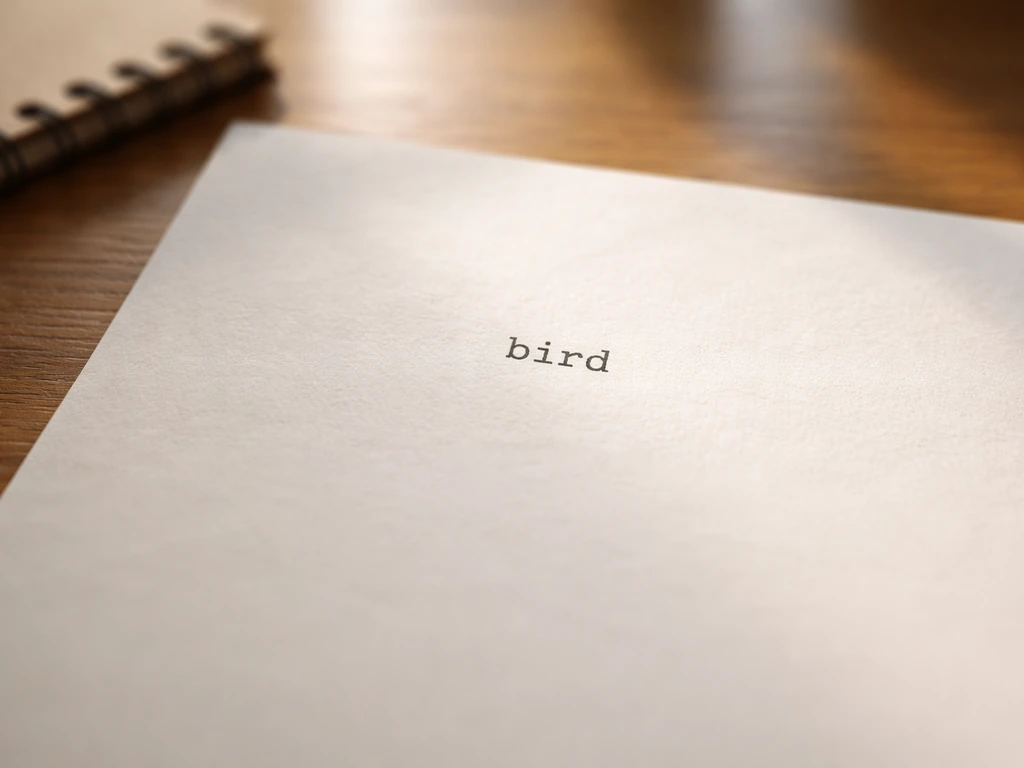
The correct spelling of "bird"
The word is bird. Every major English dictionary confirms this: Merriam-Webster lists it as "bird" with the IPA pronunciation ˈbərd, Oxford Learner's Dictionaries gives it as "bird" pronounced /bɜːd/, and Cambridge Dictionary matches that same /bɜːd/ form for British English. There is no alternate accepted spelling in standard modern English. The word has been stable in this form for centuries.
Common misspellings and quick checks
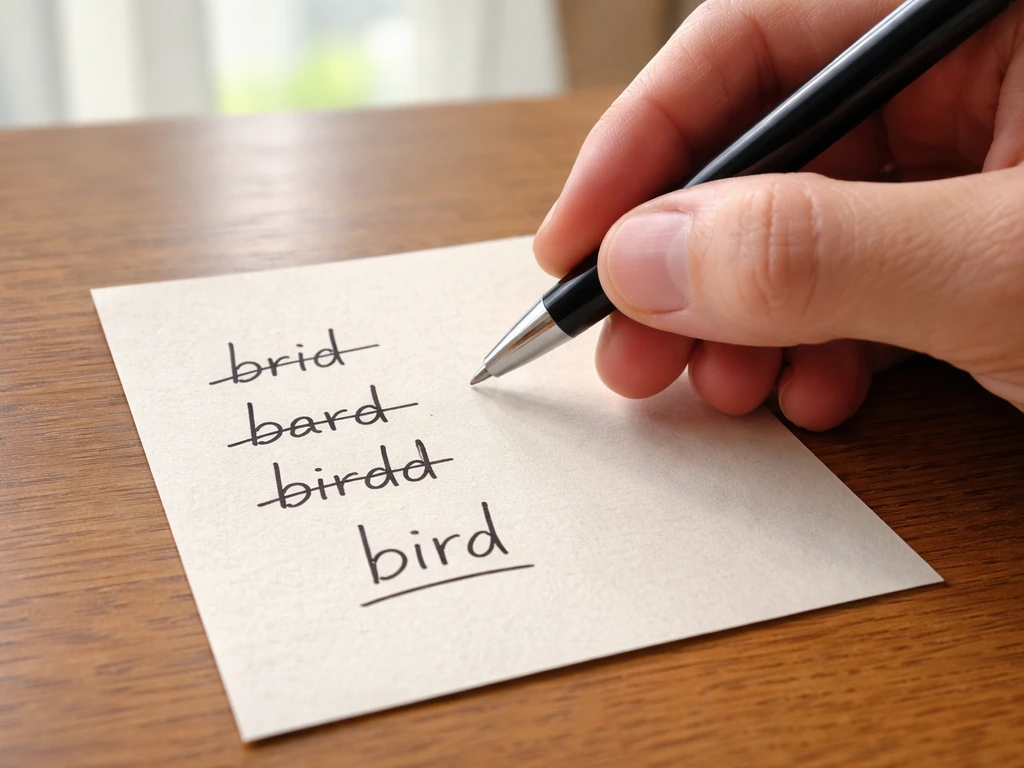
Most misspellings of bird come from one of two places: mishearing the vowel sound or making a typo. Here are the ones that show up most often, and why they happen.
- "Brid" — the letters are right, just switched. This is a classic transposition typo. Think of it as putting the R before the I instead of after it.
- "Burd" — this one is actually a real historical word (Merriam-Webster has an entry for it), but in modern English it refers to a specific old or dialectal usage, not the animal. If you typed "burd" and meant the feathered creature, it's a misspelling.
- "Byrd" — a surname (as in the explorer Richard Byrd or the musician Charlie "Bird" Parker, whose name was sometimes spelled this way), not a word for the animal.
- "Birde" or "birrd" — extra letters from fast typing. Neither is a recognized English word.
- "Berd" — a vowel swap, swapping I for E. The correct vowel is I.
The quickest check: type "bird" into any modern browser search bar or phone keyboard and watch the autocorrect. If it doesn't flag it, you've got it right. You can also verify instantly at Merriam-Webster (merriam-webster.com), Oxford Learner's Dictionaries, or Cambridge Dictionary, all of which have free online entries with spelling and pronunciation.
How pronunciation connects to spelling
In IPA (the International Phonetic Alphabet), bird is /bɜːd/ in British English and /bɜːrd/ in American English, where the R is more strongly pronounced. In practical phonetic terms, you say it like "burd" (rhymes with "heard," "word," and "nerd"). The I in bird is not pronounced the way it is in "bit" or "bin", it has that characteristic R-colored vowel sound that English speakers recognize immediately.
This matters for spelling because the vowel sound in bird doesn't obviously point you to the letter I. Words like "heard," "word," "nerd," and "bird" all have different vowel spellings despite sharing the same spoken vowel sound. The trick is to just memorize that bird uses IR for that sound, along with similar words: girl, first, shirt, birth.
Related word forms to know
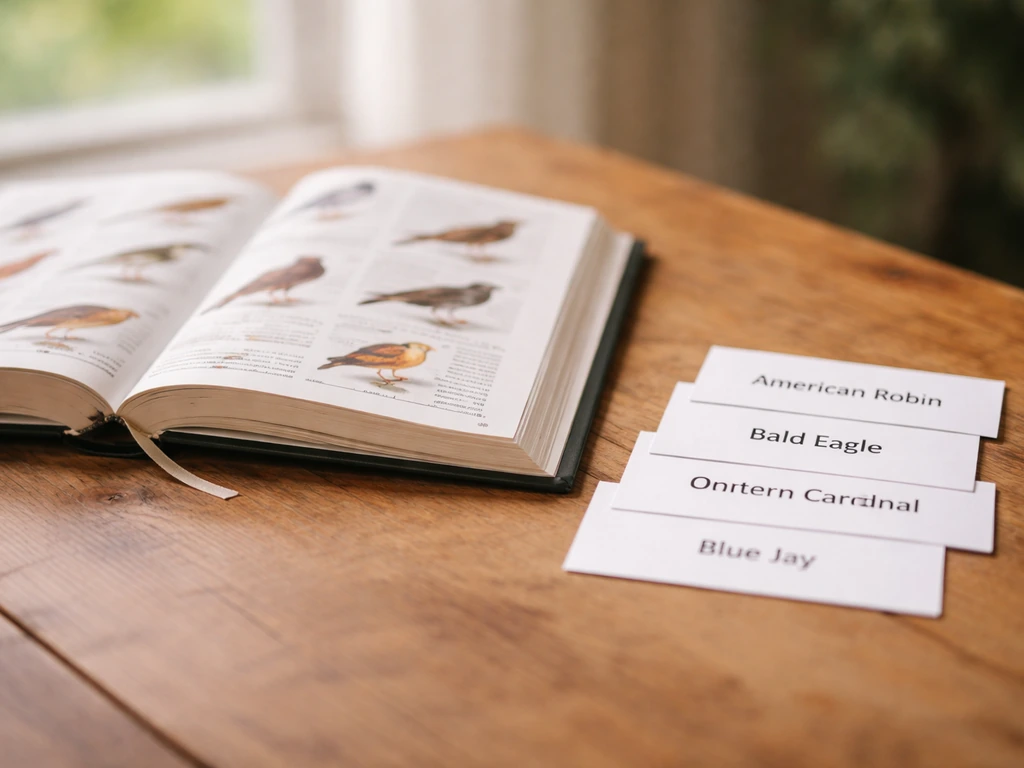
Once you have bird locked in, the rest of the word family is straightforward. Here's what you'll encounter most often and how each one is written.
| Word Form | Spelling | Notes |
|---|---|---|
| Plural | birds | Just add S, no changes to the root |
| Activity/hobby noun | birding | Drop nothing, just add -ing |
| Person who watches birds | birdwatcher | One closed word per Cambridge Dictionary |
| The activity of watching birds | birdwatching | Closed compound; some dictionaries hyphenate as bird-watching |
| Structure for birds to nest | birdhouse | One closed word |
| A small shelter for birds | birdcage | One closed word |
| A bird's song | birdsong | One closed word |
| A bird's bath | birdbath | One closed word |
A quick note on birdwatching vs. bird-watching vs. bird watching: you'll see all three across different dictionaries and style guides. Cambridge treats it as one closed word (birdwatcher, birdwatching), while Britannica uses a hyphen (bird-watcher), and Collins lists bird-watching as hyphenated. For everyday writing, the closed compound is increasingly standard. For formal or academic writing, check which style guide your context requires.
How bird names are spelled in English
This is where spelling gets a little more interesting. Individual bird species have both a common name and a scientific (Latin) name, and they follow different spelling rules. Vultures are spelled with the same kind of sound-and-letter mapping approach, so using a quick dictionary check can help you get it right how to spell vulture bird.
Common names and capitalization
In ornithological writing, the accepted convention is to capitalize each word of a bird's common name. So it's American Robin, not american robin. It's Great Horned Owl, Bald Eagle, Ruby-throated Hummingbird. The American Ornithological Society maintains official checklists that serve as the authority for correct English common names in North America, and they use this capitalized style throughout. When you're writing about a specific species, capitalizing is the mark of someone who knows the conventions. That said, in casual writing (a blog post, a text message), lowercase is completely fine and widely understood.
It's also worth knowing that common bird names occasionally change. The American Ornithological Society has an active process of updating names to remove eponymous names (those named after historical figures) that are considered exclusionary, so some names you learned years ago may have new spellings or entirely new names in current field guides. If you're writing something that needs to be current, check eBird or the Cornell Lab's BirdNET taxonomy, which uses the AviList taxonomic authority for primary English common names.
Scientific names
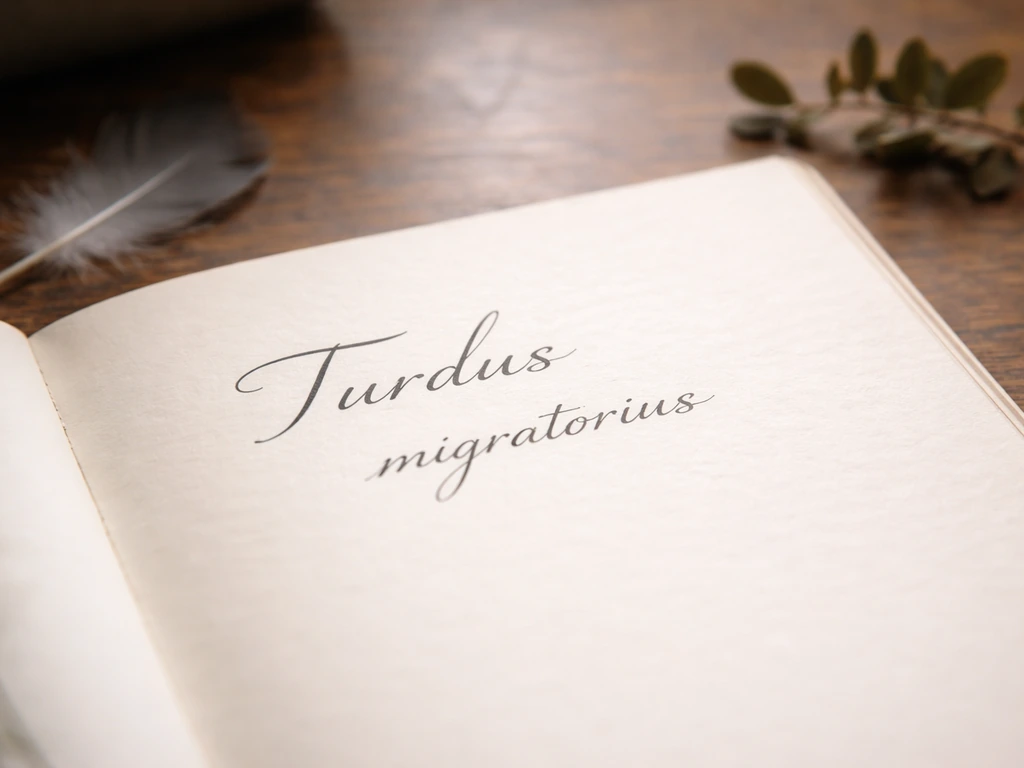
Scientific names follow Latin binomial naming: genus (capitalized) + species (lowercase), both in italics. For example, the American Robin is Turdus migratorius. The U.S. Fish and Wildlife Service and Cornell Lab of Ornithology both use this format, and it's universal across languages, which is exactly the point: scientific names eliminate ambiguity when common names differ between regions or languages.
How "bird" is spelled and said in other languages
If you're looking up how to spell or say bird in another language, the word changes completely (it's not like adding an accent or tweaking a vowel). Here's a quick reference for the most common languages. Here's a quick reference for the most common languages ave in Portuguese translates to uccello in Italian (masculine).
| Language | Word for "bird" | Notes |
|---|---|---|
| French | oiseau | Masculine noun; pronounced roughly "wah-ZOH" |
| Spanish | ave / pájaro | Ave is more formal/literary; pájaro is everyday use, pronounced "PAH-ha-ro" |
| German | Vogel | Capitalized (all German nouns are); pronounced "FOH-gel" |
| Italian | uccello | Masculine noun; pronounced "oo-CHEL-lo" |
| Portuguese | ave / pássaro | Ave (formal), pássaro (common); pronounced "AH-veh" and "PAH-sah-ro" |
| Japanese | 鳥 (tori) | Romanized as tori; also used in compound words like 野鳥 (yachō, wild bird) |
| Mandarin Chinese | 鸟 (niǎo) | Simplified character; pronounced "nyow" with a falling-rising tone |
Spelling bird in another language is essentially learning a new word, not adapting the English one. If you've come across the Egyptian hieroglyph for bird, that's a different subject entirely, connecting more to writing systems and symbols than to phonetic spelling. If you mean typing the Egyptian word for bird in a specific script or keyboard, focus on the transliteration and the correct character set for Egypt how to type bird from egypt.
Similarly, if you're thinking about how bird words appear in names across cultures (for example, whether a name like Ava derives from a word meaning bird), that's a fascinating etymology rabbit hole that connects to how bird concepts appear across different naming traditions. Similarly, if you're thinking about whether Ava means bird, that connects to etymology and how naming traditions borrow meaning from language.
Tips for remembering and verifying spellings
Memorizing bird
For the basic word bird, a simple rhyme group works well: think of girl, first, shirt, birth, and bird together. They all share the IR pattern that makes the "urd" sound. If you can spell girl, you can spell bird. A quick way to remember the spelling is to name a bird you can write on confidently, then practice the word a few times.
Another method: say the word out loud before you write it. Pronunciation-first spelling means you break the word into sounds (B... UR... D) and then map each sound to its letters. For a short four-letter word like bird, this takes about two seconds and catches most errors before they happen.
Verifying spellings of bird species names

For common bird names and species, your best sources are:
- Cornell Lab's eBird (ebird.org) — searchable by common name; reflects current AOS taxonomy and naming conventions
- Cornell Lab's All About Birds (allaboutbirds.org) — species accounts with correct common names and scientific names
- Merriam-Webster or Oxford for the basic English word and compound forms
- AOS (American Ornithological Society) checklist — the definitive authority for North American English bird names
- Collins Bird Guide or regional field guides — for species outside North America, these carry authoritative spellings for common names
If you're working on a crossword puzzle or word game involving bird names, or writing something like a care guide for an aviary (where correct spelling of the facility and species names both matter), these same sources will serve you well. Spelling bird correctly is just the start. If you're specifically asking about the spelling of aviary, it is spelled A-V-I-A-R-Y. The world of bird naming, from species common names to their equivalents in French, German, or Japanese, is surprisingly rich terrain for anyone who finds language and nature intersecting.
FAQ
Is “burd” or “birdt” ever an acceptable spelling of bird?
No, there is only one standard spelling: B-I-R-D. If a spellchecker suggests “burd” or “birdt,” ignore it unless you are using a personal style guide for a fictional character or dialect writing.
How do you spell bird in a sentence, and does punctuation change the spelling?
Type “bird” first, then recheck the result using the exact word form you need (singular). For example, “bird” becomes “birds” in most sentences by adding only an S at the end, with no extra letters or hyphen.
What should I enter for “bird” on a crossword clue, singular or plural?
For a crossword, pay attention to whether the clue expects singular or plural. “Bird” is four letters, “birds” is five. If the clue says “bird (plural),” the answer is B-I-R-D-S.
Should I write birdwatching as one word or with a hyphen?
When you’re unsure, use the closed compound form in most everyday writing, such as birdhouse and birdwatching. If you need a hyphenated form (some formal contexts still use it), mirror the style guide you are required to follow.
Do I capitalize bird common names, and when should it be lowercase?
If you capitalize a specific species common name, capitalize each word in the common name (for example, Bald Eagle). Don’t capitalize generic references like “a bald eagle” when you are not naming the specific species as a proper name.
Does American versus British pronunciation change how you spell bird?
British and American pronunciation differ, but spelling does not. American English tends to make the final R stronger, but the letters stay the same, B-I-R-D.
How do you spell bird correctly when writing the scientific name for a species?
Scientific names are always structured as genus plus species (genus capitalized, species lowercase), and they are usually italicized. You might see “American Robin” in normal text, but the scientific name format follows binomial rules, not English capitalization.
Why does autocorrect change bird when I type it on my phone, and how can I prevent that?
If you’re typing on a phone, turn on autocorrect confirmation by rechecking the final word after autocorrect runs. Autocorrect sometimes “fixes” to a similar word when your intended word is inside a longer phrase, such as in a species name.
How do I spell bird in another language, is it just adding an accent?
Yes, but it depends on the target language. For most non-English translations, you are learning a new word and a new spelling system, not an English spelling with an accent.
Next Article
How Do You Spell Bird Aviary? Spelling, Meaning, Pronunciation
How to spell bird aviary, meaning of aviary, common misspellings, and pronunciation with usage vs related terms.