If you need a bird name you can easily write, the best picks are crow, lark, tern, and robin. Wikipedia’s “blank" rel="noopener noreferrer">Ava (given name)” entry describes Ava as a medieval given name with alternative origins, which helps explain why “Ava” is not inherently a bird-name claim. All four are short, spell exactly the way they sound, and show up constantly in word puzzles, crossword grids, and fill-in-the-blank prompts. If you are wondering how to spell “vulture,” this same phonetic approach can help you lock in the letters and avoid mix-ups vulture bird. If you need just three letters, use jay or tit. If you need five, robin is your cleanest option. None of them have silent letters, tricky double-consonant traps, or spelling variants to worry about.
Name a Bird You Can Write On: Easy Spelling Picks

What does 'write on' actually mean here?
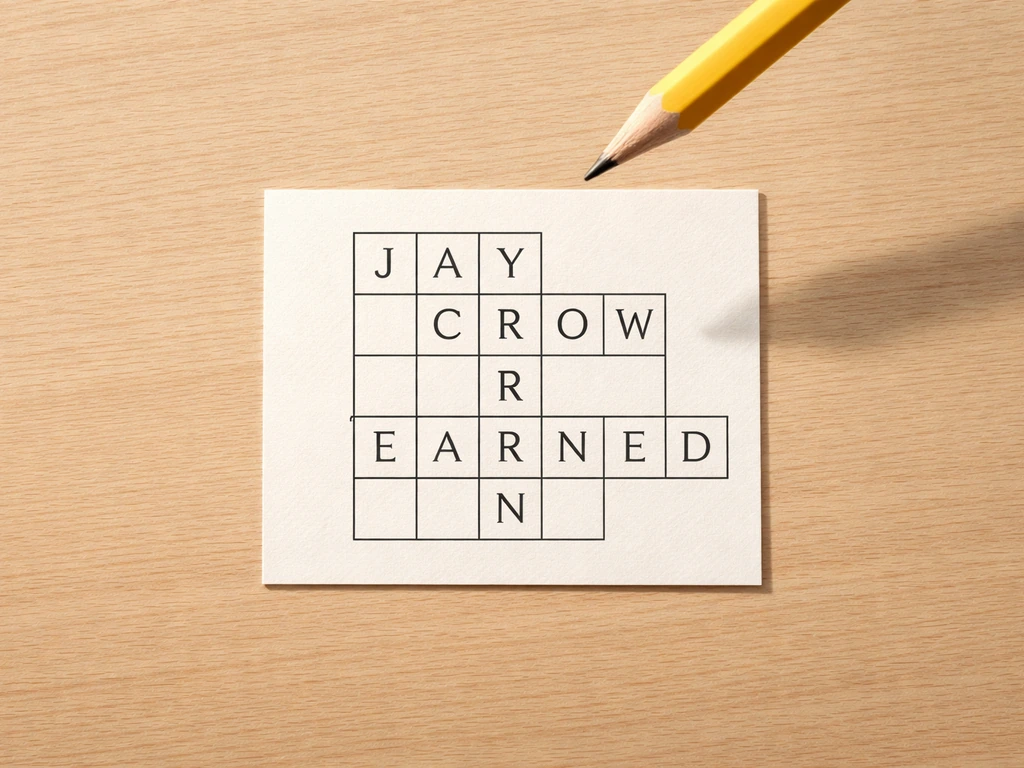
The phrase 'name a bird you can write on' is genuinely ambiguous, and it is worth unpacking before diving into recommendations. There are two main things people mean by it. The first is purely practical: they want a bird name that is easy to spell, short enough to fit a limited space, and unlikely to cause a spelling error. The second is puzzle-specific: in fill-in crossword formats (sometimes called word-fills or Cruzadex), you are given a grid and a list of words and you have to figure out where each word slots in. In that context, 'write on' really means 'write into the grid.' Fill-in-the-blank clues are among the easiest in standard crosswords because the blank position narrows the answer down fast, but fill-in grid puzzles flip that around and make word length and letter count the main constraint. Both interpretations lead to the same practical question: which bird names are cleanest to write, spell, and slot into a constrained space? This article covers both angles.
One related angle worth noting: if you are writing a bird in a different script or language, the challenge changes considerably. Writing the Egyptian hieroglyph for a bird, for example, is a completely different task from spelling an English bird name. This article focuses on English spelling and word-game use. The sibling topic on how to type the bird from Egypt covers the hieroglyph/symbol side of things.
The easiest bird names to write
Short bird names with regular phonetic spelling are the ones you want. Here is a focused shortlist with the letter count and a quick reason each one works well for writing contexts.
| Bird name | Letters | Why it is easy to write |
|---|---|---|
| jay | 3 | Fully phonetic, no traps, extremely common in puzzles |
| tit | 3 | Short and clean, though context-dependent in casual writing |
| crow | 4 | Four very common letters, no silent letters, universally recognized |
| lark | 4 | Straightforward phonetic spelling, single syllable |
| tern | 4 | Four letters, sounds exactly as written, rarely misspelled |
| wren | 4 | Almost phonetic, only the silent W is a mild trap |
| robin | 5 | Two-syllable but completely regular, no tricky letters |
| finch | 5 | Short, distinct, and phonetically consistent |
Crow, lark, tern, and robin are the four I would recommend as default answers. They are all well-known birds, widely accepted in standard dictionaries, and none of them have alternate spellings or regional variants that could cause confusion in a puzzle or writing task.
Spelling and pronunciation cheat sheet

Here is the quick-reference guide for each top pick: correct spelling, IPA pronunciation, a plain-English phonetic version, and one note on why people occasionally get it wrong.
| Bird | Correct spelling | IPA | Say it like this | Watch out for |
|---|---|---|---|---|
| crow | c-r-o-w | /kroʊ/ | KROH | Confusing 'crowed' (past tense) with the bird name in puzzle contexts; the bird is always just 'crow' |
| lark | l-a-r-k | /lɑːrk/ | LAHRK | Sometimes written as 'larke' by people over-correcting for a silent e that does not exist |
| tern | t-e-r-n | /tɜːrn/ | TURN | Confused with 'turn'; the bird is always t-e-r-n, never 't-u-r-n' |
| robin | r-o-b-i-n | /ˈrɒbɪn/ | ROB-in | Rarely misspelled, but some people try 'robbin' or 'robyn' under pet-name influence |
| wren | w-r-e-n | /rɛn/ | REN | The W is silent; some people skip it in writing because they never hear it |
| jay | j-a-y | /dʒeɪ/ | JAY | Almost never misspelled; only risk is confusing it with the letter J in a puzzle answer |
Common spelling mistakes and how to dodge them
Even simple bird names catch people out. Here are the patterns that trip writers and puzzle-solvers up most often.
- Tern vs. turn: these sound identical in most accents. In a crossword or fill-in grid, check the crossing letters. The bird is always t-e-r-n. If you are writing about a seabird, commit to the 'e.'
- Wren with a silent W: because the W is never pronounced, people writing quickly sometimes produce 'ren.' The correct English spelling has always included the W, and every standard dictionary and official bird checklist spells it w-r-e-n.
- Robin vs. robyn or robbin: the bird name is robin, full stop. The 'Robyn' spelling is a personal name variant (think Robyn the singer), not the bird. Robbin is not a correct form of either.
- Crow in verb form: Merriam-Webster notes that 'crow' also functions as a verb (a rooster crows). In a puzzle clue context, double-check whether the answer needs to be the bird noun or a verb form. The bird is always the base form 'crow,' no modification needed.
- Lark without an E: because so many English bird names end in a silent E (crane, dove, grouse), people sometimes write 'larke.' There is no E. It is l-a-r-k.
- Finch pluralization: if a puzzle calls for the plural form, it is 'finches,' not 'finchs.' The -ch ending requires -es in the plural, same as bench/benches. IOC World Bird List and official checklists are consistent on this.
Picking the right bird name for your letter or length rules

If you are solving a fill-in crossword or any grid puzzle, the number of available cells is your first filter. Fill in the plural style puzzle instructions specifically target plural or singular wording, which can affect the grammatical number needed for correct answers fill-in crossword. Start there, then narrow by the letters you already have from crossing answers. Here is a practical decision path.
- Count the available cells in the slot you are filling. Three cells: try jay, tit, or daw (a jackdaw variant used in older texts, though jay is safer). Four cells: crow, lark, tern, wren, ibis, or kite are all clean options. Five cells: robin, finch, swift, heron, egret, or stork.
- Check any letters you already have from crossing answers. If the second letter is 'R,' a four-letter slot is almost certainly wren. If the first letter is 'T' and the slot is four letters ending in 'N,' that is tern.
- Consider whether the puzzle requires singular or plural. Fill-in crosswords sometimes specify this. If you need a plural, 'crows,' 'larks,' and 'terns' are all clean and add only one letter (S) to the base form.
- Avoid names with variant spellings unless you can verify against the puzzle's source. Grey/gray heron, for example, can cause issues in a puzzle that follows British or American spelling conventions.
- If the puzzle has a theme (seabirds, garden birds, birds of prey), filter your shortlist accordingly. Tern is a seabird; robin and lark are garden/field birds; kite and hawk are raptors.
For letter-writing, poetry, or other creative writing contexts where you just want a bird name that looks clean on the page and carries no spelling risk, crow and lark are the two I would reach for first. Both are four letters, both are instantly recognizable, and both have a long history in English literature so they feel natural in almost any written context.
When capitalization matters in writing
If you are writing bird names in a scientific, ornithological, or formal birdwatching context, capitalization rules apply. The IOC World Bird List, which is the international authority on English bird names, designates official common names and typically capitalizes them (so: Common Tern, Eurasian Jay, Song Thrush). In casual writing, crossword puzzles, and everyday text, lowercase is standard and expected. Knowing this distinction matters if you are filling in a puzzle that mixes formal IOC names with informal ones, or if you are consulting a field guide and notice the name looks different from what you wrote.
Where to verify spelling, pronunciation, and name forms
When you need to double-check a bird name before committing it to a puzzle grid or a piece of writing, here are the resources that are actually worth using, and what each one is best for.
- Merriam-Webster (merriam-webster.com): best for American English spelling and pronunciation. The entries for crow, lark, and robin include pronunciation keys and usage notes. Good first stop for any common bird name.
- Oxford Learner's Dictionaries (oxfordlearnersdictionaries.com): best for British English pronunciation and spelling. Their entries for crow, lark, tern, and robin all include audio pronunciation and clear phonetic guides. Especially helpful if your puzzle uses British English conventions.
- Cambridge Dictionary (dictionary.cambridge.org): provides dedicated pronunciation pages for bird names including robin, lark, and tern. Useful as a second-opinion check when two dictionaries give slightly different phonetics.
- IOC World Bird List (avibase.bsc-eoc.org / worldbirdnames.org): the authoritative source for official English bird names, including hyphenation rules, compound name spelling, and capitalization conventions. Essential if you need to verify whether a name should be one word, two words, or hyphenated.
- Cornell Lab Clements Checklist (birds.cornell.edu): the standard scientific checklist used by eBird. If you need a species-level name verified (especially for less common birds), this is the reference. The Clements list and the IOC list occasionally differ in English name choices, so check both if a name looks unfamiliar.
- American Ornithological Society guidelines (americanornithology.org): covers the official naming and capitalization conventions for North American birds. Worth checking if a puzzle is North America-specific and you are unsure whether a name is official.
For multilingual naming (if you need a bird name in French, Spanish, or another language for a bilingual puzzle or reference), Avibase is the most practical tool. It maps common bird names across dozens of languages against the same species, so you can look up 'robin' and immediately see what the equivalent name is in other languages, along with its spelling in each.
If you find yourself needing to write bird names in cursive for a handwriting exercise or similar task, that is a slightly different challenge focused on letter formation rather than spelling, and it ties into how the letters connect in cursive script. If you are specifically practicing how to write bird in cursive, focus on smooth letter connections and consistent loop shapes write bird names in cursive. Separately, if you are trying to write the word 'bird' itself in plain English and want to double-check the spelling, that is a very quick answer: b-i-r-d, four letters, no traps. If you also need to confirm the spelling of the word itself, a quick search for “google how do you spell bird” can help you verify it fast. If you are wondering how do you spell bird aviary, the safest approach is to spell-check each word separately and confirm the exact spacing. Both of those are covered in related articles on this site.
FAQ
What’s the best bird to choose if the clue requires the fewest letters possible?
If you truly need the shortest option, pick jay or tit (3 letters). If the puzzle grid also allows multiple placements, try jay first because its spelling is very rigid, and it usually has fewer confusion issues than uncommon 3-letter birds.
If a crossword fill-in has multiple possible bird answers, how can I decide between them quickly?
Use the crossing letters first, then compare only birds that match the exact length. After that, look for letter pattern matches (like double-checking whether you already have the required vowels), and avoid changing spelling variants just to “fit” one word if the crossings conflict.
Can I use a bird name with a hyphen, spaces, or multiple words (for example, something like “song thrush”) in a grid?
Usually no, unless the puzzle explicitly allows spaces or hyphens. In standard grid puzzles, each cell represents a single letter, so multiword names often fail unless the puzzle treats them as one entry or the clue provides an exact formatting instruction.
Should I capitalize the bird name when writing it for a puzzle or casual text?
For everyday writing and most crossword-style entries, lowercase is expected. Capitalization can matter if you are copying official common-name lists that use title case, but mixing styles inside one puzzle can cost you points if the puzzle expects a specific casing.
What if I need to write the bird name in uppercase or all caps for a handwriting worksheet?
Spelling does not change, only letter shapes. To prevent errors, write and check letter-by-letter (c-o-r-w for crow, l-a-r-k for lark, t-e-r-n for tern, r-o-b-i-n for robin) because cursive style changes can make letters look similar even when spelling is correct.
Are there any “looks easy” bird names that still cause common spelling mistakes compared with your shortlist?
Yes, longer bird names or ones with silent letters and unusual combinations tend to create errors, especially when people guess instead of matching sound-to-spelling. Your shortlist works better because each name maps cleanly to letters, so if you keep getting stuck, switch to crow, lark, tern, or robin for higher reliability.
How do I handle the phrase ambiguity, if the task is actually about writing on paper versus writing into a puzzle grid?
First, confirm whether you are filling cells with exact letter counts. If it is grid-based, prioritize letter count and crossings. If it is free-form writing, prioritize short, widely recognizable spellings that look clean, and you can use crow or lark as the safest first choices.
Do bird names change by region, and could that break a puzzle answer?
Many bird species have multiple common-name variants, but the recommended picks are widely accepted as standard dictionary spellings. If your puzzle is picky, stick to the simplest common form (crow, lark, tern, robin) rather than regional alternatives.
What should I do if my puzzle entry “doesn’t fit” even after I pick a correct-looking bird?
Verify the length first, then confirm each letter against the provided crossings. If crossings contradict your letters, do not force a match by swapping to a similar-sounding bird, because one wrong letter will cascade across multiple intersecting entries.
How to Spell Vulture Bird Correctly Today
Learn the correct spelling of vulture birds, common mistakes with vulture bird, and proper capitalization and plurals.