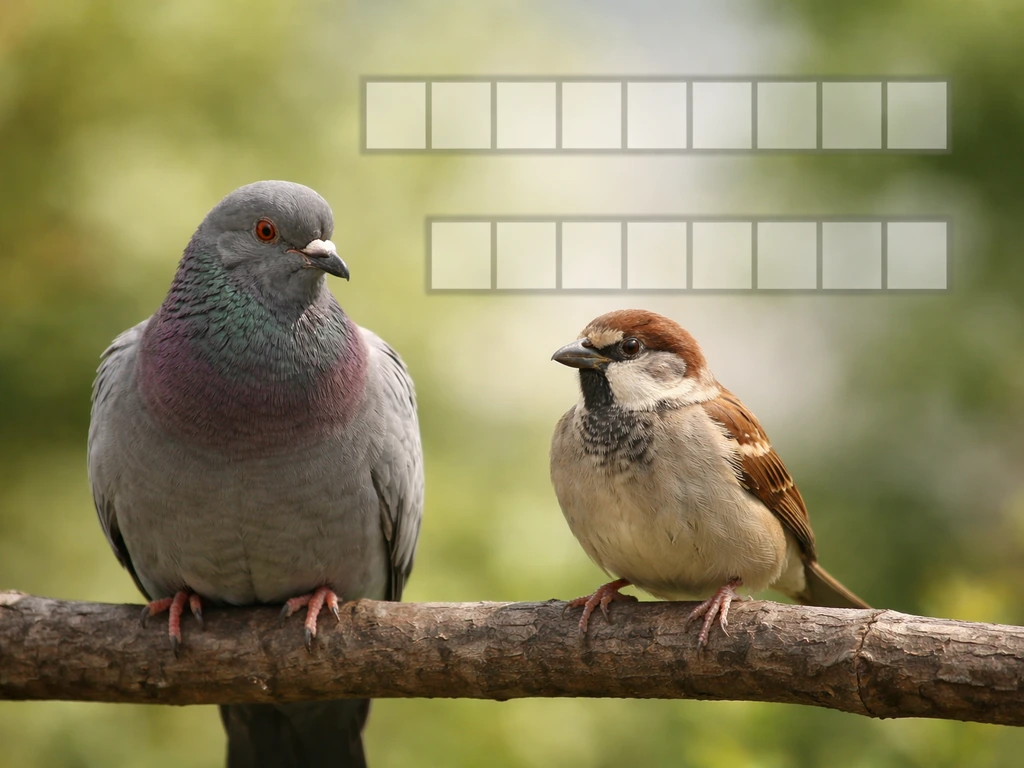
SPARROW is almost certainly the answer. It fits the clue 'common bird' at exactly 7 letters (S-P-A-R-R-O-W), and it shows up as the top result across every major crossword database for this clue length. If your grid has a plural clue like 'common birds (7)', the answer shifts to PIGEONS (P-I-G-E-O-N-S), also exactly 7 letters. Start with SPARROW and confirm it against your cross letters.
Common Bird Crossword Clue: 7-Letter Answer and How to Check

James Ridgley
4 May 2026
Quick answer lookup for 7-letter bird words in crosswords
When you're staring at a 7-letter slot next to the clue 'common bird', the crossword editor is almost always pointing you toward one of two answers. SPARROW dominates for the singular form of the clue, while PIGEONS covers the plural phrasing. Here's a fast-reference table you can scan before looking anywhere else.
| Answer | Letters | Clue form it fits | Notes |
|---|---|---|---|
| SPARROW | 7 | Common bird (7) | Top-ranked match across multiple crossword databases; singular clue |
| PIGEONS | 7 | Common birds (7) | Plural form of PIGEON; accepted in Times-style and general cryptics |
| STARLING | 8 | Common bird (8) | Too long for a 7-letter slot, but worth knowing if you miscount |
| PIGEON | 6 | Common bird (6) | Drops to 6-letter slot; see the common bird 6 letters topic for this |
Notice that STARLING and PIGEON are close relatives of these answers and appear in adjacent clue lengths. If you're working through a puzzle where a nearby clue asks for a 6-letter or 8-letter common bird, those neighboring answers are covered separately and worth cross-referencing. For a broader adjacent lookup, see common bird 6 letters, since a neighboring clue length can point to the 6-letter answer instead 6-letter common bird.
Common 7-letter birds used in crossword clues
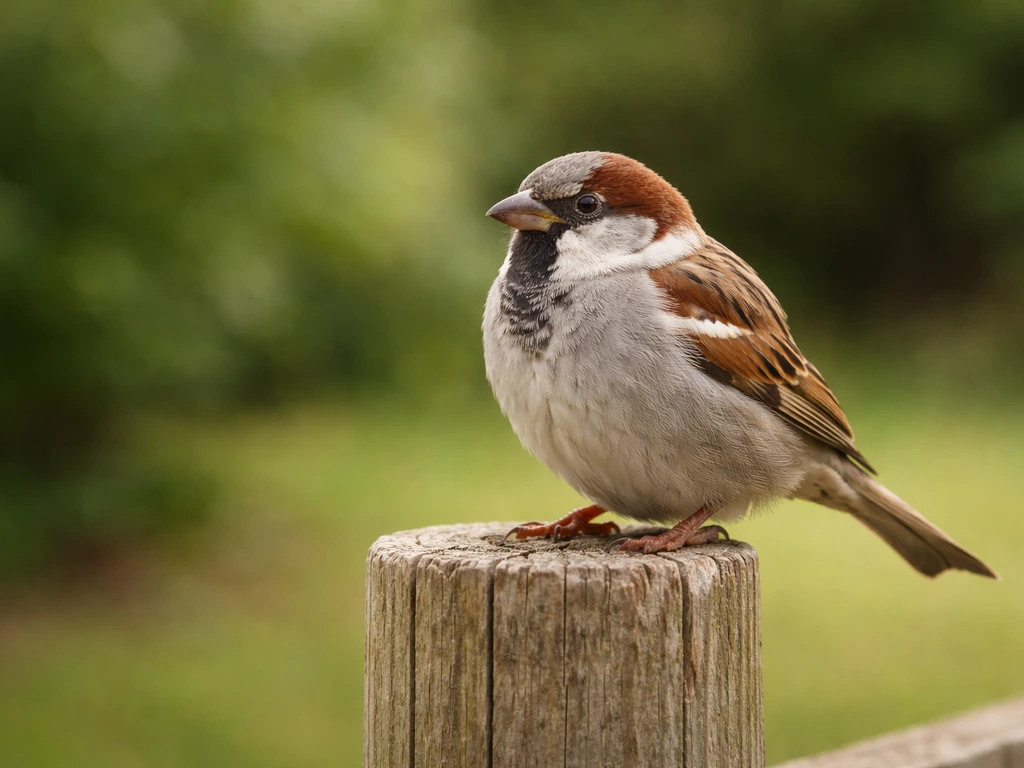
Crossword setters reach for 7-letter bird names more often than you'd think, because the length is satisfying for grid construction. The birds that come up most frequently for 'common bird' clues at this length are not obscure rarities. They're the birds you'd see on a park bench or a suburban fence. NPS (Lowell National Historical Park) notes that house sparrows thrive on farmland and in urban landscapes and tend to follow and benefit from human settlement. Here are the main players:
- SPARROW (7): The single most common answer for 'common bird (7)'. The house sparrow is genuinely one of the most widespread birds on the planet, and editors love the double meaning of 'common' (meaning both 'ordinary' and 'frequently seen').
- PIGEONS (7): The plural of pigeon, used when the clue reads 'common birds' or uses a plural indicator. Pigeons are arguably the most visible urban bird worldwide, so 'common' fits perfectly.
- STARLING (8): One letter too many for this slot, but worth knowing because setters sometimes rephrase it as 'common starling' in longer clues. File this under 8-letter answers.
- SWALLOW (7): Occasionally appears for 'common bird (7)', especially in British puzzles where the barn swallow is a familiar garden visitor.
- OSTRICH (7): Appears for exotic or themed clues rather than 'common bird' clues, but it's a 7-letter bird that sometimes trips solvers who are pattern-matching.
For this specific clue wording ('common bird', 7 letters), SPARROW is your first bet and SWALLOW is your backup if the cross letters rule SPARROW out. PIGEONS only enters the picture if the clue is plural.
How to confirm the right bird using your grid
Even when you're confident about SPARROW, it takes 30 seconds to verify it against the grid and avoid a messy erasure later. Work through these checks in order.
- Count the boxes again. Seven-letter answers are easy to miscount, especially in cryptic grids where black squares break the visual rhythm. Count each individual box: S(1) P(2) A(3) R(4) R(5) O(6) W(7). That double-R in the middle is the most common point of confusion.
- Check your first cross letter. If the crossing answer gives you the first letter, it should be S. If it's P, switch immediately to PIGEONS (checking that the clue is plural) or try PIGEON at 6 letters.
- Check the last letter. SPARROW ends in W. If a crossing answer locks in a different final letter, run through PIGEONS (ends in S) or SWALLOW (ends in W as well, so W at position 7 doesn't rule SWALLOW out).
- Look at the middle letters. SPARROW has A at position 3 and double-R at positions 4 and 5. If a cross letter at position 4 gives you anything other than R, SPARROW is eliminated and you move to SWALLOW (S-W-A-L-L-O-W, double-L at 4 and 5).
- Re-read the clue for plural indicators. Words like 'birds', 'flock', or a plural verb in the clue surface are signals to try PIGEONS instead of SPARROW.
Common crossword clue wording that maps to bird names
The exact phrasing of the clue matters, and editors vary their wording across puzzle types. Here's how different phrasings tend to map to specific answers at the 7-letter mark.
| Clue wording | Most likely 7-letter answer | Why |
|---|---|---|
| Common bird (7) | SPARROW | Singular, generic 'common' descriptor; sparrow is the textbook ordinary bird |
| Common birds (7) | PIGEONS | Plural indicator shifts the answer to the plural form of pigeon |
| Common garden bird (7) | SPARROW or SWALLOW | Garden context favors both; check cross letters to choose |
| Common urban bird (7) | PIGEONS | Urban setting points strongly to pigeon; plural fits 7 letters |
| Common starling (7) | STARLING | Here 'common' is part of the species' official name, not a descriptor — but STARLING is 8 letters, so this clue length would be 8, not 7 |
| Everyday bird (7) | SPARROW | Synonym for 'common'; same primary answer applies |
| Familiar bird (7) | SPARROW | Another synonym path to the same answer |
One thing worth knowing: in cryptic crosswords, 'common' can sometimes function as a wordplay component rather than a simple definition. If the clue looks like it's doing something structural (anagram indicators, hidden words, reversals), you may need to treat 'common' as part of the wordplay rather than the definition. For straightforward quick crosswords and general knowledge puzzles, the definition approach above works reliably.
Spelling and variants across American and British English
SPARROW and PIGEONS have the same spelling in both American and British English, which is one reason setters in both traditions use them so freely. There are no variant spellings to worry about. That said, a few things can still trip you up.
- SPARROW: Always spelled S-P-A-R-R-O-W with double-R. A single-R spelling ('SPAROW') is not a word and will not appear in any reputable puzzle.
- PIGEONS: Standard plural, always P-I-G-E-O-N-S. No variant spelling exists in either dialect. British English does not use an alternative form.
- SWALLOW: Always S-W-A-L-L-O-W with double-L. The double consonant pattern mirrors SPARROW's double-R and is the most common spelling error for both words.
- STARLING: S-T-A-R-L-I-N-G, 8 letters. If you're working a puzzle where you've miscounted and think you have 7 boxes, double-check before committing to this word.
- Crossword-accepted forms: Crossword databases accept all of these words in their standard dictionary spellings. You will not encounter alternate forms, abbreviations, or truncated versions for these particular bird names in standard grids.
If you're exploring related clue lengths, the same birds appear at different letter counts. PIGEON sits at 6 letters, SPARROW at 7, and STARLING at 8. At 6 letters, a very common crossword answer to the clue is PIGEON, and the wording may switch between singular and plural depending on the clue. Keeping that progression in mind helps when a puzzle neighbour clue points you toward a common bird at a different length.
Pronunciation and naming notes
SPARROW
Pronounced SPARR-oh (IPA: /ˈspær.oʊ/ in American English, /ˈspær.əʊ/ in British English). The name traces back to Old English, making it one of the oldest bird names in the English language. It's been in continuous use for over a thousand years, which is part of why it feels so naturally 'common.' The house sparrow (Passer domesticus) is the species most crossword editors have in mind, and it is genuinely one of the most widely distributed birds on earth. Cornell Lab of Ornithology’s All About Birds notes the house sparrow is one of the most common birds, often widely seen.
PIGEON and PIGEONS
Pronounced PIJ-un (IPA: /ˈpɪdʒ.ɪn/). The word arrived in English in the late 14th century via Old French pijon, meaning 'young dove', which itself came from a Vulgar Latin form connected to pipire, meaning 'to peep' or 'to chirp.' That onomatopoeic root is a nice memory hook: the word pigeon echoes the sound a young bird makes. The plural PIGEONS adds an S and shifts the stress pattern slightly in casual speech, but the spelling stays clean.
STARLING (for reference at 8 letters)
Pronounced STAR-ling (IPA: /ˈstɑːr.lɪŋ/). The word entered written English in the 1670s from an East Anglian dialect form with Scandinavian roots, related to Old Norse and Old English terms for similar birds. The 'common starling' is the bird's official English vernacular name, which is why clues sometimes use the phrase 'common starling' as a full proper reference rather than using 'common' as a casual descriptor. At 8 letters, STARLING falls just outside this article's target length, but it's the natural next step if you're working through related puzzles.
ROBIN (occasionally relevant)
Pronounced ROB-in (IPA: /ˈrɑb.ɪn/ in American English). ROBIN is only 5 letters, so it won't fill a 7-letter slot. But setters do use it as a 'common bird' answer at shorter lengths, and it occasionally appears in combination answers. The name has a charming history: it's a shortening of 'Robin Redbreast', which was in use by the mid-15th century, itself taken from the personal name Robin (a diminutive of Robert). The bird name predates formal ornithological naming and stuck because the robin was a popular, familiar garden bird across Britain.
What to do if SPARROW doesn't fit
If your cross letters eliminate SPARROW, work through this sequence rather than guessing randomly. First, check whether the clue is plural, because PIGEONS solves a huge number of 7-letter 'common birds' slots. Common bird clues can also point to other birds depending on the exact length and whether the clue is singular or plural. Second, if the clue is singular and the second letter from a cross answer is W, try SWALLOW (S-W-A-L-L-O-W). Third, if you have an M or an A in an early position, step back and check whether you've misread the clue length, since MARTIN (6) and MALLARD (7) can both appear as 'common bird' answers in the right puzzle context. MALLARD is worth a look if the clue has any water, duck, or pond flavour to it. A common marine bird with a 7-letter answer is often suggested when the clue hints at coastal or sea habitats. Fourth, if none of those fit, search the specific pattern you have (for example, S-blank-blank-R-blank-blank-W) in a crossword pattern solver, which will return every dictionary word matching that exact shape.
The method matters as much as the first guess. Write SPARROW in pencil, check all the cross letters you already know, and only commit in pen when at least three intersecting answers confirm the letters. That habit alone will save you more erasures than any lookup tool.
FAQ
If the slot is 7 letters but the letters I have don’t match SPARROW, what should I try next for a common bird crossword clue?
Confirm two things first: whether the clue is singular or plural, then check for SWALLOW if the second letter is W. If neither matches, look for a context-driven alternative like MALLARD when the clue or crossings suggest water or “pond” themes, and only then use a pattern solver for your exact 7-letter shape.
Does “common bird” always mean SPARROW in a 7-letter crossword clue?
No. Even at 7 letters, editors may use other species names depending on the puzzle’s theme and the crossings. The safest approach is to treat SPARROW as the default, then immediately verify against your intersecting letters before finalizing, because a single wrong cross can force a different valid 7-letter bird.
How can I tell whether “common” is definition or wordplay in a cryptic crossword “common bird” clue?
Look for signals that the clue is doing something structural (anagram indicators, hidden-word markers, reversal instructions, or unusual punctuation). If “common” is acting as part of wordplay, the answer may be a rearrangement or extraction related to “common,” not a straightforward definition of the bird.
What if the clue says “common bird (7)” but the entry I need seems to be a plural even though the clue doesn’t say plural?
Check the grammar of the clue as written and especially what the answer would do in the sentence. Some clue styles imply plurality through surrounding text. If crossings make SPARROW impossible, test PIGEONS next because it is the standard 7-letter plural option for this clue length.
Are there common American vs British spelling differences for 7-letter answers like SPARROW or PIGEONS?
For these specific bird names, spelling is the same in both American and British English. Your bigger risk is misreading a letter from the grid, for example mixing up O and Q or S and 5 in handwritten sets, so re-check each character you copied into your notes.
If I suspect the answer is MALLARD or MARTIN at 7 letters, what grid features should I look for?
Use the crossings to test thematic fit. MALLARD is more likely when you see duck, pond, water, lake, or similar neighboring answers. MARTIN is typically tied to “bird” contexts but it is only compatible when your exact letters permit it, so don’t assume based on theme alone.
When should I use a crossword pattern solver instead of continuing to guess from bird lists?
Use it as soon as your top two candidates fail due to crossings, or when you have two to four letters that strongly constrain the slot. Provide the exact pattern, including blanks and known letters, because a solver that searches by length and letter position will narrow options quickly without relying on generic frequency assumptions.
What’s the fastest practical method to verify SPARROW once you think it’s the right answer?
Write it in pencil, then verify in sequence: confirm every already-filled intersecting letter, check that no crossing forces a contradiction with another word, and only commit in pen after at least three independent intersections match. This prevents erasures cascading into unrelated clues later.
Can “common bird” point to a bird at 7 letters that is not a typical park or garden species?
Yes, especially if the puzzle includes a coastal, maritime, or theme-specific set of answers. If crossings suggest words tied to sea habitats, consider whether the setter may have chosen a less “garden” bird that still has a 7-letter common-name form.
Next Article
Common Bird 6 Letters 7 Letters Answer Guide
Quick guide to solve common bird 6 or 7 letters clues with candidate answers, spelling variants, and confirmation tips.