Grebe rhymes with "gleam" minus the M, or think of it as "greeb" with a long E. The correct pronunciation is /ɡriːb/ (one syllable: GREEB). Both UK and US English use exactly the same sound here, so there's no regional version to second-guess. If you can say the word "greed" clearly, just swap the D for a B and you've nailed it.
How to Pronounce Grebe Bird Names Correctly in English

James Ridgley
24 Apr 2026
IPA breakdown and syllable structure
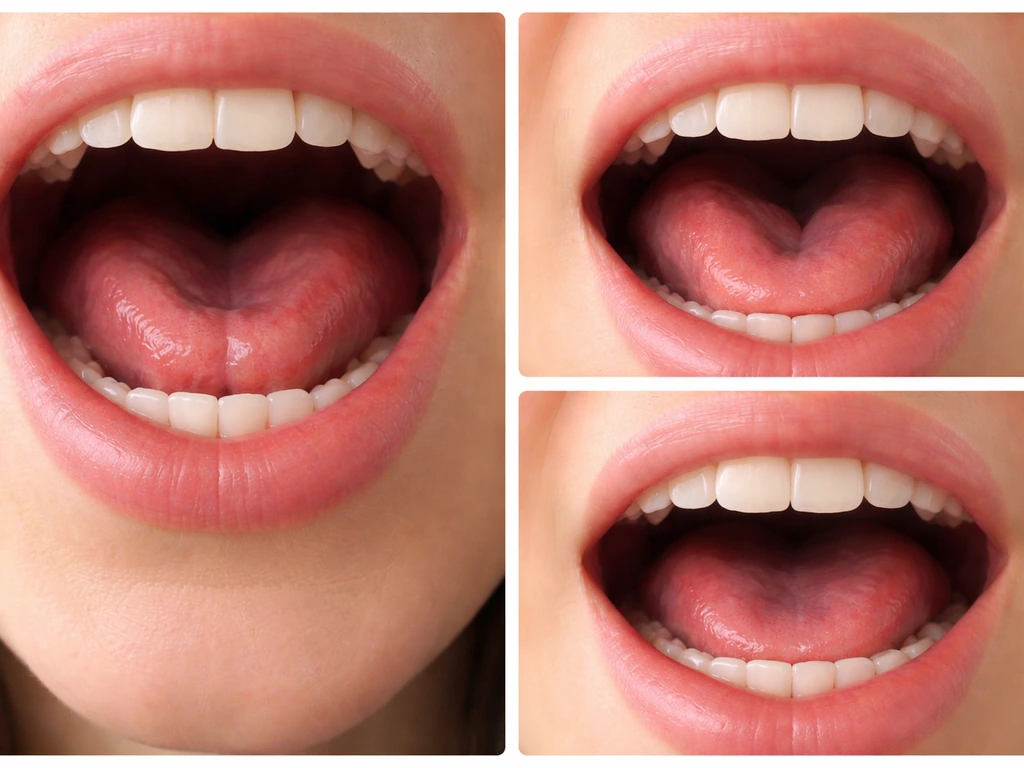
"Grebe" is a single syllable, which means there's no stress problem to solve. Every part of the word gets said in one smooth push of air. Here's how each sound maps out:
| Sound | IPA symbol | Anchor word | Notes |
|---|---|---|---|
| /ɡ/ | ɡ | give | Hard G, not a soft J sound |
| /r/ | r | run | Standard English R, not rolled |
| /iː/ | iː | sheep / need | Long E vowel, this is the key sound |
| /b/ | b | book | Clean stop, nothing added after it |
Put together: /ɡriːb/. The long /iː/ vowel is the heart of the word. It's not a short I like in "grib," and it's not the AY sound you'd find in "grabe." It's the same pure long E you hear in "tree" or "sleeve." Cambridge and Oxford both transcribe it identically: /ɡriːb/, no variation.
How to pronounce common grebe species names
The good news: once you have /ɡriːb/ locked in, every grebe species name in English just adds a descriptor in front. The tricky part is sometimes the descriptor, not the word "grebe" itself. Here are the most frequently searched species names you'll encounter in field guides and birding lists. If you are pronouncing another bird term like wading bird, you can use the same IPA-and-anchor method as well how to pronounce wading bird.
Little grebe
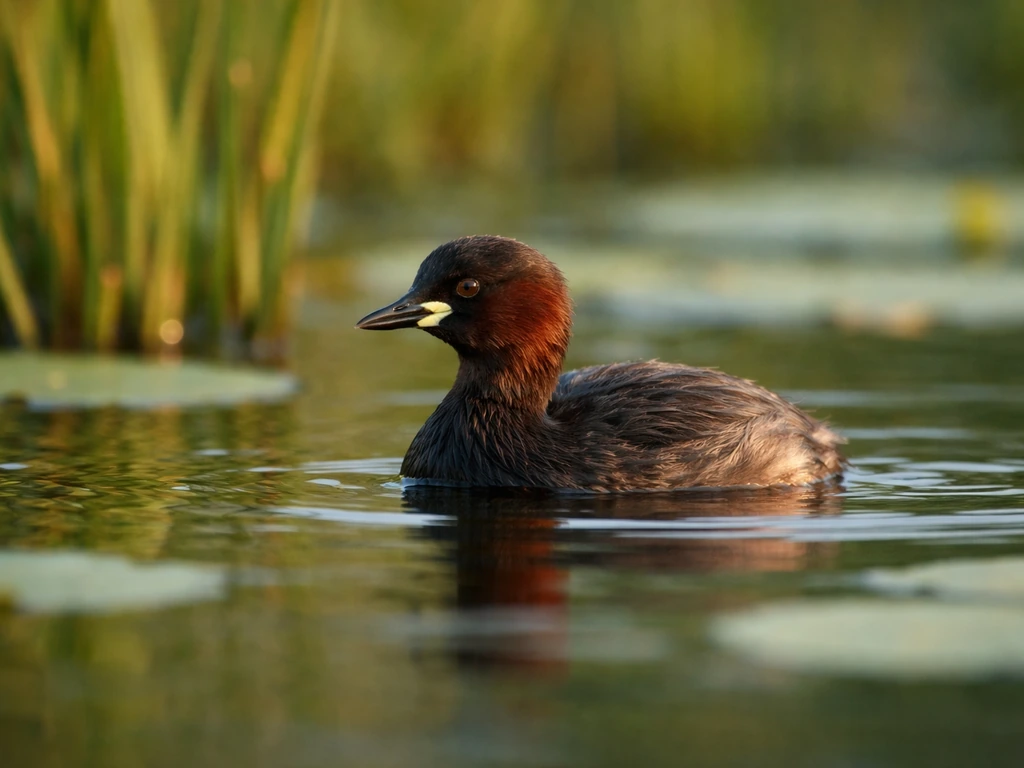
Say it: LIT-ul GREEB. "Little" is two syllables (LIT-ul), with the stress on the first. This is the smallest grebe in Europe and one of the most commonly encountered in everyday birding. The name is purely size-based, nothing tricky about it. You may also hear this bird called a "dabchick" in older or informal British English usage, so don't be confused if you come across that name.
Great crested grebe
Say it: GRAYT KREST-id GREEB. Three words, all clearly enunciated in birding speech. "Great" (one syllable, rhymes with "late"), "crested" (KREST-id, stress on the first syllable), and then "grebe" as always. Cambridge and Oxford both use this species as a go-to example in their grebe entries, which tells you it's the most recognizable compound name in everyday English. The "crested" part refers to the bird's distinctive head tufts, which is actually connected to the word's etymology (more on that below).
Red-necked grebe
Say it: RED-NEKT GREEB. "Red-necked" is a hyphenated compound adjective: RED (one syllable) + NEKT (one syllable, the past-participle form of "neck"). The stress falls on RED. This is a standard descriptor-based bird name used across North American and European field guides.
Black-necked grebe
Say it: BLAK-NEKT GREEB. Same structure as red-necked. Worth knowing: this bird is also called the "eared grebe" in North American English (EERD GREEB), so birders on different sides of the Atlantic may use different names for the same species. Both are correct in their respective regional contexts.
Quick reference: species pronunciation at a glance
| Species name | Say it like | Syllable count | Stress pattern |
|---|---|---|---|
| little grebe | LIT-ul GREEB | 3 | STRESS-unstress GREEB |
| great crested grebe | GRAYT KREST-id GREEB | 4 | GRAYT STRESS-unstress GREEB |
| red-necked grebe | RED-NEKT GREEB | 3 | STRESS-unstress GREEB |
| black-necked grebe | BLAK-NEKT GREEB | 3 | STRESS-unstress GREEB |
| eared grebe | EERD GREEB | 2 | EERD GREEB (equal weight) |
Common mispronunciations and how to fix them
Most people mispronounce "grebe" in one of three predictable ways. Recognizing which trap you're falling into makes fixing it fast. If you specifically need the pronunciation for the word “bird,” follow the same IPA-and-anchor approach in a guide on how to pronounce bird. If you specifically need the pronunciation for a plover bird phrase, use the same IPA-and-anchor approach in this guide on how to say plover bird. If you mean the turkey bird, use the same approach: find the IPA and an easy anchor word, then practice it in a natural phrase. If you want the pronunciation of other bird names like budgie bird, use the same approach as well how to pronounce bird. If you're wondering about a specific phrase like frigate bird, use the same IPA-and-anchor approach as in this guide how to pronounce bird. If you need the pronunciation for weaver bird, use the same IPA-and-anchor approach and say it in a natural phrase how to pronounce weaver bird.
- Saying "GREB" with a short E (like "web" or "deb"): This is the most common mistake. The E in grebe is long, not short. The silent E at the end of the word is your signal, just like in "theme" or "scene." Think: GREEB, not GREB.
- Saying "GRAY-b" or "GREEB-ay": Some readers see the French-origin spelling and assume a French-style pronunciation. The word has been fully anglicized. Treat it like any standard English word with a silent final E.
- Putting stress on a second syllable that doesn't exist: Because people are used to bird names being two syllables (think plover, heron, egret), some readers mentally add a second beat. Grebe has only one syllable. Say it in a single, clean beat: GREEB.
- Softening the G to a J sound: The G in grebe is always hard, as in "green" or "grab." There's no soft-G reading here.
Practice drills you can run right now
The fastest way to lock in a pronunciation is to connect it to words you already know and then say it in a natural phrase. Try these drills out loud, and you'll have it in under two minutes.
- Anchor drill: Say "green" then "greed" then "grebe." Notice the long E stays identical across all three. You're just changing the final consonant each time.
- Contrast drill: Say "greb" (wrong) then "GREEB" (right) three times, exaggerating the vowel length on the correct version to train your ear on the difference.
- Species phrase drill: Say "little grebe, great crested grebe, little grebe" as a repeating chain. The rhythm is: LIT-ul-GREEB, GRAYT-KREST-id-GREEB. This also helps your brain file the full names, not just the isolated word.
- Self-check: After saying "grebe," ask yourself: did the vowel sound like "sheep" or like "bed"? If it sounded like "sheep," you got it right.
If you want to hear real speakers say it, Forvo has native English audio clips for "grebe" that let you compare how the long /iː/ sounds in natural, conversational speech versus careful dictionary speech. The vowel quality stays consistent: no one is reducing it to a short I in normal use.
Why it's pronounced this way: the etymology
Understanding where a word came from often explains why it sounds the way it does, and that transfers to other bird names you'll encounter. "Grebe" was borrowed into English from French grèbe, which dates to the 16th century in Middle French. The earliest recorded use in English is around 1766. The French grèbe itself is traced to the Franco-Provençal dialect of the Savoy region of France, and its ultimate origin is described by both Merriam-Webster and etymologists as "obscure" or "unknown."
One interesting theory, noted by Wikipedia, connects the word to the Breton word krib, meaning "comb," which would be a reference to the crested feathers found on several grebe species. This would make the name essentially mean "crested bird," which lines up nicely with the great crested grebe being one of the most prominent members of the family.
The pronunciation takeaway from this etymology is straightforward: when English borrowed the word from French, it anglicized it fully. The final E in English grebe behaves as a standard magic-E or silent-E, making the preceding vowel long. So you get /ɡriːb/ rather than any French-inflected vowel. This is the same rule that governs words like "theme" (borrowed from Greek via French) or "scene." Knowing this rule helps when you encounter other borrowed bird names, because English consistently treats final silent-E as a vowel-lengthening signal, regardless of the source language.
Regional accents and what to expect
"Grebe" is one of those words where British and American English agree completely. Cambridge Dictionary explicitly lists both UK and US pronunciation as /ɡriːb/, with no difference between them. That's relatively unusual for a borrowed word, and it means you don't need to worry about sounding wrong on either side of the Atlantic.
What you might notice with different accents is a slight difference in how the /r/ is produced. In a standard American accent (rhotic), the R in "grebe" is a full, held R sound. In many British accents (non-rhotic), the R blends more fluidly into the vowel. But because the R in grebe comes before the vowel (not after it), this distinction doesn't really apply here. The R is always pronounced regardless of accent.
Australian and New Zealand English also use /ɡriːb/. Some regional Australian accents might produce the /iː/ vowel with a slightly different quality, but it still maps to a long E rather than any other sound, so listeners and speakers across English dialects will understand each other without any trouble.
In formal birding contexts, such as presenting at a bird club, writing a field notebook, or narrating a video, the recommended pronunciation for any audience is simply /ɡriːb/: one syllable, hard G, long E, clean B. That's what you'll hear from ornithologists, field guide authors, and experienced birders worldwide. If you're exploring pronunciation guides for other bird names, the same logic of checking IPA transcriptions against anchor words applies whether you're tackling something simple like "swallow" or something trickier like "plover." The method is always the same: find the IPA, find an anchor word for each vowel, and drill the full word in a natural phrase.
FAQ
How do I pronounce “grebe” if I only know the spelling but not the IPA?
Use the one-syllable “GREEB” approach: start with a hard G like in “go,” use the long E sound from “tree” or “sleeve,” then end with a clean B. If you say “greed” clearly and swap the final D for B, you will match /ɡriːb/.
Is the final “e” in “grebe” pronounced like an extra vowel?
No, the final E is silent in English here. Its job is to make the preceding vowel long (the long /iː/), so the word stays one syllable, /ɡriːb/, not something like “gree-bee” or “greebuh.”
Do I stress any part of “grebe” or “great crested grebe”?
“Grebe” itself has no stress issue because it is one syllable. In “great crested grebe,” keep stress on “GREAT” and on “CREST-id” (the “crested” part), then say “grebe” smoothly at the end as /ɡriːb/.
What common mistake should I fix first if people tell me I sound wrong?
Most errors come from using the wrong vowel length. Avoid a short “i” like “grib.” The correct vowel is the long E, so check yourself by thinking “tree,” not “sit.”
How should I pronounce “little grebe” when speaking quickly in conversation?
Keep “little” as two syllables (LIT-ul) with stress on the first, then attach “grebe” without adding an extra syllable. In fast speech, many speakers naturally run the words together, but “grebe” should still sound like one clear /ɡriːb/ at the end.
Are “eared grebe” and “red-necked grebe” pronounced the same way at the “grebe” part?
Yes. Even when the species descriptor changes, the base word stays /ɡriːb/. The only piece you adjust is the modifier (for example, EERD GREEB versus RED-NEKT GREEB), not the pronunciation of “grebe.”
Does non-rhotic British English ever drop the R in “grebe”?
In “grebe,” the R is always part of the sound because it appears before the vowel. You may hear a slightly smoother R in some British accents, but listeners still expect the /r/ quality, so say it clearly for best results.
What is the safest pronunciation target for formal birding events?
Aim for /ɡriːb/ (one syllable, hard G, long E, clean B). For “grebe” specifically, this single target covers both UK and US English, so you do not need separate versions for different audiences.
How can I practice “grebe” in a way that generalizes to other bird names?
Say “greed” then replace only the final consonant (D to B) to build the vowel target. After that, practice in a complete phrase like “great crested grebe” or “little grebe,” because the modifier stress pattern can otherwise distract you from keeping the /iː/ in “grebe” consistent.
Next Article
How to Pronounce Frigate Bird: Simple Step-by-Step
Step-by-step guide to pronounce frigate bird correctly, including phonetics, stress fixes, and accent variations.