Say it as TUR-kee BURD. Stress the first syllable of turkey (TUR, not tur-KEY), keep the second syllable short and light (kee), then follow it with burd, rhyming with heard or word. In IPA, the full phrase is /ˈtɜːki bɜːd/ in British English and /ˈtɜːrki bɜːrd/ in American English. That's the standard pronunciation you'll hear on any nature documentary or in everyday conversation.
How to Pronounce Turkey Bird: Syllables and Variants

James Ridgley
25 Apr 2026
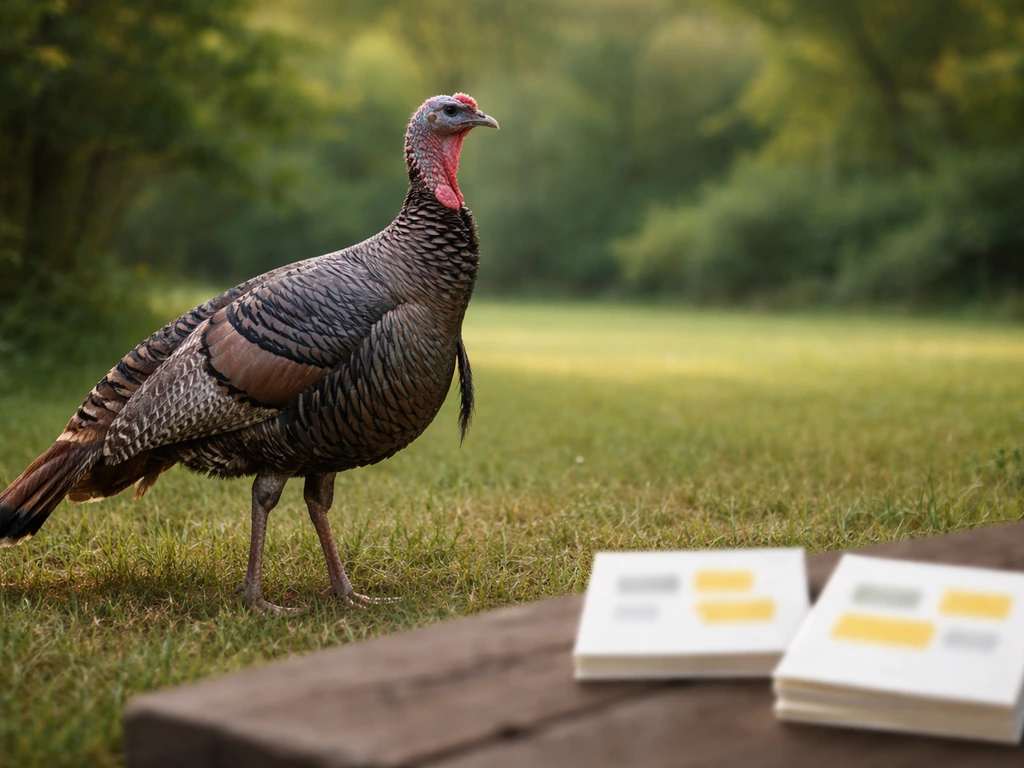
What exactly is a "turkey bird"? (It depends on context)
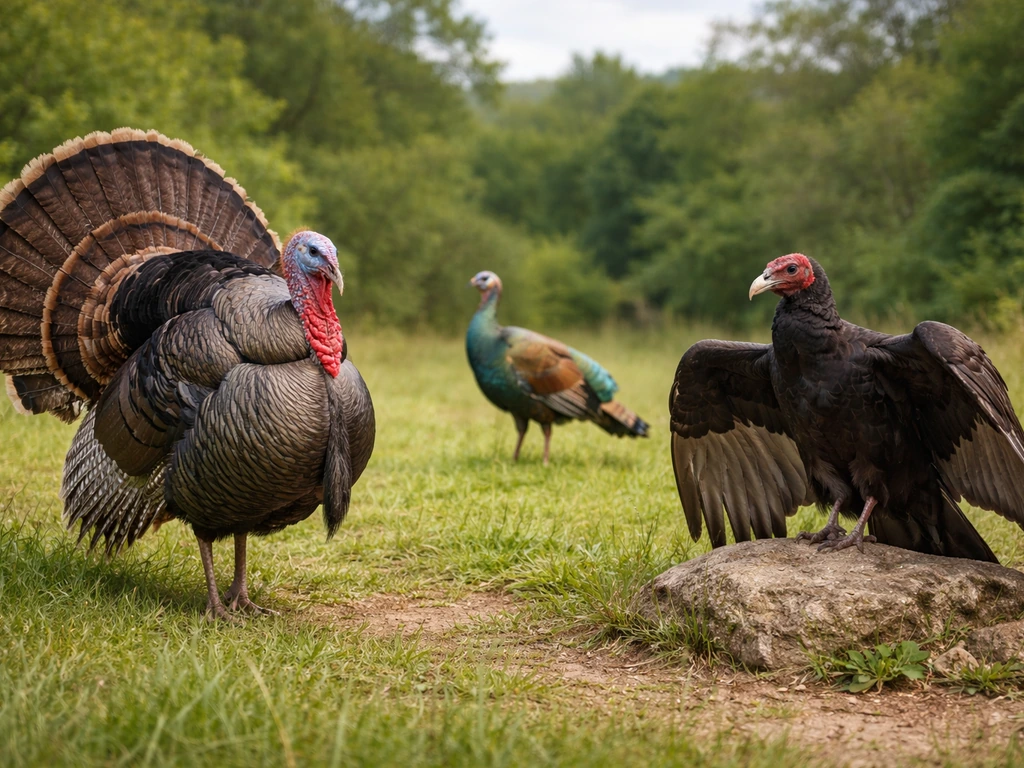
Before drilling into pronunciation, it helps to know which bird you're actually talking about, because "turkey bird" can mean a few different things depending on where you encounter the phrase.
- The wild turkey (Meleagris gallopavo): This is what most people picture. It's the large North American bird that became famous as Thanksgiving fare. Interestingly, early European settlers named it after the African guineafowl that was already known in Europe as the "Turkey bird," because the two birds reminded them of each other.
- The turkey vulture (or turkey buzzard): A large North American raptor that gets its name from its bald red head, which resembles a wild turkey's. This is a separate species entirely but shares the "turkey" label.
- Other "turkey" birds: Brush turkeys are actually megapodes from Australasia, and the Australian bustard is sometimes called the "Australian turkey." The word has been applied loosely to several unrelated birds over the centuries.
- A nickname or pet name: Some bird owners affectionately call their pet bird a "turkey bird" as a playful nickname. If that's your context, pronunciation is relaxed and informal, but the same phonetic rules still apply.
- A phrase entry: Merriam-Webster treats "turkey bird" as a recognizable phrase, which confirms it functions as a standalone label in English rather than just casual slang.
For pronunciation purposes, it doesn't matter much which of these you mean. The phrase is always pronounced the same way in English. What changes is how you might look up the formal name of the specific species once you've identified it.
The standard English pronunciation, broken down
Let's go word by word so there's no ambiguity.
Turkey
"Turkey" has two syllables: TUR + kee. The stress always falls on the first syllable. Merriam-Webster writes it as ˈtər-kē, and Cambridge and Oxford both give the IPA as /ˈtɜː.ki/. The first syllable sounds like the word "her" with a T in front: TUR. The second syllable is a quick, unstressed "kee" sound, like the letter K followed by a long E. Never say tur-KEY with the stress flipped to the second syllable. That's the single most common mistake people make.
Bird
"Bird" is one syllable: BURD. It rhymes with heard, word, and stirred. Cambridge Dictionary gives the IPA as /bɜːd/ in British English. Collins also distinguishes British and American IPA for “bird”, giving British bɜːd and American bɜrd Cambridge Dictionary gives the IPA as /bɜːd/ in British English.. In American English it's /bɜːrd/, with a slightly more pronounced R quality. Either way, it's a short, punchy syllable with no hidden complexity.
The full phrase together
| Component | Syllables | IPA (British) | IPA (American) | Plain phonetic |
|---|---|---|---|---|
| turkey | TUR-kee | /ˈtɜː.ki/ | /ˈtɜːr.ki/ | TUR-kee |
| bird | BURD | /bɜːd/ | /bɜːrd/ | BURD |
| turkey bird (full phrase) | TUR-kee BURD | /ˈtɜː.ki bɜːd/ | /ˈtɜːr.ki bɜːrd/ | TUR-kee BURD |
When you say the two words together as a phrase, the primary stress lands on TUR and secondary stress lands on BURD. There's a natural brief pause between the two words, but in fast, connected speech they run together smoothly: "TUR-kee-BURD."
Common pronunciation variants and why they happen

Most variation comes from regional accents and spelling confusion, not genuine disagreement about how the word works. Here are the variants you'll actually encounter:
- tur-KEY (wrong stress): Some learners, especially those whose native language is syllable-timed rather than stress-timed, put equal weight on both syllables or accidentally stress the second. Always keep the emphasis on TUR.
- TUR-kee with a hard final E (over-enunciated): In relaxed speech, the second syllable can sound more like a schwa-ish "kuh" than a crisp "kee." Both are fine. Overcorrecting to a very clipped, tense "kee" sounds slightly formal but not wrong.
- BERD vs BURD: Some learners pronounce "bird" to rhyme with "beard" (BEERD), influenced by the spelling. The vowel is always the same as in "her" or "fur," never a long E sound.
- Dropping the R in "bird": In non-rhotic accents (much of England, Australia, and New Zealand), the R in "bird" is not pronounced as a hard consonant. You get /bɜːd/. In rhotic American English, the R colors the vowel: /bɜːrd/. Both are correct for their regional context.
- Turkey BIRD vs TURKEY bird (phrase stress): When people use "turkey bird" as a compound noun or nickname, some speakers shift slightly more stress onto "bird" for emphasis. This is stylistic rather than a pronunciation error.
American vs British pronunciation: what actually differs
The core pronunciation of "turkey bird" is recognizable in both accents, but there are two consistent differences worth knowing. Collins dictionary also gives different IPA forms for “turkey” in British English versus American English, with British as /tɜːʳki/ and American as /tɜrki/ different IPA forms for “turkey” in British versus American.
The first is the R. American English is rhotic, meaning the R sound is actively pronounced in words like "turkey" and "bird." You'll hear a noticeable curl in the vowel of both syllables. British Received Pronunciation (RP) is non-rhotic: the R in "turkey" barely registers, and the R in "bird" disappears entirely, leaving a pure /ɜː/ vowel. So an American speaker says something closer to "TUR-ree BURD" with that American R, while a British RP speaker says "TUH-kee BUD" (simplified) without the hard R coloring.
The second is vowel length. British RP tends to lengthen the vowel in "bird" slightly more than American English does. Cambridge marks it as /bɜːd/ with the length mark (ː), and in practice British speakers hold that vowel just a touch longer. This is subtle enough that it won't cause misunderstanding either way.
If you're aiming for American pronunciation, lean into the R sounds in both words. If you're aiming for British RP, soften the R and let the vowels carry the weight. The stress pattern (TUR-kee BURD) stays identical in both.
Quick checklist to nail it every time
Run through this before speaking the phrase out loud, especially if you're preparing for a presentation, a bird-watching group, or just want to sound confident:
- Two syllables in "turkey": TUR + kee. Say it like "her" with a T, then a quick "kee."
- Stress on the FIRST syllable of turkey. TUR is loud and long; kee is quiet and short.
- The Y at the end of "turkey" sounds like a long E (kee), not like the letter Y in "yes."
- "Bird" rhymes with "heard" and "word." The vowel is /ɜː/, never a long E (not BEERD).
- American accent: roll both Rs (in TUR and in BURD). British accent: soften or drop the Rs.
- Phrase stress: TUR gets the main beat, BURD gets secondary stress. The word "kee" in the middle is the lightest part of the phrase.
- Say it at normal speed: "TUR-kee BURD." It should take about half a second. Don't over-enunciate.
How to confirm the pronunciation for the specific bird you mean
"Turkey bird" as a phrase is easy enough, but if you've encountered a specific formal bird name that includes "turkey" (like turkey vulture, brush turkey, or ocellated turkey), you may want to verify the full name's pronunciation before using it in writing or conversation. Here's how to do that quickly.
- Cambridge Dictionary (dictionary.cambridge.org): Look up any individual word in the bird's name. Cambridge gives both UK and US IPA and has audio playback buttons for each. Start here for British vs American comparison.
- Merriam-Webster (merriam-webster.com): The best American English reference. Every entry includes a phonetic respelling and an audio clip. Their Guide to Pronunciation explains how to read their system if anything looks unfamiliar.
- Oxford Learner's Dictionaries: Particularly good at showing stress patterns clearly with their IPA notation. Helpful when you're unsure which syllable to emphasize in a longer scientific or common name.
- Forvo (forvo.com): This is a crowd-sourced platform of real speaker recordings. If you search for "wild turkey" or "turkey vulture" on Forvo, you'll find audio clips from actual American and British English speakers. It's especially useful for hearing how the phrase sounds in natural, connected speech rather than careful dictionary pronunciation.
- Cornell Lab's All About Birds: For bird-specific names, Cornell's species pages sometimes include audio that gives you the accepted common name in context. Good for confirming that you're using the right common name at all.
- Field guides: If you're in a birding group, most printed field guides include a pronunciation key in the front matter or use phonetic respelling in species accounts. Worth checking if you have one at hand.
One practical tip: search for the exact phrase you want to pronounce, not just individual words. Searching "turkey vulture pronunciation" on Forvo gives you the whole phrase spoken naturally, which is more useful than piecing together "turkey" and "vulture" separately. The same principle applies to any multi-word bird name.
If you're navigating pronunciation for other bird names, the same tools work consistently. If you want a refresher on the basics before you apply them to other bird names, see how to pronounce bird for the standard word-by-word sounds. If you want the same kind of help for weaver bird, look up the exact phrase so you can match the correct stress and sounds how to pronounce weaver bird.
Bird names like plover, grebe, or frigate bird follow their own quirks (plover, for instance, surprises people because it doesn't rhyme with "rover"), but the method of checking is always the same: IPA in a major dictionary, then audio from Forvo or Cambridge to hear it in practice. Plover bird can have its own stress and vowel details, so look up the exact phrase and match the IPA with audio if you want it to sound right.
For example, if you need how to pronounce grebe bird, use the same quick approach: check the IPA in a major dictionary and then confirm with audio for the exact phrase. If you're wondering how to pronounce frigate bird, you can use the same approach and check both IPA and audio for that exact phrase.
For "turkey bird" specifically, though, you already have everything you need. If you’re also curious about another bird category, here’s how to pronounce wading bird clearly. If you also want to say a swallow bird, you can use the same approach to check the exact phrase in IPA and with audio turkey bird. If you're looking for the natural sound in real speech, listen to audio examples for the phrase how to pronounce budgie bird. TUR-kee BURD, stress on the first syllable, rhyme "bird" with "heard," and adjust the R quality depending on whether you're going for American or British delivery. That's genuinely all there is to it.
FAQ
How do I pronounce “turkey bird” if I’m reading it quickly in a sentence?
Keep the stress on TUR and let BURD snap in after it, in connected speech you may hear a smoother, almost merged transition like “TUR-keeBURD,” but the vowel pattern still matters, avoid shifting stress to kee.
Is “turkey bird” ever pronounced like “turkey” with a silent R in American English?
No, in typical American pronunciation the R is pronounced in both words, if you drop the R in bird you may drift toward a British-like sound, for American aim for a noticeable R-colored vowel in both TUR-kee and BURD.
What’s the correct vowel sound for the “bird” part, is it like “bird” in “word”?
It’s closer to the vowel used in “heard/word” as the article describes, but the key is to keep it short in American and slightly longer in British, and do not add an extra syllable like “bur-did.”
Does “turkey bird” ever get a different stress pattern, for example in emphasis?
In normal usage it stays TUR-kee BURD, if you emphasize one word you may slightly increase volume on TUR or BURD, but you should not switch primary stress to kee.
How should I pronounce it if I’m using it as part of a longer bird name, like “turkey vulture”?
Pronounce turkey bird the same way inside the full name, then apply the stress rules for the following word (vulture in this example), a good tactic is to look up the whole phrase you plan to say, not just turkey and bird separately.
Are there common spelling-based mistakes I should watch for?
Yes, people often misread turkey as if it were one stressed syllable (tur-KEY) or over-enunciate bird as two syllables, keep turkey as TUR + kee and bird as a single BURD sound.
If someone says “TUH-kee BUD” to me, should I correct them?
That version is closer to a simplified British RP delivery, it is usually understandable and not a wrong pronunciation, if your goal is matching American English, the main correction is to add clearer R coloring, especially in bird.
What should I do if I need to match a specific accent for a presentation?
Pick a target accent first (American or British), then practice with short audio loops for the exact phrase “turkey bird,” the R quality and slight vowel length are the only consistent differences, the stress placement stays the same.
Next Article
How to Pronounce Grebe Bird Names Correctly in English
How to pronounce grebe in English plus IPA stress and drills, with little grebe and great crested grebe tips