Pronounce 'swallow bird' as SWOL-oh BURD (UK) or SWAH-loh BURD (US). The stress lands on the first syllable of 'swallow' and 'bird' is a single crisp syllable. That's really all you need to say it confidently in any everyday context, from a birdwatching trip to a pet name conversation. If you want to practice, focus on the sound changes in this phrase and listen for the right syllable stress how to pronounce frigate bird.
How to Pronounce Swallow Bird: Say It Like This

James Ridgley
13 May 2026
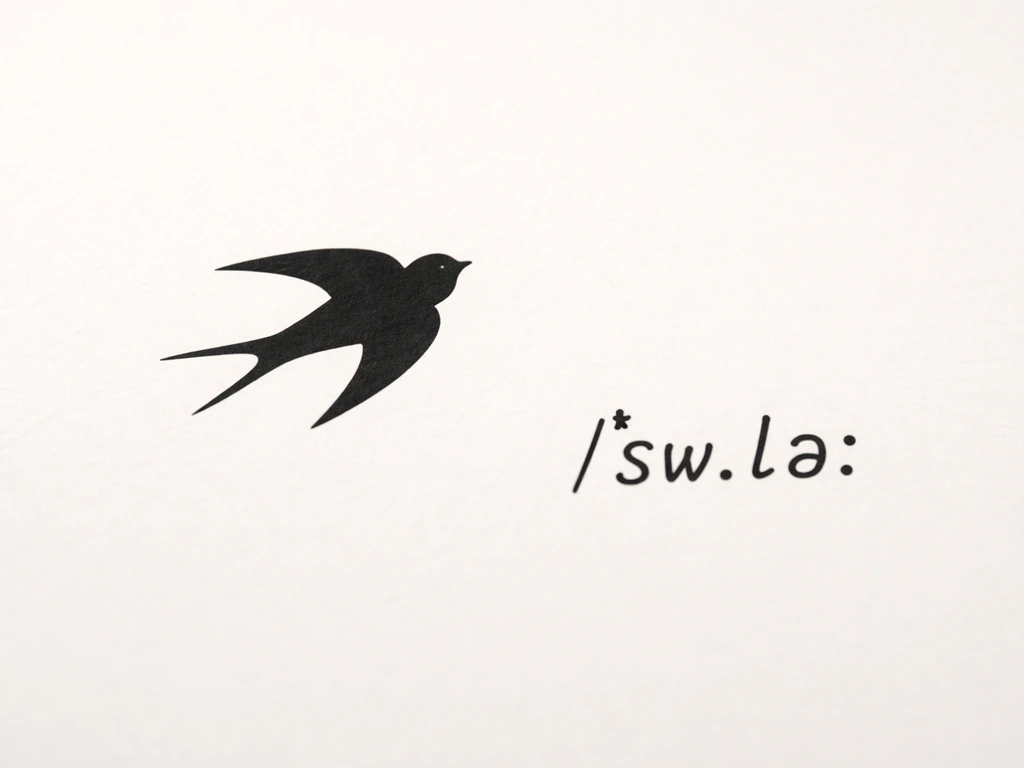
Pronounce 'swallow' (bird) vs 'swallow' (verb)
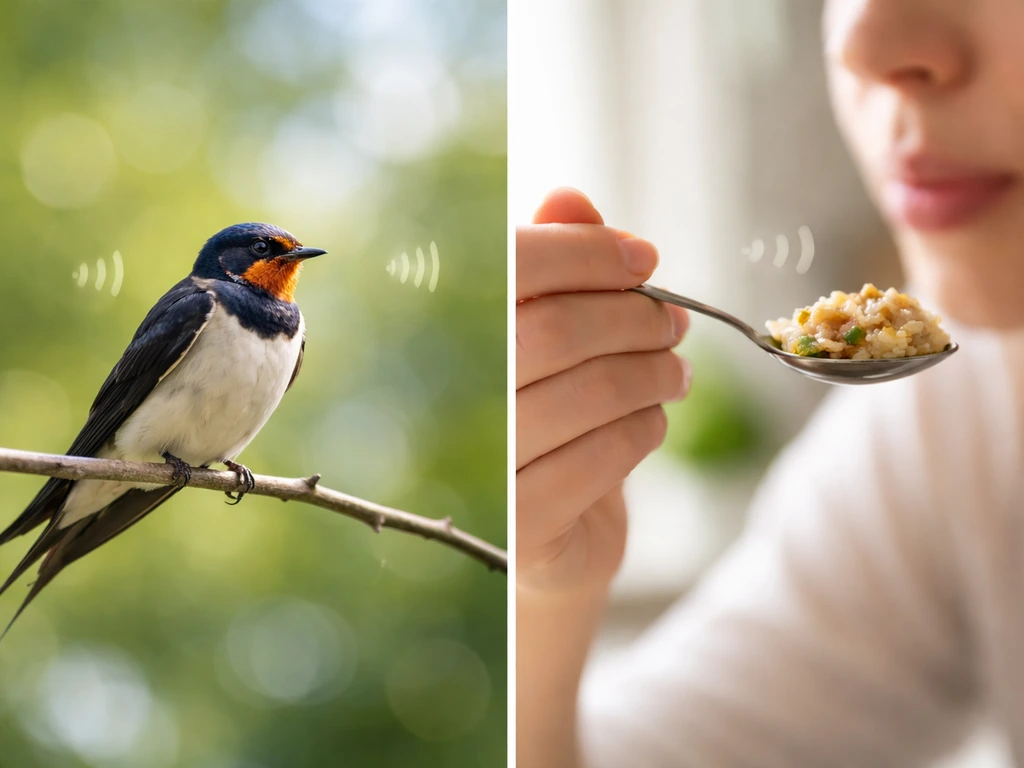
Here's something that trips people up: 'swallow' the bird and 'swallow' the action (as in swallowing your food) are spelled identically and pronounced virtually the same way. The Cambridge Dictionary gives the IPA for both as UK /ˈswɒl.əʊ/ and US /ˈswɑː.loʊ/, and Merriam-Webster's respelling for the verb is ˈswä-(ˌ)lō, which matches the noun. So no, you do not need to change how you say the word depending on whether you mean the bird or the act of ingesting something.
The difference between the two meanings is entirely contextual, not phonetic. 'I watched a swallow dart across the sky' versus 'I had to swallow the pill whole' use the same sounds. If you have been second-guessing yourself wondering whether the bird name carries a different stress or vowel, you can stop. Dictionaries from Cambridge, Oxford Learner's, and Merriam-Webster all confirm one shared pronunciation pattern for both noun and verb.
What does shift slightly is the vowel quality depending on your regional accent. British speakers use the short 'o' sound: SWOL-oh, with the first vowel sounding like the 'o' in 'lot.' American speakers open it up into SWAH-loh, with a broader 'ah' vowel like in 'father.' The two-syllable rhythm (SWOL-oh / SWAH-loh) stays the same across both.
How to pronounce 'bird' in this phrase
The word 'bird' is one syllable: /bɜːd/ in British English (like BURD, rhyming with 'heard' and 'word') and a similar rhotic /bɝːd/ in American English, where the 'r' colors the vowel more strongly. If you want more guidance, see how to pronounce bird in detail. Now that you know how to pronounce the word bird, you can combine it with swallow to say the full phrase confidently. BBC Learning English transcribes it as /bɜːd/ and Cambridge's Advanced Learner's Dictionary confirms the same IPA for UK English. Either way, the vowel is a mid-central sound, not a short 'i' (so avoid saying 'bid') and not a long 'ee' sound either.
In American speech, that 'r' in 'bird' gets pronounced quite prominently, giving it a slightly different character than the British version where the 'r' is silent and the vowel carries alone. If you are learning British pronunciation specifically, hold the /bɜː/ vowel steady and drop the 'r.' If you are going for American, let the 'r' roll naturally into the vowel: BURD with a clear 'r' coloring.
Full phrase pronunciation: 'swallow bird' step by step
Putting the two words together is straightforward. Here is how to build it:
- Say 'swallow' first: UK: SWOL-oh (two syllables, stress on SWOL) / US: SWAH-loh (two syllables, stress on SWAH).
- Say 'bird' right after: UK: BURD (rhymes with 'heard') / US: BURD with a stronger 'r' vowel.
- Combine them with a natural pause or linking: SWOL-oh BURD (UK) or SWAH-loh BURD (US).
- The main stress in the full phrase falls on the first syllable of 'swallow': SWOL-oh burd / SWAH-loh burd.
In IPA, the full phrase looks like this: UK /ˈswɒl.əʊ bɜːd/ and US /ˈswɑː.loʊ bɝːd/. The schwa (ə) in the second syllable of 'swallow' is the quiet, unstressed 'uh' sound that English speakers reduce naturally. It should never be heavy or emphasized.
One small note on the bird itself: 'swallow bird' refers broadly to any of the roughly 90 species in the family Hirundinidae, including familiar ones like the barn swallow (Hirundo rustica). Whether someone says 'barn swallow bird,' 'tree swallow,' or just 'swallow bird,' the pronunciation of the English word 'swallow' stays exactly the same. The species name in front changes, but the core word does not.
Common pronunciation mistakes and quick fixes
| Mistake | What it sounds like | Quick fix |
|---|---|---|
| Stressing the second syllable of 'swallow' | swol-OH instead of SWOL-oh | Stress the first syllable: SWOL is louder and longer than oh |
| Using a long 'ee' vowel in the second syllable | SWOL-ee or SWAH-lee | The second syllable is a schwa ('uh') or /əʊ/: SWOL-oh, not SWOL-ee |
| Pronouncing 'bird' as 'bid' or 'breed' | SWOL-oh BID / SWOL-oh BREED | The vowel in 'bird' is /bɜːd/ or /bɝːd/; rhyme it with 'heard' |
| Adding an extra syllable to 'swallow' | SWAL-oh-wuh (three syllables) | Keep it two syllables only: SWOL-oh |
| Dropping the final 'd' in 'bird' | SWOL-oh BUR (no 'd') | Finish the word cleanly: BURD with a soft 'd' at the end |
Does it change by dialect or speaking speed?
Yes, both dialect and speed shift how this phrase sounds in practice, though the underlying syllable count and stress pattern stay the same.
Dialect differences
The biggest split is the first vowel in 'swallow.' British English uses /ɒ/ (the short 'o' in 'lot'), so you get SWOL-oh. American English uses /ɑː/ (the broad 'ah' in 'father'), giving SWAH-loh. Australian and some other Southern Hemisphere accents sit close to the British pattern. For 'bird,' the main dialect split is rhoticity: American speakers pronounce the 'r' clearly, while British, Australian, and many other varieties do not. Neither pronunciation is wrong for the bird's name because it is just an ordinary English word with normal dialect variation.
Fast and casual speech
When you speed up, connected speech processes kick in. The schwa in 'swallow' can get even lighter, and the transition into 'bird' may involve linking: the final /oʊ/ or /əʊ/ of 'swallow' may flow directly into 'bird' without a full stop between words. You might also hear the second syllable of 'swallow' reduced to almost nothing: SWOL-uh BURD at a fast clip. This is normal English connected speech, not sloppy pronunciation. If you are aiming for clear, deliberate speech (say, for a presentation or teaching context), slow down slightly and give each syllable its full shape.
Quick practice tips and what to listen for
The best way to lock in a pronunciation is to hear it from a reliable source and then repeat it out loud multiple times. If you need the exact pronunciation of the plover bird itself, the best approach is to learn its common name in your dialect and then repeat it slowly before speeding up. Here are the most practical steps:
- Look up 'swallow' on Cambridge Dictionary or Merriam-Webster online. Both have audio buttons that play the word in UK and US accents. Listen to both and pick the one that matches your target accent.
- Rhyme-train each part separately. Rhyme 'swallow' with 'hollow' and 'follow' (UK: HOL-oh, FOL-oh / US: HAH-loh, FAH-loh). Rhyme 'bird' with 'heard,' 'word,' and 'herd' until the vowel feels automatic.
- Say the full phrase five times at a slow pace, then five times at a normal conversational pace. Notice whether your stress drifts to the second syllable; pull it back to the first.
- Record yourself on your phone and play it back. This catches second-syllable stress errors and dropped final consonants that you miss in real time.
- Watch bird documentaries or birdwatching YouTube videos featuring swallows. Native-speaker presenters say 'swallow' naturally and repeatedly, which gives you unconscious exposure to the rhythm.
- If you are already comfortable with other bird name pronunciations, compare: 'swallow' follows the same two-syllable, first-stress pattern as many common English bird names. The word 'bird' itself is covered more deeply in guides for related terms like how to pronounce 'grebe bird' or 'weaver bird,' where the /bɜːd/ vowel comes up in the same context.
The main thing to listen for when you hear a native speaker say 'swallow bird' is that confident drop after the first syllable: SWOL... then quickly oh burd. The word does not climb at the end. It settles. Once you hear that falling rhythm, it will click, and you will have it. If you're also wondering how to pronounce a wading bird, look for the specific name and stress pattern for that species falling rhythm. Weaver birds are pronounced differently from general bird words, so check the specific phonetics for “weaver bird” when you’re ready.
FAQ
If I say “swallow bird” as part of a longer phrase, does the pronunciation change?
In most cases you should still keep the same word form, stress on SWOL (or SWAH), and a single syllable for bird. If you add a modifier, such as “common swallow bird” or “swallow bird species,” keep “swallow” pronounced the same, then apply normal stress rules to the added words.
How do I avoid pronouncing “bird” with extra syllables?
If you are tempted to make “bird” two syllables, avoid that. English “bird” stays one crisp syllable, British /bɜːd/ and American /bɝːd/. A common mistake is saying “be-erd” (adding an extra vowel) when speaking quickly.
What should the unstressed middle sound in “swallow” feel like when I speak fast?
Say “swallow” with a light, reduced second syllable, the schwa sound (ə). In careful speech it is SWOL-oh (UK) or SWAH-loh (US), but at natural speed it often becomes close to SWOL-uh. Don’t try to make the schwa strong or full-length, or it will sound unnatural.
Which part of “swallow bird” changes between UK and US pronunciation?
British and American differ mostly in the first vowel of “swallow” (UK /ɒ/ versus US /ɑː/). Rhotic “r” in “bird” is mostly American, and British varieties typically drop it. So, if you copy the dialect label, you will get both parts right.
Do I need a different way to pronounce “swallow” depending on whether it is the verb or the bird word?
No, the meaning does not change the sounds. “Swallow bird” (the bird) and “swallow” meaning ingesting both use the same pronunciation pattern for the word “swallow,” so you do not switch stress or vowels based on context.
Is it normal if “swallow bird” sounds linked together when spoken quickly?
If you hear a native speaker link words, it is fine. You may notice the end vowel in “swallow” flowing into “bird,” and “əʊ” or “oʊ” may not sound like a separate, fully distinct chunk. For practice, start with a tiny pause, then remove the pause as you get comfortable.
How can I tell I am pronouncing “bird” with the wrong vowel?
Avoid saying “bid,” “bee(d),” or “bird” with a long ee vowel. The “bird” vowel is mid-central (British /ɜː/) and rhotic (American /ɝː/), so aim for a neutral mid sound rather than a front high sound.
Should I use careful syllable-by-syllable pronunciation or relaxed connected speech?
If your goal is clear presentation speech, keep the schwa in “swallow” audible and give each syllable its full shape. If your goal is everyday conversation, allow natural reduction, but still keep the main stress on the first syllable so it does not blur into something flat.
Is it okay to mix UK “swallow” and American “bird,” or should I pick one accent?
If you are learning for a specific accent, choose one target dialect and stick to it consistently. Mixing, for example UK “swallow” with American “bird” r-coloring, can make you understandable, but it will sound like a hybrid accent.
Does the schwa in “swallow” ever disappear completely when people speak quickly?
Yes. When you speed up, the second syllable of “swallow” may reduce to something like “-uh,” and the phrase may sound like “SWOL-uh BURD.” That reduction is connected speech, not a different spelling or a different stress pattern.
Next Article
How to Pronounce Turkey Bird: Syllables and Variants
Learn how to pronounce turkey bird with syllables, stress, and common variants for American vs British English usage.