Xeme is pronounced ZEEM, rhyming with "team" or "dream." It's one syllable, the X makes a Z sound, and the vowel is a long "ee." That's it. If you've been saying "eks-eem" or "zuh-mee," you're not alone, but the correct version is simply ZEEM.
How to Pronounce Xeme Bird: Say It Like This

James Ridgley
13 May 2026
Which bird is the xeme, exactly?
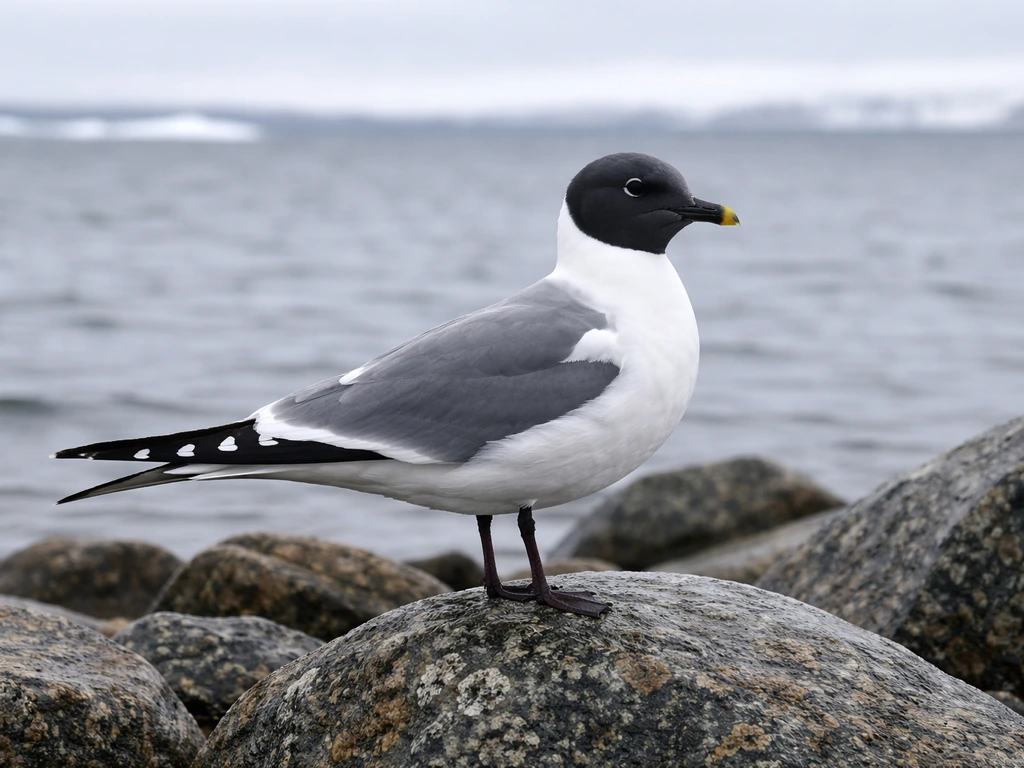
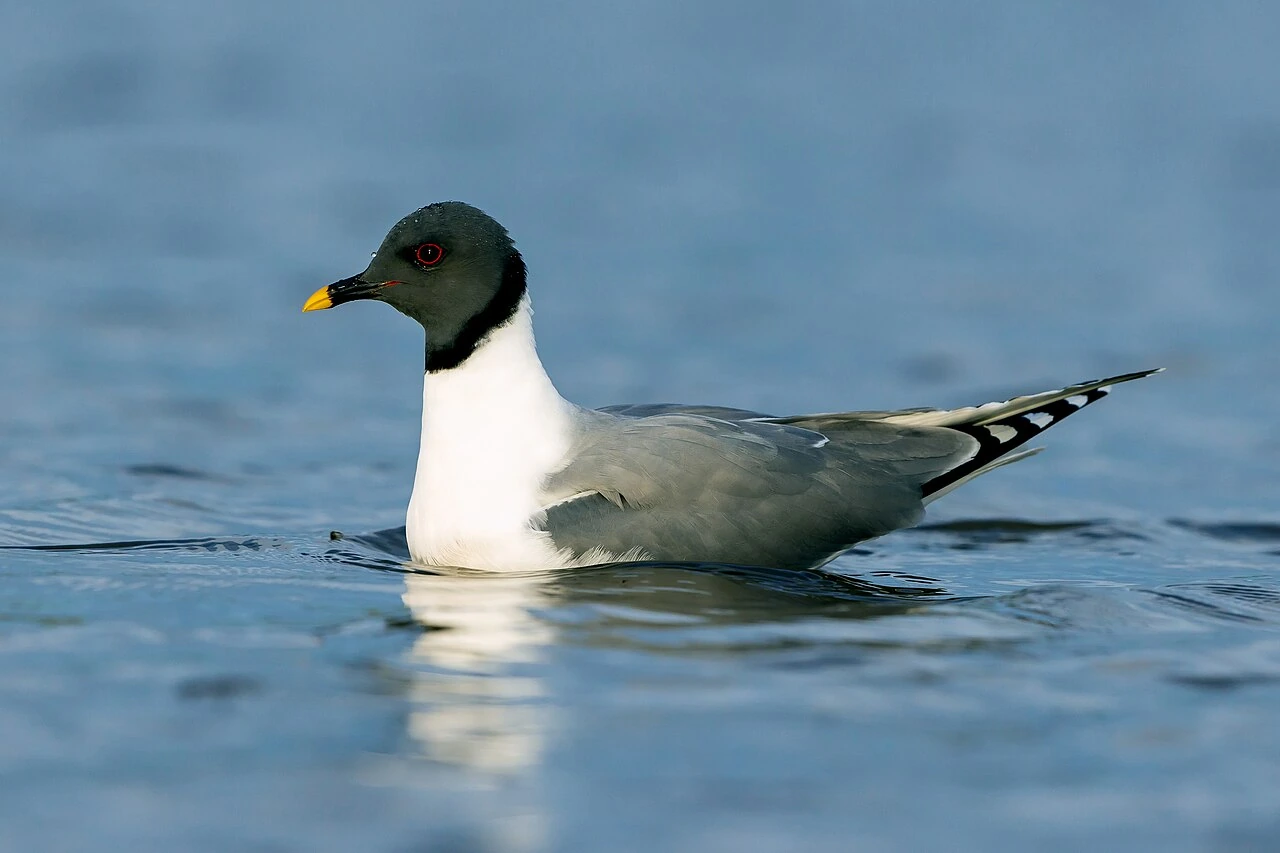
Xeme is a historical and variant common name for Sabine's gull, blank" rel="noopener noreferrer">the species known scientifically as Xema sabini. It's not a separate species or a regional subspecies. The name "xeme" is essentially a shorthand pulled from the genus name Xema, and it shows up in older field references, iNaturalist synonym lists, and word puzzle databases alongside "Fork-tailed gull" as an alternate name for the same bird. So if you've seen "xeme" in a crossword, a vintage bird guide, or a species list, it's Sabine's gull every time.
Sabine's gull is a striking Arctic-breeding seabird with a sharply forked tail and a bold black-white-gray wing pattern. It winters at sea, making it a prize sighting for pelagic birders. The genus Xema was created specifically for this species, which is why the common-name variant "xeme" maps so cleanly back to it.
Syllables and stress in English
Xeme is a single syllable. There is no second syllable to stress, no hidden vowel at the end, and no soft "e" lurking after the "m." The word runs: Z + long-EE + M. One beat, start to finish. Webster's dictionary renders it as "zēm," which is the traditional way of showing that long "ee" vowel. You say the whole word in one motion, the way you'd say "team" or "scheme."
Phonetic guides: IPA and easy spellings
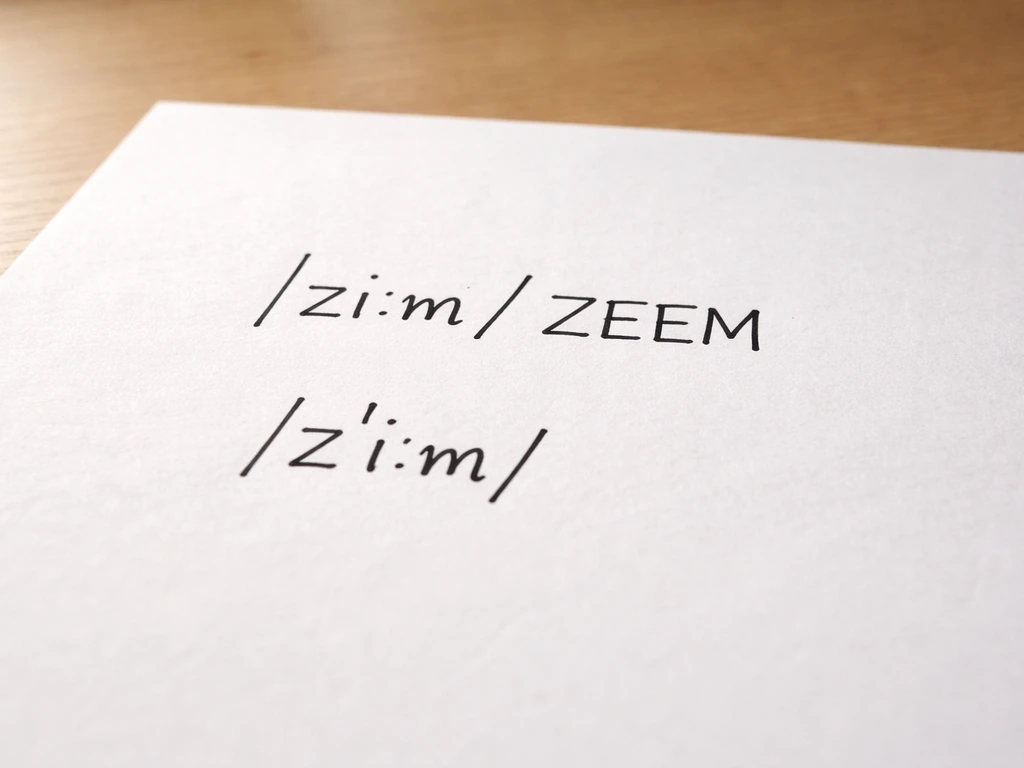
| Format | Pronunciation |
|---|---|
| IPA (standard) | /ziːm/ |
| IPA with stress marker | /zˈiːm/ |
| Webster-style | zēm |
| Easy phonetic spelling | ZEEM |
| Rhymes with | team, dream, scheme, seem |
The IPA /ziːm/ tells you everything: the /z/ is the voiced buzzing Z sound, the /iː/ is the long "ee" vowel (same as in "feet" or "keen"), and the final /m/ closes it cleanly. No schwa, no trailing vowel, no second syllable. Just ZEEM.
Common mispronunciations and how to fix them
There are a few predictable ways people get this wrong, almost all of them caused by the unusual letter combination. Here's what to watch for:
- "EKS-eem" or "EKS-mee": treating the X like the English letter name (as in the alphabet: X = eks). Wrong here. In Xema and xeme, X acts like a Z. Say ZEEM, not EKS-eem.
- "ZEH-mee" or "ZAY-mee": adding a second syllable that doesn't exist. The word ends with the "m" sound, not with a trailing vowel.
- "zɛm" (short vowel): using a short "eh" instead of the long "ee." The IPA /iː/ is a sustained, clear "ee" sound. If it sounds like "gem" with a Z, you've gone too short.
- "ZAY-muh": this one comes from Merriam-Webster's entry for the genus name Xema (/ˈzēmə/), which is two syllables because it's a Latin taxonomic word with a Latin ending. The common-name form "xeme" drops that trailing vowel entirely, leaving you with the one-syllable ZEEM.
The quickest fix for all of these: just say the word "team" and swap the T for a Z. You now have ZEEM. That's xeme. If you're specifically wondering how to pronounce mynah bird, focus on the common sounds used for that species name instead of the spelling patterns of xeme That's xeme..
Where the word comes from and how other languages handle it
"Xeme" is an English adaptation of the New Latin genus name Xema, which was coined in ornithological taxonomy. Because it's a taxonomic Latinism, the pronunciation in English follows the conventions of scientific nomenclature, where X at the start of a word typically gets voiced as Z. This is the same pattern you see in Xema itself: /ˈzēmə/ in Merriam-Webster, not "eks-ema."
In most European languages, X would be treated differently. Spanish speakers would render it closer to a guttural "heh-meh" (since X often sounds like the English "h" in Spanish). French speakers might say something closer to "gzem" or approximate an "ks" cluster. But since "xeme" as a bird name is essentially an English-language usage, the English convention, Z + long-EE + M, is the one that matters for practical use. If you're discussing this bird in a Spanish or French ornithological context, the species will almost certainly be referred to as Sabine's gull or its local equivalent rather than "xeme."
How to verify the spelling and pronunciation
If you want to double-check any of this yourself, here's the fastest path. Start with Wiktionary's entry for "xeme," which gives you the IPA /ziːm/ directly alongside the definition (Sabine's gull, Xema sabini). Then cross-reference with Merriam-Webster's entry for the genus "Xema" (pronounced /ˈzēmə/) to see where the word comes from. Finally, look up Sabine's Gull on iNaturalist, which explicitly lists "Xeme" as a synonym under the species Xema sabini. Those three sources together give you the full picture: correct spelling, confirmed species identity, and pronunciation backing.
For audio confirmation, Xeno-canto has recordings of Sabine's gull (Xema sabini), which lets you hear the bird itself once you've confirmed the name. Animalia.bio also references Xeno-canto material for this species under the xeme label. Neither of these replaces a pronunciation dictionary, but they're useful for confirming you've got the right bird before heading into the field or writing the name down.
Say it out loud: a quick practice method
Because xeme is one syllable, the practice drill is very short. Run through these steps once and you'll have it locked in:
- Say the word "team" out loud. Notice the long "ee" vowel and the clean "m" at the end.
- Now replace the T with a Z: "zeem." That's xeme. Say it three times normally.
- Check yourself: does it rhyme with "dream"? Yes? You've got it.
- Now try the mnemonic: "Xeme sounds like 'zeem,' like a seabird zipping over the sea." The Z, the long vowel, the clean finish. One beat, done.
- If you keep slipping back to "eks" sounds, remind yourself: in bird taxonomy, X at the start usually sounds like Z. Think Xema, Xenops, Xeno-canto: all start with a Z sound in English pronunciation.
A simple mnemonic that sticks: "The xeme bird zooms and zips" (ZEEM rhymes with the Z-sounds in zooms). It anchors both the Z pronunciation and the single-syllable rhythm at the same time.
Putting it all together
Xeme is Sabine's gull, it's pronounced ZEEM (/ziːm/), it's one syllable, and the X is a Z sound. The word comes from the genus name Xema, which Merriam-Webster confirms is pronounced /ˈzēmə/, a two-syllable Latin form that loses its trailing vowel when Anglicized into the common-name "xeme." The most reliable sources to check are Wiktionary (for IPA), Merriam-Webster (for the genus form), and iNaturalist (for species identity confirmation). If you enjoy tracking down tricky bird-name pronunciations, the nene bird and the hoopoe follow similarly counterintuitive patterns worth exploring. The hoopoe also has a distinct, easy-to-miss pronunciation pattern, so it helps to practice it with a quick IPA check. You can also use the same approach for the nene bird, including checking a pronunciation dictionary and reputable bird guides.
FAQ
Is “xeme” pronounced any differently when people refer to it in a field list or a species checklist?
In English birding usage, it stays ZEEM (/ziːm/). Checklist formatting or capitalization (like Xeme) does not change the sound, since it is treated as a single common-name unit, not separate letters.
How should I pronounce it if I say it quickly while talking, like “spot a xeme”?
Keep it one beat: ZEEM. Avoid inserting an extra vowel or hesitation, such as “zuh-” at the start, and don’t trail off after the final M. The word should end firmly like “team.”
What’s the most common mistake with “xeme,” and how do I correct it on the spot?
The most common error is adding a second syllable (for example, “eks-eem” or “zuh-mee”). Correct by repeating the cue “team,” then replacing T with Z (ZEEM), once slowly, then at normal speed.
Do I pronounce the “e” at the end as a soft “uh” (schwa)?
No. There is no trailing schwa sound. The final letter is M, and the vowel is the long EE sound, so you end on ZEEM, not “zee-muh.”
If I see “Xema” (the genus) in the same context, is the pronunciation the same as “xeme”?
Related, but not identical. “Xema” is typically said as /ˈzēmə/ (two syllables). The common-name “xeme” is Anglicized down to one syllable, ZEEM (/ziːm/).
How should I handle the pronunciation if I’m reading it letter by letter for the first time?
Don’t do a letter-by-letter read. The practical rule for this bird name is to think “Z + long EE + M,” and use “team” as the sound anchor.
Is “xeme” ever pronounced like “ks” because it starts with X?
In standard English usage for this bird name, no. The X in “xeme” follows the English convention for this specific Latin-derived name, sounding like a voiced Z.
What should I do if a non-English birder pronounces “xeme” differently?
Treat it as an accent or language convention issue. For clear communication in English, default to ZEEM (/ziːm/) and, if needed, say “Sabine’s gull” after the word.
If I’m writing the name from memory, is spelling like “Xime” or “Xeme” ever interchangeable?
Not reliably. The form used as the common-name variant is “xeme” (tied to the genus Xema). If you are unsure, use “Sabine’s gull” to avoid ambiguity in reports or logs.
Next Article
What Is a Myna Bird Called in English? Names Explained
Learn what myna means in English, common-name spellings and which myna species (hill, Indian/common) it refers to.