The best answer for the crossword clue 'common farmyard bird' at 7 letters is CHICKEN. It matches the letter count exactly, it's the broadest everyday term for the domestic farmyard fowl, and it appears in multiple crossword databases directly paired with this exact clue phrasing. If your crossing letters spell out C-H-I-C-K-E-N, you're done. If one or two crossings don't quite fit, read on, there's one strong runner-up and a few tricks to confirm whichever answer belongs in your grid.
Common Farmyard Bird Crossword Clue 7 Letters Answers

James Ridgley
28 May 2026
What 'common farmyard bird' really means in crossword language
Crossword setters use 'common' in two ways: to mean 'widespread' and to signal that they want the generic, species-level term rather than a gendered or regional variant. A 'common farmyard bird' clue is deliberately broad, it's not asking for the male of the species or the egg-laying female specifically. That's a strong hint that the answer is a catch-all name for the bird, not a more specific label like hen or rooster. 'Farmyard' then narrows the field to domesticated birds kept on working farms rather than wild species. Put those two signals together and you're pointed squarely at the chicken, arguably the most universally domesticated bird on the planet, raised on every continent for both meat and eggs.
It's also worth knowing that crossword databases treat 'farmyard bird' and 'barnyard bird' almost interchangeably, and both consistently surface CHICKEN and ROOSTER as 7-letter answers. For the closely related clue “barnyard bird”, YourDictionary Word Finder lists CHICKEN (7 letters) among the matching answers. The clue word 'common' tips the scales toward CHICKEN because rooster is gender-specific (male only), while chicken covers all ages and sexes of the species. That's exactly the kind of naming nuance crossword setters rely on.
The most likely 7-letter answers and why they fit
Here are the two serious candidates at 7 letters, with a plain explanation of how each matches the clue:
| Answer | Letters | Fits 'common'? | Fits 'farmyard bird'? | Notes |
|---|---|---|---|---|
| CHICKEN | 7 | Yes — generic species term | Yes — the primary domestic fowl worldwide | Top answer in crossword databases for this exact clue |
| ROOSTER | 7 | Partial — it's common but gender-specific | Yes — found on farms, but only the male | Appears under 'barnyard bird' clues; less likely when clue says 'common' |
CHICKEN, the primary answer
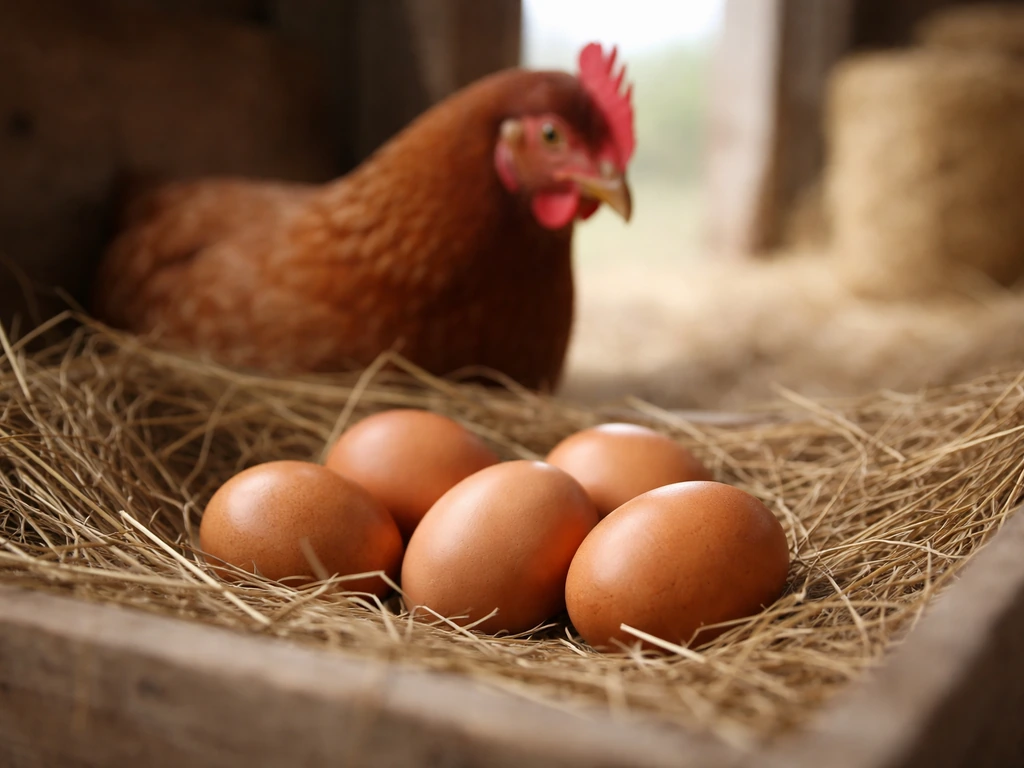
CHICKEN (C-H-I-C-K-E-N) is the standard English name for Gallus gallus domesticus, the domestic fowl descended from the red junglefowl. Encyclopaedia Britannica describes it as one of the most widely domesticated animals in human history, kept globally for meat and eggs, which is exactly what 'common' signals in this clue. The word has been in English since at least the Old English period, and it functions as both the species-level name and the everyday term most people use regardless of the bird's sex or age. That universality is why crossword setters reach for it when they write a clue this broad.
ROOSTER, the runner-up
ROOSTER is a 7-letter word that fits 'farmyard bird' perfectly but stumbles slightly on 'common' because it refers specifically to an adult male chicken. Crossword databases do list ROOSTER under barnyard and farmyard bird clues, so it's a real possibility, especially if your crossing letters are pushing you away from CHICKEN. If the clue had said 'farmyard male' or 'crowing bird,' ROOSTER would be the stronger pick. Without that gender signal, CHICKEN leads.
Using crossing letters to confirm your answer
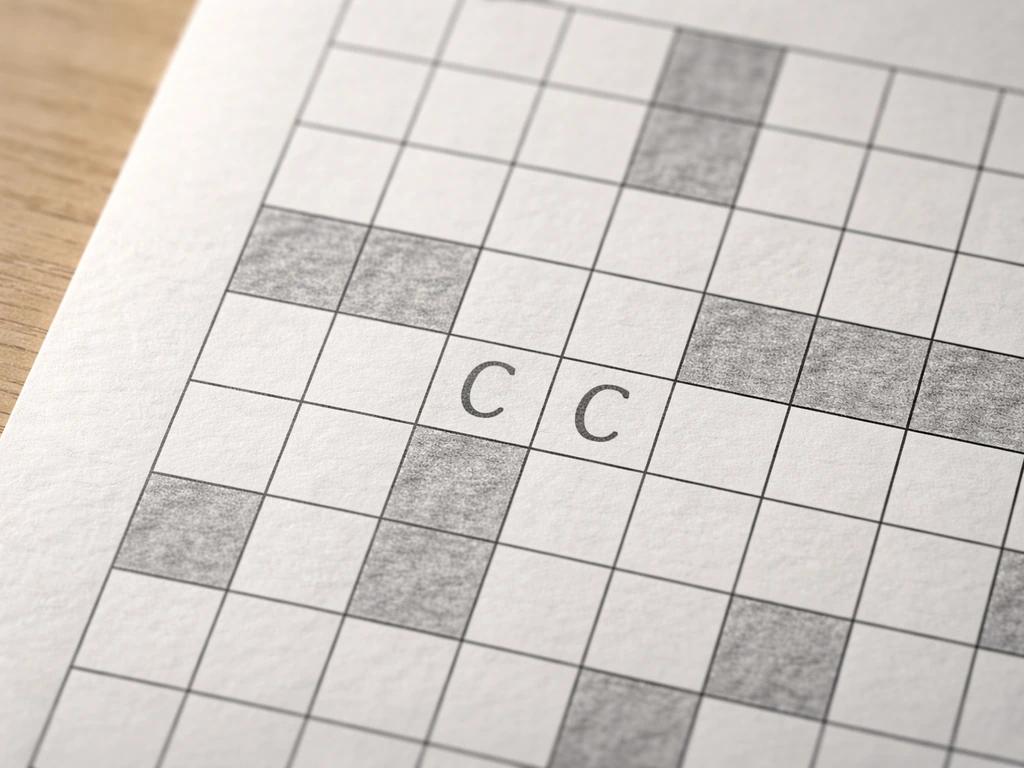
Letter patterns are your fastest confirmation tool. Here's how to use them for both candidates:
- CHICKEN: C(1) H(2) I(3) C(4) K(5) E(6) N(7). The double-C pattern (positions 1 and 4) is distinctive — if your grid shows a C in position 1 and another C in position 4, CHICKEN is almost certain.
- ROOSTER: R(1) O(2) O(3) S(4) T(5) E(6) R(7). The double-O in positions 2 and 3 is equally distinctive. If you see OO early in the answer, switch your attention to ROOSTER.
- Check the final letter first if you have it: both end in different letters (N vs R), so a confirmed last letter eliminates one candidate immediately.
- Middle letters matter too: position 5 is K in CHICKEN and T in ROOSTER — two very different letters that most crossing words will resolve quickly.
- If the clue is in a plural context (e.g., '7 letters, last letter S'), consider CHICKENS at 8 letters — that would mean the clue length is actually 8, not 7. Double-check the grid squares.
Bird naming details that actually matter for crossword accuracy
Knowing how 'chicken' works as a name, not just what the bird is, helps you avoid the most common solver mistakes. Here's what's worth keeping in mind:
- Spelling: CHICKEN ends in -CKEN, not -KEN or -KIN. The stress falls on the first syllable: CHICK-en (IPA: /ˈtʃɪkɪn/). Misspelling it as CHIKEN or CHICKIN is the most common error.
- Common vs formal name: In crosswords, 'chicken' is always the common name. The formal species name is Gallus gallus domesticus — that never appears in standard crosswords.
- Gender-specific synonyms to watch for: HEN means adult female chicken (3 letters), ROOSTER or COCK means adult male (6 or 7 letters), CHICK means a baby chicken (5 letters). Clues that specify gender will use these terms instead.
- Regional variation: In British English, 'cock' is standard for a male chicken; American English prefers 'rooster.' If the publication is British, a clue hinting at a male farmyard bird might yield ROOSTER or COCKEREL (8 letters) rather than a 7-letter answer.
- Plural form: The standard plural is CHICKENS (8 letters), so if your grid has 7 squares, you want the singular CHICKEN. This is a common trap when solvers assume a collective answer.
What to try if neither CHICKEN nor ROOSTER fits
If your crossing letters rule out both main candidates, it's time to widen the farmyard. Other domesticated birds kept on farms do exist at 7 letters, and crossword setters occasionally reach for them when they want a fresh angle on a familiar clue type.
- PEACOCK (7 letters): A large domesticated and ornamental bird that does appear on some farms and estates. Less 'common' than a chicken in everyday language, but crossword setters do use it. Pattern: P-E-A-C-O-C-K.
- GOBBLER (7 letters): An informal name for a male turkey. It's a stretch for 'common farmyard bird' but worth knowing if crossings give you G and R at either end.
- BANTAM + variants: Bantam chickens are a recognized breed, but BANTAM is only 6 letters and not a species-level name crossword setters typically use for a 'common' bird clue.
- MALLARD (7 letters): The most common duck, and ducks are definitely farmyard birds. Pattern: M-A-L-L-A-R-D. Worth considering if your clue context suggests waterfowl — though 'common farmyard bird' more typically points to poultry than ducks.
- POULTRY (7 letters): This is a category word, not a bird name, but a tricky setter might use it. It means domesticated fowl collectively. If the clue is more abstract or collective in tone, keep it in mind.
If you're searching a broader set of farmyard or rural bird clues, related clue types like 'common garden bird,' 'common British bird,' or 'common European bird' follow similar logic but pull from different bird pools, garden and British clues often yield thrushes, robins, or sparrows rather than poultry. A common European bird crossword clue can follow the same kind of broad, generic wordplay that helps solvers land on CHICKEN for “common” farmyard entries.
Common garden bird crossword clues usually still point you toward the same core answers, just with a different bird category. If you specifically see the common British bird crossword clue, the same breadth usually points you toward CHICKEN. Similarly, clues about 'what comes from a farm bird' shift the answer from the bird itself to its product (egg, feather, and so on), which is a completely different solving path.
If you see a clue like "what comes from a farm bird," the answer usually refers to the product, like an egg, rather than the bird itself.
Answers to the questions solvers ask most often
Could the answer be HEN instead of CHICKEN?
HEN is only 3 letters, so it can't fill a 7-letter answer. It's also gender-specific (female chicken), which conflicts with the 'common' signal in the clue. That said, HEN is one of the most common short answers in crosswords for farmyard bird clues, if you ever see a 3-letter farmyard bird clue, HEN is your first guess. It's also worth knowing that 'hen' is sometimes used for the female of other species: a female duck, turkey, or pheasant can all be called a hen, which occasionally creates clue ambiguity.
What about GOOSE or DUCK?
GOOSE is 5 letters and DUCK is 4 letters, neither fits a 7-letter answer. However, if you're solving a variant where the clue is about a farmyard bird at a different letter count, these are strong candidates. GEESE (5 letters) is the plural of goose, and DUCKS (5 letters) is the duck plural. None of these reach 7 letters on their own without a compound form or modifier.
Could CHICKEN be abbreviated or hyphenated in the grid?
Standard crosswords don't abbreviate animal names, and CHICKEN doesn't use a hyphen. What you see is what you fill: seven consecutive squares, C-H-I-C-K-E-N, no spaces or punctuation. If your grid somehow shows 8 squares for this clue, double-check whether the setter intended CHICKENS (the plural) or whether a crossing word is eating into a shared square.
Is ROOSTER spelled correctly, could it be ROOSTAR or ROOSER?
ROOSTER is the only correct English spelling. It comes from 'roost' (where birds perch to sleep) plus the agent suffix '-er,' meaning 'one who roosts.' Common misspellings include ROOSTAR and ROOSER, both of which are wrong. The pronunciation is ROO-ster (/ˈruːstər/), with a long OO sound and stress on the first syllable. If a crossing letter puts anything other than E in position 6, ROOSTER is ruled out.
The fast version: a quick-reference checklist
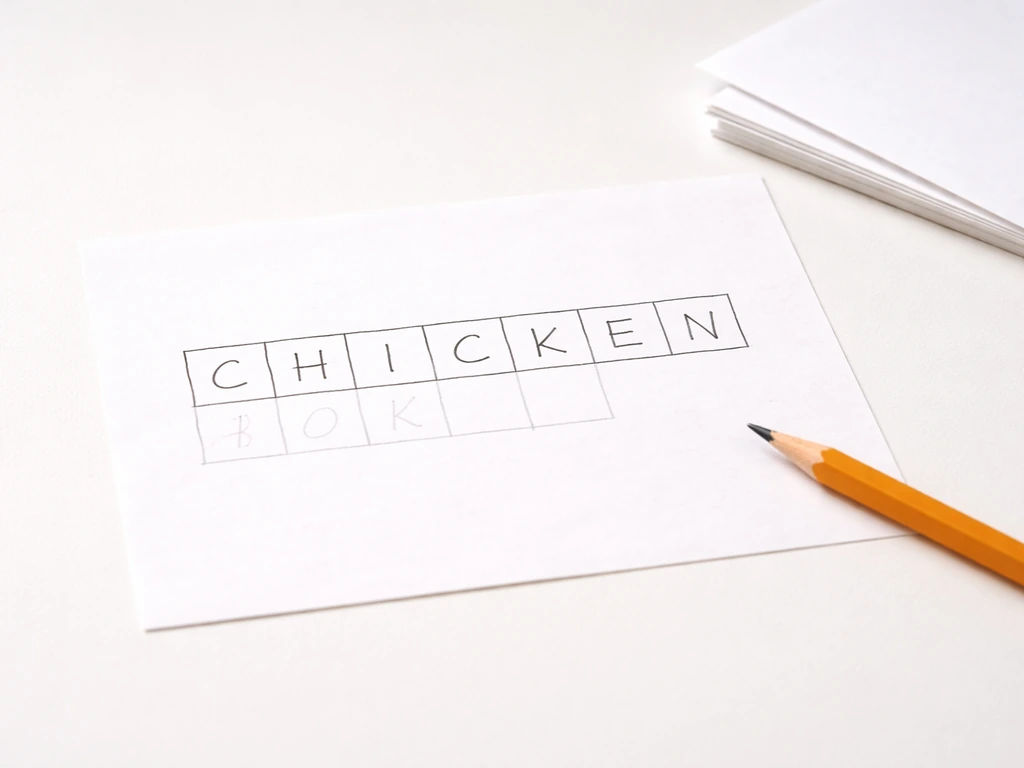
- Count your squares — confirm you actually have 7, not 6 or 8.
- Try CHICKEN first: C-H-I-C-K-E-N. Check it against every crossing word you already have filled.
- If a crossing letter blocks CHICKEN, try ROOSTER: R-O-O-S-T-E-R.
- If both are blocked, look at PEACOCK or MALLARD as outside-the-box 7-letter farmyard birds.
- When you're stuck, focus on the most distinctive letters: the double-C in CHICKEN (positions 1 and 4) or the double-O in ROOSTER (positions 2 and 3) will usually be resolved by crossing words quickly.
- If the clue has a gender hint you missed (crowing, male, cock of the walk), lean toward ROOSTER. If no gender hint, stick with CHICKEN.
FAQ
If the crossword has 7 letters but the crossings leave CHICKEN and ROOSTER both possible, how do I choose quickly?
Use the clue word “common” as the tie-breaker. If crossings allow both but nothing else in the grid suggests gender, pick CHICKEN because it matches the generic, species-level reading. Only choose ROOSTER if you see other letters that force an adult-male framing (for example, crossings that strongly fit ROOSTER’s pattern but conflict with CHICKEN’s later letters).
What if my answer length looks right but the grid shows an 8-squared slot for the clue?
Recheck whether the entry might be plural (CHICKENS) or whether the crossword is sharing squares with the across and down answers. Look for a split where one square might be part of the neighboring word, or confirm the numbering and direction before committing to CHICKEN.
Can “common farmyard bird” ever mean something other than a chicken, like a product or plural?
Yes, if the clue style changes. If the wording were “common farmyard bird’s product” or “what comes from a farm bird,” the answer usually becomes EGG rather than the bird itself. For plain “common farmyard bird” at 7 letters, CHICKEN is the intended bird, not the product.
Is HEN ever a valid answer for this clue, even though it is only 3 letters?
Not for a 7-letter slot. HEN is only relevant when the clue specifies a shorter answer length. Also, “common” in this clue points away from gendered wording, so even at different lengths HEN is typically not the cleanest match.
Could the answer be a different farm bird like DUCK or GOOSE if the crossings don’t fit CHICKEN or ROOSTER?
It is possible but less common. For 7 letters, you would usually need a less generic or less standard setter choice. Most “common farmyard bird” clues still converge on CHICKEN or ROOSTER, so if neither fits, the issue is often a misread crossing or a plural/spacing mistake rather than a completely different bird.
What are the most common spelling mistakes that lead to wrong answers?
For ROOSTER, the frequent wrong forms are ROOSER and ROOSTAR. For CHICKEN, watch for accidental spacing or punctuation, setters typically expect seven consecutive letters with no hyphen or extra character. If your pattern forces ROOSTER, keep the exact spelling ROOSTER.
How can pronunciation or word origin help if I’m stuck between ROOSTER and CHICKEN?
Pronunciation rarely helps directly in the grid, but word-origin logic can. ROOSTER is the adult-male term, while CHICKEN is generic across ages and sexes. If your clue lacks any adult-male indicator, that absence is your signal to prefer CHICKEN.
My crossing letter in position 6 doesn’t match ROOSTER, what then?
Use the grid to test CHICKEN next. ROOSTER has a specific letter in the sixth position. If that letter is incompatible with your crossing constraints, ROOSTER is ruled out immediately, leaving CHICKEN as the default if its pattern still fits.
If I see “farmyard” and “barnyard” in other puzzles, should I treat the clue logic as identical here?
Mostly yes. When the wording is broadly “(common) farmyard/barnyard bird” with no gender cue, setters usually keep the same core pool, CHICKEN leading and ROOSTER as the main gender-specific alternative. If the clue adds a gender cue, like male or crowing, the balance shifts toward ROOSTER.
Next Article
Common European Bird Crossword Clue: Answer Guide
Solve the common European bird crossword clue with candidate species, letter-count tips, and naming spelling checks for