
The 4-letter answer to 'limbless prey for a bird' is almost certainly WORM. Worm-eating warblers (as described by Cornell Lab of Ornithology’s All About Birds) eat mostly caterpillars and grubs rather than earthworms, matching the “worm-eating” name with a specific diet.
Limbless prey for a bird 4 letters meaning

James Ridgley
6 May 2026
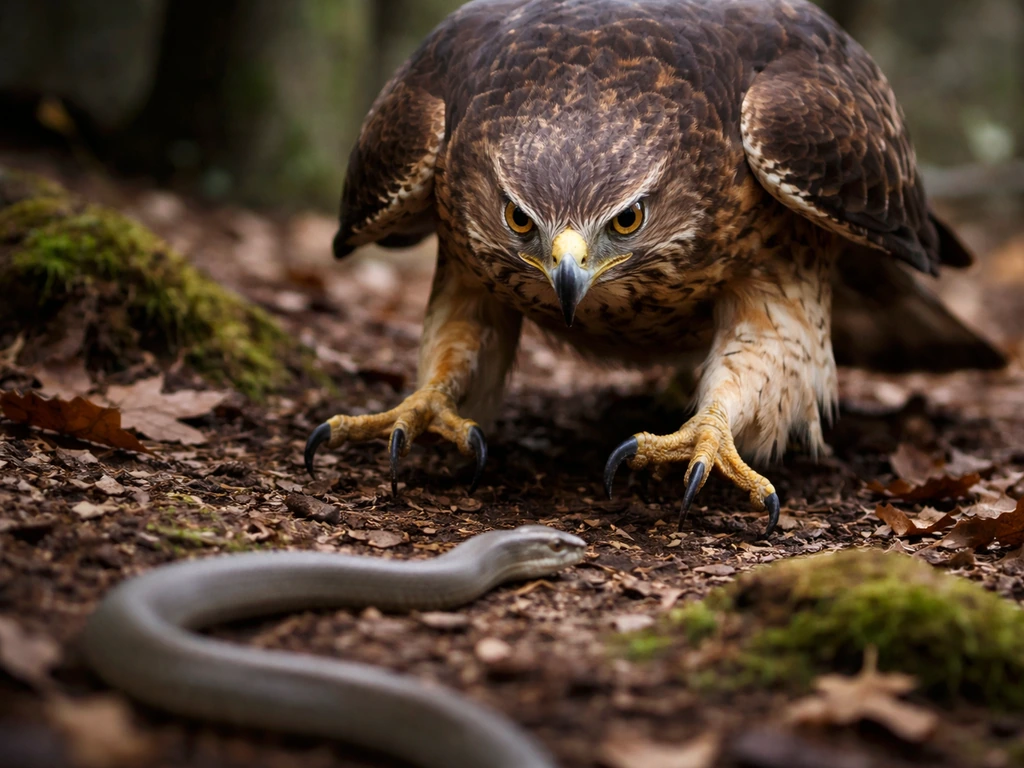
In wordplay and terminology puzzles, you may also see a short prefix meaning bird or flight, typically three letters long prefix meaning bird or flight 3 letters. That's the word that fits the letter count, matches what birds famously hunt and eat, and turns up consistently in crossword databases alongside SNAKE as the two leading answers for this clue type. If your grid gives you a W in the first position or an M at the end, you're done.
If not, keep reading, because there are a couple of other solid candidates worth checking.
Likely 4-letter answer patterns for 'limbless prey for a bird'
Crossword databases that track this exact clue report two answers, and one of them is specifically labeled as 4 letters. The two main contenders puzzle constructors reach for are WORM and SNAKE. SNAKE is 5 letters, which rules it out the moment the grid says 4. WORM is 4 letters and describes a legless, limbless creature that birds (especially robins, thrushes, and blackbirds) hunt constantly.
Earthworms are invertebrates, and the National Wildlife Federation’s Wildlife Guide explains them in detail, including their habitat and ecological role earthworms are a type of invertebrate. That makes WORM the cleanest fit for a 4-letter solution.
If the clue is appearing on a platform like LinkedIn's daily puzzle, the answer pattern is the same, and WORM remains the top pick.
| Word | Letters | Limbless? | Common bird prey? | Fits 4-letter grid? |
|---|---|---|---|---|
| WORM | 4 | Yes | Yes (robins, thrushes, starlings) | Yes |
| SNAKE | 5 | Yes | Yes (hawks, eagles, herons) | No |
| GRUB | 4 | Yes (larva) | Yes | Possible alternate |
| EEL | 3 | Yes | Yes (herons, ospreys) | No |
Meaning and common clues used in word puzzles
Puzzle clues work in a few different ways, and knowing which type you're looking at helps you verify your answer with confidence. This particular clue, 'limbless prey for a bird,' is a straightforward definition clue. If you saw this clue on LinkedIn, it is typically using the same straightforward 4-letter definition approach LinkedIn's daily puzzle. It's not cryptic (no wordplay, hidden words, or anagram signals), and it's not a pure synonym swap.
It's describing a thing: something without limbs that a bird hunts. The phrase 'for a bird' is doing two jobs here. It narrows the prey to something birds specifically eat, and it signals that the answer lives in bird-world vocabulary, not marine biology or herpetology more broadly. It narrows the prey to something birds specifically eat, and it signals that the answer lives in bird-world vocabulary, not marine biology or herpetology more broadly.
The prefix meaning bird crossword clue often depends on knowing which bird-related terms fit the pattern, just like here bird-world vocabulary.
Definition clues like this one reward you for thinking about real-world behavior rather than abstract wordplay. Ask yourself: what does a bird actually catch and eat that has no legs or arms? That question almost always lands on worms first, then snakes, then grubs or larvae. The letter count is the tiebreaker. With 4 letters confirmed, WORM wins outright.
Bird-friendly limbless food: worms, snakes, eels, and what fits 4 letters
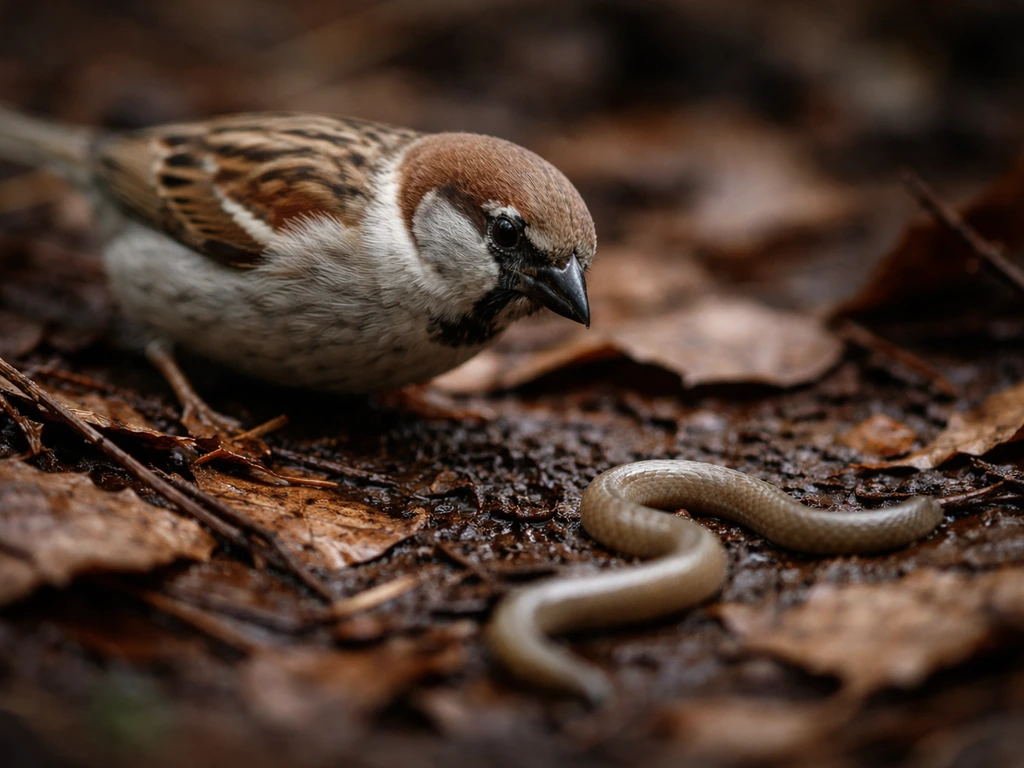
Birds eat a surprisingly wide range of limbless creatures, but not all of them squeeze into a 4-letter answer. Here's how the main candidates stack up:
- WORM (4 letters): Earthworms are one of the most iconic bird foods in English-speaking culture. The early bird gets the worm. Robins, starlings, blackbirds, and thrushes all pull worms from soil. This is your answer if the grid needs exactly 4 letters.
- SNAKE (5 letters): Hawks, eagles, secretary birds, and herons all eat snakes. The clue fits perfectly in meaning, but SNAKE is 5 letters and will not work in a 4-letter grid.
- EEL (3 letters): Herons and ospreys hunt eels. Limbless, aquatic, genuinely bird prey, but only 3 letters, which rules it out.
- GRUB (4 letters): A grub is a larval insect, technically limbless in the sense that it has no developed limbs visible to the naked eye, and birds eat them constantly. This is a possible alternate if your crossing letters don't match WORM.
- SLUG (4 letters): Thrushes eat slugs. Slugs are limbless. This is a less common answer but worth flagging as a 4-letter backup.
How to confirm the spelling and nail the right 4-letter word
Spelling verification for a puzzle answer is really about two things: matching your crossing letters and confirming the standard English spelling. WORM is W-O-R-M, full stop. There are no accepted alternate spellings in standard English. You might occasionally see 'wyrm' used in fantasy or archaic contexts (it originally referred to a dragon or serpent in Old English), but no puzzle editor is going to use 'wyrm' as the intended answer for a contemporary crossword or LinkedIn clue. Stick with WORM.
To confirm against your grid, check each crossing letter position. If position 1 is blank or W, position 2 is blank or O, position 3 is blank or R, and position 4 is blank or M, you're locked in. If any crossing letter contradicts WORM, jump to GRUB or SLUG and run the same check. If none of the 4-letter options fit, revisit whether the grid length is definitely 4, because SNAKE at 5 letters is the single most common answer for the limbless-bird-prey clue in databases.
Pronunciation and spelling guide for the key terms
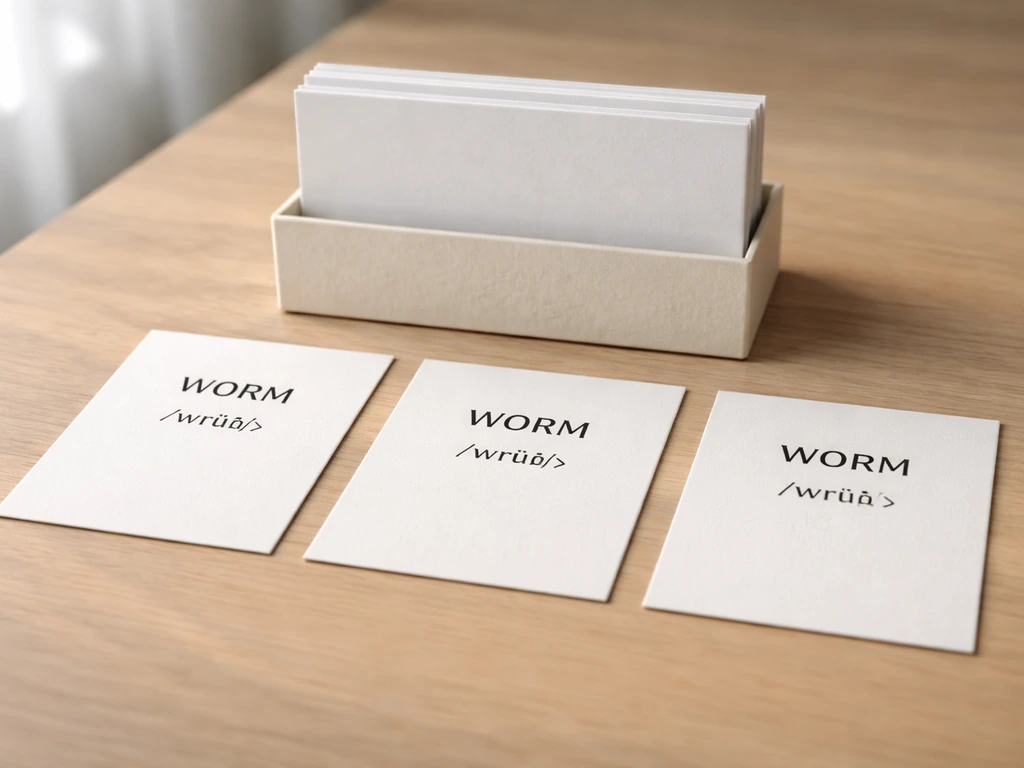
Since this site is rooted in bird naming and language, here's a quick pronunciation rundown for the terms most likely to appear in your puzzle answer or surrounding clues:
| Word | Pronunciation (phonetic) | IPA | Common misspelling to avoid |
|---|---|---|---|
| WORM | WURM | /wɜːrm/ | Wyrm (archaic/fantasy only) |
| SNAKE | SNAYK | /sneɪk/ | Snek (internet slang, never in formal puzzles) |
| GRUB | GRUB | /ɡrʌb/ | Grubb (double-b is a surname, not the insect larva) |
| SLUG | SLUG | /slʌɡ/ | Slog (completely different word) |
| EEL | EEL | /iːl/ | Eel is straightforward; rarely misspelled |
The one that trips people up in casual online discussions is 'snek,' which is internet slang for snake but would never appear as a valid crossword or puzzle answer. If you're staring at a clue that feels snake-adjacent and the grid says 4 letters, rule out snek immediately and look at WORM or GRUB instead.
If WORM doesn't fit: other limbless prey candidates to try
If your crossing letters rule out WORM, work through the backup list systematically rather than guessing randomly. GRUB is your next best 4-letter option: it's limbless, it's genuine bird food (woodpeckers, starlings, and many ground-foraging birds eat grubs), and it's a standard dictionary word with no spelling ambiguity. SLUG is third: thrushes in particular smash slugs on rocks before eating them, so the bird connection is real and documented.
If the puzzle platform allows 5-letter answers and you misread the grid, go straight to SNAKE. It's the most prominent answer in crossword databases for limbless-prey-bird clues, and the bird-snake relationship is one of ornithology's most dramatic feeding stories. In some bird-related wordplay discussions, people also ask for the crop meaning of “bird,” so it helps to know the common usage crop meaning bird. Hawks, eagles, herons, and the African secretary bird all hunt snakes regularly.
Common origami bird crossword clues often share the same bird-plus-prey vocabulary, so spotting WORM or SNAKE patterns can help you fill the grid faster. The fact that SNAKE is 5 letters makes it wrong for a 4-letter grid but right for almost every other scenario.
One more thing worth knowing: puzzle clues that mention birds and naming often overlap with terminology puzzles around bird-language itself. Prefixes meaning bird are often used in naming and word puzzles, so match the letter count first and then verify with the definition prefixes meaning 'bird'. If you enjoy this kind of word detective work, clues built around bird-related prefixes (like those covered in puzzle-solver guides on prefixes meaning 'bird' or 'flight') follow similar logic: match the letter count first, then use the definition to confirm. The same disciplined approach works across all of them.
Quick decision checklist
- Confirm the grid length is exactly 4 letters.
- Try WORM first: W-O-R-M. Check all crossing letters.
- If a crossing letter contradicts WORM, try GRUB: G-R-U-B.
- If GRUB doesn't fit, try SLUG: S-L-U-G.
- If the grid is actually 5 letters, the answer is almost certainly SNAKE.
- Ignore non-standard spellings like 'snek' or 'wyrm' entirely.
FAQ
If the clue is 4 letters, why isn’t SNAKE ever the answer?
Because crossword solvers treat the letter count as a hard constraint. Even if the definition fits perfectly, SNAKE is 5 letters, so it cannot match any 4-letter slot. If you see an S in the first position and the rest does not allow WORM, then you should recheck length and crossings rather than forcing SNAKE.
Could the answer be GRUB or SLUG even if WORM seems like the obvious pick?
Yes, if your crossing letters contradict WORM. GRUB and SLUG are both 4-letter, limbless prey items associated with birds, and they become likely when one or more positions do not match W-O-R-M. Treat crossings as the tiebreaker, not instinct.
What should I do if my first crossing letter rules out WORM, but the grid still seems 4 letters?
Run a position-by-position check for each 4-letter candidate. For WORM, that means W, O, R, M in order. If you cannot place any 4-letter candidate consistently, then the issue is often that the slot length is not actually 4 (for example, you miscounted a filled block or an extra letter is hidden in the layout).
Are there any valid alternative spellings of WORM used in puzzles?
In standard English, WORM has no accepted mainstream alternate spelling used in contemporary crosswords. You might encounter archaic or fantasy usage like “wyrm” in other contexts, but it is not typically used by puzzle setters for a current 4-letter fill.
Is this clue ever written as a cryptic clue or does it always read as a definition?
Usually it behaves like a straightforward definition, where the wording describes the prey and “for a bird” narrows the category. If you see unusual formatting like an explicit wordplay instruction, unusual punctuation, or anagram indicators, then treat it as a different clue type and look for a separate parsing explanation.
If the puzzle platform lets me type 4 letters but accepts multiple answers, how can I decide between WORM, GRUB, and SLUG?
Use crossing letters first, then confirm standard dictionary spelling. If crossings support more than one, prioritize the one that best matches the exact clue wording, especially the “for a bird” phrasing that signals common bird prey rather than any general limbless animal.
What if my answer pattern is 4 letters but the clue looks longer, like “limbless prey for a bird (something else)”?
The extra text typically adds or clarifies the definition, it rarely changes the required fill length. Still follow the slot length for the answer, then interpret the added part as narrowing which prey word (worm versus grub versus slug) is most consistent with the intended meaning.
Why do some people bring up “snek” in discussions, and should I ever consider it?
“Snek” is internet slang and generally not used as valid crossword or puzzle answers. If your grid says 4 letters and points to a snake-adjacent meaning, you should still stick to standard puzzle candidates like WORM or GRUB, or SNAKE only when the slot is 5 letters.
Next Article
Common Origami Bird Crossword Clue Answer Guide
Solve the common origami bird crossword clue fast with likely answers like CRANE and letter-checking tips.