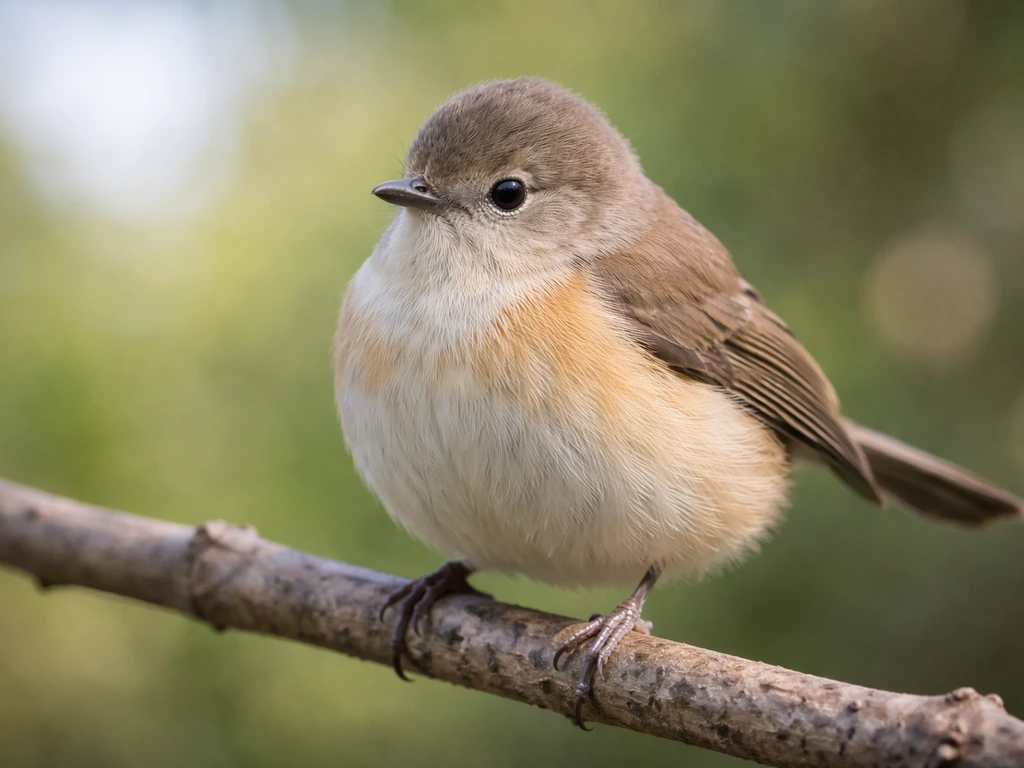
The most natural Spanish translation of 'each bird has a cracker' is 'Cada pájaro tiene una galleta.' That's the version you'd use in a language-learning context, a caption, or any straightforward sentence. If you want it to sound more like a proverb or distributive idiom, the frame 'A cada pájaro le toca su galleta' works better and feels closer to how native speakers build that kind of statement.
Cada pájaro tiene un cracker en español: traducción

James Ridgley
1 Jun 2026
What this phrase is actually trying to say
'Each bird has a cracker' is not a well-known English proverb or idiom. It's a simple, grammatical practice sentence, the kind you'd find in a language-learning app like Duolingo or on an animal-themed flashcard set. Este tipo de frase gramatical se usa como ejemplo en materiales de aprendizaje de idiomas, como los ejercicios de repetición y rellenado de espacios que aparecen en la implementación del aplicativo Duolingo a language-learning app like Duolingo. The structure is straightforward: 'each X has Y.' The sentence is used to teach how to express distributive meaning (each individual in a group possesses something), and it happens to use birds and crackers as easy, visual vocabulary.
So if you searched for 'each bird has a cracker en español,' you're almost certainly looking for one of three things: a direct Spanish translation for a language exercise, a caption for a photo or image involving birds and food, or a playful/jokey line in a bird-themed context. All three lead to the same core Spanish renderings, just with slightly different tones. If you are also a fan of Better Call Saul and its fandom, you might enjoy exploring how this phrase or its themes are discussed in Croatian bird-related “memes” around the show.
Spanish translation options: literal vs. natural
There are a couple of ways to render this in Spanish, and the right choice depends on how you want it to read.
| Version | Spanish | Best for |
|---|---|---|
| Literal / learning context | Cada pájaro tiene una galleta. | Flashcards, exercises, direct translation |
| More natural / conversational | Cada pájaro tiene su galleta. | Captions, casual sentences |
| Idiomatic / proverb-style | A cada pájaro le toca su galleta. | Jokes, playful lines, proverbial tone |
| Regional variant (Portugal/Brazil-influenced) | Cada pájaro tiene una bolacha. | Seen in bilingual flashcard sets, less common in Spanish |
The word 'bolacha' shows up in Portuguese-based learning materials for this exact sentence, but in Spanish you should stick with 'galleta' (or 'galleta salada' if you want to be specific that it's a savory cracker rather than a sweet cookie). In most of Latin America and Spain, 'galleta' covers both cookies and crackers in everyday speech, though 'galleta salada' removes any ambiguity.
How to say it: pronunciation guide

Here's a breakdown of the key words in 'Cada pájaro tiene una galleta' for anyone who wants to say it out loud correctly.
| Word | IPA | Practical phonetic | Stress |
|---|---|---|---|
| cada | /ˈka.ða/ | KAH-dah | First syllable |
| pájaro | /ˈpa.xa.ɾo/ | PAH-ha-roh | First syllable |
| tiene | /ˈtje.ne/ | TYEH-neh | First syllable |
| una | /ˈu.na/ | OO-nah | First syllable |
| galleta | /ɡaˈʝe.ta/ | gah-YEH-tah | Second syllable |
The trickiest word is 'pájaro.' The 'j' in Spanish is a back-of-the-throat sound, similar to the 'ch' in Scottish 'loch.' It's PAH-ha-roh, with the accent clearly on that first syllable. 'Galleta' trips people up because the double-l ('ll') in Spanish is pronounced like a 'y' sound in most of Latin America and increasingly in Spain too, so it's gah-YEH-tah, not gah-LEH-tah.
Which bird does 'each bird' refer to?
In a generic practice sentence like this, 'each bird' just means any bird, no specific species. You're treating 'bird' as a category noun. In Spanish, 'pájaro' is the everyday word for a small bird (think sparrow, parrot, finch), while 'ave' is the broader, more technical or formal term that covers all birds including large ones like cranes or eagles. For a learning sentence or a fun caption about parrots with crackers, 'pájaro' is exactly right. In Spanish, you can say that bird has a small head that bird has a small head in Spanish.
If you're working in a more formal ornithological or naming context, like labeling a list of species and noting what each one eats, you might write 'Cada ave de esta lista tiene una galleta asignada' (Each bird on this list has a cracker assigned). That 'de esta lista' addition removes any ambiguity about which birds you mean. The distributive 'cada' still does the heavy lifting, just like in constructions such as 'Cada país tiene su propia cultura.'
If you're curious about how specific bird names translate into Spanish, that's a related question worth exploring. In Spanish, the crane (the bird) is called grulla. For instance, the Spanish word for crane (the bird) is 'grulla,' and similar translation lookups for other species follow the same pattern of using 'pájaro' for generic references and the species-specific name when precision matters.
How native speakers would actually phrase this

Spanish handles 'each' with 'cada' almost every time, especially in distributive sentences where you're saying every individual in a group has or gets something. The pattern 'Cada [singular noun] tiene su [object]' is natural and widely used. Dropping the indefinite article ('una') in favor of the possessive ('su') makes it sound a notch more fluent: 'Cada pájaro tiene su galleta' reads slightly more naturally than 'Cada pájaro tiene una galleta,' though both are grammatically correct.
For a punchier, more proverb-like feel, Spanish has a strong tradition of the 'A cada... le toca/llega su...' construction. Think of the well-known Spanish proverb 'A cada cerdo le llega su San Martín' (every pig gets its day of reckoning), or the Cervantes-era saying 'A cada olla su cobertera' (every pot has its lid). Borrowing that frame: 'A cada pájaro le toca su galleta' immediately sounds idiomatic and punchy, even if it's not a real proverb.
Common wording variants
- Cada pájaro tiene una galleta. (Most direct, textbook translation)
- Cada pájaro tiene su galleta. (Slightly more natural, preferred in conversation)
- A cada pájaro le toca su galleta. (Proverb-style, playful, idiomatic)
- Cada ave tiene una galleta salada. (Formal/ornithological, cracker specified as savory)
- Cada uno de los pájaros tiene una galleta. (Emphatic: 'each one of the birds has a cracker')
- A cada pájaro, su galleta. (Very punchy shorthand, works as a caption or slogan)
That last one, 'A cada pájaro, su galleta,' is stripped down and snappy. It follows the same rhythmic pattern as classic Spanish sayings and would work perfectly as a short label or joke punchline.
Ready-to-use examples for real situations
For a language exercise or flashcard
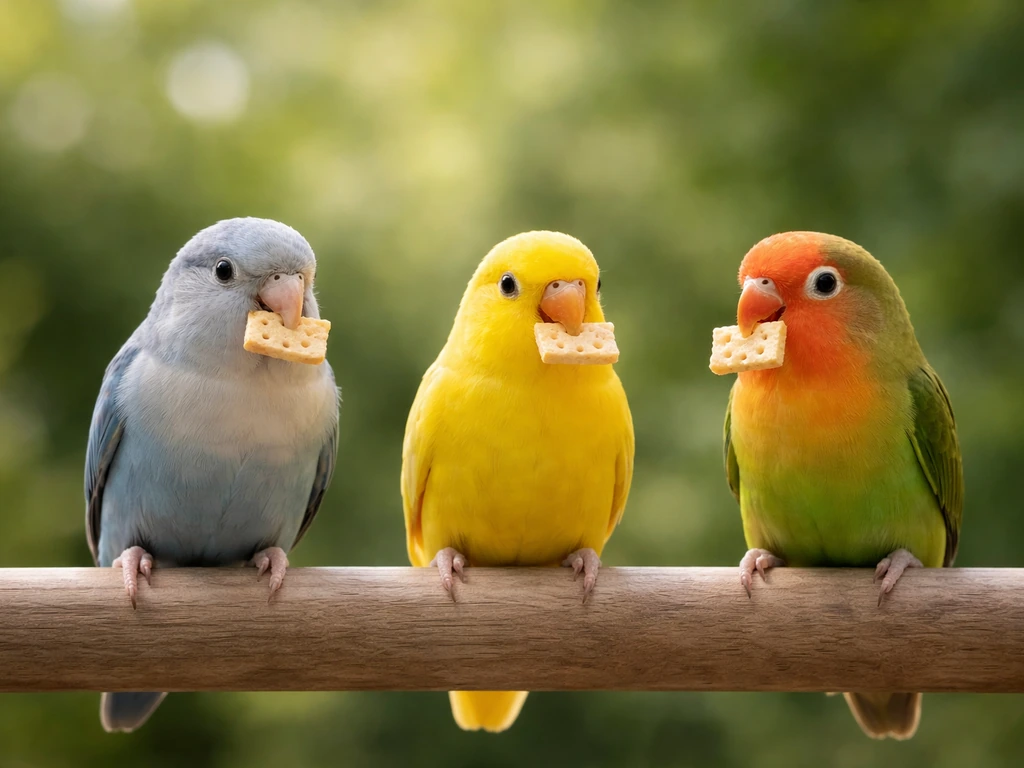
English: Each bird has a cracker. Spanish: Cada pájaro tiene una galleta. This is the version to use if you're filling in a translation blank, building a flashcard deck, or repeating sentences in a Spanish app.
For a photo caption (parrots, birds at a feeder, etc.)
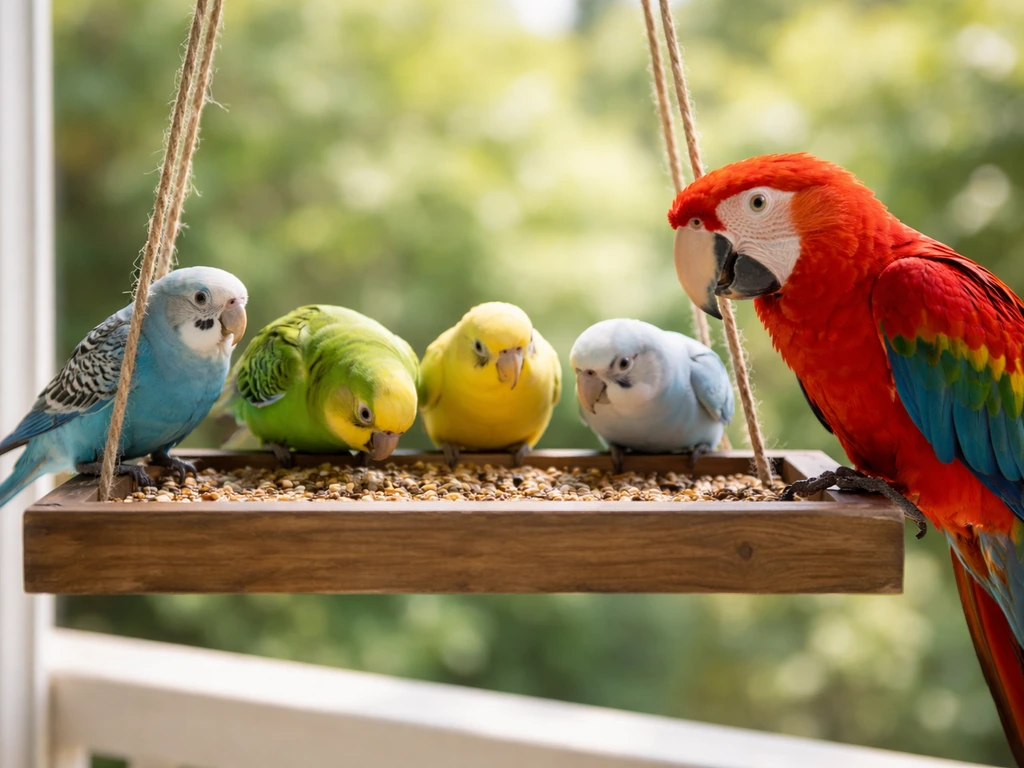
Caption: 'A cada pájaro, su galleta.' This is short, recognizable as a play on Spanish proverb structure, and reads as charming rather than awkward. Works for social media or a blog post about parrots or pet birds.
For a joke or playful line
Setup: ¿Por qué están felices todos los pájaros? (Why are all the birds happy?) Punchline: A cada pájaro le toca su galleta. (Each bird gets its cracker.) The 'A cada... le toca...' frame gives it that proverb-like inevitability that makes it land as a joke.
For a translation prompt or writing exercise
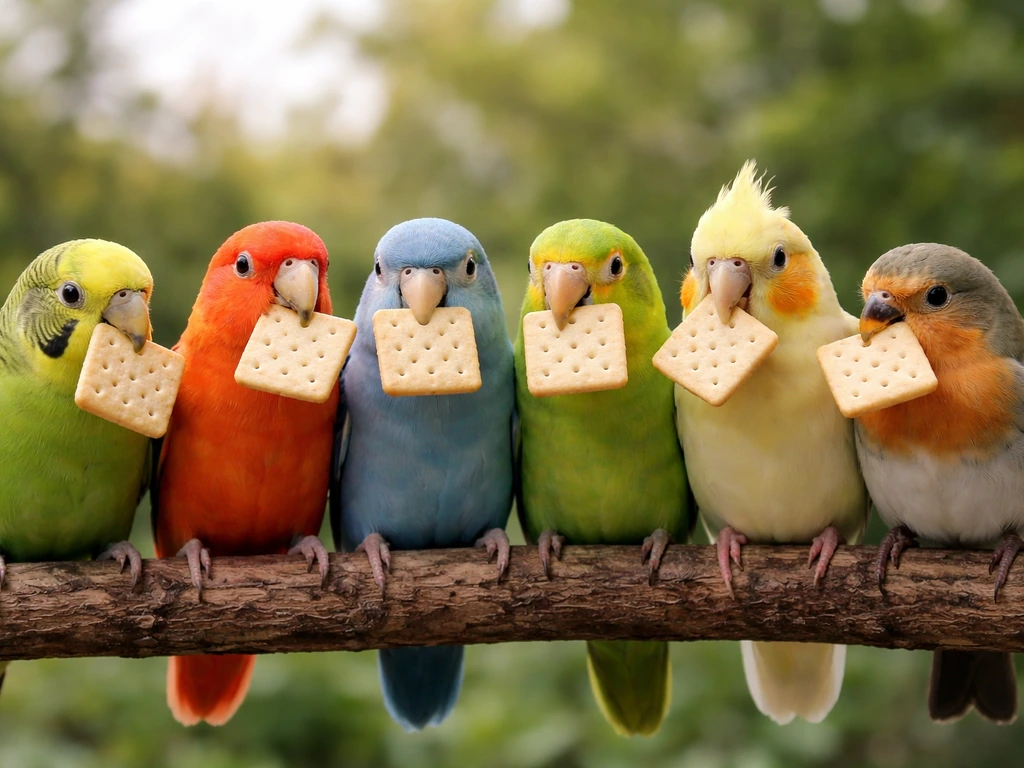
If you're writing a short Spanish description of an image showing multiple birds each holding or eating a cracker, use: 'En esta imagen, cada pájaro tiene su propia galleta salada.' (In this image, each bird has its own cracker.) Adding 'propia' (own) and 'salada' (savory/salted) makes the sentence richer and more descriptive without losing clarity.
Which version should you use?
For a direct translation in a learning context, go with 'Cada pájaro tiene una galleta.' It's clean, accurate, and matches what language apps and flashcard sets use. For anything meant to sound natural in real conversation, writing, or a caption, swap in 'Cada pájaro tiene su galleta' or the punchier 'A cada pájaro, su galleta.' And if you want maximum idiomatic flair, 'A cada pájaro le toca su galleta' is the move. The core word to know is 'cada,' which is the reliable, all-purpose Spanish equivalent of English 'each' in exactly this kind of distributive sentence.
FAQ
¿Puedo decir “Cada pájaro tiene una su galleta” o cómo se combina “cada” con posesivos?
En español estándar, la opción más cercana a “each bird has a cracker” es “Cada pájaro tiene una galleta” o su variante más natural “Cada pájaro tiene su galleta”. No suena igual decir “Cada pájaro tiene una su galleta” porque “su” ya funciona como posesivo, por eso se combina con el objeto sin “una” cuando quieres que suene fluido.
¿Cómo lo digo si no hablo de “pájaros” en general, sino de una lista o un grupo concreto (por ejemplo, los de mi jardín)?
Si te refieres a un grupo específico, es mejor añadir un complemento para anclarlo, por ejemplo “Cada pájaro de esta lista tiene una galleta asignada” o “Cada pájaro de la jaula tiene su galleta”. Sin ese “de…”, “cada pájaro” suena como categoría genérica, no como lista concreta.
¿Qué pasa si “cracker” lo entiendo como galleta salada, no como galleta dulce?
Para que “cracker” se entienda sin duda como galleta salada, usa “galleta salada”. En contextos familiares puede bastar “galleta”, pero si temes confusión con galletas dulces, “galleta salada” es la elección más segura, especialmente en una descripción de comida o una receta sencilla.
¿Cuál es la diferencia de tono entre “Cada pájaro tiene su galleta” y “A cada pájaro le toca su galleta”?
Si lo quieres como frase de regla o reparto inevitable, “A cada pájaro le toca su galleta” funciona mejor que “Cada pájaro tiene…”. La diferencia clave es el tono: “cada… tiene” es una descripción, mientras que “le toca” suena a “corresponde por turno” o “le llega” a cada uno.
¿Siempre puedo omitir “le” y decir “A cada pájaro, su galleta” como en el ejemplo?
Evita “A cada pájaro su galleta” si quieres un español más completo y natural para un texto formal. Esa forma abreviada es muy buena como rótulo o remate humorístico, pero en una frase explicativa suele preferirse “A cada pájaro le toca su galleta”.
¿Cómo cambia la frase si quiero hablar de algo que va a pasar en el futuro, no de algo que ya tiene?
Sí, pero el sentido cambia un poco. “Cada pájaro tiene su galleta” (suena a que la tiene, actualmente o de forma general) es distinto de “Cada pájaro recibirá su galleta” (futuro). Si estás describiendo una acción que ocurrirá, usa futuro o un verbo de reparto, por ejemplo “Cada pájaro recibirá su galleta” o “Cada pájaro recibirá una galleta” según el matiz.
¿Puedo sustituir “galleta/cracker” por otras cosas (premio, comida), y qué patrón debería conservar?
Si en vez de un cracker usas “comida” o “premio”, la estructura se mantiene: “Cada pájaro tiene su premio” o “Cada pájaro recibe su premio”. En general, el patrón distributivo “cada + (singular) + tiene/toca/recibe + objeto” es el que te dará más naturalidad.
¿Cuál es el punto más fácil de equivocarse al pronunciar la frase en voz alta y cómo practicarlo?
Para pronunciación, recuerda que “pájaro” lleva acento en “PAH”, y “galleta” suena con una “y” aproximada por la “ll”. Si quieres una pista práctica para decirlo bien rápido, practica primero “cada PAH-jaro” y luego “tie-ne su GA-ye-ta” (aprox.), porque ahí suelen estar las fallas de oído.
Next Article
that bird has a small head in Spanish: translations
Learn how to say that bird has a small head in Spanish, with natural options and tips to name the bird species.