
The everyday Hebrew word for 'bird' is צִפּוֹר (tzipor), pronounced roughly tsee-POHR. That single word covers almost everything you need: asking about a bird you spotted, naming a pet, searching for birdwatching content in Hebrew, or just satisfying a crossword curiosity. There is also a second word, עוֹף (of), which shows up in more formal or biblical contexts and is closer to 'fowl' in English. For modern, everyday speech, tzipor is the one to know.
How to Say Bird in Hebrew: Pronunciation, Plurals, and Phrases

James Ridgley
23 Apr 2026
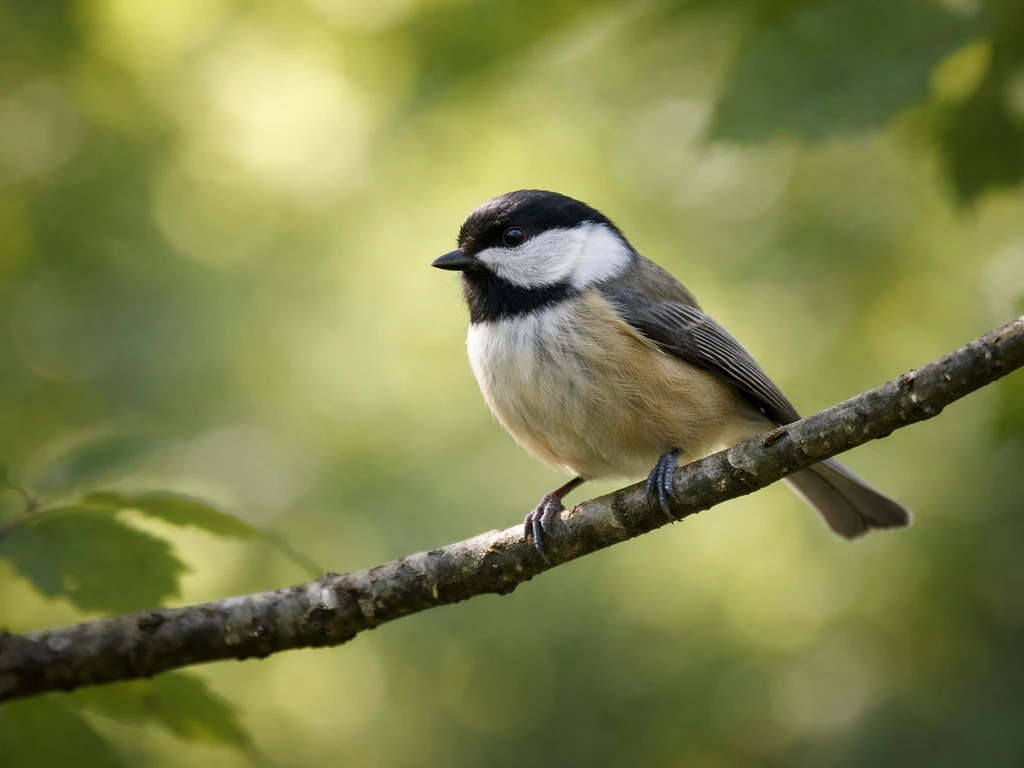
The Hebrew word for bird: everyday vs. formal
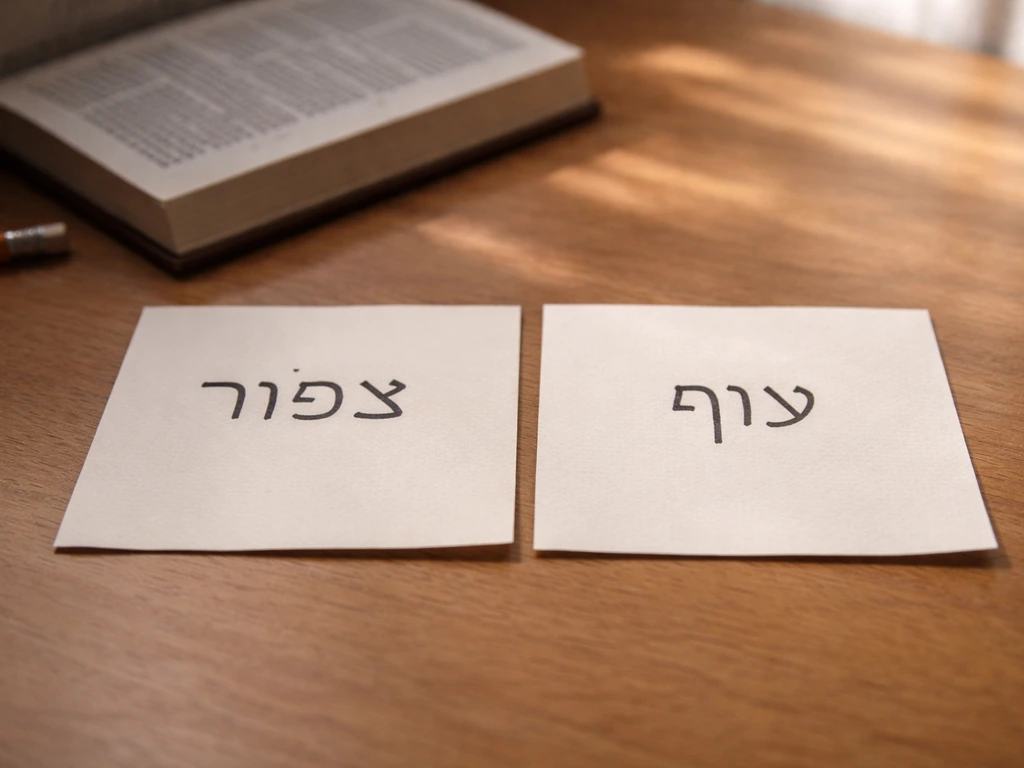
צִפּוֹר is the standard Modern Hebrew word for bird and the one you will hear in daily conversation, on nature documentaries, in children's books, and in birdwatching circles. It appears in dictionaries, language-learning apps, and the Academy of the Hebrew Language's own keyword database, making it the safe default for any general use.
עוֹף (of) is older and more formal. It appears throughout the Hebrew Bible and in some technical or culinary contexts, think 'poultry' rather than 'the bird on that branch.' You will still encounter it on restaurant menus (עוֹף can mean chicken/poultry) and in formal writing, but if you are asking a Hebrew speaker about the bird outside the window, tzipor is universally understood and natural.
| Word | Transliteration | Register | When to use it |
|---|---|---|---|
| צִפּוֹר | tzipor / tsipor | Everyday Modern Hebrew | General conversation, birdwatching, pets, nature |
| עוֹף | of | Formal / Biblical / Culinary | Scripture, poultry menus, technical biology texts |
How to pronounce tzipor
The IPA for Modern Israeli Hebrew is /t͡siˈpoʁ/. For English speakers, the closest approximation is tsee-POHR, with the stress falling firmly on the second syllable. Break it down: 'tsi' sounds like the start of 'tsetse,' and 'por' rhymes with 'more' but with a slight rasp on the R (the Hebrew ר is a guttural, similar to the French R). You do not need to nail that guttural on your first try; tsee-POHR will get you understood immediately. Native speaker recordings are freely available on Forvo if you want to tune your ear before using the word out loud.
Plurals and common phrases you will actually need

The plural of צִפּוֹר is צִפֳּרִים (tziporim, tsee-poh-REEM). Hebrew adds the suffix ים- to form the masculine plural, even though tzipor is grammatically feminine, which catches people off guard. The definite plural (the birds) is הַצִּפֳּרִים (ha-tziporim). There is also a construct plural form, צִפֳּרֵי־ (tziprei), which appears when you are saying 'birds of...' something, like 'birds of the forest' or in compound species names.
- ציפור (tzipor) — a bird / bird
- ציפורים (tziporim) — birds
- הציפורים (ha-tziporim) — the birds
- ציפורי... (tziprei...) — birds of... (construct form)
- שירת ציפורים (shirat tziporim) — birdsong / bird song
- קולות ציפורים (kolot tziporim) — bird sounds / bird calls
- ציפור מחמד (tzipor machmad) — pet bird
- צפרות (tzfarut) — birdwatching / birding
That last one is worth highlighting: the Hebrew word for the activity of birdwatching is צפרות (tzfarut), used by major organizations like Keren Kayemet LeIsrael and dedicated birding groups across Israel. If you are searching Hebrew-language birdwatching resources online, searching for צפרות will get you much further than just ציפורים.
How to say specific birds in Hebrew
Knowing tzipor gives you the generic term, but Hebrew has specific names for individual species, just like English does. Here are some of the most commonly looked-up ones, with their pronunciation and a note on where the name comes from.
| English | Hebrew | Transliteration | Pronunciation (approx.) | Notes |
|---|---|---|---|---|
| Sparrow | דְּרוֹר | dror | DRORE | Listed in the Academy of the Hebrew Language's terminology database; also carries the meaning of 'freedom' or 'release' in biblical Hebrew |
| Pigeon / Dove | יוֹנָה | yona | yoh-NAH | The everyday Modern Hebrew word for pigeon or dove; IPA /joˈna/; also a common given name in Hebrew |
| Turtledove | תּוֹר | tor | TORE | Biblical term for turtledove; appears in the Song of Songs; Reverso and Strong's both list it as a pigeon/dove-type species |
| Pigeon (alternate) | תּוֹר | tor | TORE | Sometimes listed alongside יונה in Hebrew dictionaries for pigeon; context determines which fits best |
For sparrow specifically, דְּרוֹר (dror) is the academically recognized Hebrew name. Its plural is דְּרוֹרִים (drorim). If you are looking up other species beyond these, the Academy of the Hebrew Language's terminology database (accessible on their website) is the most authoritative place to check. The National Library of Israel also holds archival discussions from the Academy on standardizing bird names (שמות העופות), which is useful if you are digging into a less common species.
Writing Hebrew correctly: spelling, niqqud, and transliteration
Hebrew is written right to left using the Hebrew alphabet. The word tzipor is spelled with four letters: צ (tsadi), פ (pe), ו (vav), ר (resh), giving you ציפור. In texts aimed at learners or in dictionaries, you may also see the word written with niqqud (vowel diacritics): צִפּוֹר. The dot under the tsadi (ִ) indicates the short 'i' sound, the dagesh (dot inside the pe) indicates a hard 'p' rather than 'f,' and the ֹ above the vav marks the 'o' vowel. Most everyday Hebrew writing, including websites, social media, and newspapers, drops the niqqud entirely, so you will usually just see ציפור.
Transliteration into English letters varies from source to source because there is no single universally enforced standard for Hebrew romanization. You will see tzipor, tsipor, and even ẓipor depending on whether the writer uses a linguistic, popular, or religious transliteration convention. All of them refer to the same word. When searching online in English, tzipor (as used by sources like IFCJ and Pealim) is the most commonly encountered form, so it is a reliable search term.
- ציפור — standard spelling without niqqud (most common in everyday writing)
- צִפּוֹר — spelling with full niqqud (used in dictionaries, educational materials, Bible texts)
- צפור — alternate spelling occasionally found in older texts (omits the yod/י as a vowel letter)
- Transliteration: tzipor or tsipor (both correct; choose one and stay consistent)
If you are unsure whether you have the right spelling, Pealim.com is one of the most reliable free tools for checking Hebrew noun forms. It shows the full inflection table with niqqud for ציפור and its related forms. The Academy of the Hebrew Language's website is the gold standard for official spelling questions if you need something academically authoritative.
Quick examples for everyday situations
Here is how tzipor and its related forms show up in real-life scenarios, from naming a pet to talking with Hebrew-speaking birders.
- Naming or talking about a pet bird: 'הציפור שלי' (ha-tzipor sheli) means 'my bird.' If you want to say 'pet bird,' use ציפור מחמד (tzipor machmad).
- Birdwatching conversation: Say 'אני אוהב/אוהבת צפרות' (ani ohev/ohevet tzfarut) — 'I love birdwatching.' Use the feminine form אוהבת if you are a woman.
- Birdsong: 'שירת ציפורים' (shirat tziporim) is the phrase you will see on museum exhibits, sound recordings, and nature apps. The Natural History Museum at Tel Aviv University uses exactly this phrase.
- Spotting a specific bird: 'זו יונה' (zo yona) — 'That is a pigeon/dove.' 'זה דרור' (ze dror) — 'That is a sparrow.'
- Searching Hebrew birding content online: Use ציפורים or צפרות as your search term. Adding a location name (like ישראל or a city name) narrows results quickly.
- Looking up a species name: Start with the English name, search it alongside מילון עברי (Hebrew dictionary) or go directly to the Academy's terminology database and search the English species name.
How Hebrew bird vocabulary compares to other languages
If you have been exploring bird words in other languages, Hebrew follows a similar pattern to Japanese and Korean in that there is one core everyday noun (tzipor) and then a rich system of distinct species names layered on top. If you are learning Korean too, this same kind of everyday word is exactly what you are looking for when searching for how to say bird in Korean. If you are also learning Japanese, you can use the Japanese name for bird as a quick comparison to Hebrew vocabulary bird in Japanese. Languages like Hawaiian also carry deep cultural weight in their bird vocabulary, where individual birds held religious and navigational significance. Hawaiian has its own traditional bird vocabulary too, so it can help to learn the word in Hawaiian alongside the Hebrew term bird in hawaiian. On the Hawaiian islands, Bird Island is also known as which Hawaiian island is also known as Bird Island. Hebrew is similar in that many of its species names, like dror (sparrow/freedom) and yona (dove/peace), carry poetic and symbolic meaning beyond just the biological label. That dual layer of meaning, practical identification plus cultural resonance, is part of what makes Hebrew bird names genuinely interesting to explore.
FAQ
If I want to say “a bird” in a casual conversation, should I use צִפּוֹר or עוֹף?
In everyday Modern Hebrew, use צִפּוֹר (tzipor). הָעוֹף (of) is more likely to sound formal or biblical, and can also mean poultry in some contexts, so it is less precise if you mean a single wild bird you saw.
Why is the plural צִפֳּרִים used if צִפּוֹר is feminine?
צִפּוֹר is grammatically feminine, but the plural uses the masculine plural ending ים, so you must say צִפֳּרִים (tziporim) even though you might expect a feminine-sounding plural.
How do I say “the birds” in Hebrew?
Use הַצִּפֳּרִים for “the birds.” If you just say צִפֳּרִים, it generally comes across as “birds” (indefinite), similar to how English distinguishes “birds” from “the birds.”
What Hebrew form do I use for “birds of the forest” style phrases?
For “birds of …” use the construct form צִפֳּרֵי־, for example צִפֳּרֵי הַיַּעַר (birds of the forest). The second noun after it carries the meaning, so do not add הַ to צִפֳּרֵי־ itself.
Do I need to write niqqud to be understood when I type the Hebrew word for bird?
Most modern writing will omit niqqud, so spelling without vowels like ציפור is the norm. For searches and messages, type ציפור, and for learning pronunciation, rely on resources that include the niqqud.
Why do I see “tzipor,” “tsipor,” and “ẓipor,” and which one should I search?
Spelling without niqqud is usually stable, but romanization varies: tzipor, tsipor, ẓipor, etc. If you are searching in English, use tzipor as a default, or better, search by Hebrew spelling ציפור to avoid romanization differences.
What word should I use for birdwatching in Hebrew, “bird” or something else?
If you mean “bird” as an activity or hobby, use צַפְרוּת/צפרות (tzfarut). If you mean a general category, use צִפּוֹר. Mixing them up can change the meaning from “birdwatching” to “birds.”
How do I say sparrow in Hebrew, and what is the plural?
For a specific “sparrow,” the commonly used name is דְּרוֹר (dror). Its plural is דְּרוֹרִים (drorim), so you can ask about “sparrows” using the plural form instead of repeating צִפֳּרִים.
What is the most common mistake when typing the Hebrew word for bird from English letters?
Write from right to left using the exact Hebrew letters. A common mistake is reversing the letters when typing in transliteration, which can produce the wrong word. For a quick check, copy the Hebrew form ציפור directly rather than retyping from memory.
Next Article
How to Say Bird in Korean: Word, Hangul, Pronunciation
Learn how to say bird in Korean with Hangul, romanization, pronunciation, and phrases plus common variants and usage tip