
The Korean word for "bird" is 새 (romanized as "sae"). In the Collins Korean-English Dictionary, the entry for 새 is glossed as “bird” and includes usage such as 새 (참새) Collins Korean-English Dictionary entry for 새 glossed as “bird”. It's a single syllable, pronounced roughly like the English word "say" but with a slightly more open vowel, closer to "sae" as in "said" without the "d." The IPA transcription is /sʰɛ̝/, which means the "s" has a light aspirated quality and the vowel sits between "eh" and "ay." In everyday Korean conversation, 새 is the word you'll use the most, and it works in the same general way that "bird" does in English.
How to Say Bird in Korean: Word, Hangul, Pronunciation

James Ridgley
23 Apr 2026
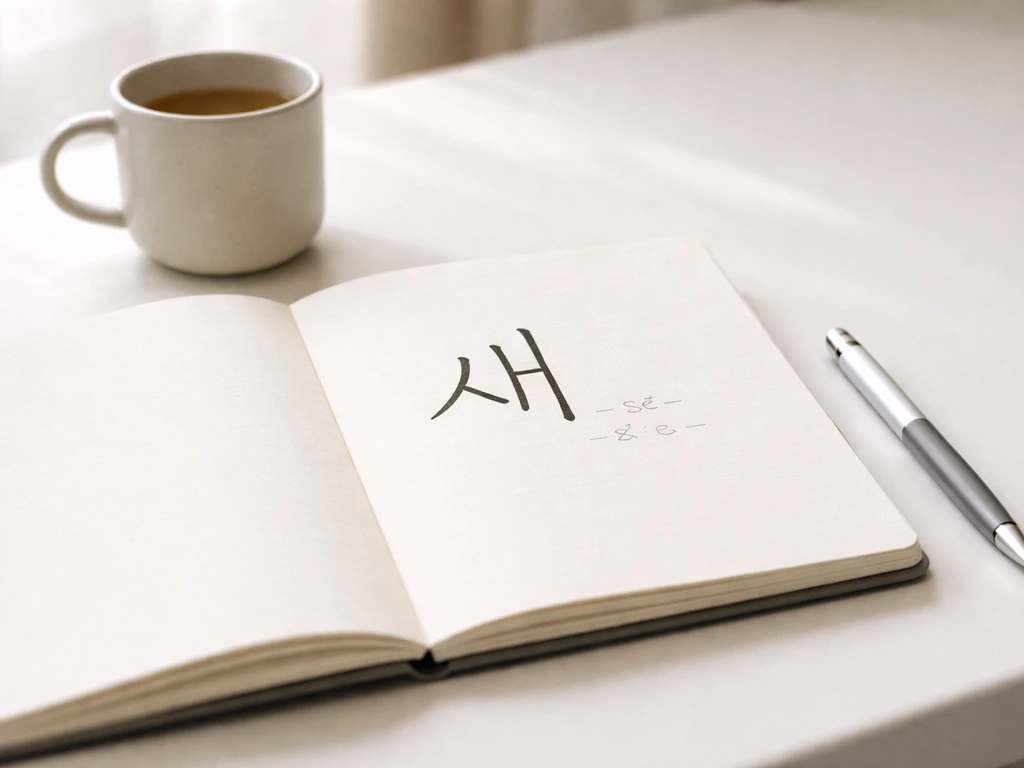
새 in Hangul, Romanization, and Pronunciation
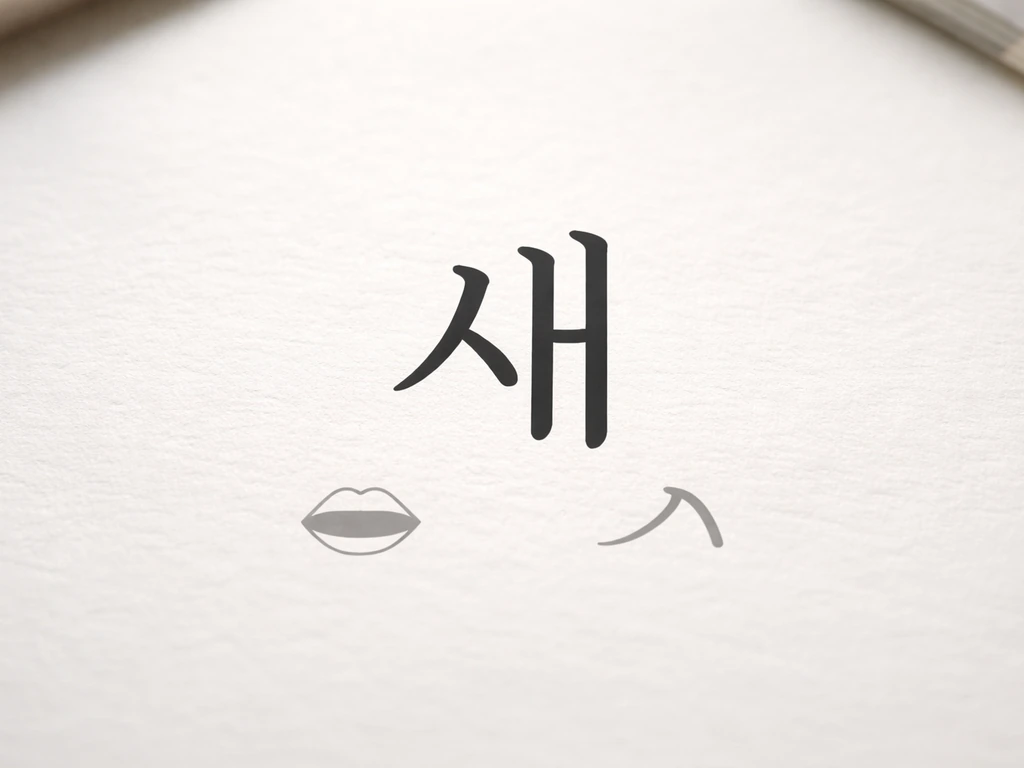
Let's break it down properly so you're spelling and saying it correctly from the start.
| Feature | Detail |
|---|---|
| Hangul | 새 |
| Revised Romanization (RR) | sae |
| IPA pronunciation | /sʰɛ̝/ |
| Practical phonetic guide | Like "say" but with the vowel slightly more open, similar to "sae" in "said" |
| Syllable count | 1 |
| Part of speech | Noun |
South Korea's official romanization system is called Revised Romanization of Korean (RR), and under that system 새 is written as "sae." You'll see this spelling used in dictionaries like Cambridge and Collins, as well as in vocabulary guides for Korean learners. Cambridge Dictionary is an English to Korean resource where you can look up Korean words like 새 for meaning and translation in context. Some older materials use the McCune-Reischauer system, which renders it similarly, so there's little confusion on the romanization side. The main thing to practice is the vowel: don't fully say "ay" as in "day," and don't fully say "eh" as in "bet." Land somewhere in between, and you're there.
새 vs. More Specific Korean Bird Terms
새 is the general category word, the equivalent of saying "bird" as in the whole class of winged creatures. But Korean, like English, has plenty of more specific terms, and knowing when to use 새 versus something more precise matters in real conversation.
Korean builds many bird names by combining 새 with a modifying word. For example, 벌새 combines 벌 (bee) with 새 (bird) to name the hummingbird. Similarly, 들새 means "wild bird," combining 들 (field/wild) with 새. This compounding pattern is worth knowing because it means once you know 새, you can start recognizing specific bird names in Korean just by spotting the 새 component.
For birdwatching as an activity, Korean speakers use 새 관찰 (sae gwanchal, literally "bird observation") or the more specialized term 탐조, which is the dedicated birding term favored by serious birders. If you're joining a birdwatching group or looking up ornithological resources in Korean, 탐조 is the term you'll see. 새소리 is another useful one: it means birdsong or birdcall (새 + 소리, meaning "sound").
| Korean Term | Romanization | Meaning |
|---|---|---|
| 새 | sae | Bird (general) |
| 들새 | deulsae | Wild bird |
| 벌새 | beolsae | Hummingbird |
| 새소리 | saesori | Birdsong / birdcall |
| 새 관찰 | sae gwanchal | Birdwatching (casual term) |
| 탐조 | tamjo | Birding / birdwatching (specialist term) |
How to Say "A Bird" and "Birds" in Korean
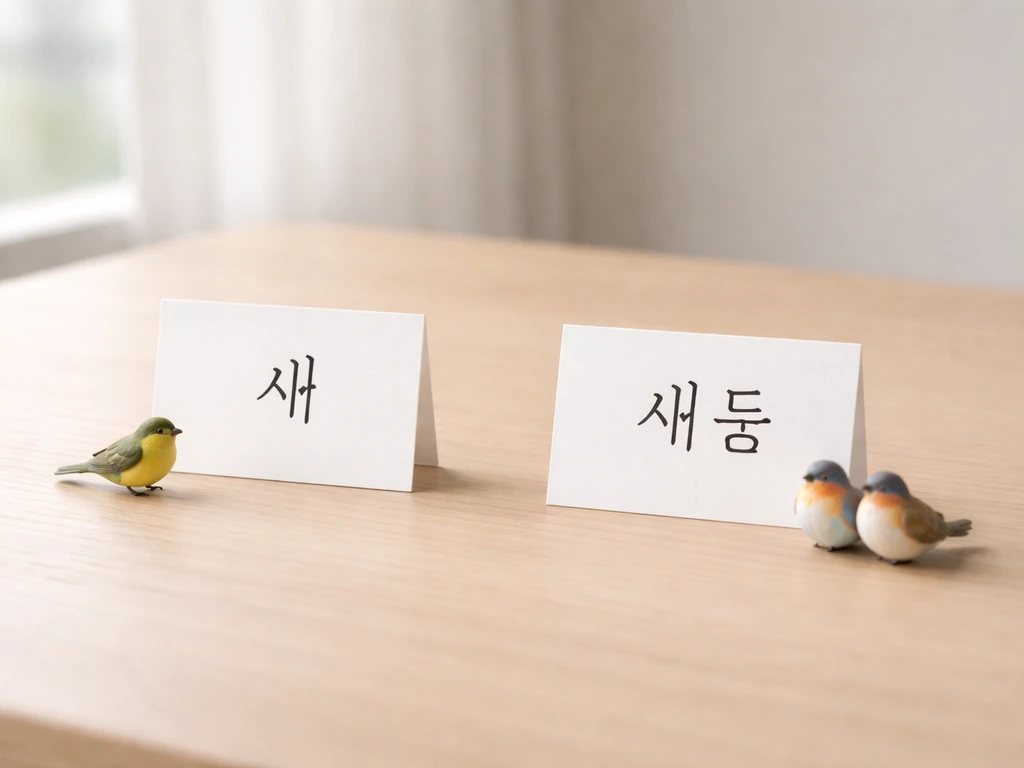
Korean grammar handles number very differently from English, and this trips up a lot of beginners. In Korean, nouns don't automatically change form to show singular or plural. 새 can mean "a bird," "the bird," or "birds" depending entirely on context. The language leans heavily on context, and that's considered completely normal.
That said, when you want to make plural explicit, you attach the suffix -들 directly to the noun: 새들 (saedeur) means "birds" in a clear, unambiguous way. -들 signals plurality and removes any ambiguity when the context doesn't make it obvious. It's similar in function to adding "-s" in English, though it's used more selectively. You might write 새들 in a sentence where you're specifically contrasting multiple birds, or in a general statement like "I like birds."
Korean also uses particles to show grammatical role, and the choice between subject and object particles changes slightly based on whether a noun ends in a vowel or consonant (called 받침). Since 새 ends in a vowel, it takes the subject particle 가 (새가, "the bird is...") and the object particle 를 (새를, "the bird" as the object of an action). You'll see these in the example phrases below.
Quick Example Phrases for Everyday Conversation
Here are some practical sentences you can actually use, covering the most common situations you'd want to talk about birds in Korean.
| English | Korean (Hangul) | Romanization |
|---|---|---|
| A bird | 새 | sae |
| Birds (plural) | 새들 | saedeur |
| The bird built a nest. | 그 새가 둥지를 틀었습니다. | Geu saega dungjireu teureotseumnida. |
| I like birds. | 저는 새들을 좋아해요. | Jeoneun saedeur-eul joahaeyo. |
| I can hear birdsong. | 새소리가 들려요. | Saesori-ga deullyeoyo. |
| I enjoy birdwatching. | 저는 탐조를 즐깁니다. | Jeoneun tamjo-reul jeulgimnida. |
| What kind of bird is that? | 저건 무슨 새예요? | Jeogeon museun saeyeyo? |
Notice how 새를 (with the object particle 를) appears when the bird is the object of the verb, and 새가 (with the subject particle 가) appears when the bird is doing something. This particle switching is one of the most practical things to internalize early because it shows up constantly.
Common Mistakes When Saying or Using 새
Even a short, simple word like 새 comes with a few common stumbling blocks. Here's what to watch out for: Reddit commenters also note that learners can misinterpret 새 because of other meanings and contexts, and the intended meaning is often “bird.” 새 can be misinterpreted in other contexts.
- Mispronouncing the vowel: English speakers often say it too much like "say" (as in the English word). Try to soften the vowel slightly toward "seh" without going all the way. Listening to a native audio clip a few times is the fastest fix.
- Forgetting particles entirely: Writing or saying 새 in isolation is fine for vocabulary practice, but in a real sentence, you need to attach the right particle (새가, 새를, etc.). Leaving them off sounds unnatural to native speakers.
- Using -들 too much: Korean doesn't require a plural marker most of the time. Saying 새 is totally fine when context is clear. Over-using 새들 everywhere can sound stilted. Use -들 when you specifically want to emphasize or clarify that there are multiple birds.
- Confusing the particle choice: Because 새 ends in a vowel, its particles are 가 (subject) and 를 (object). Don't accidentally use 이 or 을, which attach to consonant-ending nouns. This is a very common beginner error.
- Looking for a Konglish version: Unlike some animal names that have borrowed English pronunciations, 새 is a purely native Korean word. There's no common loanword alternative for "bird" in everyday speech, so stick with 새.
Using 새 to Look Up Specific Birds in Korean
Knowing 새 is just the start if you're a bird enthusiast. The real payoff comes when you use it to navigate Korean bird names and resources. Since so many Korean bird names end in 새, you can often spot them immediately in a Korean field guide or checklist. Resources like the Birds Korea checklist include a dedicated Korean Name column alongside English common names and scientific names, making it straightforward to cross-reference birds across languages.
When looking up a specific bird, try searching its English name followed by 새 or 한국어 이름 ("Korean name") in a search engine. For example, searching "kingfisher 새" or "kingfisher 한국어" will usually pull up the Korean common name quickly. Korean Wikipedia pages for bird species also consistently list Korean names in Hangul at the top, and the Birds Korea checklist PDF is a reliable bilingual reference for species recorded on the Korean peninsula.
If you're interested in how other languages handle the single word for "bird," the same one-word translation approach applies in languages like Japanese, Hawaiian, and Hebrew, each with their own phonetics and grammar quirks around the base word. If you want to know how to say bird in Hebrew, look for the Hebrew word for "bird" and practice it in a few simple sentences.
If you're wondering how do you say bird in Hawaiian, you can apply the same approach of learning the base word first, then building from it for specific kinds of birds Hawaiian word for bird. You might also see Bird Island as the name of a specific Hawaiian island, so it can help to learn which Hawaiian island is also known as Bird Island.
If you want the Japanese word for bird, you can use the same idea of learning the general base term first before moving to more specific bird types. The core skill in all of them is the same: learn the general word first, then use it as a building block to recognize species-specific names.
For anyone wanting to go further in Korean bird naming, the next practical step is building out a short vocabulary list of the birds you care about most, whether that's backyard birds, raptors, or shorebirds, and finding their Korean names using 새 as your anchor. Once you can recognize 새 inside longer compound words, Korean field guides become much more approachable, even if your overall Korean is still at the beginner stage.
FAQ
Is 새 always the best Korean word for bird, or are there other options depending on context?
Yes, but Korean usually uses native bird terms rather than borrowing an English “bird” word. If you mean “bird” generically, 새 is the default. For specific contexts, use established compounds like 새장( birdcage), 조류( birds, more formal/academic), or 탐조( birding).
How do I say “birds” in Korean, do I need a different word than 새?
You normally do not say a separate word for “birds” in Korean. Instead, you add -들 when you want plurality, for example 새들(“birds”). Otherwise, 새 can cover both singular and plural depending on what the sentence implies.
What common pronunciation mistake should I avoid when saying 새?
Don’t overdo the “s” sound. 새 starts with a lightly aspirated s (as described in the IPA in the article), so it should feel a bit like a softer “s” rather than a strong “sh.” Practice in minimal pairs like 새 vs. 샤 (sa vs. sha) if you notice you are drifting toward “sh.”
Can you remind me which particle to use with 새 for subject vs. object?
When 새 is the object of an action, you use 를, for example 새를 봐요( I see birds). When 새 is the subject, you use 가, for example 새가 날아요( the bird flies). If you mix them, the sentence can sound wrong even if your vocabulary is correct.
Do Koreans always say 새 in every sentence, or can it be dropped when it’s understood?
Korean often omits the noun when it is clear from context. In a conversation like “You like birds,” you may hear 좋아해요, with 새 implied. If you want to be extra clear, keep 새 in the sentence, but dropping it is normal in casual speech.
If I see a bird name ending in 새 in a Korean list, can I safely assume I know the full name from the pattern?
In field guide or checklist contexts, you may see the Korean name written as a compound ending in 새, but it may not be exactly the same compound you would guess from English. For example, some species names use specific modifiers or older naming conventions. A good approach is to search the species plus 새 or 한국어 이름 to confirm the exact Hangul term.
Where exactly does -들 go when I want to say “the birds” or “birds”?
If you write your own phrases, place -들 directly after 새, not at the end of the whole phrase. For example, 새들 좋아해요 is fine, but 새 좋아들 or 새 를들 is incorrect. Also note that -들 marks plurality, but the sentence still relies on context for definiteness.
When should I use 새소리 versus a more general phrase about bird sounds?
You can use 새소리 for “birdsong” or “bird call,” but for “bird sound” in a general sense Korean speakers may also say 소리( sound) with the bird term depending on how specific you want to be. If you are describing a recording, 새소리( birdsong) is typically the most natural short term.
Next Article
Which Hawaiian Island Is Known as Bird Island
Discover the Hawaiian island nicknamed Bird Island, why it’s called that, and how to verify it on maps.