If you know a bird by its name in another language, a local nickname, or a partial spelling and you need the correct English common name, the fastest path is this: match the bird's physical features and location to a field guide or app, confirm the scientific (Latin) name, then look up the standardized English common name tied to that scientific name in a trusted reference like Cornell Lab's All About Birds or the IOC World Bird List. That two-step process, feature ID plus scientific-name lookup, works every time, even when common names vary by region.
What Is Bird Name in English? How to Find the Right One

James Ridgley
14 May 2026
Common name vs. scientific name: which one should you trust?
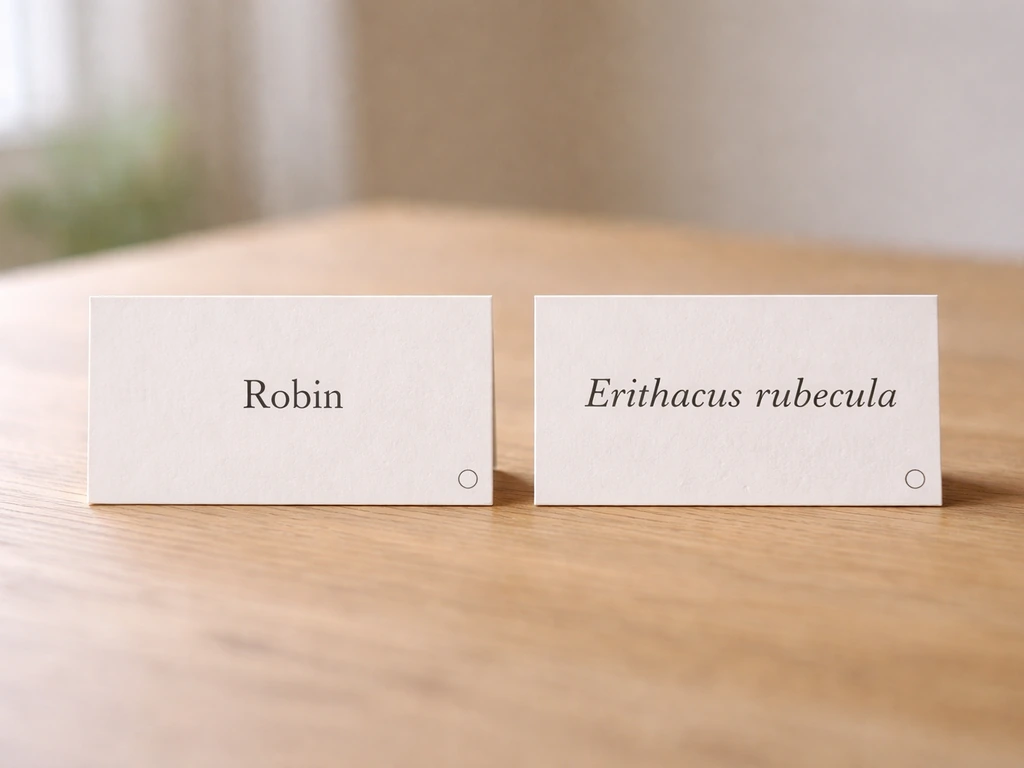
This is the foundation of the whole problem. Every bird species has one scientific (Latin) name governed by the International Code of Zoological Nomenclature (ICZN). That name is the same in every country and every language, period. English common names, on the other hand, are managed separately by regional committees, and there is no single globally accepted English common name list. The American Ornithological Society (AOS) controls names for North America, the IOC World Bird List maintains its own list used widely in Europe and internationally, and eBird supports 47 regional English name variants across its platform. The result is that one bird can have several legitimate English common names depending on which authority you're looking at.
A classic example: what the IOC calls the "Common Sandpiper" might be listed under a subtly different form in another checklist after a taxonomic split. BirdLife International's species pages pair the Latin name (like Aythya ferina for Common Pochard) right alongside the English name, which is exactly the kind of cross-reference you want to use. The scientific name is your anchor. Once you have it, the English name is easy to confirm.
Identify the bird first, then find its name
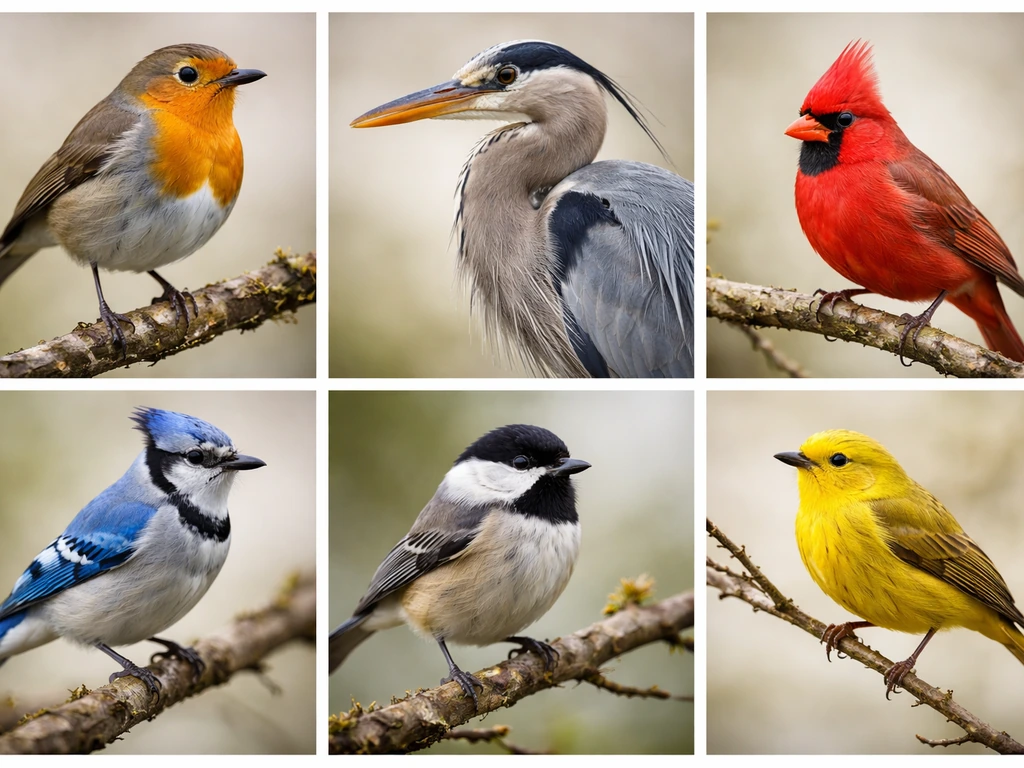
You can't reliably find an English name if you haven't pinned down which species you're actually dealing with. Here's the practical approach used in field guides and backed by Cornell Lab's identification framework: Cornell Lab’s identification framework organizes bird ID using four main concepts: size and shape, behavior, color pattern (field marks), and habitat.
- Size and shape: Is it sparrow-sized, crow-sized, or somewhere in between? Note the body shape, neck length, and tail proportions.
- Bill structure: Long and curved? Short and thick? Hooked at the tip? The bill alone often narrows it to a family group fast.
- Color pattern and field marks: Note the head markings, breast color, wing bars, and any distinctive patches. These are called field marks and they're the core of any ID.
- Behavior: Does it bob its tail? Hover? Swim? Walk upright? Behavior is often more diagnostic than color.
- Habitat and location: A marsh bird in southern India and a marsh bird in Florida might look similar but belong to entirely different species. Region and habitat together eliminate a huge number of candidates.
- Sound: If you can hear the bird, use Merlin Sound ID (free from Cornell Lab). It uses recordings from the Macaulay Library, with at least 150 recordings per species to train its model, so it's genuinely reliable for common species.
Audubon's field identification approach specifically warns that vagrants (birds outside their usual range) complicate ID because your location-based assumptions break down. Audubon's field ID approach also emphasizes key distinguishing features like overall size and shape, bill structure, plumage head and body markings, and bird actions, while noting that vagrants outside expected range can complicate identification. If the bird seems odd for your area, don't rule out a rare visitor before checking range maps. eBird's dynamic range maps update continuously with new checklist data and are one of the best tools for checking whether a species could realistically appear where you are.
How to translate a non-English bird name into English

If you already know the bird's name in Hindi, Spanish, Japanese, or any other language, the cleanest route to its English name runs through Avibase or the World Bird Index. Avibase holds around 87,000 scientific names with synonyms and common-name coverage across dozens of languages. You type in the name you know, it returns the scientific name, and from there you can pull the English common name. The World Bird Index does something similar, pulling cross-language names directly from the IOC World Bird List.
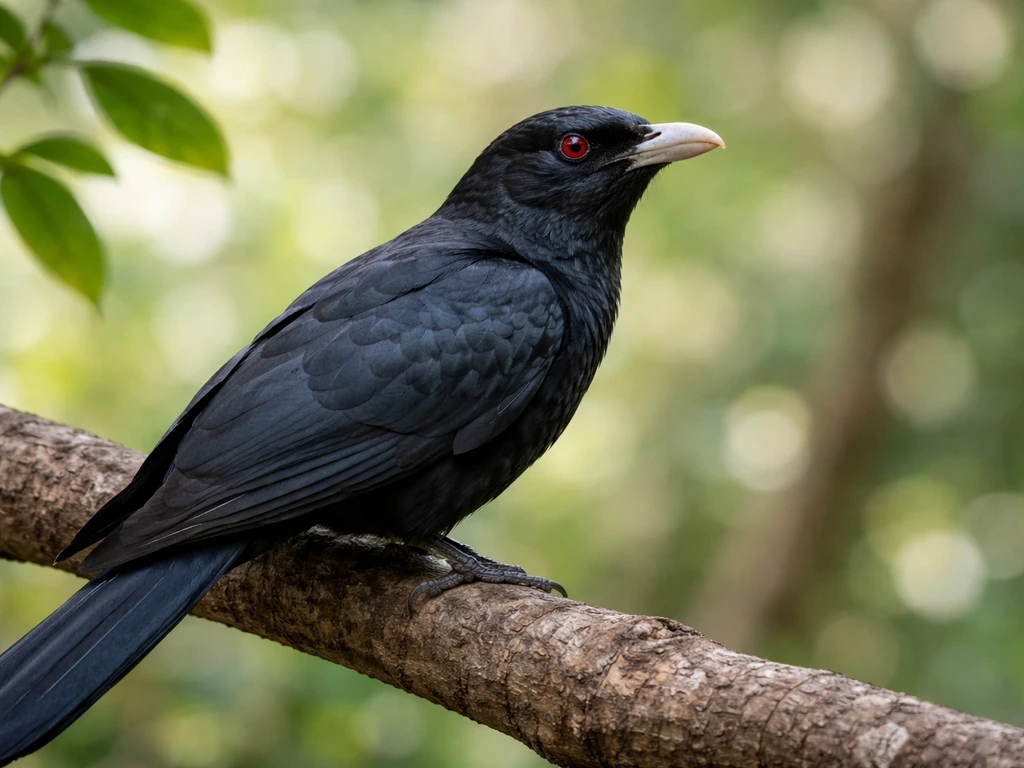
A real-world example: if you've grown up calling a bird "koyal" in Hindi, you're talking about the Asian koel (Eudynamys scolopacea is the original single-species treatment, though taxonomy has since split it). Searching "koyal" or its variant spellings in Avibase will surface the scientific name immediately, and then the English common name follows. Similarly, the bird known in South Asia as the "ghar chiriya" or other local names often maps to a species with a well-established English name once you cross-reference via scientific name. Related naming puzzles, like what the koyal bird is called in English, or what garuda or ghar birds are called in English, follow the exact same lookup workflow.
iNaturalist is also genuinely useful here. Its search accepts common names, scientific names, and even alternate/synonym names, so typing a partial or phonetic spelling often surfaces the right taxon along with community-verified observations.
When names overlap, split, or multiply: the disambiguation problem
This is where most confusion happens. Scholars call the problem polylexy and polysemy: one bird can have many names, and one name can refer to many birds. Here are the most common situations you'll hit:
- Regional name splits: The same species gets a different English name in North America vs. the UK vs. Australia. The IOC list and the AOS list don't always agree, which is why you might see two valid English names for the same bird in different apps.
- Taxonomic lumps and splits: When scientists decide two populations are actually one species (a lump) or one species is actually two (a split), the English name often changes to match. The IOC publishes explicit English-name change logs for this reason. For example, "Spine-tailed Swift" was changed to "Spinetail" following a taxonomic update.
- Shared descriptive names: "Blackbird" in the UK (Turdus merula) is a completely different bird from a "blackbird" in casual North American usage (which might mean any of several icterid species). Context and location matter enormously.
- Introduced or vagrant species: AOS notes that for species that are vagrants or introduced in a region, the name used may follow a different regional authority, adding another layer of variation.
The practical takeaway: if two sources give you different English common names for the same bird, both might be correct for their respective authorities. Check the scientific name to confirm you're looking at the same species, then decide which English name to use based on your region and the checklist you're working from. eBird warns explicitly that taxonomy alignment can differ between checklists due to split and lump decisions, so comparing across at least two systems is good practice.
Spelling and pronunciation: getting the English name right out loud
English bird names follow a few consistent patterns that make spelling and pronunciation more predictable once you know them.
Spelling tips
- Hyphenation matters: "Black-capped Chickadee" (a single species) versus "black capped" without a hyphen means something different in formal nomenclature. AOS guidelines include explicit rules about hyphen use in common names.
- Capitalization convention: In formal ornithological writing, the full English common name is capitalized ("Northern Cardinal") to distinguish it as a species name. In general writing, lowercase is standard.
- Loanwords from other languages often keep unusual spellings: "koel" (from Hindi via Sanskrit kokila) looks odd in English but is the accepted spelling. Collins Dictionary lists it with full word-origin information. When a South Asian or other vernacular name enters English, the spelling is usually a phonetic approximation of the source language.
- Avoid guessing from pronunciation alone: "Ptarmigan" is pronounced TAR-mig-an, not with a P sound. Looking at the spelling after you've only heard the word can throw you off.
Pronunciation tips
For everyday English bird names, standard dictionary pronunciation guides work fine. Cambridge Dictionary, for instance, provides explicit pronunciation for words like "hummingbird" (named, per Oxford Learner's Dictionaries, for the humming sound its wings make during rapid vibration). For less common or scientific names, Cornell Lab's All About Birds addresses pronunciation directly, including examples like Tympanuchus phasianellus (tim-PAN-yoo-kus fay-zee-an-EL-us), because scientific names are notoriously non-intuitive even for experienced birders. When in doubt, check a dictionary entry or Cornell's species pages, which often include audio.
| Bird name | Common pronunciation mistake | Correct pronunciation |
|---|---|---|
| Ptarmigan | p-TAR-mig-an | TAR-mig-an (the P is silent) |
| Pileated Woodpecker | pil-ee-AY-ted | PIE-lee-ay-ted or PIL-ee-ay-ted (both accepted) |
| Koel | koh-EL | KOH-el (stress on first syllable) |
| Prothonotary Warbler | pro-THON-oh-tary | pro-THON-oh-teh-ree |
| Anhinga | an-HIN-jah | an-HIN-gah |
Quick steps to verify you've got the right English name
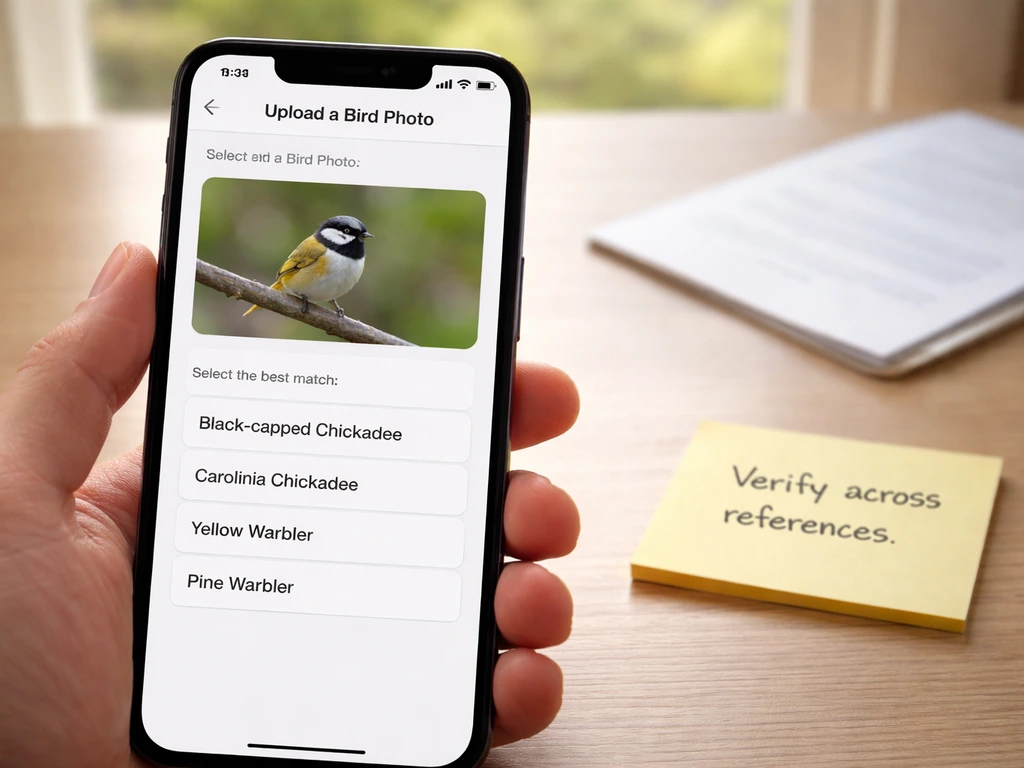
- Start with a physical description or photo: Open Merlin Bird ID (free, from Cornell Lab), upload a photo or describe the bird's features, and let the app return candidates based on your location.
- Check the scientific name: On the candidate species page in Merlin, All About Birds, or eBird, find the Latin binomial. Write it down.
- Cross-reference in a second authority: Paste the scientific name into BirdLife International's species search or Avibase. Confirm the English name matches (or note if there's a legitimate regional variant).
- Verify the range makes sense: Use eBird's range maps to confirm the species actually occurs where you encountered the bird. If it doesn't, revisit your ID.
- For non-English starting points: Use Avibase's multilingual search or World Bird Index to go from a vernacular name to a scientific name, then follow steps 2 through 4.
- For community confirmation: Submit your sighting or photo to iNaturalist. Community agreement from multiple identifiers is a strong signal you've got the right species and name.
Best references to bookmark
| Resource | Best used for | Covers |
|---|---|---|
| Cornell Lab All About Birds | Feature-based ID, species accounts, pronunciation | North America focus, some global |
| eBird / Merlin | Photo ID, sound ID, range maps | Global, 72 languages, 47 regional English variants |
| IOC World Bird List | Authoritative English names, name-change logs | Global standard, used by most researchers |
| BirdLife International | Scientific name + English name pairing, conservation status | Global |
| Avibase | Multilingual name lookup, synonyms, cross-taxonomy | ~87,000 scientific names, dozens of languages |
| iNaturalist | Community verification, photo-based ID confirmation | Global, common and scientific name search |
Why bird names differ so much across languages and cultures
Bird names in any language reflect how people noticed, used, and related to those birds long before formal science existed. English bird names come from at least three broad sources: descriptive observation ("Hummingbird" for the sound of its wings, "Woodpecker" for obvious reasons), loanwords from other languages where the bird was first described or commonly known ("Koel" from Hindi/Sanskrit kokila, entering English through South Asian contact), and honorific or commemorative names (named after a person, now a contested practice in ornithology).
The koel is a good case study. The word is echoic in origin, meaning it mimics the bird's call, and it passed through Sanskrit (kokila) into Hindi variants (koel, koil) before entering English. If you are wondering about the chise name meaning bird, you can often trace it back to the sound or characteristic that early speakers associated with the bird word is echoic in origin. That's why the English spelling looks unusual and why you'll see multiple transliteration variants in different texts. The same process explains why many South Asian, African, and South American birds have English names that look like phonetic approximations rather than descriptive English words.
Cultural and political history also shapes names. The U.S. National Park Service has documented cases like "oldsquaw," a duck name changed because it was offensive, and the NPS explicitly notes that translation does not map 1:1 between languages. A bird's name in one culture might encode ecological knowledge (what it eats, where it nests), a sound it makes, or a mythological association (as with the Garuda in South Asian tradition) that simply has no direct English equivalent. This is exactly why the scientific name serves as the neutral anchor: it bypasses all of that cultural layering and lets you find the agreed English label from a reliable authority.
If you're researching a specific naming question, like what a particular regional bird is called in English or the origin of a bird's name in your language, the same workflow applies: scientific name first, English common name second, etymology through a dictionary or species account third. That sequence keeps you grounded even when the cultural history gets complicated.
FAQ
If two websites give different English bird names, how do I know which one is right?
Use the scientific (Latin) name as the “species key.” Then, pick the English common name from the same authority your project uses (for example, eBird for checklists you submit there, IOC for many international guides, AOS for North America). If the scientific name matches, differences in English naming are usually just authority preference, not different birds.
What should I do if the bird I saw seems unusual for my area (possible vagrant)?
Don’t trust location alone. A bird outside its normal range can be a vagrant or misidentified, so confirm with at least one non-location signal (song/call, key field marks, and plumage differences). Then verify plausibility with updated range maps from your checklist system.
How can I find the English bird name if I only know a rough spelling or how it sounds?
When you only have a partial spelling or you are unsure how it sounds, search using multiple variants: phonetic spellings, common alternate transliterations, and even likely “root” forms. Tools that accept synonyms or alternate names (like iNaturalist) are especially helpful because they return candidate taxa even when your spelling is off.
Do English names ever change when bird taxonomy is revised, and how can I avoid mixing species?
Cross-check via the scientific name, because some English common names include taxonomic categories like “eastern,” “western,” “island,” or “dwarf.” Those labels can shift when subspecies are split or lumped, so rely on the Latin name to avoid mixing subspecies with separate species.
What if my local bird name could refer to multiple different species?
If your local name maps to more than one species, you need extra constraints to narrow it down, such as habitat (wetland, forest edge, city parks), behavior (foraging style), and timing (season and time of day). Then use the candidate scientific names to see which one best matches your observation.
How do I handle cases where a common name in my language is actually a group name in English?
Check whether the name you’re using is meant as a broad group label rather than a single species. Words like “sparrow,” “koi,” or “kingfisher” can cover multiple species in casual speech. Once you identify the likely scientific species, the correct standardized English common name becomes unambiguous.
What should I do if I have the scientific name but it looks outdated or different from what databases show?
If the scientific name itself changed (for example, the bird was moved to a different genus), you can still succeed by using a database that lists synonyms. Search by the older Latin name or spelling variants, then pick the current accepted name and its matching English common name.
How can I confirm how to pronounce both the English bird name and the scientific name?
Use pronunciation sources separately from name identification. For scientific names, an audio example or syllable guide is more reliable than guessing from spelling, especially for unfamiliar Latinized endings. If you only need how to say the English common name, standard dictionary pronunciation usually covers it.
Which English bird name should I use for a checklist, a school report, or a birding app submission?
If you plan to report sightings, citations, or conservation records, align your naming with the checklist that governs your workflow. The same bird can legitimately have different English names across authorities, but the scientific name should still match. Decide the authority first, then keep consistent naming in your notes.
Why doesn’t a direct translation of a local bird name reliably give the correct English name?
Translation gaps are common. Some local names encode behavior, mythology, or culturally specific associations that do not map neatly to English. That’s why the correct order is species key first (scientific name), then the closest standardized English label, then only afterward explore the local etymology.
Next Article
What Is the Koyal Bird Called in English? Name, Meaning
Know what koyal means in English, the common name for this bird, plus tips to confirm the right species by traits and lo