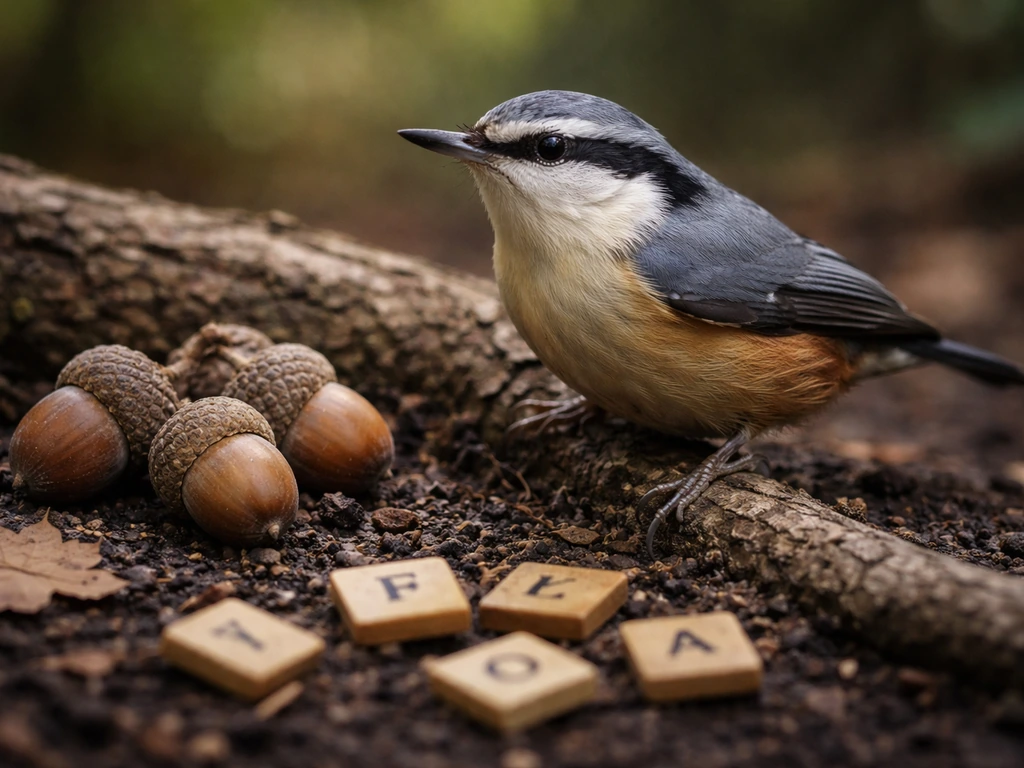
If you searched for 'bird that is a synonym for nuts,' the most likely answer you're looking for is the NUTHATCH, a real bird whose common name contains the word 'nut' and whose behavior is directly tied to nuts as food.
Bird That Means Nuts: Identify the Right Bird Fast

James Ridgley
22 Apr 2026
But there's a second strong candidate depending on your context: if 'nuts' is being used as slang for 'crazy,' the bird you want is almost certainly the LOON, a common crossword and wordplay answer for 'crazy' that also happens to be a well-known bird. Both interpretations are valid, and the right answer depends entirely on which meaning of 'nuts' the clue, puzzle, or question is pointing to. In bird-homophone clues, understanding the bird homophones meaning of words like “nuts” and “loon” helps you pick the intended interpretation. All About Birds provides an authoritative overview of the [Common Loon (Gavia immer)](https://www.
allaboutbirds. org/guide/common_loon) that you can cite to confirm the bird identity behind “loon” clueing. Here's how to sort it out fast.
What does 'nuts' actually mean in this clue?
This is the key question, and it splits into two completely different directions. 'Nuts' in plain English has at least two common meanings that show up in bird-related wordplay and naming.
First, there's nuts as food: acorns, seeds, and hard-shelled edible kernels that many birds actually eat or cache. This is the botanical and culinary meaning, and it directly shows up in bird common names like nuthatch, where 'nut' refers to the bird's habit of hacking nuts open on tree bark.
Second, there's nuts as slang for crazy. Dictionary.com, Cambridge, and Oxford Learner's Dictionaries all list 'nuts' as a very informal adjective meaning insane, crazy, or foolish. Cambridge defines it plainly as 'crazy, foolish, or strange.' Oxford flags it as 'very informal' with the example 'He's driving me nuts!' In crossword puzzle databases, NUTS maps directly to synonyms like LOCO, BATTY, INSANE, and MANIACS. This is the slang meaning crossword setters and riddle writers love to exploit, because it lets them clue a 'crazy' bird with a misdirecting 'nuts' surface reading.
So the first thing to figure out is which angle the clue is coming from. Are you looking at a bird that eats or is associated with nuts (food angle), or a bird whose name is a synonym for nuts meaning crazy (slang angle)? The next section helps you narrow that down in under a minute.
How to narrow down the intended bird fast
The fastest way to figure out which bird you need is to look at the format of the question or clue you're working with.
- If it's a crossword clue: count the letters in the answer box. NUTHATCH is 8 letters. LOON is 4 letters. COOT is 4 letters and another slang word for a mildly crazy or eccentric person. These letter counts alone can eliminate most candidates immediately.
- If it's a riddle or wordplay question phrased as 'a bird that is a synonym for nuts': the word 'synonym' is your key signal. A synonym for nuts (crazy) is a word that means crazy, and that word also happens to be a bird name. Think LOON (loony = crazy), COOT (old coot = eccentric), or DODO (sometimes used to mean a foolish or crazy person).
- If it's a bird-naming or natural history question: you're almost certainly looking for NUTHATCH, the bird with 'nut' built right into its name, and the connection is behavioral, not linguistic wordplay.
- If the context is a pet name, field guide, or birdwatching: again, NUTHATCH is the most direct answer. No wordplay needed.
- If the question came from a word game, trivia night, or 'synonym clue' format: LOON is the most common answer because 'loony' is a widely recognized slang term for crazy, and a loon is a real and well-known bird.
Bird names that involve 'nut(s)': spelling and pronunciation
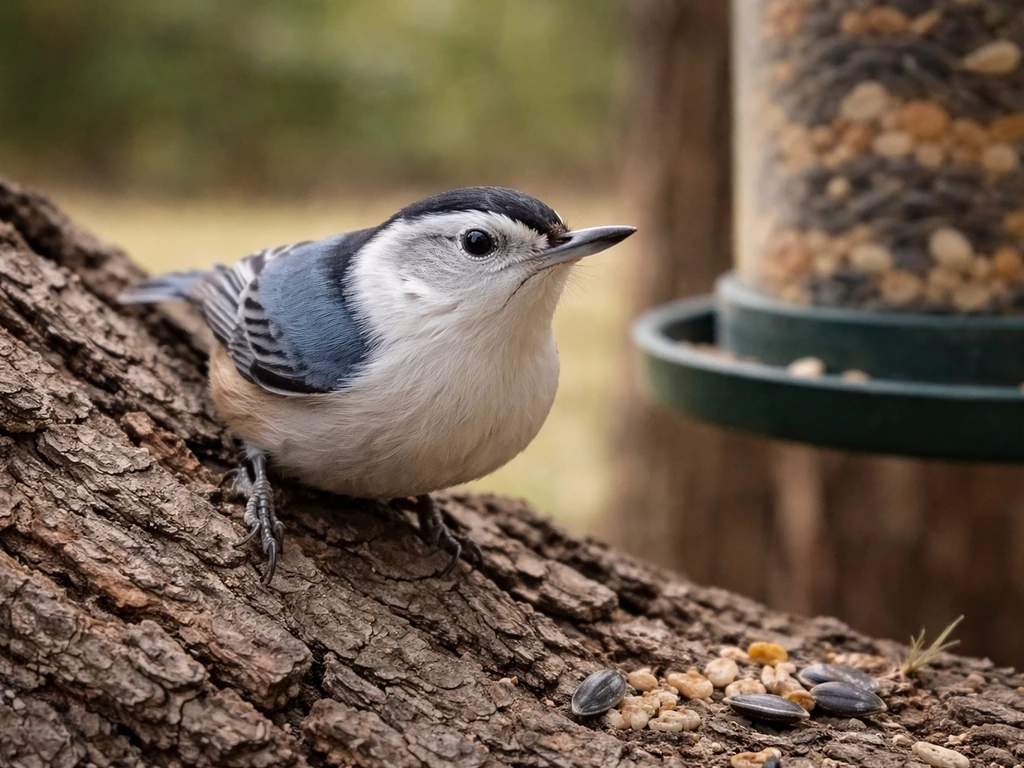
Let's go through each strong candidate with correct spelling, pronunciation, and the reason the 'nut(s)' connection exists.
Nuthatch (food-nut angle)
Spelled N-U-T-H-A-T-C-H. Pronounced 'NUT-hatch' (IPA: /ˈnʌt.hætʃ/). This is a real bird in the family Sittidae, and the name directly references nuts: specifically, the bird's habit of wedging nuts or seeds into bark crevices and then hacking them open with its bill. The word 'hatch' here comes from an old English word meaning to hack or chop, not from the idea of hatching eggs. There are multiple species, including the White-breasted Nuthatch (Sitta carolinensis) and Red-breasted Nuthatch (Sitta canadensis), both very common in North American field guides. If your question is about a bird literally connected to nuts as food, nuthatch is your answer with no ambiguity.
Loon (crazy-nuts angle)

Spelled L-O-O-N. Pronounced 'loon' (IPA: /luːn/). The Common Loon (Gavia immer) is a diving bird famous in North America, but the word 'loon' also functions as informal English for a crazy or eccentric person, directly from the same root as 'loony.' This makes LOON one of the most popular crossword answers when the clue reads something like 'crazy bird' or 'bird that means nuts.' It's clean, short, and the slang connection is immediately recognizable to most English speakers.
Coot (eccentric/mildly crazy angle)
Spelled C-O-O-T. Pronounced 'koot' (IPA: /kuːt/). The Eurasian Coot (Fulica atra) and American Coot (Fulica americana) are real birds, but 'coot' in informal English also means an old, eccentric, or slightly odd person, as in 'old coot.' It's a softer synonym for nuts or crazy than 'loon,' and appears in some crossword databases as an answer for clues about eccentric characters. It's less commonly the intended answer than LOON in pure synonym clues, but worth knowing.
Dodo (foolish/crazy angle)
Spelled D-O-D-O. Pronounced 'DOH-doh' (IPA: /ˈdoʊ.doʊ/). The Dodo (Raphus cucullatus) is an extinct bird, but 'dodo' in informal speech can mean a foolish or dim-witted person, which overlaps with the broader 'nuts/crazy' synonym space. It appears occasionally in wordplay but is less precise as a synonym for 'nuts' specifically. You'd more often see dodo clued as 'foolish person' rather than 'crazy/nuts.'
Scientific vs common names: a quick nomenclature check
Crossword clues and casual wordplay work almost exclusively with common names, not scientific ones. But if you're verifying a bird identification for a more serious purpose, it's worth knowing how the scientific names line up.
| Common Name | Scientific Name | Family | Nut/Crazy Connection |
|---|---|---|---|
| Nuthatch (White-breasted) | Sitta carolinensis | Sittidae | Food: caches and hacks open nuts |
| Nuthatch (Red-breasted) | Sitta canadensis | Sittidae | Food: caches and hacks open nuts |
| Common Loon | Gavia immer | Gaviidae | Slang: 'loon/loony' = crazy |
| American Coot | Fulica americana | Rallidae | Slang: 'old coot' = eccentric |
| Dodo (extinct) | Raphus cucullatus | Columbidae | Slang: 'dodo' = foolish person |
The scientific name for the nuthatch genus, Sitta, comes from Greek and has nothing to do with nuts linguistically. The nut connection lives entirely in the English common name. For the loon, the genus name Gavia is Latin for a seabird, again with no 'crazy' connection in the scientific name. So if you're using a scientific or formal ornithological source to verify your answer, you won't find the slang meaning confirmed there. That's normal: the wordplay and synonym angle belongs to the common-name world only.
How bird names shift across languages and usage
The 'nuts' synonym connection is specific to English. Once you cross into other languages, the slang falls away and you're dealing with entirely different naming systems. This matters if you're solving a multilingual puzzle or researching the name across sources.
In French, the nuthatch is called the sittelle (from the same Greek root as Sitta), not anything resembling 'nut.' In German it's Kleiber, meaning something closer to 'climber' or 'one who clings.' In Spanish it's trepador, meaning 'climber.' None of these carry the food-nut meaning that English preserves. The loon, meanwhile, is called plongeon in French (meaning 'diver'), Eistaucher or Seetaucher in German (also meaning 'diver'), and somormujo or colimbo in Spanish. No language outside English uses a word meaning 'crazy' for this bird.
This is an important reminder that synonyms and slang embedded in bird common names are language-specific. The same bird can have a name in English that carries rich connotations, while its name in another language describes an entirely different feature, usually something behavioral or physical. This is why bird-naming reference work across languages always needs to anchor on the scientific name as the stable identifier.
For readers who enjoy related language puzzles, the way bird names shift across languages connects to broader questions about bird homophones, bird-word etymology, and what words like 'ornith' reveal about naming history, all angles that show up frequently in word-focused bird research. If you are also exploring “ornith” in bird terminology, you can connect that naming-history thread to how related words describe birds. If you mean the “bird homophone” sense of the phrase, it usually refers to how different word meanings lead to different bird answers bird homophones, bird-word etymology. This is the kind of bird-word relationship covered in bird homophones meaning questions, where a clue shifts based on the intended word sense.
Why 'nut(s)' shows up in bird naming at all
The etymology of 'nuthatch' is genuinely interesting and worth knowing if you want to give a confident answer about why nuts and birds intersect.
The word 'nuthatch' dates back to at least the 16th century in English. The 'nut' part is straightforward: the bird is strongly associated with hard-shelled seeds and nuts, which it wedges into bark and then attacks with its chisel-like bill. The 'hatch' part comes from the Middle English word hatch or hacche, meaning to hack or chip at something, which is also related to the modern word 'hatchet.' So 'nuthatch' literally means 'nut-hacker' or 'nut-chopper.' The spelling has been stable in English for centuries with no significant variants.
The slang journey of 'nuts' and 'loon' is a parallel but separate story. 'Loon' as a word for a crazy or foolish person appears in English from at least the 15th century, possibly derived from an old Norse or Dutch word meaning a slow or clumsy person. The bird name 'loon' for the diving bird may share that root or may have developed independently. What matters for wordplay is that by modern English, loon the bird and loon meaning a crazy person are the same spelling, which makes it a perfect synonym clue. 'Loony' (or 'looney') as an adjective meaning crazy is the adjectival form, directly tied to 'loon.'
The connection between 'nuts' as slang for crazy and birds in general is largely a crossword and riddle artifact. Puzzle setters know that 'nuts' in a clue can mislead a solver into thinking about food, while the intended answer is a bird whose name means crazy. That misdirection is the whole game.
Your checklist to confirm the right bird
Use this checklist to land on the right answer for your specific situation.
- Identify which meaning of 'nuts' applies: food/behavioral (nuts the bird eats) or slang (nuts = crazy). Your context, crossword letter count, or clue phrasing will tell you.
- If food/behavioral: your answer is NUTHATCH. Confirm spelling (N-U-T-H-A-T-C-H) and check species if needed (White-breasted, Red-breasted, etc.).
- If slang/crazy: your primary answer is LOON (4 letters). Secondary options are COOT (4 letters, eccentric) or DODO (4 letters, foolish).
- Cross-check with the letter count if it's a crossword: NUTHATCH = 8, LOON = 4, COOT = 4, DODO = 4.
- Verify the common name in a standard bird field guide (Sibley, National Geographic, or the Cornell Lab of Ornithology's All About Birds site) to confirm correct spelling.
- If the source or puzzle is in another language, use the scientific name to anchor the ID and then find the correct common name in that language.
- If you need to confirm the slang meaning, check any standard English dictionary (Cambridge, Oxford, Merriam-Webster) for the 'nuts = crazy' entry as a cross-reference.
The bottom line: for a bird literally connected to nuts as food, NUTHATCH is the answer every time. For a bird whose name is a synonym for nuts meaning crazy, LOON is your best bet in most puzzle and wordplay contexts, with COOT and DODO as backup options depending on letter count and clue nuance. The blank" rel="noopener noreferrer">Loon Preservation Committee describes the Common Loon as a distinct species, offering background on the bird beyond the slang meaning of “loon.”. Once you know which angle you're working from, confirming the right bird takes less than a minute with any standard reference.
FAQ
How can I tell quickly whether the puzzle means “nuts” as food or “nuts” as slang for crazy?
In most crossword-style clues, the “crazy” reading wins unless the clue explicitly mentions food, seeds, bark, acorns, or “eats/caches nuts.” If the entry length fits both NUTHATCH and LOON, check whether the rest of the clue uses misdirection words like “one who,” “type of,” or a character description that points to slang rather than feeding behavior.
What spelling mistakes cause the most wrong answers for these “nuts” birds?
Spelling matters for two of the candidates. The common bird is LOON (no extra letters), and the food-linked one is NUTHATCH (not NUTHACK, not NUTHATCHER). If your puzzle shows an unexpected letter pattern, first test NUTHATCH for the food angle and LOON for the slang angle, then consider COOT or DODO only if the length or clue wording forces it.
If multiple answers seem possible by meaning, how do I use word length to decide fast?
In crosswords, you can treat letter count as the tie-breaker: LOON fits very short answers, COOT is also short, and DODO is longer than LOON but shorter than NUTHATCH. NUTHATCH is usually the longest choice and almost always corresponds to clues that look like they want a specific English bird common name tied to “nut” behavior.
Do clue hints like “diver” or “bark” point more strongly to LOON or NUTHATCH?
If the clue includes “diver,” “diving bird,” “water bird,” or location hints like “shore,” the intended answer is more likely LOON, because it is a well-known diving bird. If the clue mentions “bark,” “chisel,” “wedges,” or “tree,” it strongly favors NUTHATCH since its nut-related behavior is tied to feeding on tree bark and cracking nuts or seeds.
Which of these is actually relevant for real bird facts, not wordplay?
For general reading or field identification, LOON is not a “nuts” bird at all, it is mainly a synonym trap in English wordplay. For actual bird watching questions, NUTHATCH is the safer interpretation because its common name directly reflects feeding behavior involving hard-shelled nuts and seeds.
What happens if the clue doesn’t say “nuts” directly, but uses slang like “loony” or “batty”?
Some puzzles or games replace “nuts” with close slang like “loony,” “batty,” or “insane.” When you see those exact synonyms, LOON is typically the cleanest target, while COOT may appear if the clue emphasizes an “odd old person” vibe. If the clue is more playful than clinical, expect the “slang person” angle rather than the bird’s biology.
Should I rely on scientific names to verify the “nuts” slang connection?
Use the scientific names only to confirm what bird species you are looking at in real life, but do not expect them to confirm the slang meaning. The “nuts means crazy” link is an English common-name wordplay convention, so a formal ornithology source will not reflect that secondary meaning.
How do multilingual puzzles affect choosing between NUTHATCH, LOON, COOT, and DODO?
If you are solving in a different language, these synonym traps usually break, because English-specific slang does not carry over into other languages’ bird names. Even if a translated clue still says “nuts,” the correct bird for wordplay in English may not match the name in the target language.
What’s a reliable step-by-step checklist to avoid getting stuck on the wrong “nuts” meaning?
If you want the most robust method, first decide the intended word sense, then validate against the clue’s surface features. A practical approach is: (1) scan for food or tree-bark cues, (2) scan for character descriptions that sound like slang, (3) apply letter count, (4) only then choose COOT or DODO as secondary options.
Next Article
Words with Ornith Meaning Bird: List, Pronunciation, Uses
Learn ornith bird word roots, pronunciation and meanings, plus a list of ornithology and related terms