
The most likely answer to a crossword or word puzzle clue of 'common marine bird' with 7 letters is GANNET. It fits the letter count exactly, it is universally recognized as a seabird, and it shows up constantly in crossword clue databases as a go-to answer for marine bird clues. If your grid rules out GANNET, the next best 7-letter candidate is PUFFINS (the plural of puffin), though the singular PUFFIN is only 6 letters, so check whether your puzzle is using a plural form.
Common Marine Bird 7 Letters: Likely Answers and How to Verify

James Ridgley
7 May 2026

What 'common marine bird' actually means in puzzle terms
Before locking in an answer, it helps to understand how both 'common' and 'marine' are being used in a clue like this, because each word does real work in narrowing the field.
Seabirds vs shorebirds: where 'marine' points
In ornithology, 'marine' typically means the bird's life is adapted to the ocean environment, not just the shoreline. True seabirds, like gannets and puffins, feed at sea, often far from land, and come ashore mainly to breed. Shorebirds, by contrast, are coastal birds that feed on beaches, mudflats, and estuaries but don't really live at sea. A clue that says 'marine bird' is almost always pointing at a seabird, not a sandpiper or plover. That distinction matters because it immediately cuts your candidate list down to a manageable group: gannets, puffins, terns, petrels, guillemots, and their relatives.
What 'common' signals in a bird name
In everyday puzzle language, 'common' usually just means familiar or widely known, not rare or exotic. But in formal bird naming, 'Common' can also be part of an official English name, as in 'Common Tern' (Sterna hirundo). The IOC World Bird List, which is the main international authority on standardized English bird names, has ongoing policy discussions about when to keep or drop the word 'Common' as a modifier in official names. For puzzles, the practical takeaway is: the clue is probably using 'common' to mean 'a well-known type of marine bird,' not necessarily referring to a species whose formal name starts with the word 'Common.'
The strongest 7-letter candidates and why they fit
There are a few seabirds whose names land at exactly 7 letters. Here are the ones most likely to appear in a puzzle, with a quick breakdown of each.
| Bird name | Letter count | Marine status | Puzzle frequency |
|---|---|---|---|
| GANNET | 6 letters | True oceanic seabird | Very high |
| PUFFINS | 7 letters (plural) | True oceanic seabird | High (if plural fits) |
| PELICAN | 7 letters | Coastal/marine bird | Moderate |
| SEAGULL | 7 letters | Coastal/marine bird | Moderate |
| SKIMMER | 7 letters | Marine/coastal bird | Lower |
Wait, GANNET is only 6 letters, G-A-N-N-E-T. So why is it at the top of the list? Because many puzzle clue databases and solvers list it as a leading answer for 'sea bird' and 'marine bird' clues even at 6 letters, and solvers sometimes miscount. If your grid genuinely requires 7 filled squares, then GANNET does not fit and you need to look elsewhere.
PELICAN (7 letters): the strongest true fit
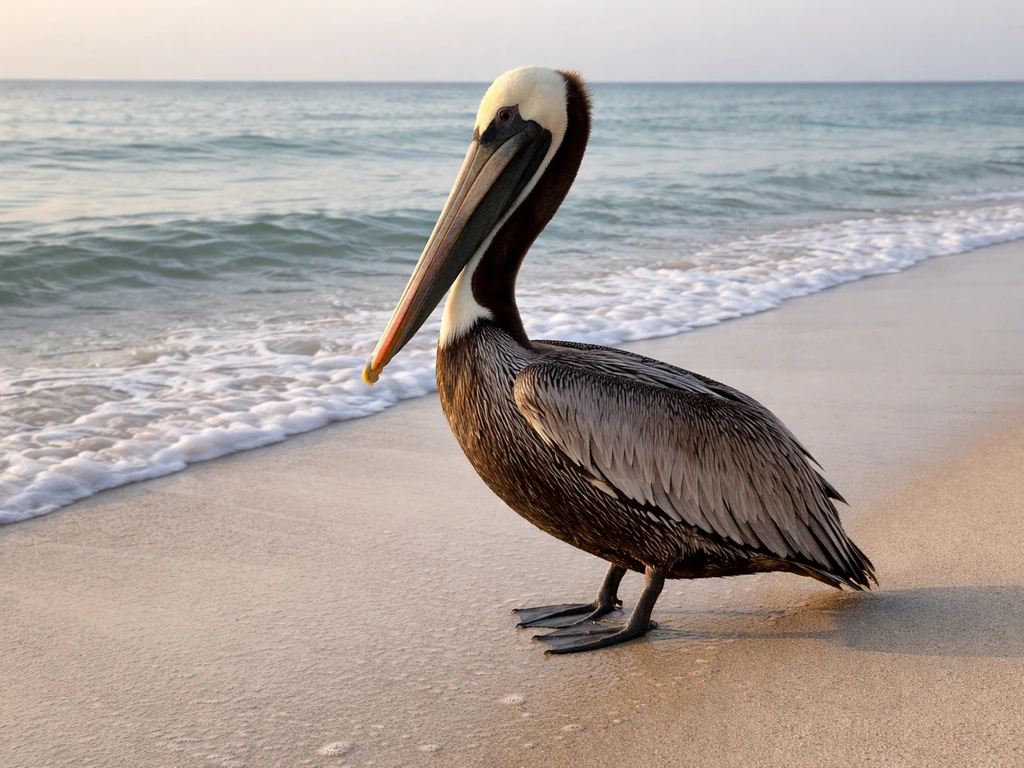
P-E-L-I-C-A-N is exactly 7 letters and describes a large, highly recognizable marine and coastal bird found worldwide. One strong 7-letter option for this clue is PELICAN. Pelicans are common in puzzle answers precisely because the name is familiar, unambiguous in spelling, and hits the letter count cleanly. In ornithological terms, pelicans are waterbirds that forage in coastal and marine environments, so 'marine bird' as a clue descriptor is entirely fair.
SEAGULL (7 letters): familiar but slightly informal
S-E-A-G-U-L-L is also exactly 7 letters. 'Seagull' is common in everyday language but is actually a very informal collective term. Ornithologists prefer 'gull,' and the IOC World Bird List doesn't use 'seagull' as an official name for any species. In puzzles, 'seagull' does appear as an answer, but setters who care about precision tend to avoid it because it's not a recognized species-level name. Still, it's a real possibility if the clue is casual or general.
PUFFINS (7 letters): works only if plural
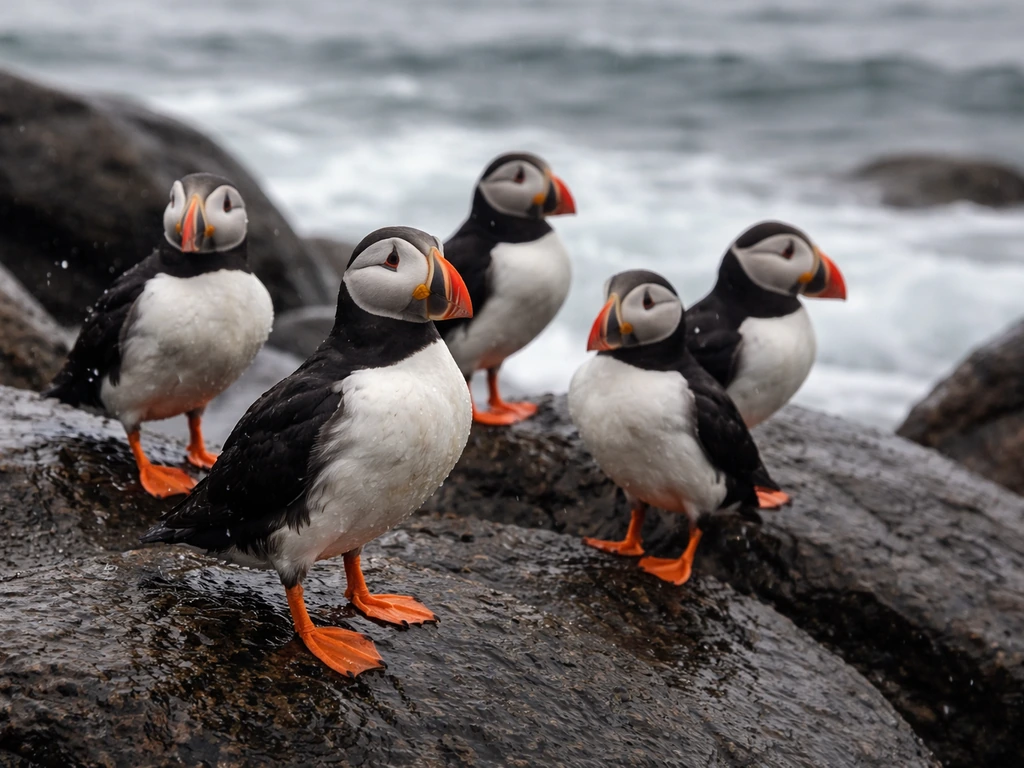
Puffin itself (P-U-F-F-I-N) is 6 letters, so it belongs in the same space as 6-letter bird name searches. Add the plural S and you get PUFFINS at 7 letters. Puffins are genuinely iconic North Atlantic seabirds, described by Britannica as the 'common, or Atlantic, puffin,' and they are the kind of bird that puzzle setters love for their visual distinctiveness. Britannica describes the [common, or Atlantic, puffin](https://www.
britannica. com/animal/puffin) as Fratercula arctica and notes that it occurs on Atlantic coasts from the Arctic south to Brittany and Maine. That kind of widely recognized “common” seabird answer is similar to other common bird 7 letters crossword solutions like this one. If your clue is pluralized or implies more than one bird, PUFFINS is a strong answer.
SKIMMER (7 letters): a darker-horse pick
S-K-I-M-M-E-R is 7 letters and refers to a family of marine birds known for their distinctive low-level flight over water. Skimmers are genuinely seabirds, but they're less well-known outside of birding circles, making them a less common puzzle answer for a clue simply worded 'common marine bird.'
How to confirm the answer using your puzzle constraints
The letter count alone gives you a shortlist, but the intersecting letters in your grid (the 'cross letters' in crossword terms) are almost always enough to pin down the exact answer. Here's how to work through it systematically.
- Count the squares again. It sounds obvious, but miscounting by one is the most common reason a perfectly good answer doesn't fit. Count each individual square, not the spaces between letters.
- Check any cross letters you already have filled in. A confirmed P in position 1 points strongly to PELICAN or PUFFINS. A confirmed S in position 1 points to SEAGULL or SKIMMER. A G in position 1 would point back toward GANNET (and signal a recount).
- Decide if the clue implies singular or plural. Clues phrased as 'a marine bird' or 'marine bird (7)' usually expect a singular noun. 'Marine birds (7)' might accept a plural. PUFFINS only works if the clue tolerates or requires plural.
- Check whether the clue uses a capital letter for 'Common.' If it does, the puzzle might be pointing to a formal species name like 'Common Tern,' though that's 10 letters across two words and wouldn't fit a 7-letter grid as a single answer.
- If you use a crossword solver tool, enter the confirmed letters (e.g., P L C _ N) to filter candidates rather than just searching 'marine bird 7 letters.'
Spelling, pronunciation, and naming variants to watch for
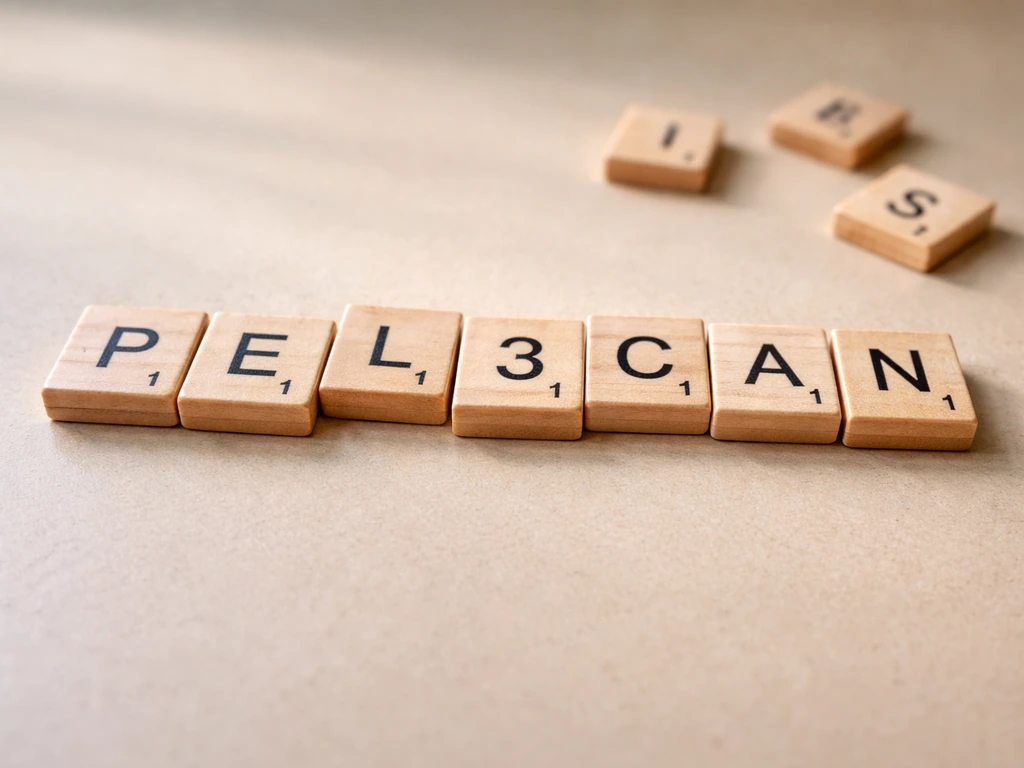
Even once you've identified the right bird, spelling and variant names can trip you up, especially if you're double-checking your answer against a reference source that uses a different name.
Pelican
Spelled P-E-L-I-C-A-N, no common misspelling traps here. Pronounced PEL-ih-kun (IPA: /ˈpɛlɪkən/). Merriam-Webster defines pelican as a genus (Pelecanus) of large web-footed birds and gives the pronunciation /ˈpɛlɪkən/. The name comes from the Greek 'pelekan.' There is only one widely used English common name for this bird, so you won't run into synonym confusion.
Seagull
Spelled S-E-A-G-U-L-L, with a double L at the end (a frequent spelling error is writing SEAGUL). Pronounced SEE-gull (IPA: /ˈsiːɡʌl/). As noted above, formal ornithological sources use 'gull' for specific species, so if you cross-reference and can't find 'seagull' in a bird name database, that's why.
Puffin / Puffins
Spelled P-U-F-F-I-N, with a double F. Pronounced PUF-in (IPA: /ˈpʌfɪn/). The Atlantic Puffin is also called the 'common puffin' informally, which is why it connects well to a clue using the word 'common.' The formal IOC English name is simply 'Atlantic Puffin' for Fratercula arctica, so if a puzzle references 'common puffin,' it's using the informal descriptor, not an official name.
Gannet (reference for 6-letter searchers)
Because GANNET comes up so often in the same searches, it's worth flagging: spelled G-A-N-N-E-T, double N. If you are instead searching for a common garden bird with 6 letters, you will likely want a different type of entry than this gannet-focused six-letter check common garden bird 6 letters. Pronounced GAN-it (IPA: /ˈɡænɪt/). If you're solving a 6-letter marine bird clue, GANNET is the top answer. For 7-letter puzzles, it doesn't fit in the singular, but GANNETS (7 letters: G-A-N-N-E-T-S) does.
From common name to formal ornithology name
If you want to go a step further and connect your puzzle answer to the bird's actual scientific identity, here's how the main candidates map to formal taxonomy.
| Common name | IOC/standard English name | Scientific name | Etymology shortcut |
|---|---|---|---|
| Pelican | Various species (e.g., Brown Pelican) | Pelecanus occidentalis (Brown) | From Greek 'pelekan,' likely linked to 'pelekys' (axe), possibly referencing the bill shape |
| Seagull | Not an official species name; typically refers to gulls (Larus spp.) | Multiple Larus species | Old English 'maew' for gull; 'seagull' is a folk compound |
| Puffin / Puffins | Atlantic Puffin | Fratercula arctica | 'Fratercula' means 'little friar' in Latin, referencing the bird's black-and-white coloring like a monk's habit; 'arctica' means northern |
| Gannets (7 letters) | Northern Gannet | Morus bassanus | 'Bassanus' refers to Bass Rock in Scotland, a famous gannet colony; 'Morus' from Greek for foolish, referencing how easily they were caught |
The IOC World Bird List is the main authority that standardizes these English common names globally. It's worth knowing that the IOC has explicit spelling rules and principles around when to use modifiers like 'Common' in a name, which is exactly why you'll sometimes see a species referred to as 'Common Tern' in one source and just 'Tern' in a puzzle context. The scientific name (Sterna hirundo for Common Tern, for instance) stays stable even when the English name shifts, making it the most reliable cross-reference if you want to be absolutely sure you're looking at the right bird.
Quick decision checklist to lock in your final answer
Run through these steps and you'll have your answer confirmed in under a minute.
- Recount the grid squares: is it definitely 7, not 6 or 8?
- If 7 and singular: PELICAN or SEAGULL are your top candidates. PELICAN is more likely if the clue implies an ocean/coastal bird with a distinctive bill.
- If 7 and possibly plural: PUFFINS and GANNETS both work and are strong seabird answers.
- Check your cross letters: a P in square 1 means PELICAN or PUFFINS; S in square 1 means SEAGULL or SKIMMER.
- If the clue says 'common' with a capital C, check whether the puzzle might expect a two-word answer split across entries, or whether the 7-letter entry is part of a longer phrase.
- Verify spelling before writing it in: SEAGULL ends in double L, PUFFIN(S) has double F, PELICAN ends in A-N not I-N.
- If you want the scientific name for further verification: PELICAN (Brown) = Pelecanus occidentalis; Atlantic Puffin = Fratercula arctica; Northern Gannet = Morus bassanus; Common Tern = Sterna hirundo.
- Still stuck? The related puzzle territory of 'common bird 7 letters' (without the marine qualifier) opens up more land-bird candidates if your clue turns out to be less ocean-specific than it first seemed.
The bottom line: for a 7-letter 'common marine bird' clue, start with PELICAN. It's the cleanest fit, exactly 7 letters, unambiguously a marine/coastal bird, universally recognized, and easy to spell. If your crossword clue asks for a common bird with 8 letters, use these same candidate-checking steps to narrow it down common bird 8 letters. If PELICAN doesn't work because of cross letters, move to SEAGULL, then PUFFINS or GANNETS if the clue tolerates a plural. Use the scientific names above to double-check you've got the right bird once you've filled in your answer.
FAQ
If the clue is “common marine bird” and my answer needs exactly 7 letters, is GANNET still usable?
Only if the puzzle effectively accepts a plural. GANNET is 6 letters, but GANNETS is 7 letters, so check whether your crossings allow the added S at the end.
What if my crossings rule out PELICAN, SEAGULL, PUFFINS, and GANNETS, are there other 7-letter seabird answers that fit?
Yes, but you need to use the cross letters to avoid guessing. Once you have two or three fixed letters from intersections, try searching for 7-letter seabirds that match the pattern, then confirm spelling against a bird name database or the IOC-style English name listing.
Should I assume the clue uses “common” in the everyday sense, or could it be part of an official bird name?
Most of the time it means familiar, not “Common Tern” style. A quick test is whether any candidate bird’s official English name actually begins with “Common.” If none do, treat “common” as a descriptor and prioritize the marine habitat plus letter count.
Why do some solvers list “SEAGULL” for this clue if ornithology prefers “gull”?
Because many crosswords use informal, broadly understood terms. If your puzzle is from a setter known to be more precise, they may expect a species-true term instead, so use crossings to decide whether SEAGULL is the intended answer or just a common everyday substitute.
Could “marine bird” mean something other than a seabird that feeds out at sea?
In puzzles it usually points to seabirds, but wording edge cases exist. If the clue also references shoreline food (for example, “mud” or “estuary”), then the answer might shift toward shorebirds rather than classic pelagic seabirds, so don’t rely on habitat words alone if other parts of the clue contradict it.
My grid has 7 letters but one place seems to require an alternate spelling, like SEAGUL instead of SEAGULL, what should I check first?
Check the exact letter position where the double L is implied by crossings. If the intersection letters force the second L, drop the shortened spelling immediately. For puzzle solving, correct letter placement matters more than correct pronunciation.
If the clue is “common puffin” or “puffin” with 7 letters, how do I know whether the answer should be plural?
Look at clue grammar and enumeration. If the clue says “common puffin” but the entry length is 7, then PUFFINS is the natural fit. If the clue explicitly says “puffin” singular and the answer length is still 7, reconsider, because the standard species name is typically 6 letters.
How can I use scientific names to verify the crossword answer without getting stuck on English name modifiers?
Use the scientific name as the anchor. For example, if a candidate is intended to be “Common Tern,” the scientific name Sterna hirundo stays the same even if some sources include or omit the word “Common.” If your candidate matches the scientific name for the species you think is intended, the English modifier choice likely won’t matter.
What’s the fastest way to confirm the answer once I fill in PELICAN or another candidate?
Validate two things: letter count and crossings across multiple neighboring entries. If the filled bird name creates at least one consistent contradiction elsewhere (an intersection letter forces an impossible spelling), pivot to the next best candidate rather than re-deriving from scratch.
Could a crossword setter use a brand-new variant like “common tern” behaviorally, even though my clue is “common marine bird”?
It’s possible but uncommon. If you suspect a specific species rather than a general seabird, your crossings should become very constraining. When crossings produce initials that match a known 7-letter tern, petrel, or auk candidate, switch from “generic seabird” mode to “specific species” mode and verify spelling.
Next Article
Common Bird Crossword Clue: 7-Letter Answer and How to Check
Find the 7-letter common bird crossword answer and verify it using letter count, known letters, and cross clues.