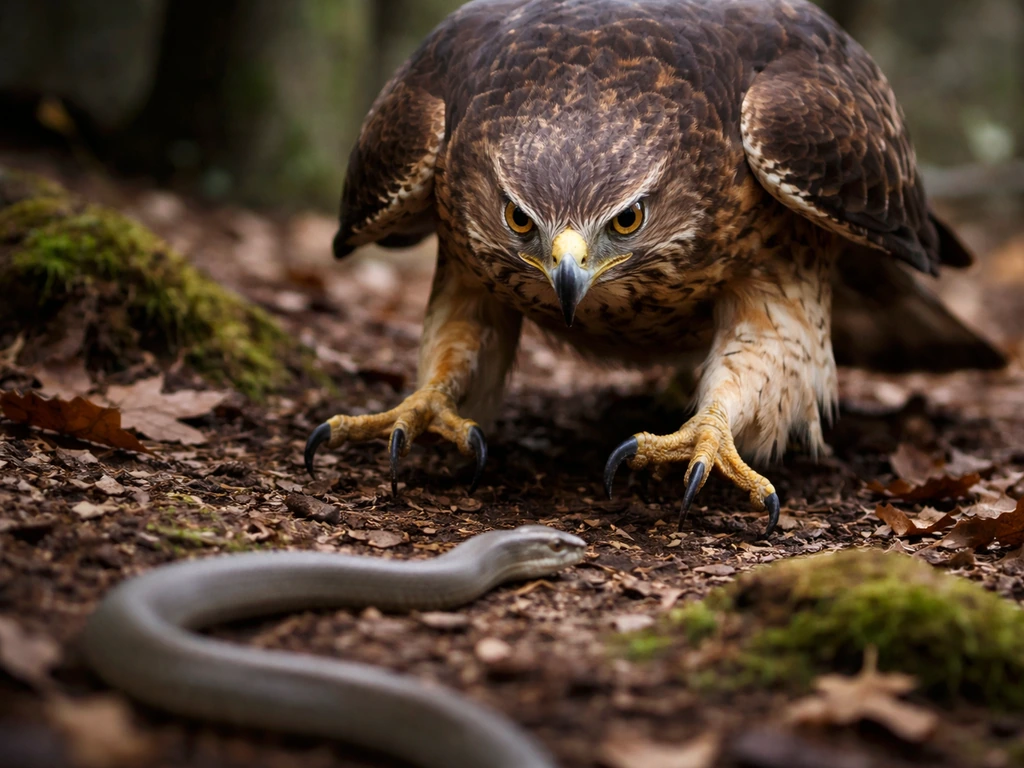
In bird terminology, a "bill" is the beak: the projecting mouthpart made of upper and lower jaws covered by a hard, horny sheath. That's it. When a field guide, birdwatcher, or bird name uses the word "bill," it has nothing to do with money, invoices, or legislation. It's purely the anatomical structure a bird uses to eat, drink, preen, build nests, and interact with its world.
Bill Meaning in Birds: Definition, Uses, and Examples

James Ridgley
20 May 2026
"Bill" in birds vs. other meanings of the word

"Bill" is one of those English words that wears a lot of hats. You've got a dollar bill, a restaurant bill, a bill in parliament, and a bill on a bird's face. If you searched "bill meaning bird" and landed here feeling confused, that's completely understandable. The key is context: when the word appears alongside a bird species, a field guide, or any description of avian anatomy, it always refers to the mouthpart. Cambridge Dictionary, Merriam-Webster, and Collins all list a dedicated "bird" sense for "bill," defined as the beak of a bird or, more precisely, the projecting jaws covered with a horny sheath. Every other meaning of "bill" belongs to a completely different domain.
One small disambiguation worth noting: in crossword puzzles or word games, "bill" cluing a bird part is a very common device. Common origami bird crossword clues often use bird-part words in the same way crossword puzzles or word games. If you’re trying to solve a prefix meaning bird crossword clue, remember that many answers come from common bird-related roots used in naming and wordplay crossword puzzles. If you work through bird-themed word puzzles regularly, you'll quickly recognize it as the go-to shorthand for beak in that context too.
Bird bill anatomy: what you're actually looking at
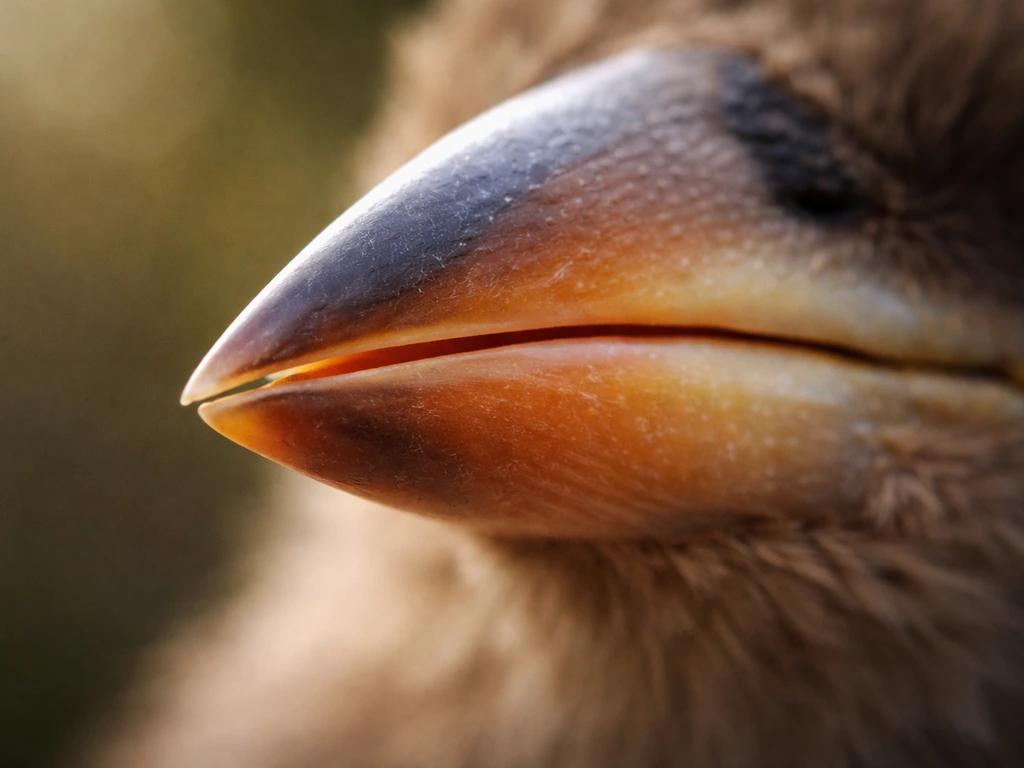
A bird's bill is composed of two jaws: the upper jaw (maxilla) and the lower jaw (mandible). Both are covered by a tough protein layer called the rhamphotheca, which is essentially the hard outer casing you see. The nostrils sit dorsally, usually near the base of the bill, and in some birds (parrots, birds of prey) there's a soft, fleshy patch at the bill base called the cere that surrounds the nostrils.
Once you start looking at labeled bird diagrams, you'll encounter a handful of terms that keep coming up. Here's a quick reference so they don't catch you off guard:
| Term | What it means |
|---|---|
| Maxilla | Upper jaw/upper bill |
| Mandible | Lower jaw/lower bill |
| Rhamphotheca | The hard horny covering over the whole bill |
| Rhinotheca | The horny covering of the upper bill specifically |
| Gnathotheca | The horny covering of the lower bill specifically |
| Culmen | The ridge running along the top of the upper bill |
| Tomium (pl. tomia) | The cutting edges of both the upper and lower mandibles |
| Commissure | The line where the upper and lower mandibles meet when the bill is closed |
| Cere | A fleshy, often bare patch at the base of the bill, enclosing the nostrils |
| Gape | The angle or corner of the mouth where the mandibles meet |
Bills also have a sensory side that surprises many people. In probing birds like kiwis and mallards, the bill tip is packed with mechanoreceptors (touch-sensitive nerve structures). These birds can actually detect prey by touch alone while their bill is submerged in mud or water, a technique called remote touch. So the bill isn't just a grabbing tool; in many species it functions almost like a fingertip.
What bill shape tells you about how a bird feeds

Bill shape is one of the most reliable clues to a bird's diet and feeding strategy. Birdfact also links bill shape to feeding behavior and diet, summarizing common beginner heuristics for different foraging types bill shape correlates with diet and foraging strategy. This is genuinely useful knowledge for birdwatchers because if you can see the bill clearly, you can often narrow down what family a bird belongs to before you've even checked a field guide.
- Long, thin, straight bills: Built for probing into mud, sand, or soil. Shorebirds like sandpipers and curlews reach down into sediment to snatch invertebrates from burrows.
- Long, thin, curved or tubular bills: Hummingbirds and sunbirds use these to probe deep into tubular flowers for nectar. The bill length often matches the flower species they favor.
- Spear-shaped bills: Egrets and herons carry a long, pointed, dagger-like bill used to jab fish and amphibians in shallow water.
- Heavy, conical bills: Seed-cracking machines. Grosbeaks, sparrows, and finches use the thick base and strong tomia to crack open hard seeds.
- Thin, pointed, insectivorous bills: Warblers and other small insect-eaters have needle-like bills for picking insects off leaves and bark.
- Hooked bills: Birds of prey and parrots use a strongly hooked upper mandible to tear meat or crush hard shells. The Hook-billed Kite, for example, has a bill specifically sized for extracting snails.
- Spatulate or spoon-shaped bills: The Spoon-billed Sandpiper swings its wide-tipped bill side to side as it walks forward, sieving small animals and particles from shallow water.
- Flat, serrated (duck-type) bills: Ducks and other waterfowl use broad, flat bills with comb-like lamellae along the tomia to filter food from water.
The general rule: when you see a bird name that includes a bill descriptor (long-billed, hook-billed, spoon-billed, crossbill), that descriptor is almost always a direct signal about the bird's feeding ecology. It's one of the cleaner form-function relationships in all of zoology.
Beak, bill, rostrum, mandibles: sorting out the synonyms
Here's something that trips up a lot of beginners: "beak" and "bill" mean exactly the same thing in bird anatomy. There is no anatomical difference between them. Cornell Lab's All About Birds confirms they are interchangeable labels for the same structure, and ornithology education sources are equally direct about this. Some people loosely use "beak" when talking about songbirds and "bill" for ducks or waders, but that's informal habit, not a formal distinction. Either word is correct.
"Rostrum" is the more formal, Latin-derived term used in scientific and academic contexts. It's the same structure again, just labeled in technical literature. "Mandibles" specifically refers to the two jaw components (upper mandible and lower mandible) that together form the bill. You'll hear ornithologists say "the lower mandible" when they want to be precise about which jaw they mean, but when someone just says "mandibles," they usually mean the bill as a whole in casual use.
| Term | Context where you'll see it | Means the same as bill? |
|---|---|---|
| Beak | Everyday birding, field guides, casual conversation | Yes |
| Bill | Field guides, bird names, ornithology, everyday birding | Yes (it is the primary term) |
| Rostrum | Scientific papers, formal ornithological writing | Yes |
| Mandible(s) | Anatomy descriptions, scientific writing | Refers to the jaw component(s) of the bill |
Reading bird names that use "bill" as a descriptor
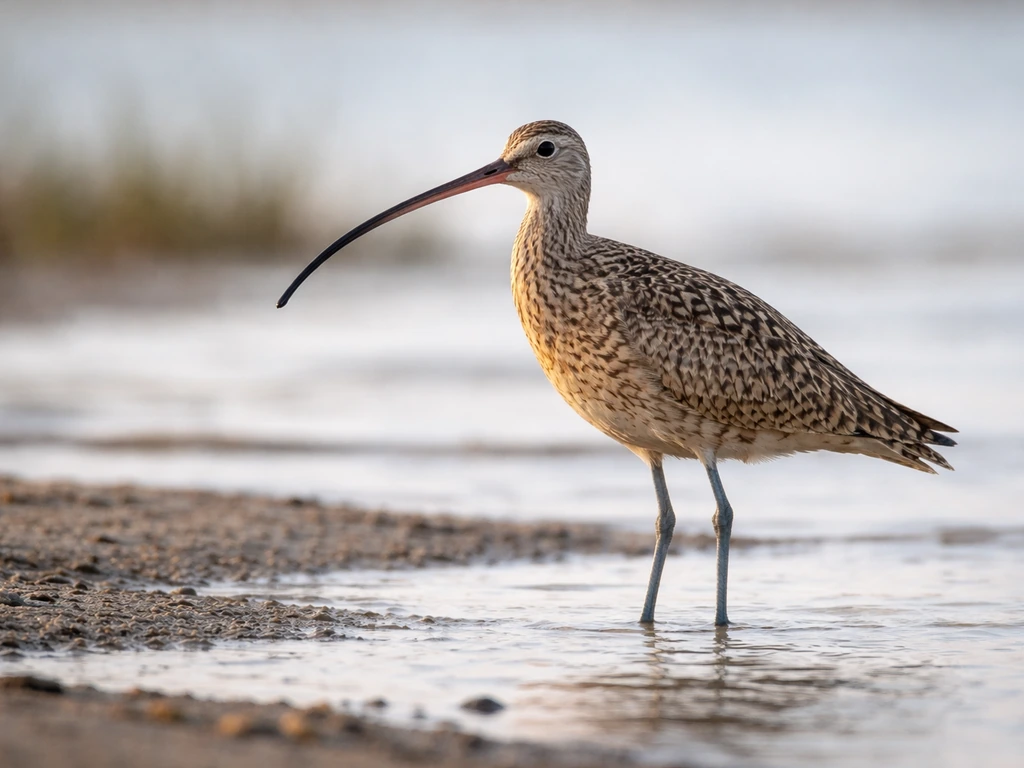
Once you know what "bill" means anatomically, bird names containing it become immediately readable. In English common names, "bill" almost always appears as part of a compound descriptor telling you something about the bill's size, shape, or color. Here are some real-world examples:
- Long-billed Curlew: A shorebird with an exceptionally long, downcurved bill used to probe deep into mud and sand.
- Hook-billed Kite: A raptor whose strongly hooked bill is adapted for pulling snails from their shells.
- Spoon-billed Sandpiper: A critically endangered shorebird whose spatulate bill tip enables a distinctive side-sweeping feeding motion.
- Crossbill: Finches whose upper and lower mandibles cross at the tips, a specialized adaptation for prying seeds out of conifer cones.
- Shoveler (or Shovelbill): Duck species with an unusually broad, shovel-like bill for filtering food from water.
- Yellow-billed Cuckoo: The bill color identifies the species from similar-looking relatives.
The pattern is consistent: adjective (describing shape, size, length, or color) plus "-billed" plus bird name. When you see "-billed" in a name, your brain can immediately translate it to "having a [adjective] bill." This naming logic is shared with other anatomical bird descriptors, similar to how prefixes that relate to bird features or flight appear in compound scientific and common names throughout ornithology. If you also run into a short prefix like one that means bird or flight, it can help you decode the meaning of a bird name fast prefixes that relate to bird features or flight. Those same kinds of prefixes also show up in bird names, including ones that hint at flight prefixes that relate to bird features or flight.
In scientific (Latin) names, the bill is often referenced through terms derived from "rostrum" (rostrata, rostratus) or "rhynchus" from Greek, meaning beak. So if you see a species epithet like "longirostris," that translates directly to "long-billed." Same concept, different language root.
Pronunciation, spelling, and everyday usage tips
"Bill" is pronounced /bɪl/, rhyming with "fill" and "pill." That's the IPA transcription, but in plain phonetics: one short syllable, short "i" vowel, clear "l" at the end. No tricky sounds. The word form "billed" (as in "Long-billed") is pronounced /bɪld/, adding a single "d" sound at the end. It does not gain an extra syllable: it's one syllable, not "bil-led."
For spelling, the most common mistake is confusing "-billed" with "-beaked" when writing bird name descriptors. Both are correct English and both are used in common bird names, but individual species names are fixed: the Long-billed Curlew is always "Long-billed," not "Long-beaked." When in doubt about a specific species name, check a field guide or a resource like Cornell Lab's All About Birds for the standardized English common name.
A few practical usage notes worth keeping in your back pocket:
- Use "bill" or "beak" interchangeably in conversation. Neither is wrong.
- In formal writing or academic contexts, prefer "bill" or "rostrum" over "beak," which can sound slightly more colloquial.
- "Mandible" without a qualifier (upper/lower) can be ambiguous, so specify "upper mandible" or "lower mandible" when you need precision.
- When a bird name uses "-billed," that compound adjective is always hyphenated in the official English common name (Long-billed, Hook-billed, Yellow-billed).
- If you encounter "bill" in a crossword or word puzzle clue in a bird context, beak is the answer (or vice versa), since they are confirmed synonyms.
- For pet birds, you'll see the word "bill" in care guides alongside "cere": the cere is the soft patch at the bill base, and its color or texture is often used to identify sex in species like budgerigars.
Getting comfortable with "bill" as a bird term really does open up a lot of the language around birds. Once you know it means the beak, and you see how bill shape maps to feeding behavior, names like "Spoon-billed Sandpiper" or "Hook-billed Kite" stop being confusing labels and start being instant clues about the bird's lifestyle. The Spoon-billed Sandpiper entry describes its spatulate bill feeding behavior, including side-to-side sweeping as it walks forward with its head down, and notes diet items such as small animals blank" rel="noopener noreferrer">Spoon-billed Sandpiper feeding style and diet. That's one of the genuinely satisfying things about learning bird nomenclature: the names usually mean something practical. You might also come across “limbless prey for a bird” in word puzzles, where the 4-letter answer’s meaning is the creature being referenced limbless prey for a bird 4 letters meaning.
FAQ
If a bird name says “billed,” does it always mean the bill shape (like spoon or hook), or can it refer to color or size only?
Usually it indicates a recognizable trait of the bill, which can be shape, size, length, or sometimes obvious color. For example, “spoon-billed” and “hook-billed” point to form, while names like “white-billed” focus on visible coloration. The key is that the descriptor is attached to the bill itself, not to general body color.
Are there bird species names where “bill” is not written with “-billed,” and how should I interpret them?
Yes. Some names use other bill-related terms such as “bill” directly (for example, “bill” appears as a separate word) or use older or less consistent naming conventions. If the name includes a clear beak descriptor, treat it as bill anatomy even if the hyphenated “-billed” pattern is missing. When precision matters, verify the standardized common name.
Is “beak” always interchangeable with “bill,” or is there a situation where one is more correct?
They are used interchangeably in bird anatomy for the same structure. In everyday writing, “beak” is common for songbirds, and “bill” shows up frequently for ducks, waders, and other groups, but that is stylistic. For formal discussions of bird anatomy, either term is acceptable if you mean the beak structure.
In biology classes, what is “rostrum” telling me that “bill” does not?
“Rostrum” is mostly a terminology shift. It is the technical, Latin-derived label used in academic writing, and it refers to the same projecting mouthpart. The fresh value is that rostrum appears in related forms you might see in scientific descriptions, so recognizing it helps you decode species accounts and anatomy glossaries.
What’s the difference between “mandibles” and “bill,” and why do bird experts sometimes emphasize lower mandible?
“Mandibles” refers specifically to the paired jaws that form the bill, upper and lower. When an expert says “lower mandible,” they are drawing attention to the exact jaw part, which can differ in shape, movement, or markings even when the bill overall looks the same at a glance. This matters for identification when only one jaw shows a distinctive feature.
If I see “rhynchus” or “longirostris” in a scientific name, how do I reliably translate it to bill meaning?
Look for bill-meaning roots in the species epithet. “Longirostris” breaks down into a long plus a rostrum-derived element, so it reads as “long-billed.” In practice, translating scientific names works best when you recognize repeated root patterns that map to beak or bill anatomy.
How can I use bill shape for identification when the bird is far away or the bill is partially hidden?
Focus on what you can still infer: bill profile (straight, curved, strongly hooked, upturned, or drooping), relative thickness, and whether the bill seems wide at the tip (often linked to feeding style). Even without exact color, shape cues can narrow the bird’s feeding strategy, and many “-billed” names correspond to those high-confidence shapes.
Is the “cere” always present and visible, or is it only for certain birds?
A cere, the soft fleshy area at the base around the nostrils, is most noticeable in some bird groups such as parrots and birds of prey. For many other birds, the nostrils are positioned on the bill without a clearly visible cere. So if you do not see a cere, that does not automatically mean the bird lacks bill nostrils.
Are mechanoreceptors and “remote touch” relevant to all birds with tactile bills?
They are particularly associated with certain probing birds whose bill tips are specialized for touch-based detection. You cannot assume every bird with a tactile or submerged-feeding lifestyle uses touch in the same way. If you are trying to infer behavior, use bill shape plus habitat and feeding posture together, not bill tip features alone.
What is a common spelling or usage error with “-billed” descriptors, and how do I avoid it?
A frequent mistake is swapping “-billed” with “-beaked” when writing the English common name. Both are valid English words, but the standardized species name is fixed, so “Long-billed Curlew” is not the same official spelling as “Long-beaked Curlew.” When unsure, check the standard common name in a field guide rather than improvising.
Next Article
Limbless prey for a bird 4 letters meaning
4-letter answer for limbless prey for a bird, likely SNAKE, plus checks for spelling and grid fit.