Pronounce it MY-nuh, two syllables, stress on the first. The IPA is /ˈmaɪnə/: the first syllable rhymes with the word "my," and the second syllable is a quick, unstressed "nuh" sound (a schwa). That's it. Whether you see it spelled myna or mynah, the pronunciation is exactly the same.
How to Pronounce Mynah Bird (MY-nah vs my-NAY)

James Ridgley
30 May 2026
Myna or mynah: which spelling is correct?
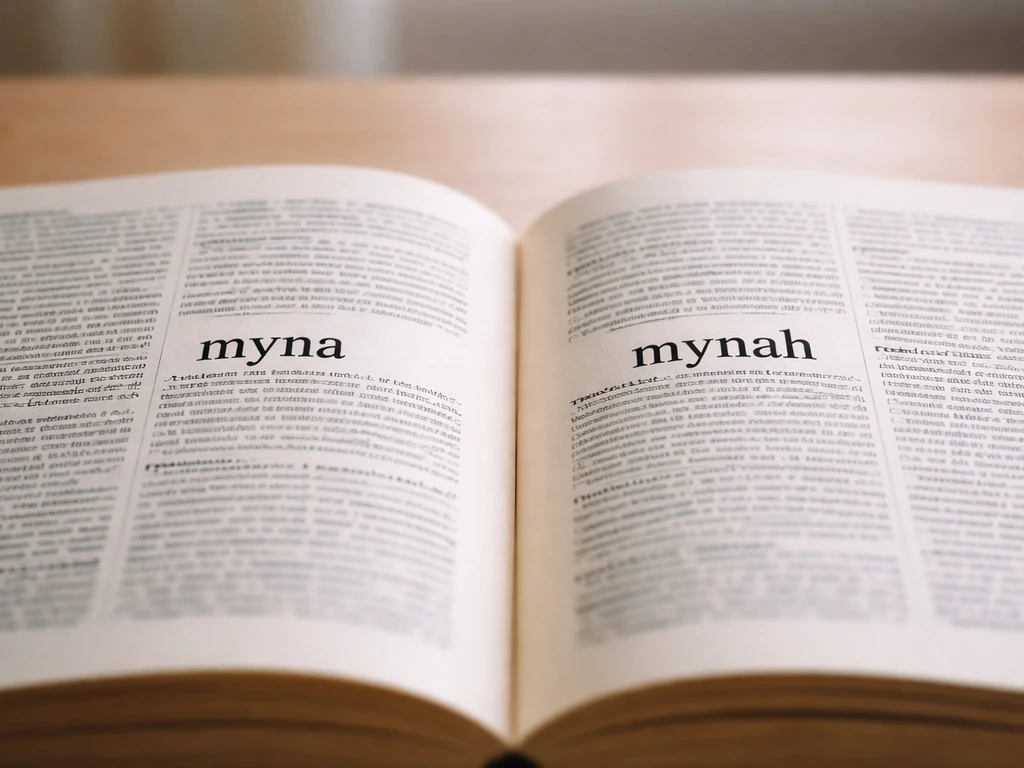
Both spellings are correct, which is genuinely the source of a lot of confusion. Different major dictionaries make different editorial choices here. Merriam-Webster uses "myna" as its headword, while Oxford Learner's Dictionaries and Collins English Dictionary prefer "mynah." Cambridge and Dictionary.com accept both. The short answer: either spelling is defensible in writing, but the pronunciation is the same either way, /ˈmaɪnə/.
If you're writing for a North American audience or citing a field guide like Cornell Lab's All About Birds, "myna" (no H) is the more common choice. If you're writing for a British or international audience, "mynah" is equally standard. For your own use, pick one and be consistent. The spelling confusion does not change how you say the word out loud.
Breaking down the syllables and stress
The word has exactly two syllables: MAI and nuh. Cambridge explicitly marks the syllable break as /ˈmaɪ.nə/, which is useful because it confirms the word does not get stretched into three syllables and the second syllable should stay short and unstressed. The stress mark (ˈ) sits before the first syllable, meaning "MAI" carries all the weight and "nuh" stays soft.
- Syllable 1 (stressed): MAI — rhymes with "my," uses the diphthong /aɪ/ (your mouth opens slightly then glides upward)
- Syllable 2 (unstressed): nuh — a simple schwa /ə/, like the last syllable in "sofa" or "pizza"
- Full word: MAI-nuh
Common pronunciation variants and which one to use
A few variants show up in casual speech and on pronunciation websites. Here's how they compare to the standard dictionary form:
| Variant | Written out | Is it correct? | Why people say it |
|---|---|---|---|
| MY-nuh | /ˈmaɪnə/ | Yes — this is the standard | Matches all major dictionaries: Merriam-Webster, Oxford, Cambridge, Dictionary.com |
| MY-nay | /ˈmaɪneɪ/ | No | Mishearing the schwa /ə/ as an "ay" sound; common but not dictionary-supported |
| mih-NAH | /mɪˈnɑː/ | No | Wrong stress and wrong first vowel; sounds more like a foreign-language pronunciation |
| MY-nah | m AY - n AH | Close enough | A teaching approximation used on informal pronunciation sites; slightly over-pronounces the second syllable but won't cause confusion in conversation |
The variant to avoid is "my-NAY," with the stress shifted to the second syllable and an "ay" at the end. It is not supported by Merriam-Webster, Oxford, Cambridge, or Dictionary.com. It likely spreads because the final schwa /ə/ can sound ambiguous in fast speech and gets filled in as a sharper "ay" sound. Stick with MY-nuh and you'll be right every time.
How to say it step by step
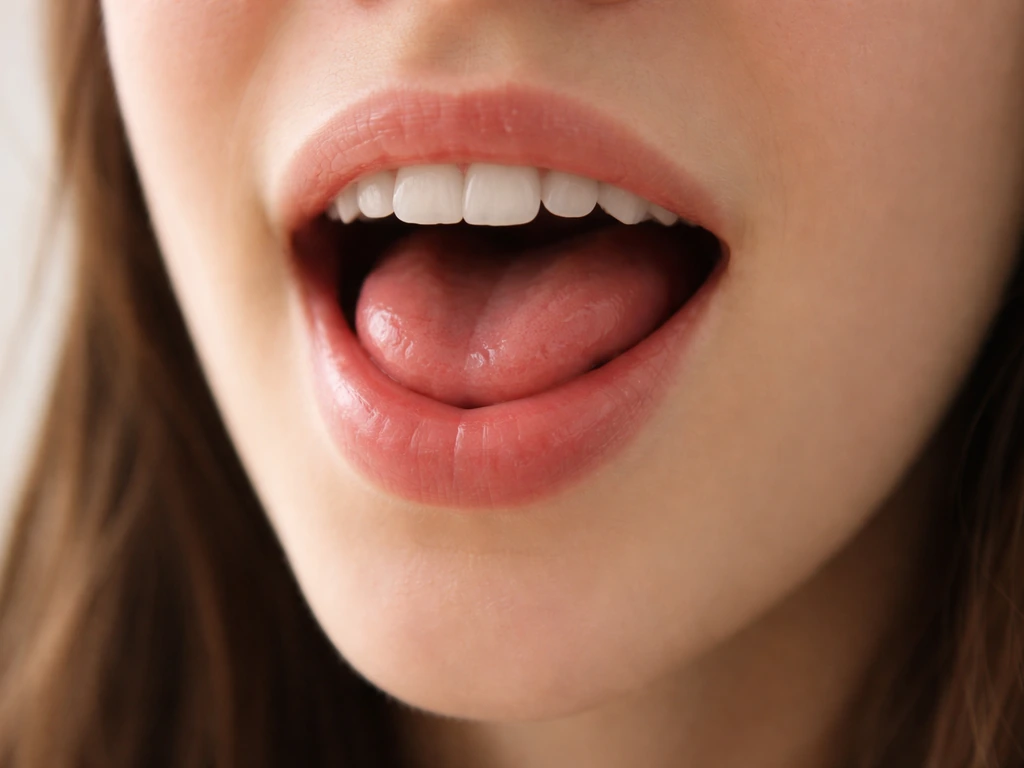
Here's a practical breakdown you can follow out loud. Go slowly the first time, then try it at normal conversational speed.
- Say the word "my" out loud. Notice your jaw drops open slightly and your tongue rises. That's the /aɪ/ diphthong — hold onto that sound.
- Now add a soft "nuh" immediately after, without any pause: "my" + "nuh" = "MY-nuh." Keep "nuh" short and unstressed, like the ending of "antenna."
- Do not stretch the second syllable into "nay" or "nah." The moment you feel your mouth opening wide for a long vowel at the end, pull back.
- Check your stress: the first syllable should be noticeably louder and longer than the second. If both syllables feel equal in weight, try again with more emphasis on the first.
- Say it in a sentence: "The mynah bird can mimic speech." If "MY" pops out clearly and "-nuh" lands quietly, you've got it.
Quick self-check
Run through this checklist after your first few tries. If you can check all four boxes, your pronunciation matches the standard IPA /ˈmaɪnə/ used by Oxford, Cambridge, and Dictionary.com.
- Two syllables only (not three)
- First syllable rhymes with "my" (not "mih" or "mee")
- First syllable is louder and longer than the second
- Second syllable ends in a soft, unstressed "nuh" (not "nay" or a hard "nah")
Practice words that sound similar

If you want to lock in the rhythm, practice with these familiar English words first. They all share the /aɪ/ diphthong in the stressed syllable and a soft, unstressed ending, which is exactly the pattern you need for mynah.
- "Final" — FI-nul: same two-syllable shape, stress on syllable one, soft ending
- "Spiral" — SPI-rul: /aɪ/ sound in the stressed syllable
- "Liner" — LI-ner: stress on first syllable, unstressed schwa at the end
- "Minor" — MI-ner: almost identical rhythm to mynah; this one is the closest match
- "Miner" — same sound as "minor," same pattern as "mynah"
"Miner" and "minor" are your best practice words. Say "miner" three times, then swap the ending to "nuh" instead of "ner." You're now saying "mynah. If you want a similarly quick phonetic guide, see how to pronounce xeme bird next for another bird-name pronunciation comparison. " The stress pattern and opening diphthong are identical.
What the word actually refers to, and why the name varies
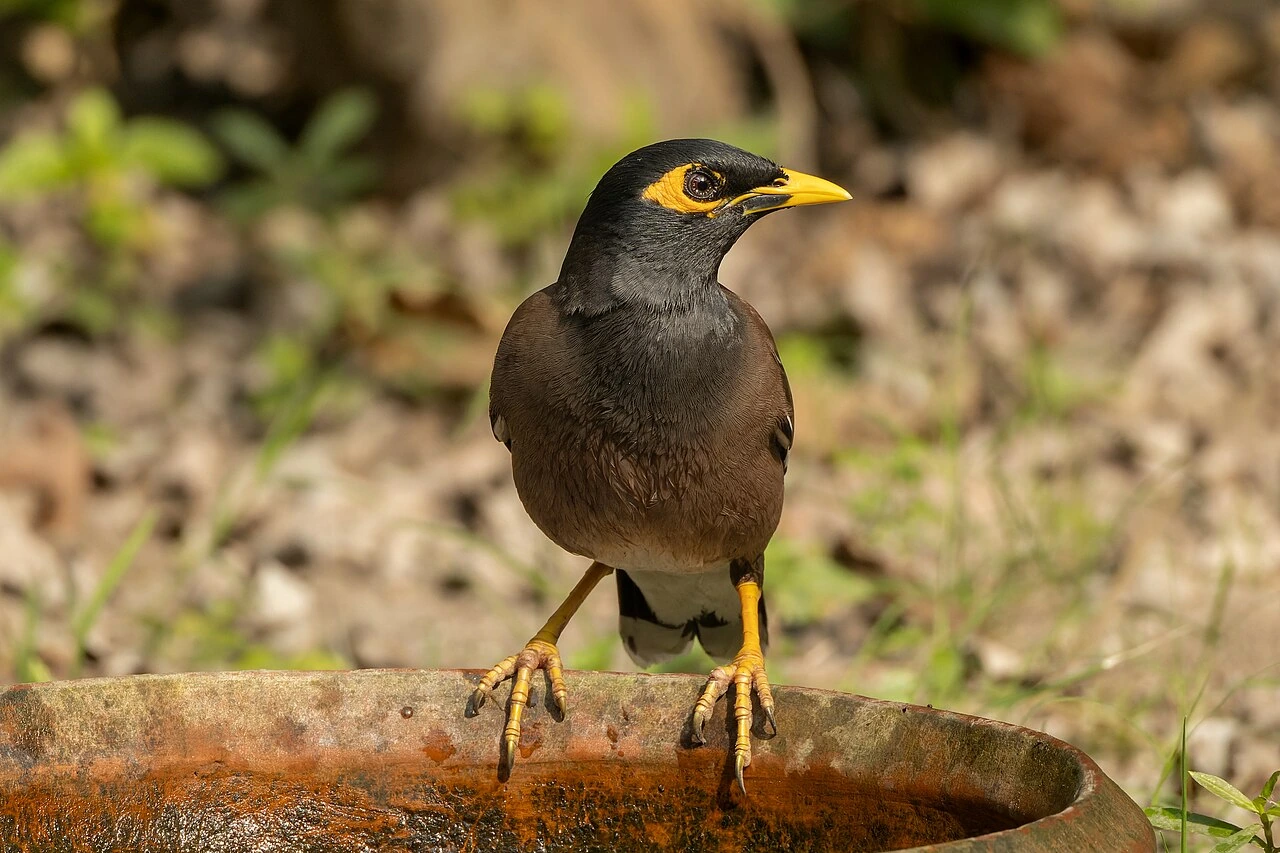
"Myna" or "mynah" refers to a group of birds in the starling family (Sturnidae), not a single species. Wikipedia discusses the genus Acridotheres and includes the common myna type species historically designated as Paradisea tristis a group of birds in the starling family (Sturnidae).
In English, this is also the name people use when they ask, what is myna bird called in english. The most well-known is the Common Myna (Acridotheres tristis), also called the Indian Myna, which has spread across much of the world and is famous as a pest species in several countries.
The Hill Myna is another well-known member of the group and is the species most often kept as a pet for its remarkable ability to mimic human speech. Britannica uses "common mynah" as an alternate common name for the same bird that Cornell Lab lists as "Common Myna," which tells you something about how freely the spelling varies even among authoritative sources.
The word itself comes from Hindi "maina," which in turn traces back to Sanskrit "madana," with meanings linked to something along the lines of "delightful" or "joyful." Oxford dates the English borrowing to the mid-18th century, which is when British naturalists were actively cataloguing South Asian wildlife and anglicizing local names. That Hindi origin, "maina," is why the pronunciation centers on the /aɪ/ sound rather than a short /ɪ/ or long /iː/: English speakers heard the Hindi syllable and approximated it as "my." The final "-nah" or "-na" ending in the spelling reflects different attempts to transliterate the Hindi word, which is why both forms (myna and mynah) have been used for centuries and neither has fully won out.
This kind of spelling drift is common with bird names borrowed from other languages. If you've looked up how to pronounce other bird names with non-English roots, like hoopoe or nene, you'll recognize the pattern: the spelling wobbles across sources, but the spoken form usually settles into something consistent.
If you've looked up how to pronounce rhea bird, you'll recognize a similar pattern where spelling and reference sources can vary but a single spoken form is what you should aim for. Hoopoe is also commonly mispronounced at first, so it helps to follow a clear syllable-by-syllable guide. If you're also wondering how to pronounce nene bird, the key is to follow the spelling-to-sound pattern your source uses and practice it slowly first hoopoe or nene.
For mynah, that settled form is simply MY-nuh, and every major dictionary agrees on it even when they disagree on the spelling.
FAQ
Is “MY-nuh” always the right way to say it, even if I only see “myna” in a field guide?
Yes. Both common spellings, myna and mynah, map to the same two-syllable pronunciation (MAI plus a short, unstressed “nuh” sound). The only time you might hear a different rhythm is accents that shorten or swallow the final vowel, but the stress should still stay on the first syllable.
How do I avoid the common mistake “my-NAY” when speaking fast?
Slow down just for the ending, keep it as a schwa-like “nuh” rather than turning it into an “ay” glide. A quick way is to practice alternating “MIN-er” and “MIN-a(uh)” with the ending staying soft and brief, then blend it into “MY-nuh” at normal speed.
Where should the stress fall, and should I pause between the syllables?
Stress goes on the first syllable, MAI. You do not need an audible pause, but a slight separation in timing helps accuracy, especially on the first attempts. If it sounds like three syllables, you are usually over-emphasizing the second syllable.
Does the ending sound like “nuh” (schwa) or “nah” with a clear A?
It should be closer to schwa, a very short, unstressed “uh” quality, not a firm “ah.” If you clearly enunciate “nah,” you will often sound like the wrong stress pattern even if the first syllable is correct.
If I’m teaching someone else, what’s an easy shorthand to remember the pattern?
Use this rhythm cue: “MAI” like the start of “my” plus a soft “nuh” that does not carry stress. If you can replace the second syllable with the sound in “sofa” without changing stress, you are very close.
How should I pronounce “Common Myna” in a sentence that includes a species name?
Say it as two syllables for the bird name, then move on smoothly to the next word. Keep “Common” stressed as usual, but do not shift stress onto the second syllable of “myna/mynah.” The bird-name stress should still be first-syllable heavy.
Are there any regional pronunciation differences I should expect from non-native speakers or recordings?
You may hear the final vowel reduced differently, especially in fast speech, but the key features to preserve are two syllables and first-syllable stress. Some speakers also slightly vary the first vowel quality due to their accent, yet “MAI” should remain the stressed portion.
When writing, should I choose “myna” or “mynah” for consistency?
Pick one based on your target audience or style. If you are writing for North America, “myna” is often more common, while “mynah” is widely used in British and international contexts. Either way, readers should say it the same, so consistency matters more than which spelling you select.
What should I do if my pronunciation app or video uses a different IPA than /ˈmaɪnə/?
Treat the stress and syllable count as the priority. If the app says the stress is on the first syllable and the second syllable stays short and unstressed, it will likely still match the standard. If it suggests stress on the second syllable or adds an extra syllable, re-check for the “my-NAY” style drift and correct the ending back to a schwa-like “nuh”.
Next Article
How to Pronounce Magpie Bird: Easy Guide + IPA
Easy guide to pronounce magpie bird correctly with IPA, syllables, common mistakes, and quick practice tips.