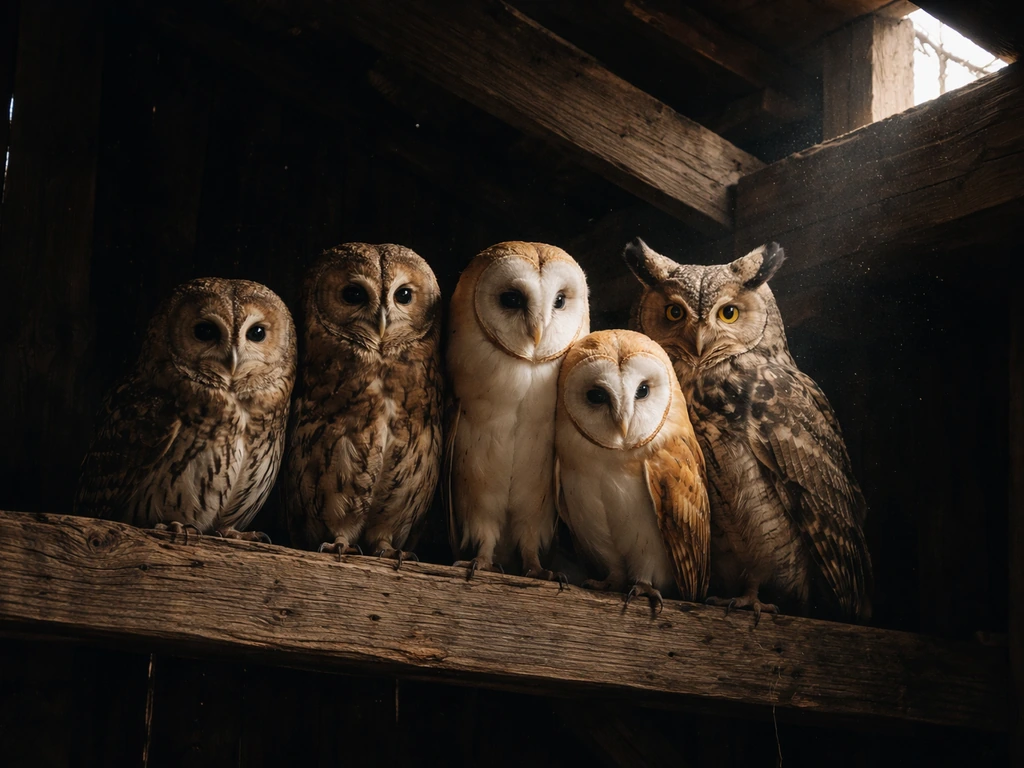
A "parliament" is the collective noun for owls. So if you spot a group of owls roosting together, the correct term is "a parliament of owls." It's one of the most evocative animal group names in English, and once you know it, you'll never forget it.
Parliament Collective Noun for Which Bird? Usage Guide

James Ridgley
7 Jun 2026
Which bird is it, exactly?
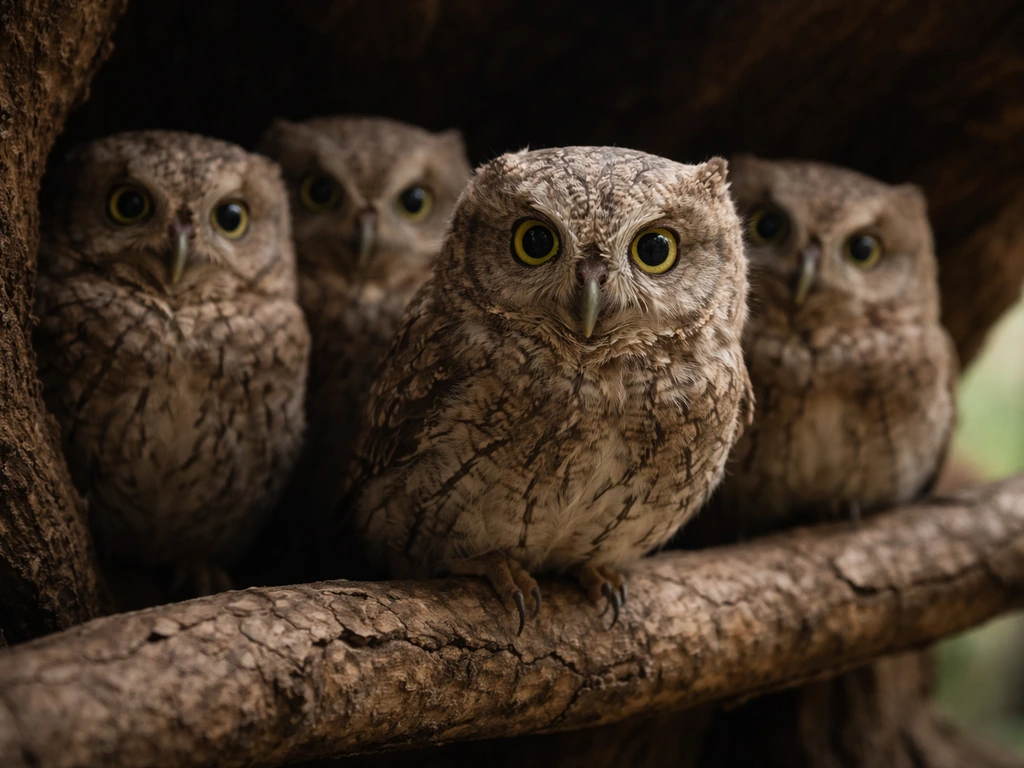
The collective noun "parliament" is primarily associated with owls. You'll see it listed in wildlife reference books, birding field guides, and vocabulary resources as "a parliament of owls." Some older British lists also assign "parliament" to rooks (a type of crow), and you may still come across that usage in traditional texts. Wiktionary notes that the “parliament” collective noun usage for birds is attested for owls, including examples like “a parliament of owls.” parliament collective-noun usage for owls. However, for most modern purposes, and in the majority of current bird-naming references, "parliament of owls" is the version people mean and the one most widely recognized today. If you're solving a word puzzle or crossword clue, "owls" is the answer they're looking for.
The association with rooks isn't wrong exactly, just older and less commonly cited now. If your puzzle or quiz specifies rooks, that's a valid historical usage. But if it just says "parliament," go with owls.
The collective nouns people mix up
Bird collective nouns are a genuinely confusing area of English vocabulary because there are so many of them, and most people only know one or two. If you're also wondering about bird group labels versus basic word forms, you might like the quick answer to what is the plural of bird Bird collective nouns. Here are the ones that get mixed up most often, and which birds they actually belong to:
| Collective Noun | Bird(s) It Describes | Notes |
|---|---|---|
| Parliament | Owls (also historically rooks) | The main answer to today's question |
| Flock | Almost any bird, generically | Safe to use for any bird group when you don't know the specific term |
| Gaggle | Geese (on the ground or water) | "Skein" is used for geese in flight |
| Skein | Geese (in flight) | Refers specifically to the flying V-formation |
| Brood | Chicks/young birds of the same clutch | About age and family, not species |
| Brace | Game birds (e.g., pheasants, grouse) | Traditionally a pair prepared for eating or sport |
| Murder | Crows | Another well-known evocative collective |
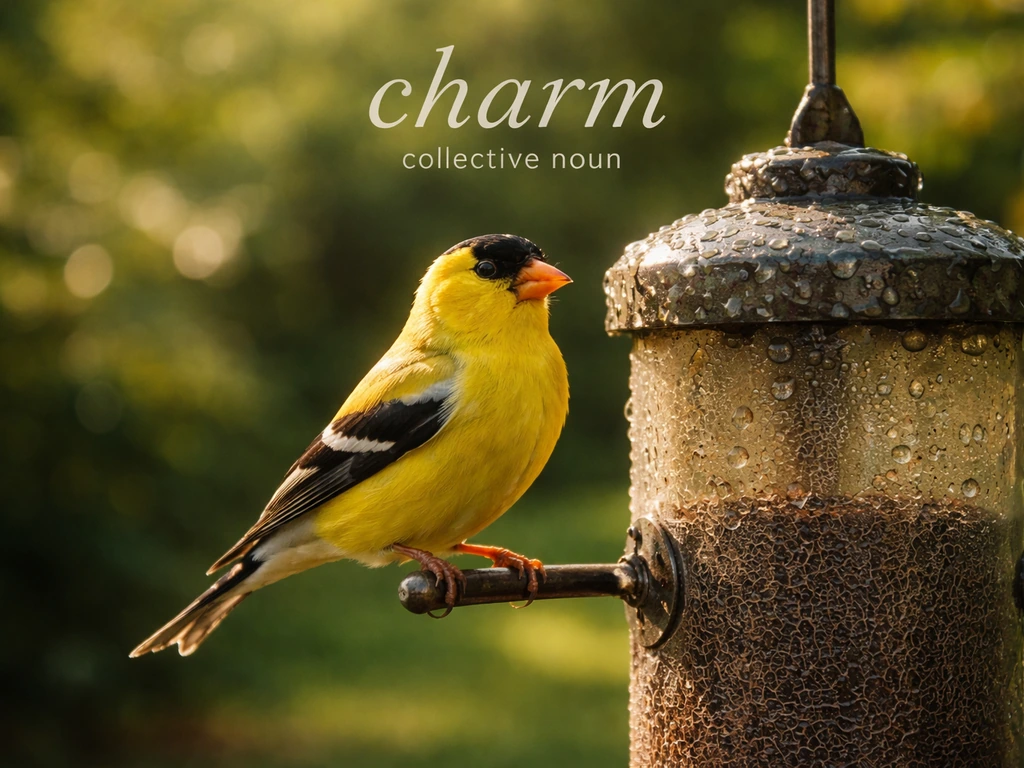
| Charm | Goldfinches | Also used for hummingbirds in some references |
| Colony | Penguins, gulls, herons | Used for nesting groups |
| Conventicle / Tribe | Sparrows | Less commonly known; more archaic usage |
The ones that trip people up most are "brood" (which is about young birds, not a specific species) and "brace" (which sounds grand but is really about hunting pairs). Neither of those is interchangeable with "parliament."
How to pick the right collective noun for the bird in front of you
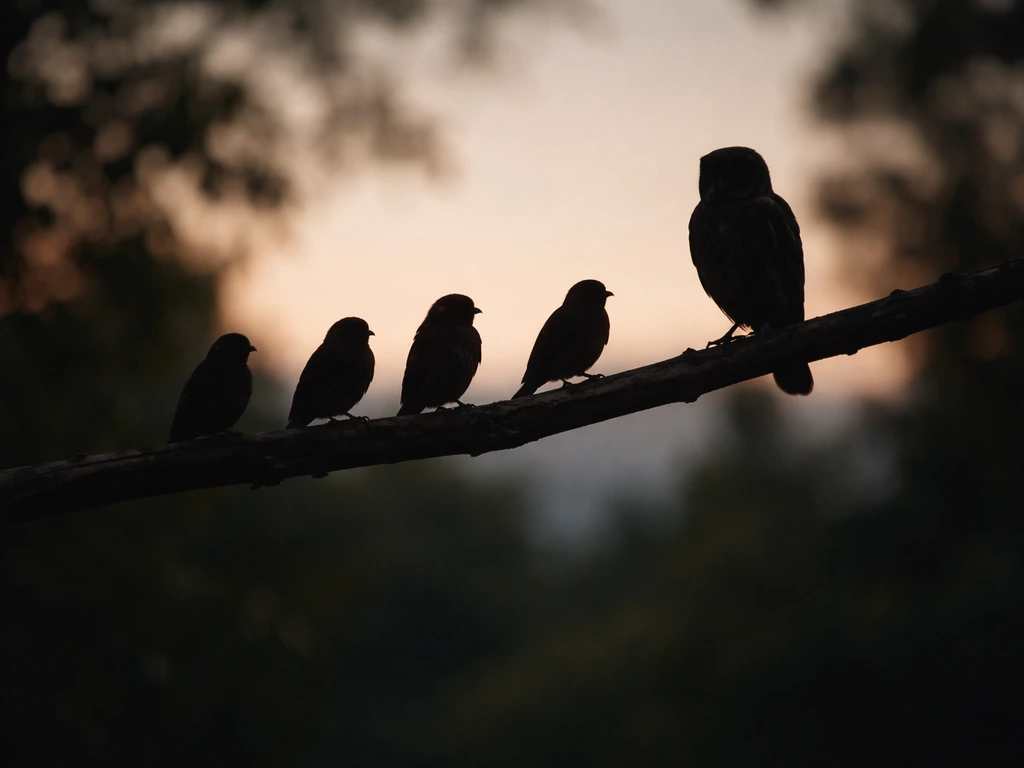
The simplest rule: if you know the specific collective noun for that species, use it. If you don't, "flock" works for almost any bird and won't be wrong. If you're specifically wondering what to call a group of birds of this kind, the answer is usually a parliament of owls. Here's a more practical breakdown by situation:
- Owls roosting or gathering together: use "parliament."
- Any mixed group of birds, or a species you don't know the specific term for: use "flock."
- Geese walking around a park: use "gaggle."
- Geese flying overhead in formation: use "skein."
- Baby birds in a nest from the same parents: use "brood."
- A pair of pheasants or similar game birds: use "brace."
- Crows gathering in a field or tree: use "murder."
- Goldfinches at a feeder: use "charm."
A good mental shortcut: the more unusual and poetic the collective noun (parliament, murder, charm), the more likely it belongs to a specific, well-known species. These terms were coined deliberately to be memorable and descriptive of the bird's character or behavior. For everything else, "flock" is your safe default.
How to say it, spell it, and use it in a sentence
Pronunciation
"Parliament" is pronounced PAR-luh-ment in everyday speech. The IPA notation used by Cambridge and Oxford dictionaries is /ˈpɑːləmənt/ in British English. The middle syllable is unstressed and often reduced, which is why some people accidentally misspell it. There are three syllables: PAR - luh - ment. Don't add an extra syllable; it's not "par-lee-uh-ment."
Spelling
The word is "parliament" with an A in the middle: p-a-r-l-i-a-m-e-n-t. The most common spelling mistake is writing "parliment" (dropping the A) or "parliment" (swapping letters in the unstressed middle). If you're unsure, remember the word contains "parlia" at the start, then just add "ment."
Grammar and usage
In formal English grammar, collective nouns like "parliament" can take either a singular or plural verb depending on context. In American English, the singular is preferred: "A parliament of owls was perched in the tree." In British English, you'll often hear the plural: "A parliament of owls were hooting all night." Both are grammatically defensible; just stay consistent within a piece of writing. When using it casually or in a quiz answer, just write "a parliament of owls" and you're set.
Real sentences and a quick reference cheat sheet
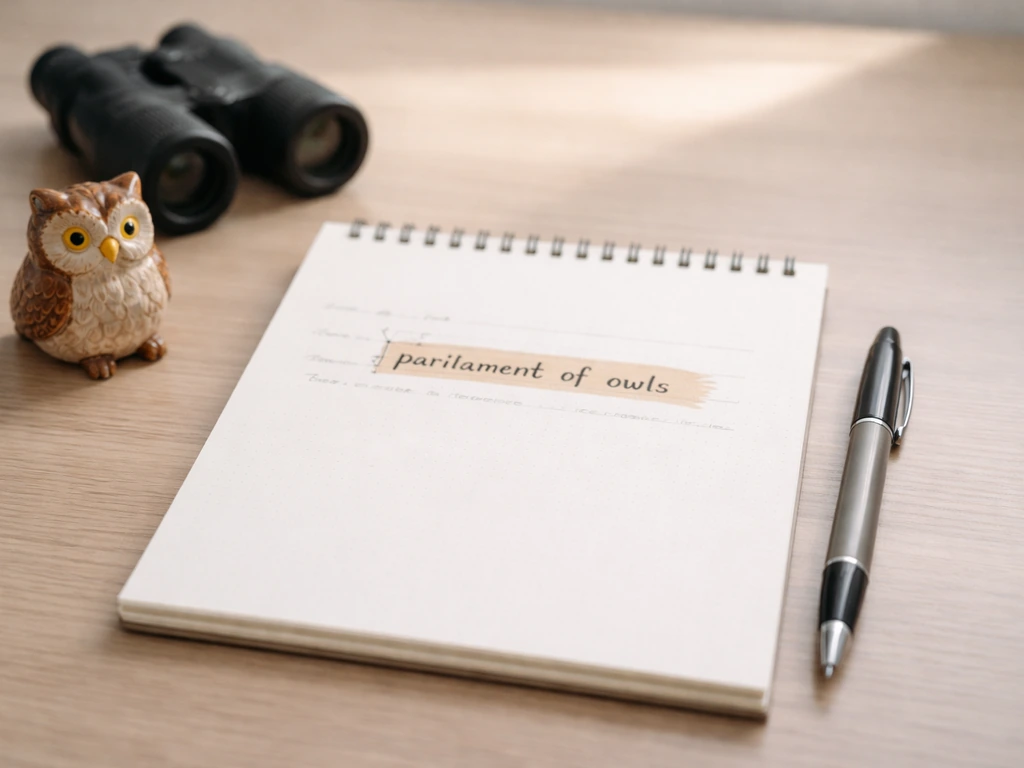
Example sentences
- Birdwatching: "We spotted a parliament of owls roosting in the old barn rafters just before dusk."
- Word puzzle context: "The answer to 12 Across, 'collective noun for owls,' is PARLIAMENT."
- Casual conversation: "Did you know a group of owls is called a parliament? Apparently they look like they're deliberating."
- Writing or storytelling: "A parliament of owls watched silently from the pines as we made our way through the forest."
Quick reference cheat sheet
| Bird | Correct Collective Noun |
|---|---|
| Owls | Parliament |
| Rooks (archaic/traditional) | Parliament |
| Crows | Murder |
| Geese (ground) | Gaggle |
| Geese (flight) | Skein |
| Goldfinches | Charm |
| Sparrows | Conventicle or tribe |
| Pheasants/game birds (pair) | Brace |
| Any bird (generic) | Flock |
Where "parliament of owls" comes from
The word "parliament" itself comes from the Old French "parlement," meaning a speaking, discussion, or formal meeting, derived from "parler" (to speak). It entered English in the 13th century to describe formal assemblies and deliberative bodies. The idea of applying it to owls is a playful, literary invention, most likely drawing on the owl's reputation in European folklore as a wise, judicious creature that seems to sit in solemn contemplation.
Most of the vivid animal collective nouns we know today, including "murder" for crows and "charm" for goldfinches, trace back to a 15th-century English text called "The Book of Saint Albans" (1486). This hunting and heraldry manual compiled a huge list of collective nouns for animals, many of which were fanciful, poetic, or deliberately humorous. They were partly practical and partly a kind of educated wordplay that showed off one's knowledge. "Parliament of owls" fits this mold perfectly: owls perching together in a tree really do look like a group of dignified officials deliberating in silence.
This also explains why English has so many bird collective nouns compared to other languages. It's not because English ornithology is more advanced; it's because a 15th-century scribe got creative, and the names were memorable enough to stick around for 500+ years. Many of these terms were rarely used in everyday speech until trivia culture, nature documentaries, and word puzzles made them popular again. Today, knowing that owls gather in a "parliament" rather than just a "flock" feels like insider knowledge, which is exactly why people search for it.
FAQ
Is “parliament” only for owls, or can it be used for other birds too?
In modern English references, “parliament” is treated as the collective noun for owls specifically. If you use it for another species, it is likely to be flagged as incorrect in quizzes or word puzzles, even if a reader can infer your meaning.
What should I write in a crossword if the clue just says “parliament (birds)”?
Most commonly, the answer is “owls.” If the entry length does not fit, check whether the puzzle is using the older historical variant “rooks,” but that is less common in current clue-setting.
Do I use “a” or “an” before “parliament of owls”?
Use “a parliament of owls.” The starting sound is the consonant “p,” so “an” would be incorrect in standard grammar.
Which verb form is more correct, “was” or “were” in “a parliament of owls”?
Both appear in good English. American writing more often prefers singular agreement (“was perched”), while British writing frequently uses plural (“were hooting”). If you want the safest option across audiences, pick one verb form and keep it consistent throughout your piece.
Is it okay to say “the parliament of owls” instead of “a parliament of owls”?
Yes, if you are referring to a specific group you have already identified (for example, “the parliament of owls in the old tower”). For general statements, “a parliament of owls” is the typical default.
Is “parliament of owls” the same as “owl flock”?
They are not identical. “Flock” is a general safe term for many kinds of birds, while “parliament” is a species-specific, set phrase, and can sound more precise and stylistic.
How do I handle the plural if I am talking about multiple groups?
You can pluralize the collective phrase as “parliaments of owls” (for multiple groups). In everyday writing, many people instead keep “parliament of owls” singular for each group, or use “several flocks of owls” to avoid sounding unusual.
What is the correct pronunciation, and where do people usually slip up?
It is PAR-luh-ment (IPA /ˈpɑːləmənt/ in British English). The common errors are adding an extra syllable (like turning it into “par-lee-uh-ment”) or misspelling it by dropping the internal “a”.
Can I shorten it to just “a parliament” when the birds are obvious?
Usually, it is best to include “of owls” the first time (so there is no ambiguity), then you can refer back to it as “the parliament” later. If you are writing for a quiz or a broad audience, keep the full phrase to prevent misreading.
Does “brood” or “brace” ever replace “parliament” for owls?
No. “Brood” is about young birds in general, and “brace” refers to a pair of birds, commonly in hunting contexts. They are different concepts, so they should not be substituted for “parliament” in species-specific answers.
Next Article
Charm Collective Noun for Which Bird: Correct Terms
Find the right collective noun for birds, fix charm typos, with examples, pronunciation, and quick decision guide.