Oriole is pronounced OR-ee-ole, with three syllables and the stress firmly on the first one. In IPA, American English dictionaries give it as /ˈɔr.iˌoʊl/ and British English as /ˈɔː.ri.əʊl/. The two versions are close enough that anyone who hears either one will immediately recognize the bird you mean.
How to Pronounce Oriole Bird: IPA, Tips, and Practice

James Ridgley
5 Jun 2026
Quick pronunciation guide: IPA and syllables
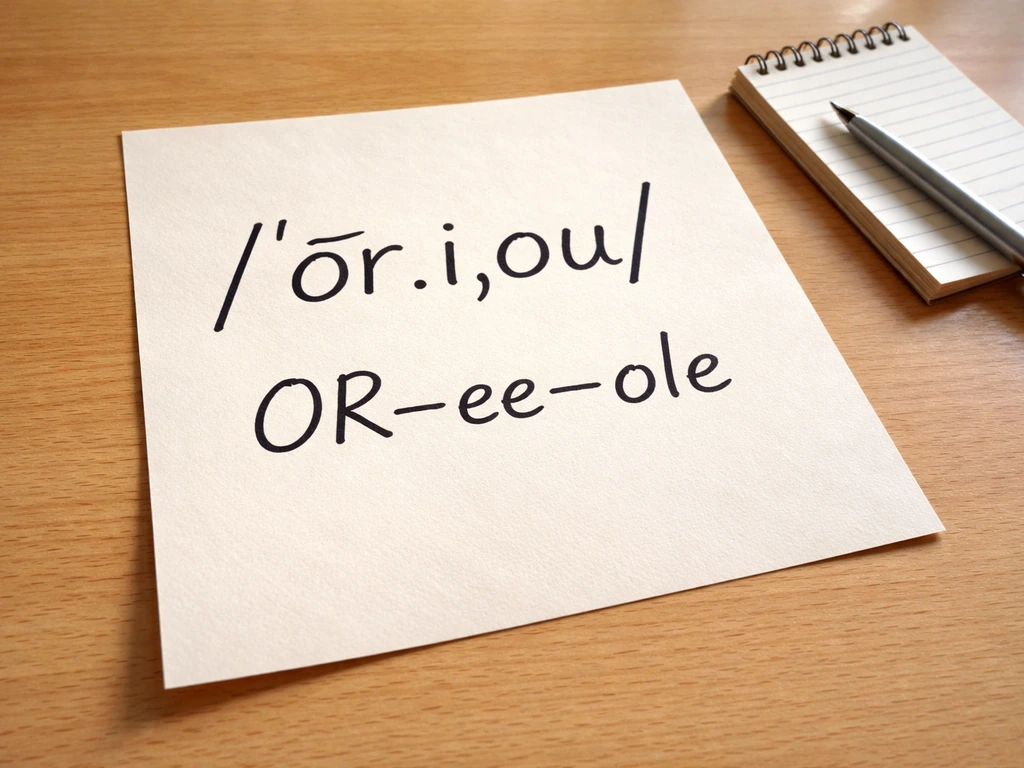
Breaking it down by syllable makes it easy to copy. The word splits as OR - ee - ole, three clean beats. The first syllable gets the primary stress, and the last syllable carries a light secondary stress, which is why it sounds like OR-ee-ole rather than or-EE-ole or or-ee-OLE.
| Variety | IPA | Casual phonetic spelling | Syllables |
|---|---|---|---|
| American English | /ˈɔr.iˌoʊl/ | OR-ee-ole | 3 |
| British English | /ˈɔː.ri.əʊl/ | AW-ree-ohl | 3 |
| Merriam-Webster (US) | /ˈȯr-ē-ˌōl/ | OR-ee-ole | 3 |
| Collins (US) | /ɔːrɪˌoʊl/ | OR-ih-ole | 3 |
The differences between sources are tiny. Cambridge, Merriam-Webster, Collins, Wiktionary, and WordReference all point to the same basic shape: stress on syllable one, a short /i/ or /ee/ in the middle, and an /oʊl/ or /əʊl/ finish. Merriam-Webster’s rhyme and pronunciation materials for oriole also reflect this stable stress pattern, which you can use to match the word’s sound for rhyme and stress drilling stress on syllable one. Pick the American form /ˈɔr.iˌoʊl/ and you are covered for nearly every English-speaking context.
How to say oriole in English (and what trips people up)
The most common mispronunciations come from two places: misreading the vowel sequence in the middle, and rushing the ending so it disappears. Here are the specific errors worth watching for.
- OR-ee-ul (swallowing the final -ole into a schwa): the last syllable needs to land as a clear "-ole" sound, like the word "hole" or "mole." Do not let it collapse into a mumble.
- OH-ree-ole (shifting the first vowel): the opening sound is /ɔr/ as in "or" or "oar," not a long /oʊ/ as in "go." Think of the word "more" without the M, and you are close.
- OR-ee-OH-lee (adding an extra syllable): the word has exactly three syllables. Adding a fourth at the end (like Italian loan words sometimes tempt people to do) is a very common slip.
- Or-EYE-ole (stressing the second syllable): the stress lives on the first syllable. OR is the louder, longer beat. The -ee- in the middle is quick and light.
- OR-i-ole with a hard /aɪ/ in the middle: the second syllable is a simple short /i/ or /ee/, not a diphthong like the word "eye."
The single most useful fix is to anchor the word on that first syllable. Say "OR" clearly, then let the rest flow quickly behind it: OR... ee... ole. Once you feel the weight land on OR, the rest of the word tends to fall into place on its own.
Regional accents and natural speech variations
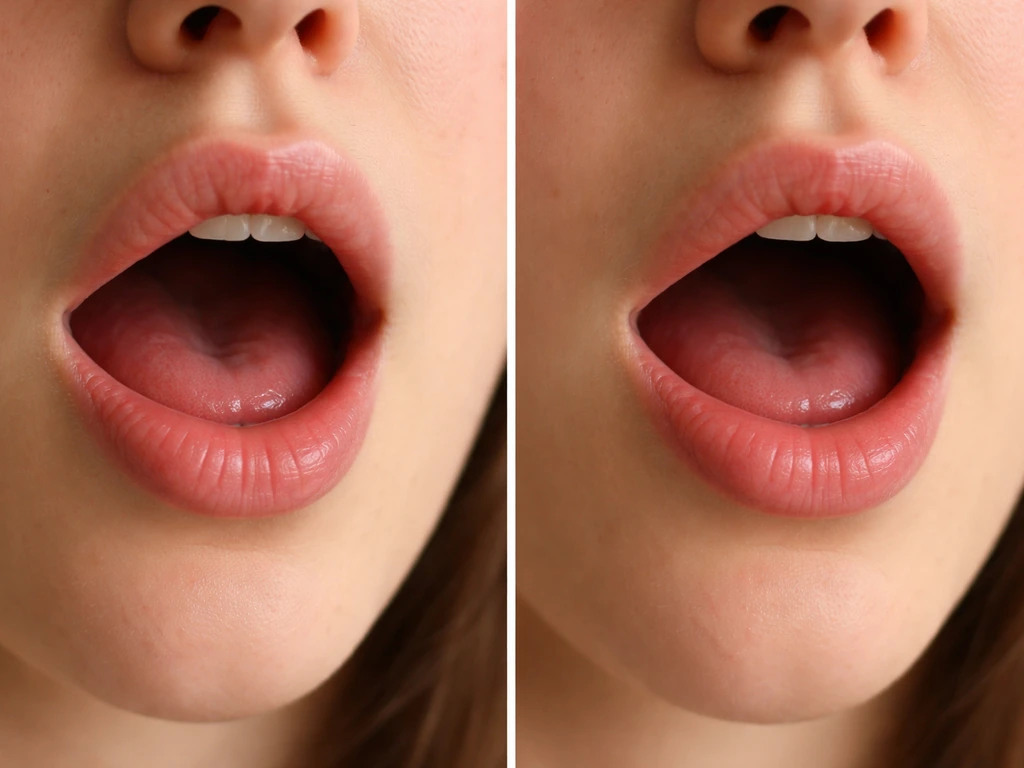
Across different English accents, oriole stays recognizable but shifts slightly in vowel quality. In standard American English, the first syllable is /ɔr/ (a rhotic vowel, meaning the R is clearly sounded), and the ending is /oʊl/ with a rounded, forward "oh" glide. WordReference summarizes commonly heard pronunciations for oriole as UK /ˈɔːrɪˌəʊl/ and US /ˈɔriˌoʊl/. In British Received Pronunciation, the first syllable stretches to /ɔː/ (a longer, non-rhotic "aw" sound), and the ending becomes /əʊl/, which is a slightly more central and less rounded glide. To an American ear, the British version sounds a touch more like AW-ree-ohl.
In some parts of the American South and Mid-Atlantic, the /ɔr/ and /oʊ/ vowels can merge or shift, so you may hear something that sounds closer to OR-ih-ole with a shorter middle vowel. In Australian and New Zealand English, the vowels shift in a similar direction to British English but with their own characteristic qualities. None of these variations are wrong; they are just what the word naturally sounds like in each accent. As long as the three-syllable structure and first-syllable stress are intact, any listener will understand you.
One practical note: if you are listening to a birding podcast, a field guide audio recording, or a nature documentary, you will hear this range of accents naturally. Do not let slight vowel differences throw you. The stress pattern is the most consistent feature across all varieties, and that is the thing worth locking in.
Pronouncing the species names people pair with oriole
When birders search for how to pronounce oriole, they usually have a specific species in mind. If you are looking for which bird name starts with O, an oriole is a common example. If you are specifically looking for a what-bird-starts-with-N answer, note that oriole is not one of the birds that starts with N. When people ask, "what bird starts with x," they're usually trying to identify a specific species by its starting letter. The word oriole almost always shows up alongside a geographic or descriptive modifier, and some of those modifiers are tricky in their own right. Here is a guide to the most common pairings.
| Species name | Pronunciation | Notes |
|---|---|---|
| Baltimore Oriole | BAWL-tih-more OR-ee-ole | IPA: /ˌbɔldəˈmɔːr ˌɔriˈoʊl/ — 'Baltimore' gets three syllables; the city name is often reduced to BAWL-tuh-more in natural speech |
| Bullock's Oriole | BUL-oks OR-ee-ole | Named after William Bullock; the apostrophe-s is just a regular possessive, pronounced as a quick /s/ |
| Hooded Oriole | HOOD-id OR-ee-ole | Straightforward; stress on HOOD, then a quick unstressed -id |
| Orchard Oriole | OR-cherd OR-ee-ole | The OR- in 'orchard' matches the OR- in 'oriole,' so the phrase has a satisfying repeated sound |
| Scott's Oriole | SKOTS OR-ee-ole | Simple possessive; named after General Winfield Scott |
| Spot-breasted Oriole | SPOT-brest-id OR-ee-ole | A compound descriptor; keep 'breasted' as two syllables, not three |
| Altamira Oriole | al-tuh-MEER-uh OR-ee-ole | Spanish origin; stress lands on the third syllable of Altamira |
| Audubon's Oriole | AW-duh-bonz OR-ee-ole | Named after John James Audubon; the -bon ending sounds like 'bon' in bon vivant |
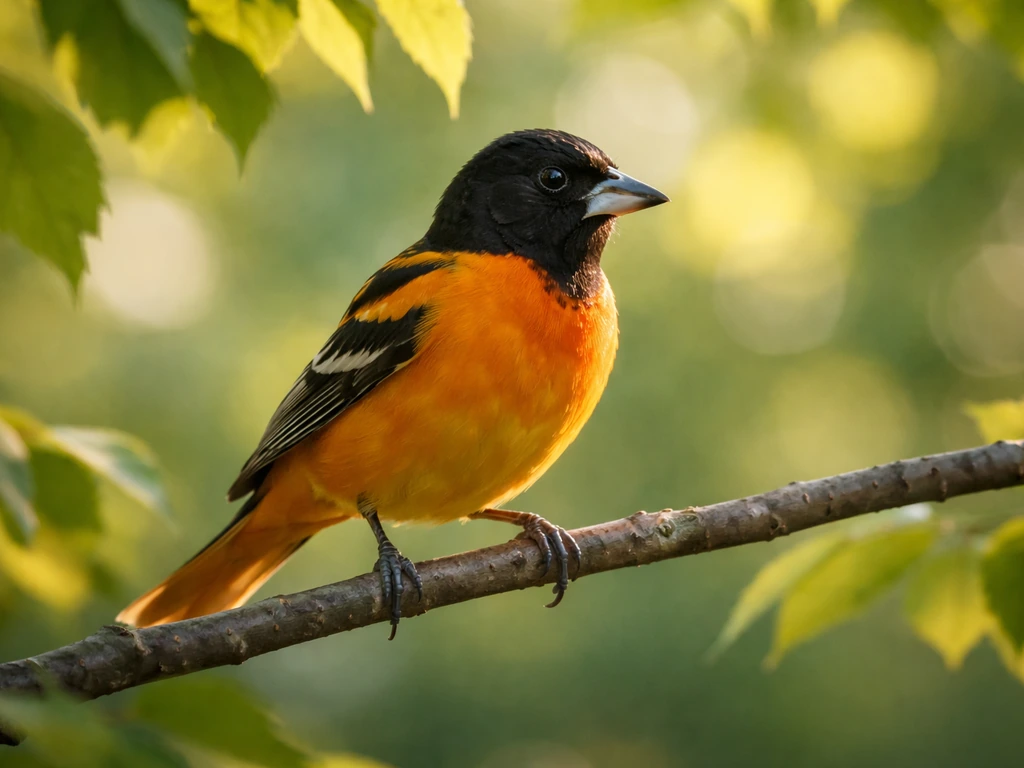
The Baltimore Oriole is the one that comes up most often, both for birding and for the baseball team. If you mean the baseball team mascot, the Orioles’ bird mascot is typically referred to by that same team name: the Baltimore Oriole. Vocabulary.com renders it as /ˌbɔldəˈmɔːr ˌɔriˈoʊl/, which lines up with what you hear from Maryland locals. The city name Baltimore is commonly reduced in fast speech to something like BAWL-tuh-mer, and that is perfectly natural. The species name does not need to be enunciated like a news anchor reading a headline.
Where the name oriole comes from (and why it helps you remember)

The word oriole traces back through Middle French oriol and Old French oriol to the Latin word aureolus, a diminutive of aureus meaning golden. If you are wondering whether the oriole bird has a particular name of its own beyond “oriole,” the answer depends on the species you mean does the oriole bird have a name. The connection is the bird's famously bright yellow-orange plumage. Aureolus gives us words like aureole (a halo of light) in English, and the Latin root aur- is the same one behind the chemical symbol for gold (Au).
The earliest English use of the word in its modern spelling is traced to around 1776, appearing in the naturalist Thomas Pennant's writings. The word came into English through New Latin oriolus, the taxonomic genus name that Linnaeus-era ornithologists used, which itself came from the Medieval Latin and Old French chain above. So the spelling OR-i-ole reflects the Latin vowel sequence fairly faithfully, which is why the pronunciation follows a Latin-influenced pattern rather than a purely English one.
Knowing this makes the pronunciation stick better. When you say OR-ee-ole, you are basically saying a softened version of the Latin aureolus: the OR comes from the aur- root, the -ee- is the compressed middle vowel, and the -ole is the diminutive suffix. The bird is literally named "little golden one." If you picture a flash of orange-gold in a tree and think "golden, aur-, OR," the stress pattern becomes intuitive rather than arbitrary.
This etymology also connects neatly to spelling questions. The word ends in -ole, not -ol or -oll, because it reflects the Latin -olus suffix. If you have ever wondered about the correct spelling alongside the pronunciation, that Latin ending explains both. If you have been wondering about spelling alongside the sound, see how do you spell sore like a bird for the “sore” versus “oriole” confusion and the correct form. If you are also asking how do you spell the bird oriole, focus on the -ole ending and the OR-ee-ole pattern spelling alongside the pronunciation. (The spelling question comes up often enough that it deserves its own look, and the same root logic applies there too.)
Practice tips: how to drill this until it sticks
Reading about pronunciation only gets you so far. Here is a practical sequence you can run through in about five minutes today to make OR-ee-ole feel automatic.
- Start with the first syllable alone. Say 'OR' out loud five times, making sure it rhymes with 'more' and 'oar.' This locks in the correct opening vowel before you add anything else.
- Add the middle syllable. Say 'OR-ee' five times, keeping the -ee short and light. It should feel like a quick hop, not a held note.
- Complete the word. Say 'OR-ee-ole' five times at a slow, deliberate pace. Tap your finger on the table once for each syllable so you feel the three-beat structure physically.
- Speed it up gradually. Say the word at normal conversational speed five times, then slightly faster five more times. The goal is to get it to feel effortless, not careful.
- Use it in a sentence. Try 'I saw a Baltimore Oriole this morning' or 'Is that an orchard oriole?' Speaking the word in context forces your mouth to transition into and out of it naturally, which is harder than saying it in isolation.
- Self-check: record yourself on your phone saying 'oriole' once slowly and once at normal speed, then play it back. Listen for whether the first syllable is the loudest and whether the -ole ending is clear rather than swallowed.
- Use real-world audio for comparison. YouGlish (a YouTube-based tool that shows words spoken in real clips) is excellent for hearing how different speakers say 'oriole' in actual sentences. A few minutes of listening to varied speakers will calibrate your ear much better than any phonetic chart.
The record-and-playback step is the one most people skip, and it is the most useful. You genuinely cannot hear your own pronunciation the way a listener does. Even a ten-second voice memo on your phone gives you the outside perspective you need to catch lingering issues with the final syllable or the opening vowel.
Once you have OR-ee-ole solid, practicing the species names in the table above follows the same pattern: isolate the tricky modifier, drill it separately, then combine it with oriole. Baltimore Oriole is the one worth special attention since it comes up so often in both birding and everyday American cultural contexts, from baseball to backyard feeders.
FAQ
Is “oriole” ever pronounced with four syllables (like OR-ee-oh-lee)?
In standard English, it stays three syllables. If you hear something closer to four, it is usually an accent-influenced insertion of a tiny vowel, not a separate syllable. To keep it correct, keep the stress on OR and let the middle “ee” flow straight into the final “ole” without an extra pause.
Do I need to pronounce the “R” clearly, or can I soften it?
In most varieties, the first “R” is the part that makes “OR” recognizable, so try to sound it (rhotic in standard American). If you are using a non-rhotic accent (more typical of some British speech), you can still keep the word understandable by focusing on the “OR” stress and the three-syllable timing.
What is the most common way people mess up the middle vowel?
People often turn the middle vowel into “ih” or over-stretch it, which can make the word sound like it has a different vowel pattern. The target is a short “ee” feeling in the middle (the “OR-ee-ole” rhythm). Record yourself and listen specifically for whether the middle becomes too “wide” or too “flat.”
How should I say “oriole” if I do not know the IPA but want a quick rule?
Use a rhythm rule: “OR” first, then “ee,” then “ole.” Say it like a quick beat sequence, OR…ee…ole, with no equal emphasis on the last syllable. If you can say “OR” clearly on its own, the rest usually lines up automatically.
Does “Baltimore Oriole” change how I pronounce “oriole” inside it?
The species name uses the same “OR-ee-ole” core. The main change is the preceding “Baltimore” stress and vowel reduction in fast speech. Focus on keeping “oriole” three syllables and the OR stress, even if you say “Baltimore” more quickly.
If I’m asking about “oriole” as a bird, should I say it differently from “oriole” as a team name or adjective?
No. The pronunciation of “oriole” does not meaningfully change based on meaning. What changes is how the whole phrase is stressed, for example “Baltimore Oriole” will have phrase-level emphasis on Baltimore plus the three-syllable core of “oriole.”
How can I tell whether I’m saying “oriole” correctly when practicing?
Use outside feedback. Record a short voice memo, then play it back and compare whether the stress lands on the first syllable and whether the ending stays audible as “ole” rather than dropping off. A quick check is whether you sound like OR-ee-ole rather than or-EE-ole or OR-ee-ol.
Are there any spelling traps that affect pronunciation of “oriole”?
Yes, the last two letters matter for the sound. The spelling ends in -ole, which is why you finish with an “ole” glide rather than “ol” or “oll.” If you keep the mental image “-ole = ole,” your pronunciation usually improves, especially for the final syllable.
Next Article
What Is the Oriole Bird Mascot Name? Official Answer
Get the official name of the Oriole bird mascot, how to confirm it by team, and common fan nicknames if unnamed.