Vireo is pronounced VIR-ee-oh, with three syllables and the stress on the first one. Say it like you're saying the name "Victor" but swap the ending: VIR (rhymes with "her") + ee + oh. That's it. You're done.
How to Pronounce Vireo Bird: Easy Guide and Practice

James Ridgley
31 May 2026
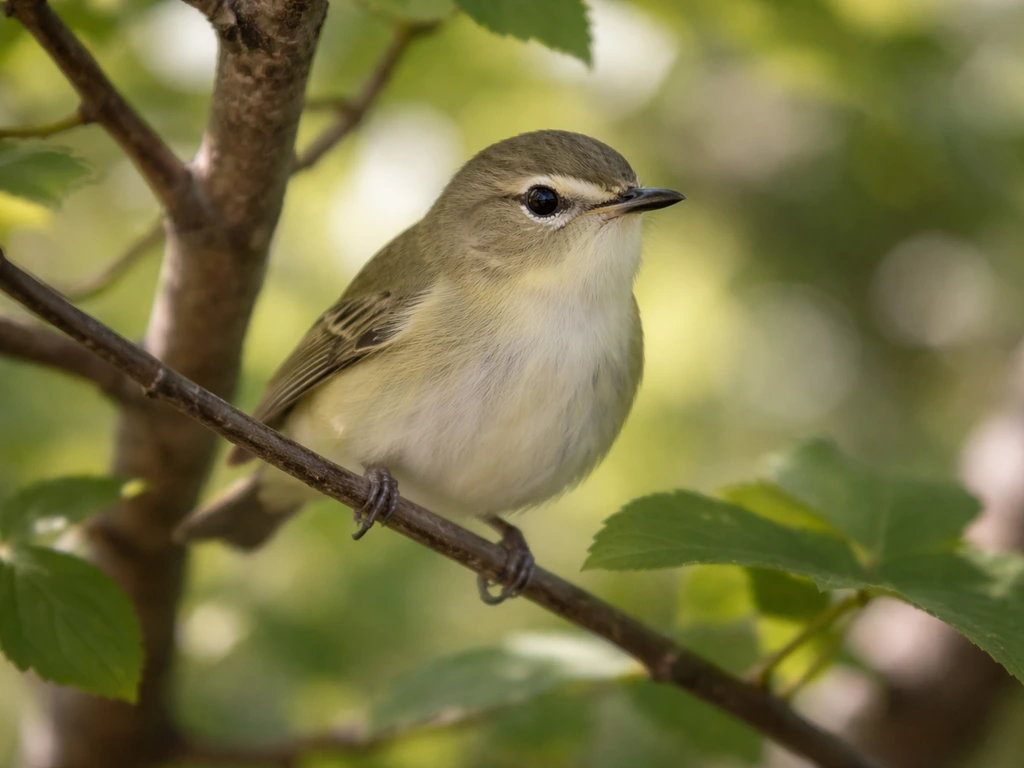
The correct pronunciation, spelled out clearly

The word "vireo" has exactly three syllables: VIR-ee-oh. The first syllable carries the stress, so you lean into it and let the last two syllables roll off lighter. Think of it this way: if you know the word "video," vireo follows almost the same rhythm, just swap the initial "v-ih-d" sound for "v-ih-r." VID-ee-oh becomes VIR-ee-oh. That mental shortcut alone fixes about half the confusion people have with this word.
This is the standard American English pronunciation confirmed by Merriam-Webster, and it holds up whether you're describing the bird family in general, the genus, or a specific species like the warbling vireo or the red-eyed vireo. The word does not change pronunciation depending on context.
Syllables, stress, and where people usually trip up
The three syllables are: VIR | ee | oh. Stress lands firmly on VIR. The middle syllable "ee" is unstressed and short. The final "oh" is also unstressed but it's a clean, round vowel sound, not swallowed or clipped.
The most common mistakes come down to two things. First, people try to say it as two syllables: VIR-oh or VEER-oh. That drops the middle "ee" entirely and it just sounds wrong to anyone who knows the word. Second, some readers stress the wrong syllable and land on vir-EE-oh, which sounds like they're emphasizing the middle. That's not how native English speakers or birders say it. The stress belongs on VIR, full stop.
There's also occasional confusion about the first vowel. The "ir" in VIR sounds like the "ir" in "bird" or "sir," not like the long "ee" in "viral. If you're wondering how many syllables are in bird, it’s typically two syllables. " So it's not VEE-ree-oh or VI-ree-oh with a long "i." It's VIR, like the word "stir" with a V in front.
- VIR-oh (only 2 syllables): missing the middle "ee" sound
- VEER-ee-oh: wrong first vowel, making it sound like "veer"
- vir-EE-oh: stress in the wrong place
- VY-ree-oh: treating the first vowel like the "i" in "sky"
IPA and a phonetic spelling you can use right now

The International Phonetic Alphabet (IPA) transcription from Merriam-Webster is: /ˈvir-ē-ˌō/. If you're not an IPA reader, here's the plain-English breakdown that maps directly to it:
| Format | Pronunciation |
|---|---|
| IPA (Merriam-Webster) | /ˈvir-ē-ˌō/ |
| Plain phonetic | VIR-ee-oh |
| Rhyme trick | "stir" + "ee" + "go" (drop the g) |
| Syllable count | 3 |
| Stressed syllable | First (VIR-) |
In the IPA, the ˈ mark before "vir" shows primary stress. The ˌ before ō shows secondary stress on the final syllable, which just means the final "oh" is a distinct, clear vowel and not reduced to a schwa. You actually pronounce that last syllable properly rather than mumbling it.
How the pronunciation works across vireo species names
Vireo is a genus name in ornithology, meaning it appears as the first word in the scientific name of every vireo species. The warbling vireo is Vireo gilvus. The red-eyed vireo is Vireo olivaceus. The yellow-throated vireo is Vireo flavifrons. In every single case, that first word, "Vireo," is pronounced exactly the same way: VIR-ee-oh.
What changes between species is the second word, the species epithet. "Gilvus," "olivaceus," "flavifrons" all have their own pronunciations to figure out separately. But you never have to wonder how to say "vireo" itself because it stays constant no matter which species you're talking about. This is one of the genuinely convenient things about bird genus names: learn it once, apply it everywhere the genus appears.
The common English names follow the same pattern. Warbling vireo, red-eyed vireo, Bell's vireo, blue-headed vireo: the word "vireo" at the end of each name is always VIR-ee-oh. If you're working through a field guide or a bird checklist and you want to say these names out loud, just nail the first syllable stress and you'll sound natural to any birder around you.
Practice tips: slow it down, then build back up
The best way to lock in a new pronunciation is to say it at a crawl first, then gradually bring it up to natural speaking speed. Here's a quick drill you can do in about two minutes:
- Say each syllable separately with a pause: VIR ... ee ... oh. Do this three times.
- Now connect them slowly without pauses but keep them distinct: VIR-ee-oh. Say it five times slowly.
- Speed up to normal speaking pace: "That's a VIR-ee-oh over there." Say it in a sentence twice.
- Try the full species name: "warbling VIR-ee-oh" and "red-eyed VIR-ee-oh." Say each three times.
- Final check: say "video" then "vireo" back to back. Notice how similar the rhythm is. VID-ee-oh, VIR-ee-oh.
If you want audio reinforcement, the Merriam-Webster dictionary entry for "vireo" has a playable audio clip. VOA’s pronunciation guide model similarly uses entries that include phonetic pronunciation paired with audio links to help readers verify how to say words audio-backed dictionary pronunciation. Play it, repeat it, then compare your own voice. That feedback loop is faster than any written guide. The National Park Service and Audubon also have recordings of vireo species calls, and hearing the bird's name said out loud in context next to its actual song is a surprisingly good way to make both stick in memory.
One more tip: if you've ever been uncertain about bird name pronunciations the way many birders admit to being (there are Reddit threads full of people quietly unsure whether they've been saying "vireo" or "pileated" correctly for years), you're in good company. A lot of birders learn names visually from field guides before they ever hear them spoken. The fix is simple: look it up in a dictionary with audio once and your brain recalibrates immediately.
The same approach works for other birds with spelling-vs-sound surprises. If you are also wondering how to spell bird sounds the same way, look for a phonetic breakdown before you try writing it from memory. If you're also wondering how to pronounce the quail bird, start by spelling it out and matching the syllables to the rhythm of common English bird names.
If you mean the phrase “bird of prey,” you can use the same slow drill method: break the words into sounds, listen to an audio example, then practice until it feels automatic birds of prey. If you’re wondering how to pronounce dove bird, use the same slow-and-drill approach with a dictionary audio clip and a simple phonetic breakdown.
If you're wondering how to pronounce ibis bird, the same drill works: use a dictionary with audio, translate the spelling into syllables, and practice slowly. If you've had similar questions about ibis, quail, dove, or birds of prey names, the pattern is worth repeating: find a dictionary audio source, use a phonetic breakdown, and drill it slowly before bringing it up to speed.
Why "vireo" sounds the way it does: the Latin backstory
The word "vireo" comes directly from Latin. Latin authors used it for a small green migratory bird, and the name connects to the Latin verb virēre, meaning "to be green. Etymonline documents “vireo” as a modern use of Latin vireo, said to come from virēre, meaning to be green. " You can see the same root in words like "verdant" (green and lush) and even the color name "viridian." So a vireo is, etymologically, a green bird.
When Latin words get absorbed into English scientific names, they usually keep a pronunciation close to how English speakers would naturally read Latin vowel patterns. The "ir" in vireo follows English phonology (like "bird" or "sir"), and the -eo ending comes out as two syllables: ee-oh, not a single blended sound. That's why the spelling maps so predictably to VIR-ee-oh once you understand the structure.
The V at the start is another point worth flagging. In classical Latin, V was pronounced more like a W sound. But in modern English ornithological usage, vireo starts with a plain English V as in "very." Nobody says "WIR-ee-oh" in a field setting. The Anglicized pronunciation is completely standard, and Merriam-Webster confirms it.
Understanding this Latin origin also helps with other bird genus names you'll encounter. Many genus names are Latin or Latinized Greek words describing a bird's color, behavior, or habitat. Once you get comfortable with how Latin vowel endings like -eo, -ia, and -us behave in English speech, a lot of scientific bird names become much less intimidating to say out loud.
FAQ
My pronunciation keeps turning into 2 syllables, how can I stop dropping the middle “ee”?
Aim for three clear beats (VIR, ee, oh). If you sound like you are skipping the middle, practice “VIR-ee” slowly while keeping the ee short (not a long “eeeee”), then add the final “oh” without clipping it.
How do I know I’m stressing vireo correctly (VIR-ee-oh vs vir-EE-oh)?
Stress on the first syllable, VIR. A quick check is to tap your finger on the “VIR” syllable once, then tap lightly on “ee” and “oh.” If your loudest tap is on “ee,” you are likely putting stress in the wrong place.
Should the final sound in vireo rhyme with “go,” “oh,” or something else?
The ending is not just “oh” like the exclamation “oh!”, it is a distinct, clean vowel. Try “ee-oh” as one smooth transition: make the “ee” bright, then let it open into the “oh” without becoming a schwa.
What vowel sound is the first part, “VIR,” and how is it different from “viral”?
Use “ir” like the vowel in “bird” or “sir,” not the long “i” in “viral.” A helpful comparison is to say “stir” first (stir, with a short i), then add a V in front to get “virstir” feel, which collapses into “VIR-ee-oh” in rhythm.
Does vireo change pronunciation when it appears in different scientific bird names or common names?
In English, “vireo” stays the same regardless of species name or whether you are saying the genus alone. Only the second word changes (example: “Vireo gilvus” versus “Vireo olivaceus”).
What’s the best way to practice vireo so it still sounds right at field-guide speed?
If you are speaking quickly, keep the syllable boundaries. Say it once at a slow speed, then increase pace while preserving the three-syllable timing: VIR (strong), ee (brief), oh (clear).
How do I use the IPA notation for vireo if I’m not fluent in IPA?
If you use IPA, /ˈvir-ē-ˌō/ means primary stress before “vir,” and the final syllable has a distinct vowel because of the secondary-stress mark. If you do not use IPA, you can ignore the symbols and just copy the rhythm: VIR-ee-oh with a clear final “oh.”
I assumed “-eo” would blend into one sound, is that why I get it wrong?
Don’t guess from spelling patterns like “-eo” in other words. In vireo, that ending consistently splits into two syllables, ee-oh. The safe strategy is to map endings into syllables (ee + oh) before you try to speed up.
What should I do in real conversation if I’m unsure about the species name but know the genus?
If you are unsure in conversation, you can confidently say the genus alone as “VIR-ee-oh,” then add the species later. Since birders recognize the genus piece instantly, getting vireo right first reduces overall confusion even if the second word is still under practice.
Next Article
How to Pronounce Quail Bird: Spelling and IPA Guide
Spelling and syllables plus IPA and phonetic tips for saying quail bird and quail, with common accent variations.