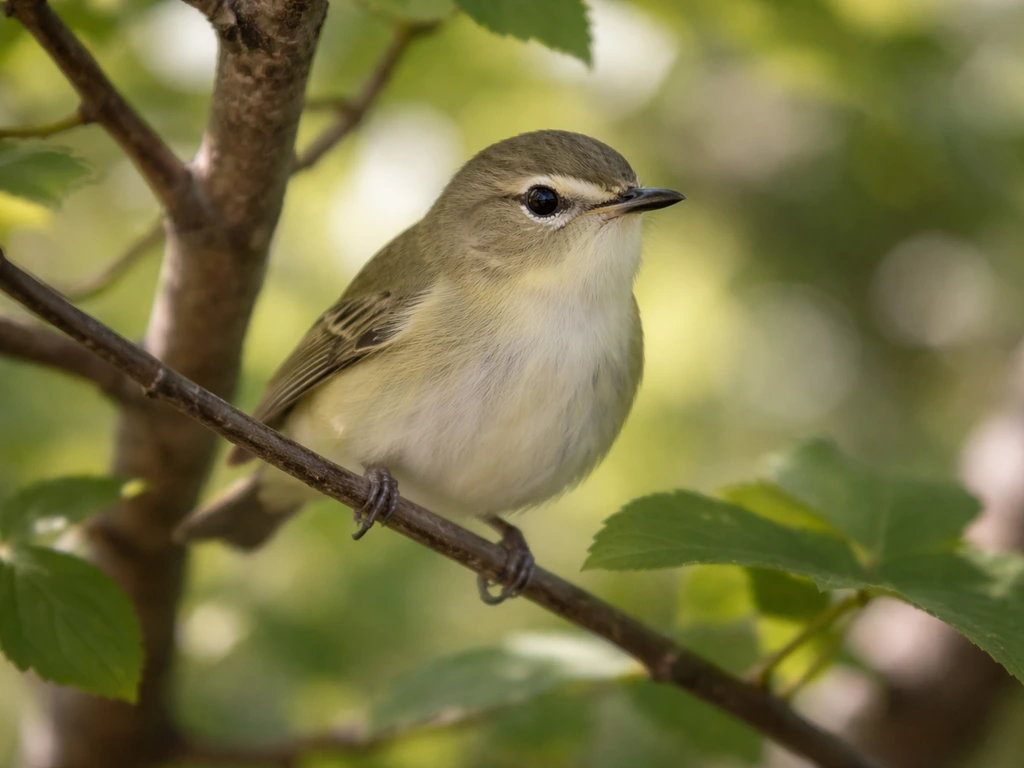
The vowel sound in "bird" is the r-colored vowel /ɜːr/. In standard American English it's transcribed as /bɝːd/ (a single syllable with a mid-central vowel that has built-in r-coloring), and in standard British English it's /bɜːd/ (the same long mid-central vowel, but without the r-coloring because British English is non-rhotic). Either way, the key vowel sound is the one in words like "burn," "her," and "word", not the short /ɪ/ you might expect from the letter "i" in the spelling.
What Is the Vowel Sound of Bird and How to Pronounce It

James Ridgley
4 Jun 2026

The exact vowel in "bird" (and what the IPA means)
The vowel symbol /ɜː/ represents a long, mid-central vowel. "Mid-central" just means your tongue sits roughly in the middle of your mouth, neither high nor low, neither fully front nor fully back. Cambridge Dictionary transcribes the word as /bɜːd/ in British English and /bɝːd/ in American English. blank" rel="noopener noreferrer">Oxford Learner's Dictionaries uses /bɜːd/ for the UK entry and /bərd/ as the American equivalent in its pronunciation guide. Merriam-Webster also flags this same vowel class in its pronunciation key. Merriam-Webster’s pronunciation key for “bird” also includes the word’s pronunciation with audio and IPA Merriam-Webster pronunciation key.
In practical terms: there are two versions of this vowel depending on accent. American English adds r-coloring to it, making it /ɝː/ (sometimes written /ɜːr/ or /ɚ/ in less formal notation). British English keeps it as a pure /ɜː/ with no r sound at all. Both are the correct vowel for "bird" in their respective dialects. What they share is that mid-central tongue placement, the r-coloring is the only meaningful difference between them.
Worth knowing: this same vowel shows up in a whole family of English words where the letter combinations <ir>, <er>, <ur>, and sometimes <ear> or <or> appear before a consonant. Think "girl," "fern," "burn," "heard," and "word." That spelling pattern is one of the most reliable signals that you're dealing with the /ɜː/ vowel family.
How to actually pronounce it (mouth and tongue guide)

Here's the physical breakdown for both accents, starting with where to put your tongue and jaw.
American English /bɝːd/
- Open your mouth slightly — jaw relaxed, not wide open.
- Place your tongue in the middle of your mouth, neither raised toward the roof nor pushed down.
- Curl the tip of your tongue gently back and upward (this creates the r-coloring that defines American /ɝː/).
- Lips should be slightly spread, not rounded.
- Hold that vowel sound for a beat before closing into the final /d/.
- The whole word is one syllable: /bɝːd/.
British English /bɜːd/

- Same jaw and tongue starting position — mid-central, relaxed.
- Do NOT curl the tongue tip back. Keep it flat or just slightly raised.
- Lips stay neutral or very slightly spread.
- Hold the long vowel /ɜː/ cleanly before the /d/ — there is no /r/ sound after the vowel.
- Still one syllable: /bɜːd/.
In both cases, stress falls on that single vowel, it's a monosyllabic word, so everything rides on getting that one sound right. The consonants /b/ and /d/ are the same across accents; the vowel is where the dialects diverge.
Common mispronunciations (and why people make them)
The spelling of "bird" is genuinely misleading. The letter "i" normally signals a short /ɪ/ sound (as in "bit" or "fish"), so many learners want to say something like "burd" with a short vowel or even "bird" rhyming with "bid." Here are the most common errors and what's going wrong in each case.
| Mispronunciation | What it sounds like | Why it happens | Fix |
|---|---|---|---|
| /bɪrd/ (short i) | Like "bid" with an r | The letter usually maps to /ɪ/, so learners apply that rule here | The combination overrides the short-i rule — treat as a unit meaning /ɜːr/ |
| /bɛrd/ (short e) | Like "bed" with an r | Confusion with the /ɛ/ sound from words like "berry" or "err" | The vowel in "bird" is longer and more central than /ɛ/ — hold the sound longer |
| /bʌrd/ (short u) | Like "bud" with an r | The /ɜː/ and /ʌ/ sounds are close in some dialects (historically some mergers exist) | Practice minimal pairs: "bun" vs "burn" — the /ɜː/ is noticeably longer |
| Dropping the vowel length | A clipped, short central vowel | Non-native speakers used to languages with short vowels clip /ɜː/ too soon | Consciously lengthen the vowel before the /d/ — /bɜːːd/ as an exercise |
The root of most confusion is that English spelling doesn't make the vowel quality obvious. Once you internalize that <ir>, <er>, and <ur> all point to the same /ɜː/ vowel family, the word "bird" stops being a puzzle.
How this vowel sounds across different accents
Rhoticity is the single biggest variable here. "Rhotic" accents (standard American, Canadian, most Irish and Scottish) pronounce the /r/ quality inside the vowel. "Non-rhotic" accents (standard British RP, Australian, New Zealand, most South African) do not, the vowel is a pure /ɜː/ with no curl.
- General American: /bɝːd/ — the vowel is r-colored throughout; it's one fused sound, not vowel-plus-r.
- Received Pronunciation (British RP): /bɜːd/ — clean long vowel, no r-coloring at all.
- Scottish and Irish English: rhotic like American, often with a shorter, crisper vowel and a more clearly pronounced /r/ after it.
- Australian and New Zealand English: non-rhotic like British RP, so /bɜːd/, but the vowel quality can sound slightly different in quality from RP.
- Some regional U.S. dialects (parts of New England, New York City historically): non-rhotic, so "bird" may sound closer to the British version.
- Some Caribbean and West African English varieties: the vowel may shift toward /ɛr/ or /ɪr/, which is why those accents can sound like they're using a different vowel even though the word is the same.
Wikipedia's sound correspondence tables map American /ɝ/ directly to British /ɜː/ for this vowel class, so if you're hearing the word differently in a British vs American speaker, that's the entire explanation. Neither is wrong; they're just rhotic vs non-rhotic realizations of the same underlying vowel.
Quick practice: saying "bird" on its own and in a sentence
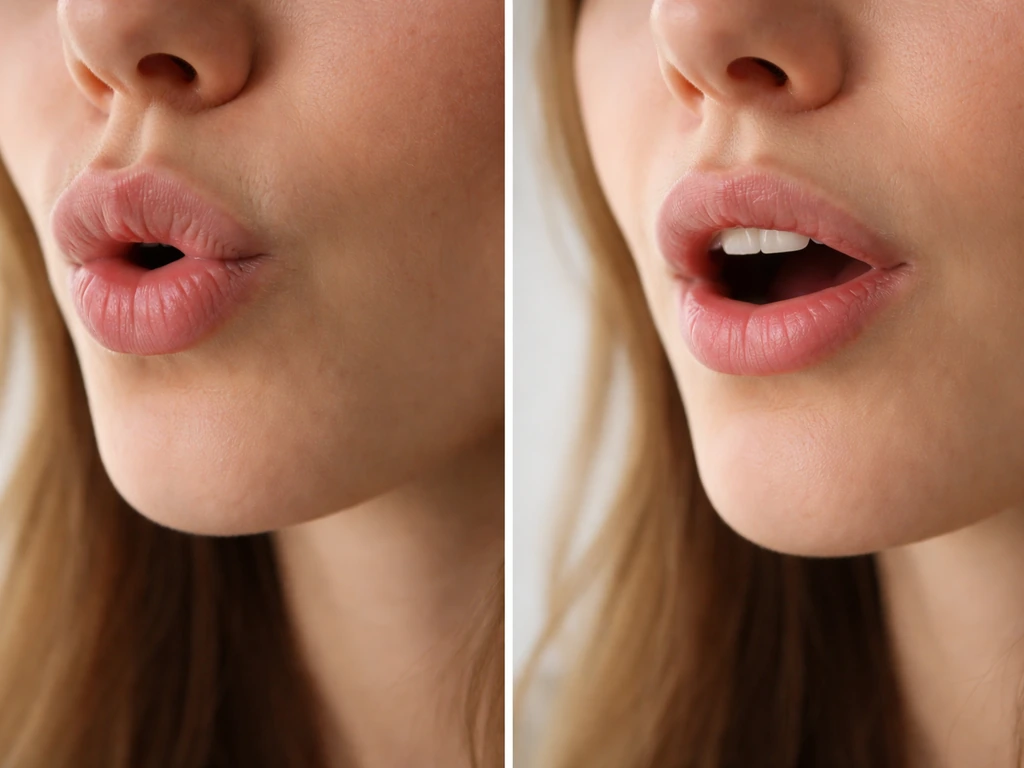
Start in isolation. If you want a step-by-step guide, start with the vowel sound, then add /b/ and /d/ to say “bird” clearly pronounce. Say the vowel sound alone first: stretch out "uuurrr" (American) or "uuuuh" (British) until it feels natural. Then add the /b/ at the front and the /d/ at the end. You're building the word from the inside out, which forces you to get the vowel right before the consonants distract you.
Then try these practice sentences, which put "bird" alongside other /ɜː/ words so your ear can confirm you're hitting the same vowel each time:
- "The bird perched on the curb." (/ɜː/ in bird, perched, curb — all the same vowel class)
- "Her first word was bird." (her, first, word, bird — four examples of the vowel in a row)
- "I heard a bird stir in the fern." (heard, bird, stir, fern — good ear training set)
If you want to check your own pronunciation against a model, pull up Cambridge Dictionary's "bird" entry, it has separate audio buttons for UK and US, so you can switch between /bɜːd/ and /bɝːd/ and echo each one. The British Council's Sounds Right app and the BBC Learning English sounds chart both include the /ɜː/ symbol with audio examples, which lets you hear the isolated vowel before you try the full word.
For a quick self-check: if "bird" rhymes cleanly with "heard," "word," and "nerd" in your pronunciation, you've got the right vowel. If it rhymes more with "bid" or "bed," adjust your tongue to that relaxed mid-central position and lengthen the vowel before landing on the /d/.
Why this matters for bird names and bird-related words
The word "bird" itself is the foundation for a lot of compound names and ornithological terms in English: songbird, shorebird, seabird, bird of prey, and so on. To pronounce the quail bird correctly, apply the same “bird” vowel guidance using the /ɜː/ (UK) or /ɝː/ (US) sound. To pronounce the phrase “bird of prey” accurately, use the same /ɜː/ vowel in “bird” and keep the rhythm natural across the two words. Getting the base vowel right means you'll carry that correct /ɜː/ sound into all those compounds naturally. It's also worth noting that the vowel pattern (<ir> = /ɜː/) repeats across many bird-related words: "chirp," "twitter," "stir" (as in stirring in the nest), and even the word "birding" itself all use the same sound. So nailing this vowel once gives you a handle on a whole cluster of pronunciation questions that come up in birding and ornithological contexts.
If you're working through pronunciation of specific bird names, the same vowel principles apply to other words in the bird-naming world. As for the pronunciation of the vireo itself, use the same /ɜː/ vowel approach and keep the vowel consistent with the way you say “bird.”. The /ɜː/ sound doesn't only appear in the word "bird", it turns up in species names and common terms throughout English ornithology, making it one of the more useful individual vowel sounds to get comfortable with.
FAQ
Is “bird” pronounced as one syllable or two?
No. In standard American and standard British English, “bird” stays one syllable, the vowel is lengthened (it is not the short /ɪ/ from “bit”), and you do not add an extra schwa. If you hear someone say “bur-d” or “bi(rd)-like,” they are usually shortening the vowel too much or moving the tongue toward a higher front position.
What should I change if my “bird” rhymes with “bid” instead of “word”?
If “bird” sounds like it rhymes with “bid” or “bed,” you are likely using the short /ɪ/ or /e/ vowel. The fix is to keep a mid-central tongue position and stretch the vowel before the /d/ so it lands with the same long quality used in words like “heard” and “word.”
Why does the letter “i” not sound like /ɪ/ in “bird”?
Spelling “i” does not control the vowel here because the vowel is determined by the common vowel-family pattern (like <ir>, <er>, <ur>). Treat “bird” as belonging to that /ɜː/ family, so you should not try to read it like “b + short i + rd.”
How can I tell whether I’m producing the same vowel as in “burn” or “heard”?
Yes, because “bird” is in the same vowel family as “burn,” “her,” and “word,” many words using <er>/<ir>/<ur> before a consonant share the vowel quality. A practical check is to compare your vowel in “bird” to “burn,” not to “bit.” If those match, your vowel is likely correct.
Should I pronounce an “r” sound at the end of “bird”?
Add r-coloring only in rhotic accents. In non-rhotic accents (typical standard British), you keep the vowel pure, so you may feel tempted to add an extra “r” at the end, but that can make it sound like the American realization. Choose one target accent and stick to it consistently within a sentence.
What tongue and jaw habit usually causes the wrong vowel in “bird”?
Generally, your tongue position should be mid-central and relaxed, then the vowel should be held long enough to sound distinct. If it feels too tense or too far back, you will drift toward a different vowel category. Think “relaxed center” rather than “wide mouth” or “back-of-throat” shaping.
Does the vowel in “bird” change when it’s part of a phrase like “bird of prey”?
In phrases like “bird of prey” the main risk is breaking rhythm between the two words and accidentally changing the vowel. Keep “bird” as the same one-syllable base, then connect naturally into “of prey” without inserting a pause that makes the vowel sound shorter or different.
What’s a good step-by-step practice method if I can’t get “bird” right yet?
Yes. If you can’t make the vowel land correctly, practice it in isolation first, then add the consonants. Start with the vowel only, then attach /b/ and /d/ in one continuous movement. This reduces the tendency to “correct” the consonants by changing the vowel quality at the same time.
Next Article
How to Pronounce Vireo Bird: Easy Guide and Practice
Learn how to pronounce vireo bird in everyday English, avoid common mix-ups, and practice slow to normal speed.