The answer is WORM. Every major crossword solver database points to WORM as the 4-letter solution for the clue 'limbless prey for a bird,' and it checks out both definitionally and ornithologically. If you landed here after seeing this phrase on LinkedIn, that's almost certainly because someone shared a word puzzle or brain teaser there, not because LinkedIn has some special term for it.
Limbless Prey for a Bird 4 Letters LinkedIn Meaning

James Ridgley
24 May 2026
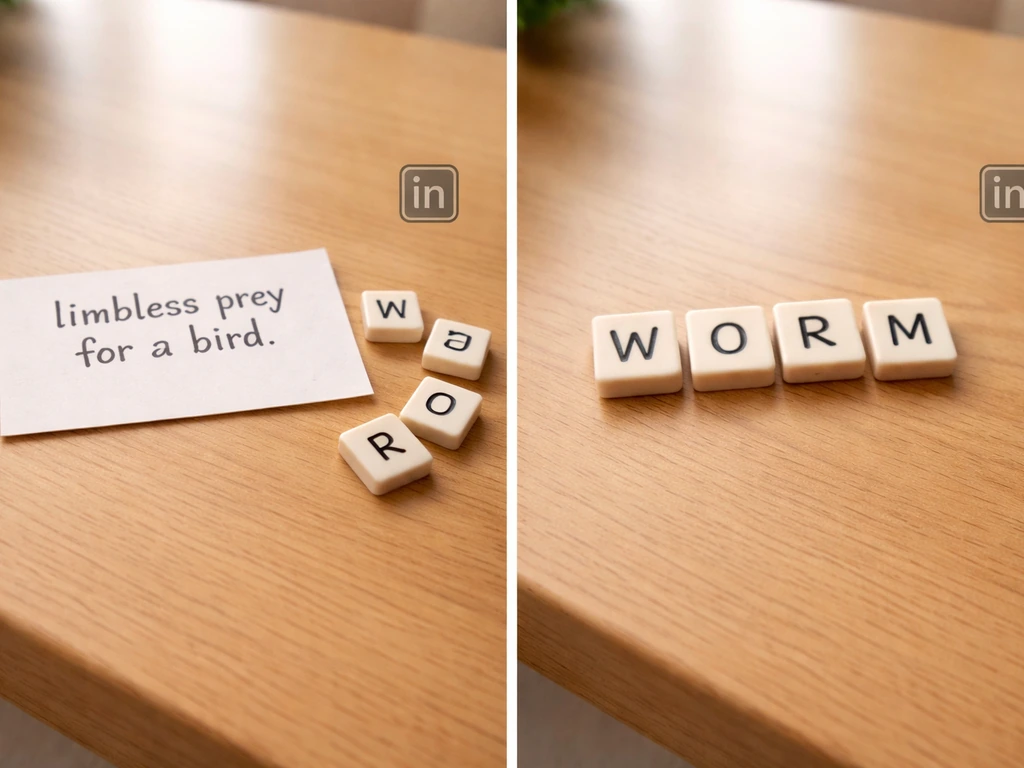
Interpreting the clue: what counts as 'limbless prey'
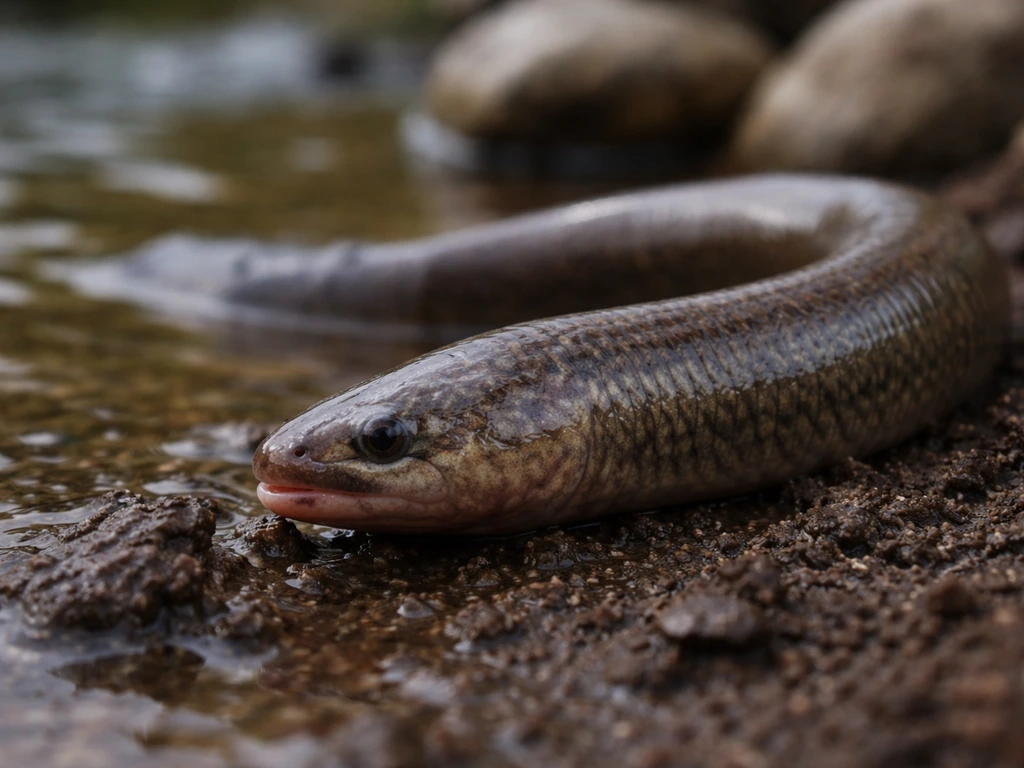
The clue leans on a very specific definition. 'Limbless' means the creature has no arms or legs, and 'prey' means it gets eaten by another animal. When you combine those with 'for a bird,' you're looking for something birds actively hunt and consume that also has zero limbs. That narrows the field considerably.
The usual suspects for limbless prey in birds' diets are worms, eels, and snakes. Worms are the most universally recognized example: Taber's Medical Dictionary defines a worm plainly as 'any small, limbless, creeping animal,' which is about as clean a match as you'll find for the puzzle's wording. Cambridge Dictionary even flags that species like the kiwi eat worms, tying the food-source angle directly to birds. Snakes fit the limbless description too, but fewer songbirds prey on snakes as a staple food. Eels are limbless aquatic animals some waterbirds consume, but they're less commonly identified as 'prey' in everyday bird-watching language.
So the logic the clue is working with is straightforward: worms are classically limbless, they are a staple food item for countless bird species, and the word 'prey' is used loosely (as crossword clues often do) to mean 'food source.' The clue isn't asking for a precise ecological relationship; it's using 'prey' as a synonym for 'something a bird eats.'
Fit-to-constraints: 4-letter word possibilities and why they work
Once you know the clue is about limbless prey for a bird, you have to match it to exactly 4 letters. Here's how the main candidates stack up:
| Word | Letters | Limbless? | Bird prey? | Fits clue? |
|---|---|---|---|---|
| WORM | 4 | Yes (definitionally) | Yes (universal) | Yes — strong match |
| EEL | 3 | Yes (aquatic, limbless) | Yes (herons, kingfishers) | No — wrong letter count |
| SNAKE | 5 | Yes (reptile, limbless) | Yes (raptors, roadrunners) | No — too many letters |
| GRUB | 4 | Yes (larval, soft-bodied) | Yes (many species) | Possible but not the standard answer |
GRUB is worth a quick note. It's 4 letters, birds do eat grubs, and grubs are effectively limbless in the way they move. However, solver databases for the exact clue 'limbless prey for a bird' consistently return WORM, not GRUB. GRUB tends to appear under clues referencing larvae or beetle larvae specifically, not limbless creatures in general. EEL falls short at 3 letters, and SNAKE at 5. WORM is the only candidate that hits every constraint cleanly.
Most likely answer and final verification steps
WORM is the answer. Multiple independent crossword databases, including Scanmath and CrosswordSolver.com, list the exact clue 'limbless prey for a bird' with the confirmed 4-letter answer WORM. CrosswordSolver.org also maps 'limbless invertebrate' directly to WORM as a crossword solution, which is essentially the same clue phrased differently.
To verify it yourself, run through these steps:
- Check your puzzle grid: confirm the answer slot is exactly 4 squares.
- Look at any crossing letters you've already filled in. WORM is W-O-R-M, so if you have a crossing letter at position 1 that isn't W, re-examine those crossings before assuming the clue answer is wrong.
- Search the exact clue text in a crossword solver (Crosswordtracker, Wordplays, or Scanmath all work). The clue 'limbless prey for a bird' returns WORM consistently.
- If the grid letter at position 2 is O and position 4 is M, you can be confident WORM is correct.
One real-world ornithological confirmation: Cornell Lab's All About Birds features the Worm-eating Warbler, a species named specifically for its diet of worms and similar soft-bodied, limbless invertebrates. The name itself encodes the 'bird + worm as prey' relationship in a way that aligns perfectly with how the crossword clue frames it.
What 'LinkedIn meaning' could mean in this context
This is the part of the search query that confuses most people, and it's worth clearing up directly. LinkedIn does appear as a source domain in crossword clues, but in a very specific way: clue writers use LinkedIn as a context to hint at job-related words. For example, 'LinkedIn listing' is a well-documented clue for the answer JOB, and 'LinkedIn posting' has been clued as RESUME in Wall Street Journal crossword puzzles. LinkedIn in a clue almost always points to professional networking vocabulary, not biological or ornithological terms.
There is no documented LinkedIn-specific coinage or platform term that means 'limbless prey for a bird. No widely documented LinkedIn coinage matches “limbless prey” semantics, and the LinkedIn-related evidence found is about LinkedIn-as-context for job, resume, or linking clues rather than biological riddle prey no documented LinkedIn-specific coinage.
' If you searched for 'limbless prey for a bird 4 letters LinkedIn meaning,' one of two things is likely happening: either you saw someone share this crossword clue as a brain teaser post on LinkedIn (it's common for people to post puzzles and riddles there), or the phrase 'LinkedIn meaning' crept into your search because you were trying to find where you originally spotted the clue.
If you are curious about the phrase itself, the “4 letters meaning” part is simply pointing to the crossword answer and its definition. In either case, LinkedIn is the source location, not a modifier that changes the clue's meaning.
The bottom line: don't let 'LinkedIn meaning' redirect your thinking. The clue is a standard crossword puzzle entry. LinkedIn is just where you (or someone you follow) happened to encounter it. The answer is still WORM.
Bird-related terminology: common prey terms, spelling, and pronunciation
Since this site focuses on bird language and nomenclature, it's worth grounding WORM in the broader vocabulary of bird prey. The crop meaning bird connects this crossword answer to how bird species and their diets are described in ornithology WORM. The word 'worm' in English is spelled W-O-R-M and pronounced with a single syllable: the IPA is /wɜːrm/ in American English, or roughly 'wurm' in practical phonetics. It rhymes with 'firm' and 'term.' There's no silent letter and no common misspelling to watch for.
In bird-related contexts, worm shows up in species names and common descriptors more than you'd expect. 'Worm-eating' is a compound adjective used directly in official bird names (Worm-eating Warbler, Helmitheros vermivorum), and 'vermivore' is the formal Latin-rooted term for a worm-eating animal, from the Latin vermis (worm) plus vorare (to devour). In etymology, the prefix 'avi-' relates to birds, which is why you may see it used in bird-related word formations vermivore. If you ever encounter crossword clues referencing bird prefixes or suffixes related to diet, 'vermi-' is the root to know.
Other common limbless or near-limbless prey terms that appear in bird diet descriptions include 'eel,' 'larva,' 'grub,' and 'serpent' (the last one more in poetic or field-guide prose). Each has a slightly different crossword profile. EEL is a frequent 3-letter answer for 'slippery fish' or 'river predator' type clues. GRUB tends to appear when the clue references beetle larvae or underground food sources.
WORM remains the go-to for any clue that combines 'limbless,' 'bird,' and a 4-letter constraint in the same breath. If you are also looking for a common origami bird crossword answer, you can use the same crossword strategy to narrow possibilities by letters and clue wording. Prefix meaning bird crossword clue answers often hinge on familiar bird-related word parts.
If you enjoy untangling bird-related word puzzles like this one, clues involving prefixes that mean 'bird' or 'flight' follow a similar pattern where knowing the root word (ornitho-, avi-, pter-) unlocks a whole family of answers. The logic is the same: match the definition, count the letters, and verify against crossing entries.
FAQ
Does “prey for a bird” mean the bird hunts the animal, or can it mean “food source”?
In this clue style, “prey” usually means “food that a bird eats,” not necessarily a predator-prey relationship involving hunting behavior. That is why WORM fits cleanly even though the clue is not asking for a specific hunting method or ecosystem niche.
How can I tell when a similar clue should still be WORM even if I’m unsure?
Yes. If the clue’s letter count is 4 and the definition includes both “limbless” and “for a bird,” WORM is the dominant fit. Other candidates like EEL (often 3 letters) or GRUB (usually clued for larvae) are typically excluded once you enforce both the length and the wording “limbless prey for a bird.”
Could “limbless” ever point to something other than a worm for bird-related clues?
Crossword clues sometimes use “limbless” loosely for soft-bodied or effectively legless animals, not only zoological “no limbs” cases. That said, if a clue instead says “slippery fish” or “river predator,” the correct answer may shift to EEL rather than WORM, because the bird context changes what the clue is targeting.
Why does “LinkedIn meaning” show up with this clue, if the answer is biology-related?
No special LinkedIn terminology is required. When “LinkedIn” appears inside a crossword clue, it commonly serves as a contextual hint for a work or resume-related word, for example “LinkedIn listing” tends toward JOB. So “LinkedIn meaning” here is best read as “where I saw the puzzle,” not a modifier of the biology definition.
What are the most common mistakes when solving “limbless prey for a bird”?
The most common miss is getting distracted by nearby options that are also limbless, like GRUB or EEL. A quick decision aid is: check letter count first (4 letters here), then confirm the clue uses both “limbless” and “for a bird.” Those two together narrow it heavily toward WORM.
What should I do if crossings contradict WORM for a clue that looks like this?
If you’re solving without any web checking, fill crossings. Worm-based answers often cross neatly with other short bird or nature words. If your intersecting letters contradict WORM (for example, you can’t make W-O-R-M with the crossing constraints), then you should revisit whether the clue is truly the same one or whether the site changed the clue text.
How do slight wording changes affect the answer?
If the clue changes slightly, the answer can change. For instance, “slippery fish” or “river creature” tends to favor EEL, and “beetle larva” tends to favor GRUB. WORM is most reliable when the clue explicitly combines “limbless” and “for a bird” with a 4-letter requirement.
Does spelling or dialect change the correct 4-letter answer?
If the puzzle uses UK versus US spelling, WORM does not change, because it is already the same 4-letter English spelling in both varieties. The pronunciation may differ slightly, but the crossword entry spelling remains W-O-R-M.
Next Article
Bill Meaning in Birds: Definition, Uses, and Examples
Get the bird bill definition, uses, beak synonyms, and how bill shape links to feeding and bird naming.