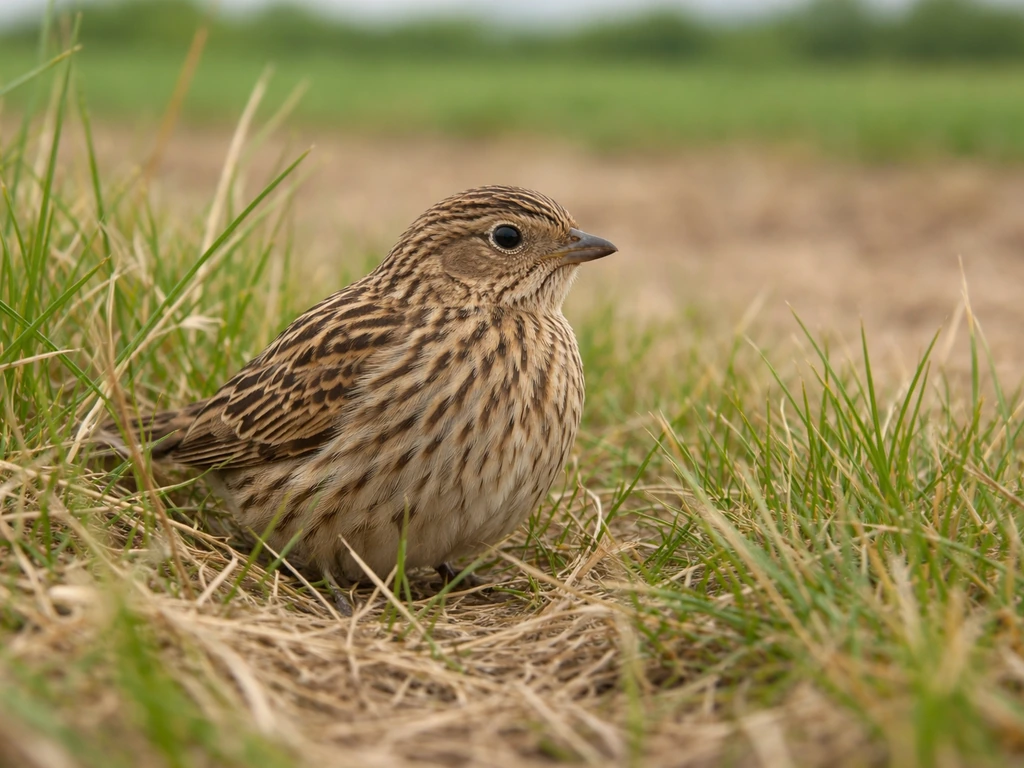
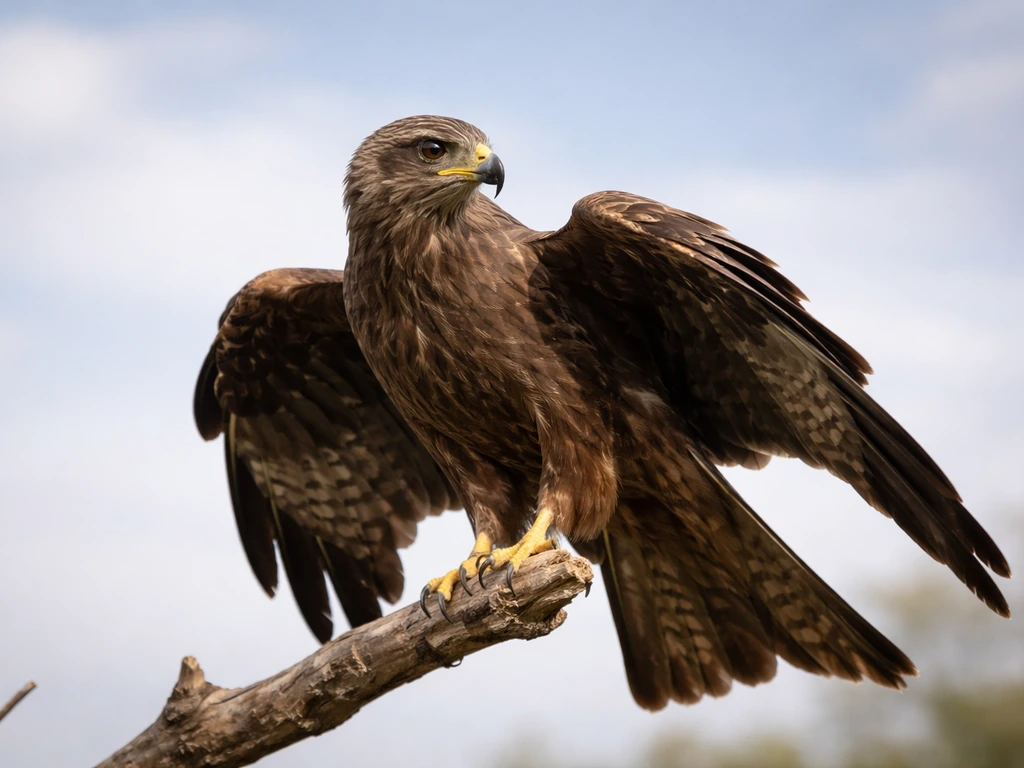
The bird most commonly called 'cheel' in South Asia is the [Black Kite](/bird-name-translations/what-is-vak-bird-called-in-english), known scientifically as Milvus migrans. If someone in India, Pakistan, Bangladesh, or Nepal points at a large brown bird wheeling overhead and says 'cheel,' they almost certainly mean this species. The subspecies you'll most often encounter in the region is Milvus migrans govinda, sometimes called the Pariah Kite in older English texts.
What Is Cheel Bird Called in English? Names and ID

James Ridgley
28 May 2026
Where 'cheel' comes from and which bird it refers to
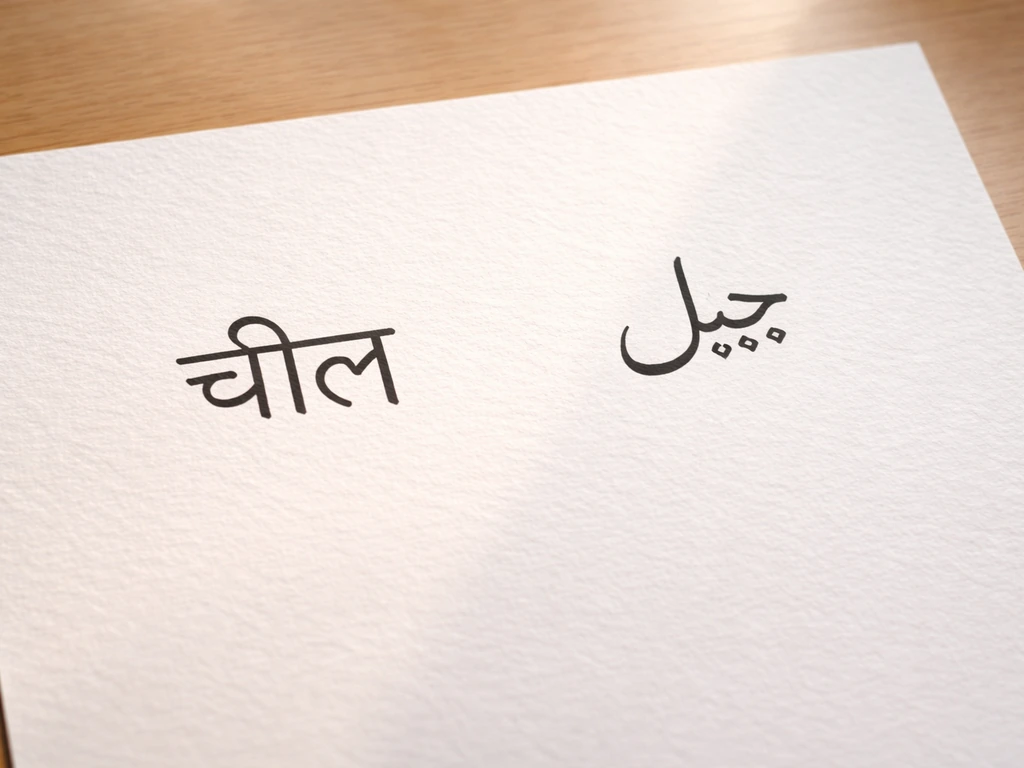
The word 'cheel' (also written चील in Hindi and چیل in Urdu) belongs to Hindustani, the broad language family that covers both Hindi and Urdu across the Indian subcontinent. It is an everyday vernacular name, not a scientific one, and it has been in use for centuries. If you are looking for the Afrikaans wording for the same idea, see what is a bird in Afrikaans for the translation and common phrasing.
Colonial-era ornithology records, including entries in the Journal of the Bombay Natural History Society, [explicitly pair the Hindustani name 'Cheel' with the Common Pariah Kite (Milvus migrans govinda). ](https://upload. wikimedia. org/wikipedia/commons/0/03/JournaloftheBombayNaturalHistorySociety%28IAjournalof403419381939bomb%29.
pdf) Modern field data confirms the same: the Red List of Bangladesh, for example, records the Black Kite with local name 'Chil/Cheel,' showing the name is consistent across the wider region, not just India.
The term stretches across multiple South Asian languages with very similar forms. You will see it spelled cheel, chil, chiil, and even kalocheel (a compound meaning roughly 'black kite' in some Nepali-influenced regional usage). All of these point to the same bird or its close relatives.
The correct English names: common and scientific
The standard English common name is Black Kite. This is the name used by the International Ornithological Committee (IOC), BirdLife International, and most modern field guides covering Asia. In older British and Anglo-Indian literature you may also encounter the name Pariah Kite, referring specifically to the South Asian subspecies Milvus migrans govinda. 'Pariah Kite' is now considered an outdated label, so if you are writing, birding, or submitting a sighting record, stick with Black Kite.
| Name type | Name | Notes |
|---|---|---|
| Modern English common name | Black Kite | Current standard; used worldwide |
| Older English common name | Pariah Kite | Refers to South Asian subspecies; now archaic |
| Scientific (Latin) name | Milvus migrans | Full species; accepted by IOC and IUCN |
| Subspecies scientific name | Milvus migrans govinda | The specific South Asian form most often called 'cheel' |
| Hindi/Urdu vernacular | Cheel / Chil / Chiil | Non-scientific; used across the Indian subcontinent |
Why 'cheel' can mean more than one bird
Vernacular names are not precise. Dictionaries like Rekhta gloss 'chiil' broadly as 'eagle, kite, a bird of prey,' and that ambiguity is real in everyday speech.
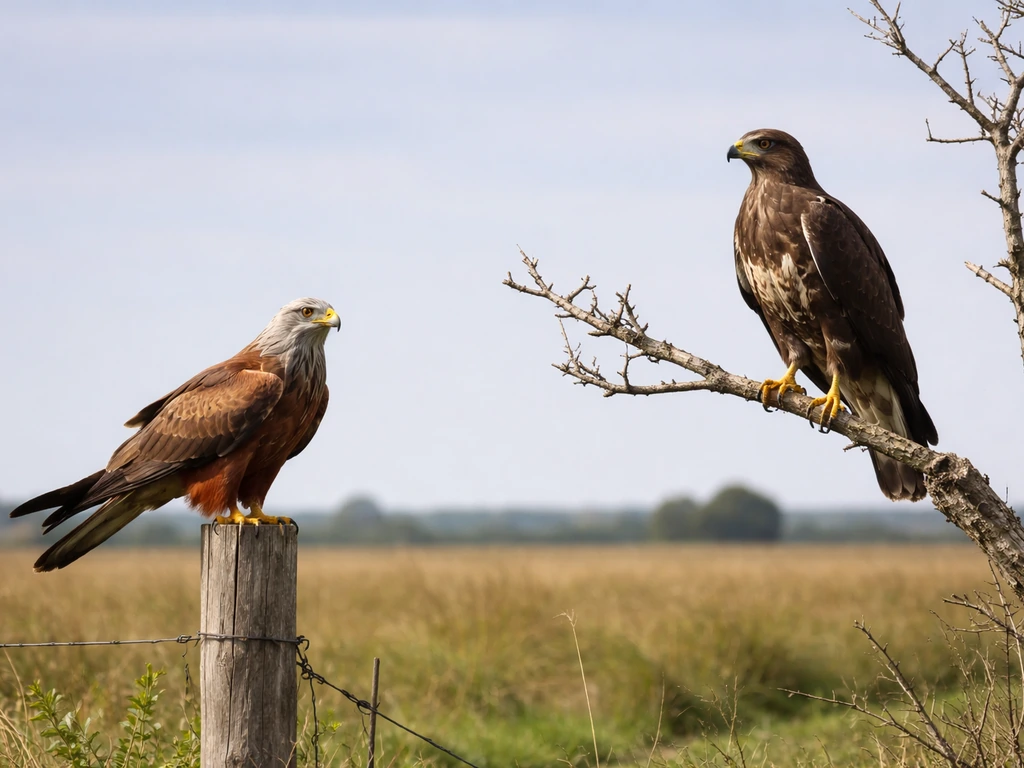
A farmer in rural Rajasthan calling a large soaring bird a 'cheel' may occasionally mean a Brahminy Kite or even a Short-toed Snake Eagle. Historical ornithology texts have also noted that 'cheela' or 'cheel' was sometimes applied to hawk-like birds connected to the genus Spilornis (serpent eagles). So the name does not lock onto a single species the way a scientific name does.
That said, in the vast majority of modern uses in towns and cities across the subcontinent, 'cheel' means the Black Kite, which is by far the most common large raptor in urban and peri-urban South Asia.
Spelling, pronunciation, and alternate forms
The Hindi word चील is a single syllable or a very quick two-syllable word depending on the speaker. In practical phonetic terms, say it like 'CHEEL' (rhymes with 'feel'), with the 'ch' as in 'chair.' In IPA it sits close to /tʃiːl/. The long 'ee' vowel is the key: it is not 'chell' or 'chyle,' it is a clean, held 'ee' sound.
- Cheel: most common romanisation in English-language texts about Indian birds
- Chil: used frequently in Bangladeshi and Nepali sources (e.g., Red List of Bangladesh)
- Chiil: Urdu-influenced spelling sometimes seen in Pakistani birding literature
- Kalocheel: regional compound used in Nepal, combining 'kalo' (black) and 'cheel'
- Cheela: a related but distinct form sometimes used for raptors in historical texts
For English-language writing, 'cheel' is the most widely recognised romanisation if you need to reference the local name. If you are just naming the bird in English, write 'Black Kite' and you will be understood everywhere.
Where the word 'cheel' actually comes from
The word traces back to Sanskrit and shares roots with other Old Indo-Aryan words for birds of prey. Some ornithologists and etymologists note that it may carry an onomatopoeic quality, loosely echoing the thin, drawn-out whistling call the Black Kite makes. Whether or not that is the true origin, the call-to-name connection feels intuitive once you have heard a Black Kite scream overhead. The formal scientific name Milvus migrans tells a different story: 'Milvus' is Latin for kite (the bird, not the flying toy), and 'migrans' means migrating, noting the species' migratory behaviour across its range. So the English common name 'kite' and the vernacular 'cheel' both independently land on the same idea: a soaring, hovering raptor.
This is a pattern you see across many South Asian bird names. Just as 'bagla' translates to heron and 'bater' maps to quail, 'cheel' maps to kite. Similarly, what is bagla bird called in English is simply heron. If you are wondering what bater bird is called in English, it maps to quail. Each of these vernacular names has an English equivalent that fits neatly once you know the species. The naming logic is consistent even if the one-to-one match requires a little verification.
How to confirm you have the right bird
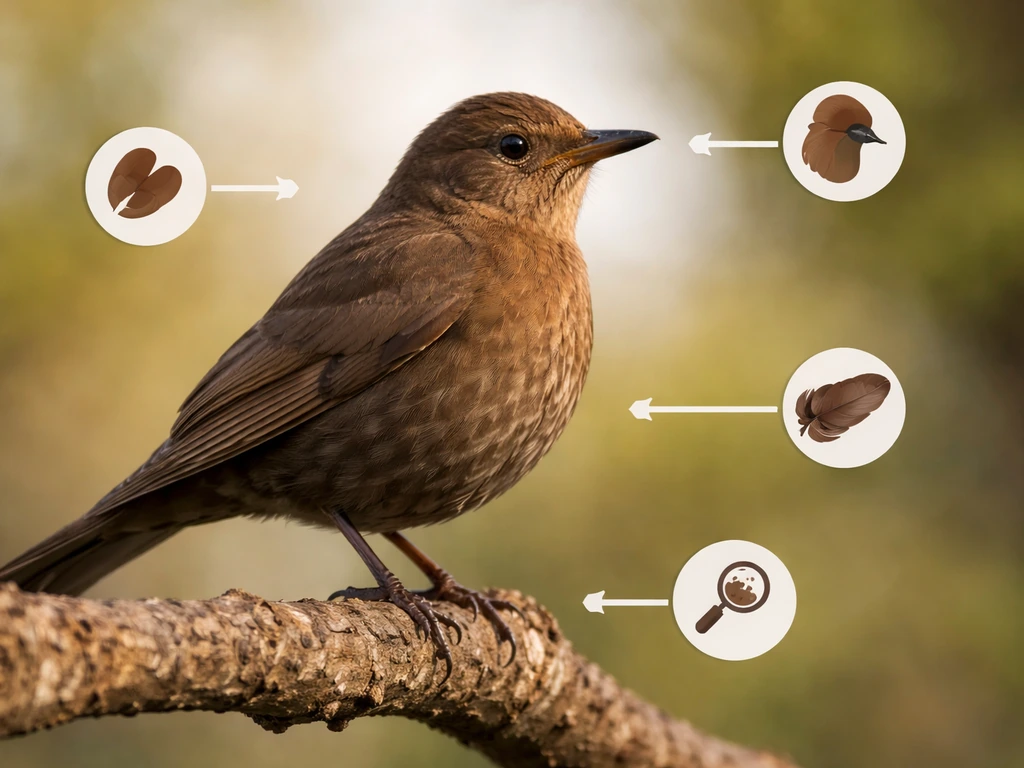
Because 'cheel' can sometimes be used loosely, it is worth taking thirty seconds to confirm the species. Here is what to look for if you are in the field or checking a photo:
- Overall colour: Medium to dark brown body, slightly paler brown head, not pure black despite the name
- Tail shape: The most reliable field mark is a shallow forked or notched tail (not deeply forked like a Red Kite, not square like a buzzard)
- Size: Medium-large raptor, roughly 55–65 cm body length, wingspan around 140–155 cm
- Flight style: Spends long periods soaring and gliding with minimal wingbeats; frequently tilts and twists the tail in flight
- Habitat: Almost always near human settlement, rubbish dumps, rivers, and coastlines; thrives in cities
- Call: A thin, wavering, descending whistle (the sound many people in South Asia associate with a 'cheel' call)
- Range: Widespread across South and Southeast Asia, parts of Africa, Europe, and Australia
If the bird you are looking at has a deeply forked red-brown tail, it is a Red Kite (Milvus milvus), a European species unlikely to be what someone in South Asia means by cheel. If it has a white head and chestnut-red body, that is a Brahminy Kite (Haliastur indus), which is a different bird entirely. Apps like eBird or Merlin Bird ID (Cornell Lab) are useful for confirming your sighting: enter your location and the field marks described above and Black Kite should come up quickly.
Regional English names and birding versus scientific usage
If you are talking to a birder, 'Black Kite' is the right term universally. In older Anglo-Indian writing and some regional English texts from the 19th and early 20th centuries, 'Pariah Kite' was standard because it highlighted the bird's scavenging, omnipresent nature around human settlements (a usage that has since fallen out of favour for obvious reasons). You may still encounter 'Pariah Kite' in vintage field guides or colonial-era natural history literature, so it is useful to recognise it.
In zoology and taxonomy, you need the scientific name: Milvus migrans for the full species, or Milvus migrans govinda if you are specifically discussing the South Asian subspecies. Scientific papers, species checklists, and conservation reports will use the Latin binomial. For a crossword, a children's book, a birding app, or a nature quiz, 'Black Kite' is the answer you want.
One small practical note: if someone asks you 'what is cheel in English' in a general conversation, the clean one-word answer is 'kite' (as in the bird family). If you are also curious about bird anatomy and language, you may like to see what are bird feet called in english as a related vocabulary point. If you are also wondering about the name Akala bird, its English meaning is used differently depending on the country and local usage what is akala bird in english. The full answer is 'Black Kite.' Either way, you are now well equipped to give a confident, accurate answer.
FAQ
If someone says “cheel” and I only know English, should I answer “kite” or “Black Kite”?
In casual conversation, most people mean the bird of prey by saying “cheel” but, if you need an English one-word equivalent that is always safe, use “kite” or “Black Kite.” If you are writing formally, “Black Kite” is the best option to avoid confusion with other raptors that sometimes get the same vernacular label.
What should I write if I see “Pariah Kite” in an older book or my notes?
“Pariah Kite” usually refers to the South Asian subspecies Milvus migrans govinda, but it is considered outdated in modern guides. If you are logging a photo to an app or reporting a sighting, choose “Black Kite” as the species name to match current taxonomy and common database labels.
How can I tell when “cheel” might not be the Black Kite in my photo?
Yes, because vernacular names can be loose, you should confirm with field marks. For a typical “cheel” in the region, look for a large dark raptor with a deeply forked tail, and use your location and date along with photo ID tools like Merlin or eBird to rule out lookalikes such as Brahminy Kite or Red Kite.
Can the call help confirm what “cheel” means, or is it unreliable?
If your “cheel” call sounds like a thin, repeated whistle and the bird is dark and wheeling over open areas, it is more likely to be a Black Kite. However, call alone is not definitive, especially because multiple raptors can sound similar, so treat audio as supporting evidence rather than the final ID.
When would I use Milvus migrans versus Milvus migrans govinda?
If you need the scientific name, use Milvus migrans for the species in general, or Milvus migrans govinda when you specifically mean the South Asian subspecies. Scientific writing and most checklists expect the Latin binomial, not the vernacular term.
What’s the best way to search for this bird in an ID app if I only know it as “cheel”?
For most birding apps, you will get the best results by selecting “Black Kite” first, then checking whether the returned species matches your location. If you search for “cheel” directly, results can vary by region and can bring in multiple raptors, so start with the English common name.
Are “chil,” “chiil,” or “kalocheel” different birds, or just spelling variants?
“Chil” and “chiil” are common spelling variants in English romanization, and “kalocheel” can appear as a compound form in some local usage. They usually still point to the same kite in everyday speech, but if you see these in user-generated notes, confirm with location plus visible traits.
Is it ever acceptable to translate “cheel” as “eagle” in English?
If you are writing for an international audience, avoid translating “cheel” into “eagle” because that can broaden the meaning too much in English. Use “Black Kite” (or “kite” as a short generic) to keep the match tight and reduce the chance of misidentifying a different raptor.
Next Article
What Is Bater Bird Called in English? Identify the Species
Find the English name for the so-called bater bird, with spelling, pronunciation, lookalikes, and verification tips.