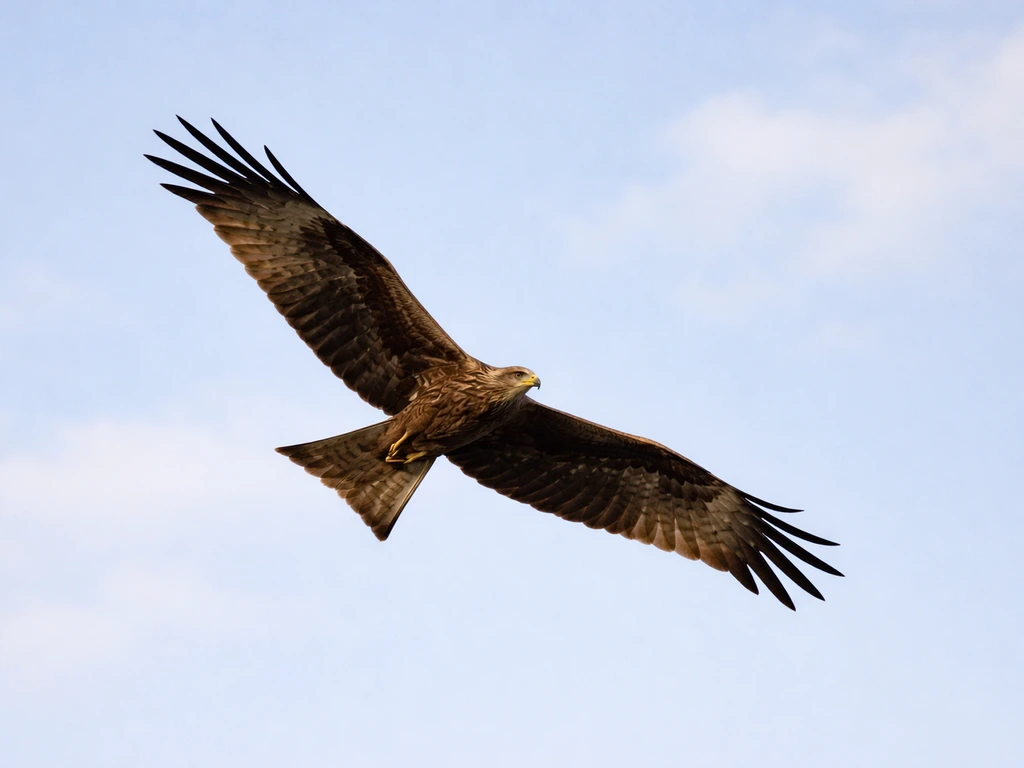
The Afrikaans word for 'bird' is voël, and 'a bird' is 'n voël. That's the complete translation you need. The apostrophe-n ('n) is Afrikaans for the indefinite article 'a' or 'an,' and voël is pronounced roughly like 'fool' but with a 'v' at the front. So 'n voël sounds something like 'un fool' said quickly. Simple as that.
What Is a Bird in Afrikaans: Voël and Correct Usage

James Ridgley
22 May 2026
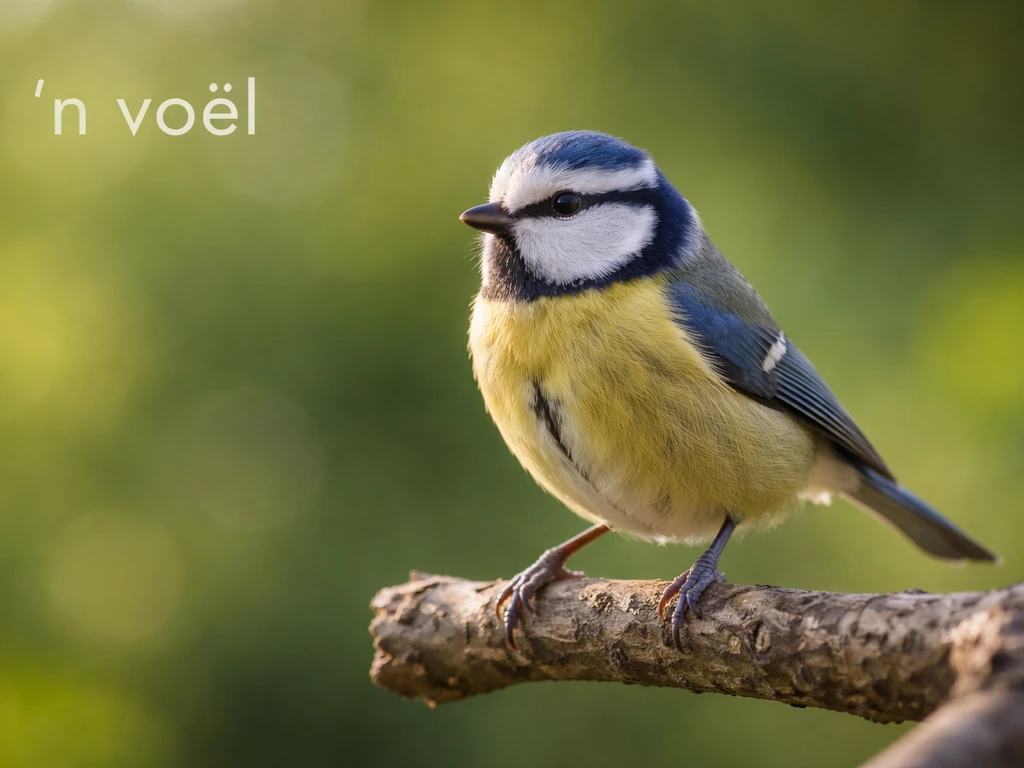
Direct translation: 'a bird' in Afrikaans
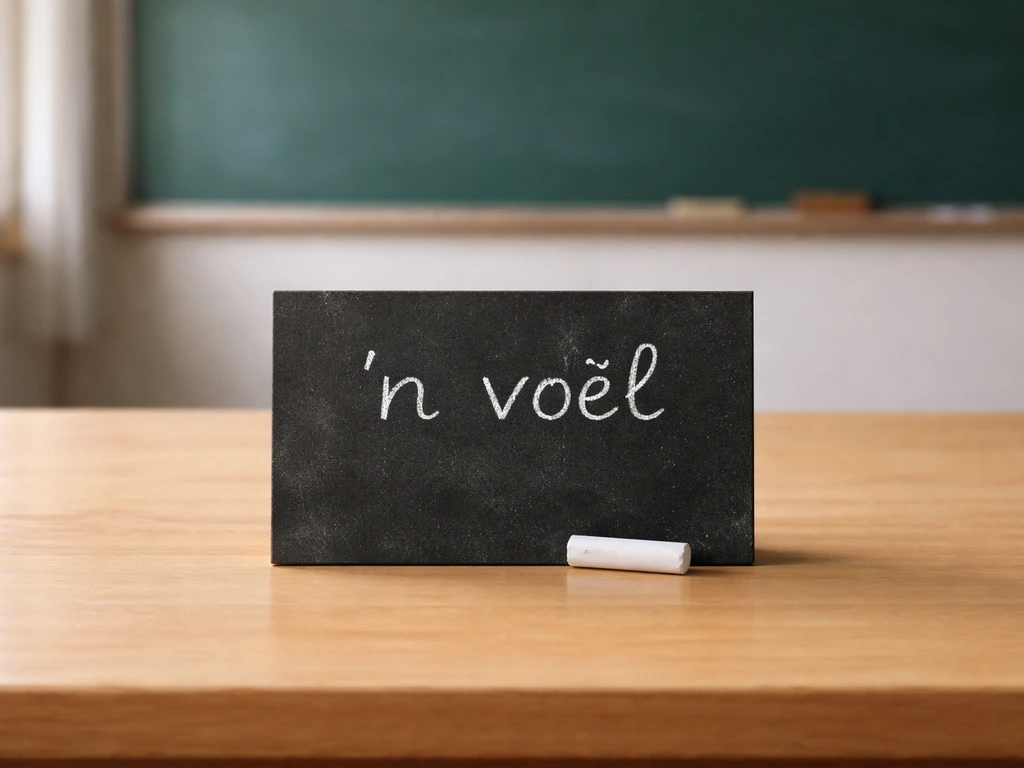
In Afrikaans, the indefinite article 'a' is written as 'n (with an apostrophe, lowercase, and no capital even at the start of a sentence). It attaches to the noun that follows it. So 'a bird' becomes 'n voël. There is no masculine or feminine article distinction in Afrikaans, which makes things much easier than in, say, French or German. You use 'n voël whether you're talking about a sparrow, an eagle, or any other bird. The definite article 'the' is die, so 'the bird' is die voël, but when someone asks 'what is a bird in Afrikaans,' the answer they almost always need is 'n voël.
Singular vs plural: 'bird' vs 'birds' in Afrikaans
The plural of voël is voëls, formed by simply adding an -s to the end. This is one of the easier plural patterns in Afrikaans, which can otherwise involve vowel changes or -e endings depending on the noun. Afrikaans plural formation often follows patterns like adding -e or -s, and the exact plural ending depends on the noun or its ending rather than being a single uniform rule plural patterns in Afrikaans, which can otherwise involve vowel changes or -e endings. Here the diaeresis (the two dots over the ë) stays in place in the plural form too, so you always write voëls with the ë, never voels. When speaking generally about birds as a category, you use the bare plural with no article: voëls verskyn oral (birds appear everywhere). For 'a flock of birds' you can say 'n swerm voëls, which is a very natural and common construction.
| English | Afrikaans | Notes |
|---|---|---|
| a bird | 'n voël | indefinite article + singular noun |
| the bird | die voël | definite article + singular noun |
| birds (in general) | voëls | no article needed for generic statements |
| the birds | die voëls | definite article + plural noun |
| a flock of birds | 'n swerm voëls | common collective construction |
Afrikaans pronunciation and spelling tips
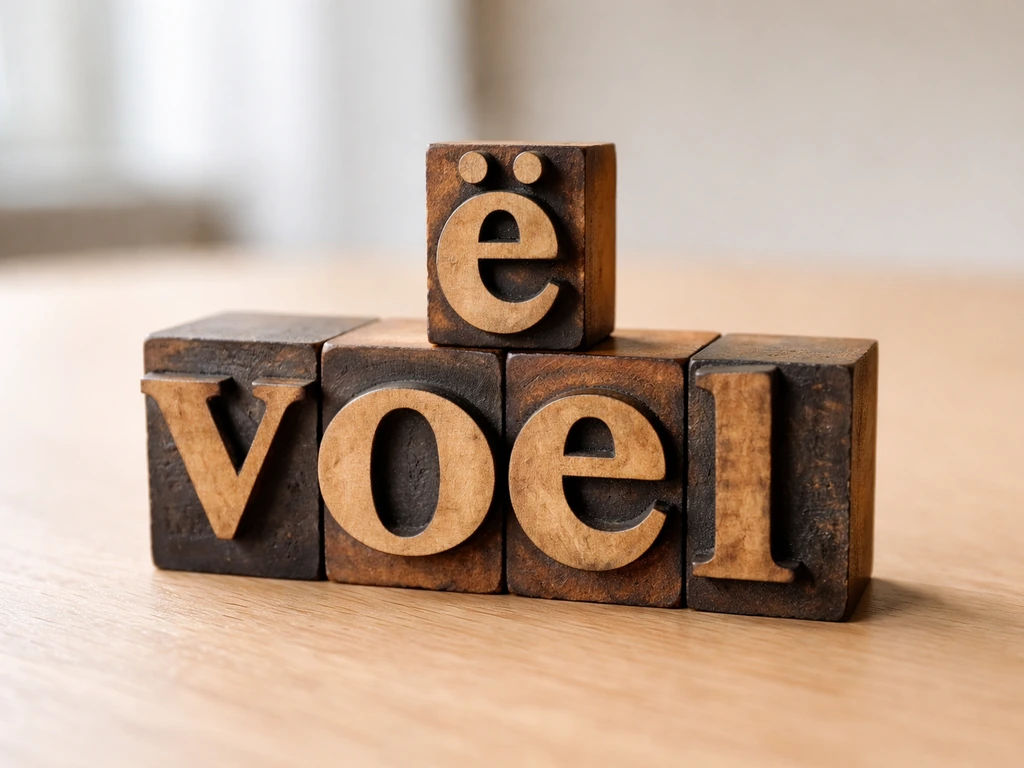
The word voël has two parts: the 'v' sound (same as English 'v') and then 'oel,' which sounds like the English word 'ool' as in 'ool' from 'fool.' Put it together and you get something close to 'vool,' with a short, clean vowel. The IPA transcription is roughly /fuəl/ for the vowel cluster, but for practical purposes, just say 'vool' and you'll be understood.
The ë with a diaeresis is the most important spelling detail. In Afrikaans orthography, the diaeresis indicates syllable separation or a specific vowel quality, and dropping it changes the standard spelling. The correct written forms are voël (singular) and voëls (plural). Writing voel or voels without the two dots is a common mistake and technically incorrect according to the Afrikaanse Woordelys en Spelreëls (AWS), which is the official Afrikaans spelling authority. If you're writing the word on a keyboard, you can usually find ë through character maps, or type it as a Unicode character (ë is U+00EB).
- Always include the diaeresis: voël, not voel
- The plural keeps the diaeresis: voëls, not voels
- The indefinite article is 'n with an apostrophe, lowercase always
- Pronounce the 'v' as in English 'very,' then add 'ool' as in 'fool'
- Stress falls on the first (and only) syllable: VOOL
Natural sentence examples you can copy
These examples are straightforward and cover the kinds of situations that come up most often, whether you're a birdwatcher keeping notes, someone learning the language, or just curious about the word.
- Ek het 'n voël gesien. — I saw a bird.
- Daar is 'n voël in die tuin. — There is a bird in the garden.
- Voëls is oral. — Birds are everywhere.
- Watter voël is dit? — What bird is that?
- Dit is 'n pragtige voël. — It is a beautiful bird.
- 'n Swerm voëls vlieg oor. — A flock of birds flies over.
Notice that in 'Voëls is oral,' there's no article before the plural, just like in English when you say 'birds are everywhere' without 'the.' Afrikaans works the same way for general statements. Also notice that 'n stays lowercase even when it opens a sentence like 'n Swerm voëls. That's a quirk of Afrikaans writing rules that trips up a lot of people.
Common related bird words and quick extension
Once you know voël, a whole family of Afrikaans compound words opens up, since Afrikaans builds vocabulary by joining words together. This is exactly the kind of thing that comes up when you're exploring bird naming and language across different contexts, whether you're a birder, a puzzle solver, or someone trying to follow an Afrikaans bird guide. If you are wondering what a specific Samdi bird is called in English, you can use these bird-naming patterns to find the right match bird naming.
| Afrikaans Word | English Meaning | Built From |
|---|---|---|
| voël | bird (singular) | base word |
| voëls | birds (plural) | voël + -s |
| voëlkyker | birdwatcher / birder | voël + kyker (looker/watcher) |
| voëlnes | bird's nest | voël + nes (nest) |
| voëlhuis | birdhouse / aviary | voël + huis (house) |
| voëlverskrikker | scarecrow | voël + verskrikker (frightener) |
Knowing voël also helps when you encounter Afrikaans bird names in the field. Many species names in Afrikaans include descriptive compounds built on voël or common bird-type words, similar to how other languages use their base word for 'bird' as a building block in species naming. This connects naturally to questions about translating bird names between languages, the same kind of question that comes up when tracking down what a word like 'bater' or 'vak' means in English, or what Afrikaans-speaking birders call the birds in their field guides. In English, bird feet are called the “feet” or sometimes the “tarsi” when you mean the lower leg portion. In English, you’ll usually see the cheel bird referred to by its common name. In English, the vak bird is called a kingfisher. In English, you would typically refer to a “bater” as “a kingfisher. In English, you would typically say “bagla bird” is called a kingfisher. ” what a word like 'bater' or 'vak' means in English.
FAQ
How do you say “the bird” and “some birds” in Afrikaans?
Yes. The definite article is die, so “the bird” is die voël, and the indefinite plural “some birds” is gewoonlik “voëls” or “’n paar voëls,” depending on context.
Do I need an article when talking about birds in general, like “Birds appear everywhere”?
In general statements, Afrikaans usually drops the article with the bare plural, so “Birds appear everywhere” is Voëls verskyn oral, not ’n voëls verskyn oral.
Is there a smaller or cute word for a bird, like “little bird”?
Afrikaans also has a true adjective form “voëltjie” (meaning “little bird”), which you can use when you mean a small bird specifically. For plural, it becomes “voëltjies.”
If the sentence starts with Voël, do I write it as Voel or Voël?
If you capitalize, you still spell the word with the diaeresis, so “Bird” at the start of a sentence is Voël (or Voëls for plural). The capitalization does not remove the two dots.
Why is the ’n lowercase even when it begins a sentence?
The indefinite article stays lowercase and written as ’n, even at the beginning of a sentence. So you write “’n voël” and not “’N voël.”
What goes wrong if I type voels or voel without the diaeresis?
If you remove the diaeresis and write voel or voels, it becomes a common spelling mistake. In formal Afrikaans writing, it is best to always use ë, so voël (singular) and voëls (plural).
How can I type ë correctly on a keyboard or phone?
For keyboard input, the most reliable approach is to use a proper Unicode character, ë (U+00EB and Ë for uppercase). If your keyboard cannot type it, copy the character from a reference or use an input method that supports Unicode.
When should I use just voël, and when should I use a species-specific Afrikaans bird name?
In many contexts you might use a different word altogether, like “voëltjie” for a small bird, or species-specific names instead of just “voël.” If you are translating a specific bird from a guide, check whether the species name already includes voël as part of a compound.
Next Article
What Is Samdi Bird Called in English? Name and ID Guide
Find the English name and scientific ID for the Samdi bird, plus tips to confirm via range, traits, and spelling.