In most South Asian contexts, "Bagla" refers to the Indian Pond Heron (Ardeola grayii), also commonly called the Paddybird in English. That is the bird you will find mapped directly to the local name "Bagla" in official Indian wildlife documents. However, "Bagla" is also used as a broad umbrella term across Hindi and other South Asian languages for the entire family of herons and egrets, so a specific variant like "Gai Bagala" points to the Cattle Egret (Bubulcus ibis), while "Andha Bagla" or "Surkhia Bagla" point to still other species. The Government of Maharashtra management file also explicitly distinguishes "Bagla" (Pond Heron or Paddy Bird, Ardeola grayii) from "Gai Bagala" (Cattle Egret, Bubulcus ibis) blank" rel="noopener noreferrer">distinguishes "Bagla" versus "Gai Bagala". Read on to figure out exactly which one you mean. If you are trying to answer 'what is samdi bird called in english', the key is to identify the local name you are given and match it to the correct species using regional bird checklists.
What Is Bagla Bird Called in English? Names and ID Tips

The exact English name for "Bagla"
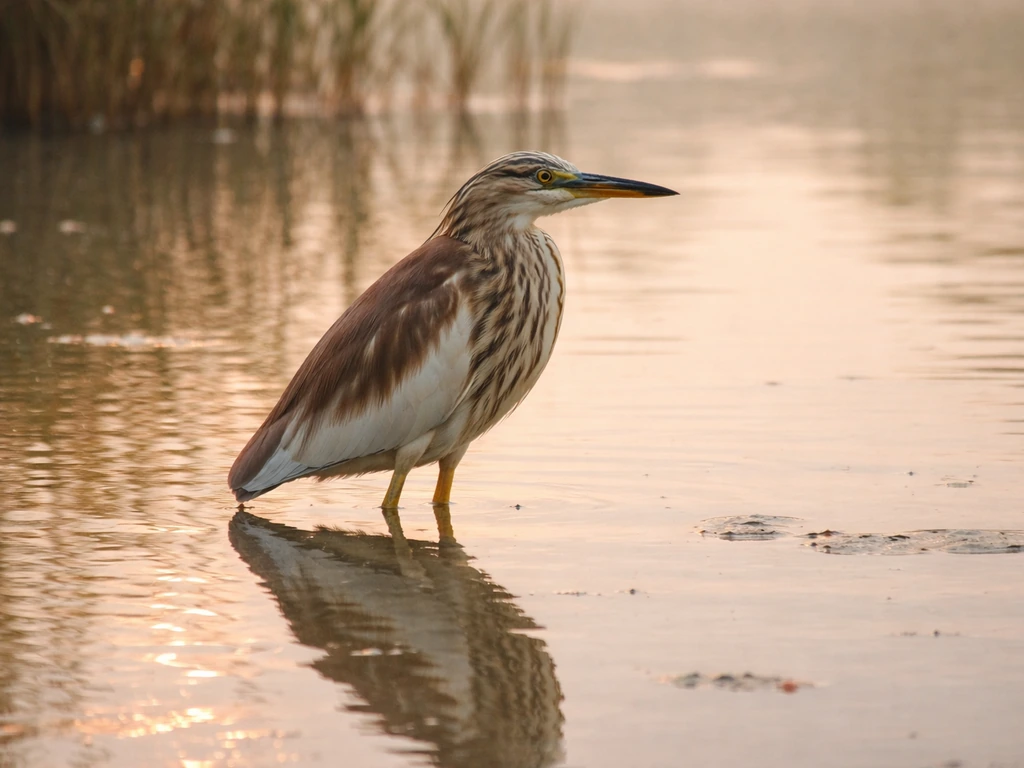
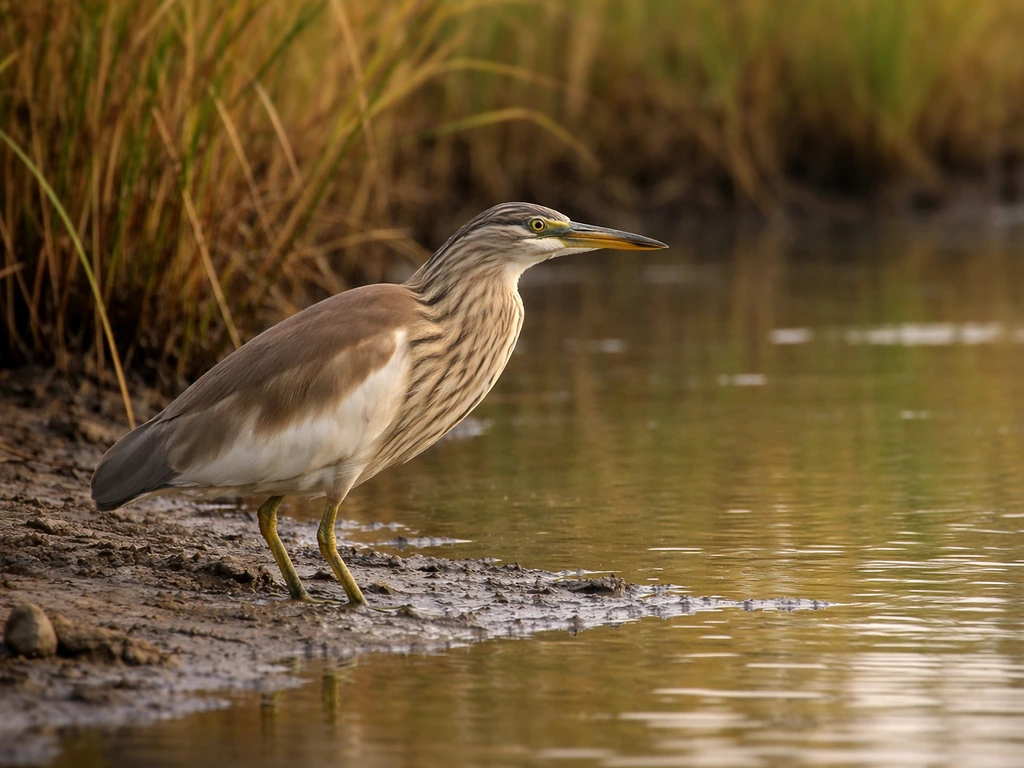
The Government of Maharashtra's official wildlife documents map the local name "Bagla" directly to two English names for the same bird: Pond Heron and Paddy Bird. Both refer to Ardeola grayii, the Indian Pond Heron. This is the strongest direct documentary mapping available, and it lines up with field guide traditions going back to Douglas Dewar's classic Indian Birds, where "Baglā, Paddy bird" appears as a straightforward local-to-English pairing. If someone in India, Pakistan, Nepal, or Bangladesh just says "bagla" without any modifier, this is almost certainly the bird they mean.
The Wiktionary entry for बगला (baglā) confirms the Hindi linguistic root simply means "heron," which explains why the word attaches to so many species in everyday speech. But in formal local-language wildlife checklists, plain "Bagla" without a qualifier consistently lands on the Indian Pond Heron.
Which bird is "Bagla" by language and region?
"Bagla" is a Hindi vernacular term, and its close variants appear in Urdu, Marathi, Punjabi, and several other North and Central Indian languages. In Bengali, a near-equivalent is "Bak" rather than "Bagla," though "Bada Bak" and "Bada Bagla" are used side by side in some regional checklists. The Journal of the Bombay Natural History Society stated it plainly: "Bagla is the local name for all birds of this shape: Herons, Egrets..." So in everyday village use across the Indian subcontinent, almost any large wading waterbird standing stock-still at the edge of a pond or rice paddy might get called a bagla.
That said, when wildlife managers, park guides, or birding checklists in Maharashtra, Rajasthan, or Madhya Pradesh use the unqualified word "Bagla," they are pointing at the Indian Pond Heron specifically, not the larger egrets. The Ranthambhore National Park bird checklist, for instance, lists the Indian Pond Heron (Paddy Bird) with the local name "Andha Bagla," a regional modifier that distinguishes it further.
Common variants and spellings you might search for
Because "Bagla" is a romanized transliteration of a Hindi word, you will find it spelled several different ways online and in field guides. Here is how the main variants map to English bird names:
| Local/Variant Name | English Name | Scientific Name |
|---|---|---|
| Bagla / Baglā | Indian Pond Heron / Paddy Bird | Ardeola grayii |
| Andha Bagla | Indian Pond Heron (Paddy Bird) | Ardeola grayii |
| Gai Bagala / Gai Bagle | Cattle Egret | Bubulcus ibis |
| Surkhia Bagla / Badami Bagla | Cattle Egret | Bubulcus ibis |
| Bada Bagla | Large heron (general term, often Purple or Grey Heron) | Ardea purpurea / Ardea cinerea |
| Bagula / Bagoola | Heron or Egret (general) | Various Ardeidae species |
One spelling trap worth knowing: "Baggala" appears in Merriam-Webster as an English word, but it refers to a type of Arabian sailing vessel, not a bird at all. If you search "baggala" expecting a bird result, you will hit a dead end fast. Stick to "bagla" or "bagula" for bird searches. If you are specifically looking for what a bird in Afrikaans is called, you can use the same English bird names to translate it reliably.
How to confirm which bird you are looking at
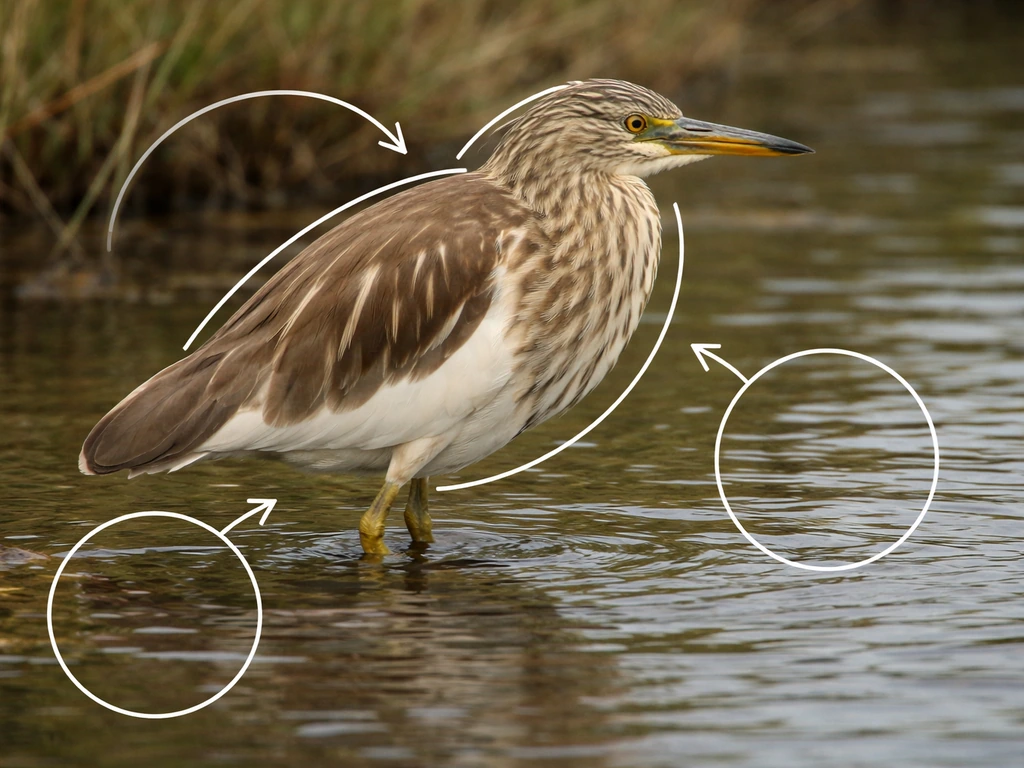
The Indian Pond Heron is one of the most recognizable waterbirds in South Asia once you know what to look for. It is a stocky, medium-sized heron, roughly 42 to 45 cm long, and it has a very distinctive behavior: it stands absolutely motionless at the edge of ponds, rice fields, and irrigation ditches waiting for prey. Here are the key identifying features:
- Non-breeding plumage: streaky brown back and wings, white belly, making it blend into dead reeds so well it is nearly invisible until it flies
- Breeding plumage (spring/summer): dramatic transformation to a rich maroon-red back with white wings that flash brilliantly in flight
- In flight: the white wings pop out instantly, making it look almost entirely white from a distance despite looking brown at rest
- Bill: yellow at the base, dark at the tip
- Legs: yellowish-green
- Habitat: rice paddies, freshwater ponds, marshes, slow-moving rivers across the Indian subcontinent
If the bird you saw has orange-buff plumes on its back during breeding season and tends to follow cattle or tractors across open fields, you are likely looking at the Cattle Egret (Gai Bagala), not the Indian Pond Heron. The Cattle Egret is a bit slimmer, prefers dry or agricultural fields, and associates closely with grazing animals.
Quick confirmation steps you can do right now
- Open eBird (ebird.org) and search for "Indian Pond Heron" filtered to your location and today's date. If it shows up as a common or expected species, that strongly supports the identification.
- Compare a photo using the Birda app or iNaturalist's species guide for Ardeola grayii. The breeding and non-breeding plumage images are side by side and make the white-wing-flash identification very clear.
- Check habitat: pond or paddy field with still water? Almost certainly Indian Pond Heron. Open grassy field with cattle? Cattle Egret.
- If still unsure, upload your photo to iNaturalist. The AI identification tool is accurate for common South Asian herons and the community will confirm within hours.
Why this bird has multiple English names
The Indian Pond Heron answers to at least three well-established English names: Indian Pond Heron, Pond Heron, and Paddybird (sometimes written as two words: Paddy Bird). This is not unusual in ornithology, and it happens for a few predictable reasons. Colonial-era naturalists often coined English names based on habitat ("pond heron") or agricultural association ("paddy bird"), while later taxonomists preferred geographically specific names ("Indian Pond Heron") to distinguish this species from similar pond herons in China and Southeast Asia. The International Ornithological Committee (IOC) now standardizes "Indian Pond Heron" as the preferred English name, but older field guides and local wildlife documents still use "Paddybird" freely, so you will see both.
This pattern of multiple English names for a single species shows up across South Asian bird vernacular translations. If you have looked into what the "Vak" bird is called in English, or what "Cheel" translates to, you will have noticed the same thing: a single local name often has two or three competing English equivalents depending on which era or which field guide you consult. You may see similar ambiguity when asking what the “Bagla” bird is called in English, since different guides and languages can prefer different English equivalents. The practical answer is to use the scientific name (Ardeola grayii) when you need zero ambiguity, and use "Indian Pond Heron" when you need a modern, standardized English name. If you are specifically asking what akala bird is called in English, the commonly used English name here is Indian Pond Heron.
How to say and spell the English name correctly
"Indian Pond Heron" is straightforward to pronounce: IN-dee-un POND HAIR-un. The word "heron" trips some people up because of the silent second syllable: it is two syllables, not three. Do not say "HEE-ron" or "HEH-ron-uh." The IPA transcription is /ˈhɛr.ən/. "Paddybird" is equally simple: PAD-ee-burd, one compound word, no hyphen needed though you will see it written both ways.
For the Hindi source word, "Bagla" is pronounced BAG-lah (rhymes with "jag" plus "la"). The long ā at the end is held slightly longer than an English short "a." In written Hindi it is बगला. You may also see it romanized as "Bagula" or "Bagoola" in older texts, both reflecting the same bird and the same pronunciation with a slightly different vowel representation.
Spelling checklist for searches and field notes:
- Correct English name: Indian Pond Heron (capitalize both words as a proper name)
- Acceptable alternative: Paddybird or Paddy Bird
- Scientific name: Ardeola grayii (italic in print, with lowercase species epithet)
- Hindi romanization: Bagla, Baglā, or Bagula (all acceptable, all the same word)
- Avoid: Baggala (unrelated Arabic nautical term), Bagla bird as a standalone English label (it is not an English name)
FAQ
I saw “Bagla” in a local note, how can I confirm the exact species in English?
If you want to be sure you have the right “Bagla” on a checklist, use the scientific name Ardeola grayii. English names like “Pond Heron” and “Paddybird” can vary by guide, but the scientific name will still point to the Indian Pond Heron across regions.
Does “Gai Bagala” mean the same thing as “Bagla”?
If you see “Gai Bagala” (or similar) in your source, that typically points to the Cattle Egret. A practical cue is behavior, Cattle Egrets more often move around in open fields and near grazing animals, while the Indian Pond Heron is strongly associated with still, edge-hunting at ponds and rice paddies.
What if the page just says “Bagla” with no modifier, can I assume Pond Heron?
When “Bagla” is unqualified, most South Asian bird checklists use it for the Indian Pond Heron. But if the document is a region-specific list, check whether it uses modifiers like “Andha Bagla” to distinguish it, because some parks reserve plain “Bagla” for one species and put the other variants under qualified local names.
Is “Paddybird” a different bird from “Paddy Bird”?
Yes, “Paddy Bird” and “Paddybird” refer to the same English-name usage for the Indian Pond Heron. The difference is just spacing in writing, not a different species.
Why do my searches for “bagla bird” sometimes return irrelevant results?
Common search mistakes include typing “baggala” (which often returns a sailing-vessel term), or using “bagula” without adding a bird-family context. For bird results, search “bagla bird” or include “Pond Heron” with your query.
How can I tell from appearance or behavior whether it is Indian Pond Heron or Cattle Egret?
If you have photos, the fastest way to resolve ambiguity is to look at posture and feeding style. Indian Pond Heron tends to stand very motionless at the water or paddy edge waiting for prey, while Cattle Egrets are more likely to walk actively and forage alongside livestock.
How should I reconcile conflicting translations of “Bagla” across different bird guides?
If you are comparing multiple sources that translate Bagla differently, prioritize the source that also includes a scientific name or a habitat descriptor (pond, paddy, irrigation ditch) tied to a single species entry. Otherwise you may end up mixing two different egrets and herons under the same vernacular word.
What should I do if my local language version does not use the word “Bagla”?
If your source language is Bengali, you may encounter “Bak” instead of “Bagla.” So if “Bagla” does not appear in that checklist, try the local equivalent term and then match it by habitat and, ideally, by scientific name.
Which English name should I use in a formal write-up?
If you need the most standardized English answer for writing a label or report, use “Indian Pond Heron.” For older field notes, “Paddybird” is common, so you can include it in parentheses but still center the standardized English name.
What’s the best note-taking format when I’m unsure about local-to-English mapping?
If you want zero ambiguity in communication, spell out both the local term and the scientific name in your notes, for example “Bagla (Ardeola grayii).” That way, readers who know only the English or only the vernacular word will still converge on the same bird.
What Is Akala Bird in English? Name, Pronunciation
Find the English name and pronunciation of Akala bird, including meaning, spelling variants, and quick ID tips.