The Hindi word 'bater' (बटेर) most commonly translates to quail in English, and depending on which species someone in India is referring to, the English name is usually either Common Quail (Coturnix coturnix) or Barred Buttonquail (Turnix suscitator). If you heard 'bater bird' in a North Indian or Chandigarh-region context, there is a very good chance the speaker meant the Barred Buttonquail. If the reference came from a forest or wildlife document, it likely points to the Common Quail. Both are real species, both go by 'bater' locally, and the rest of this article will help you figure out which one fits your situation.
What Is Bater Bird Called in English? Identify the Species

James Ridgley
24 May 2026
First, which 'bater bird' do you actually mean?
The word 'bater' is a Hindi vernacular name, and the honest truth is that it gets applied to several different birds across different parts of India. This is not a mistake by anyone; it is just how local common names work. The same word can cover multiple species in different districts, and wildlife surveys, conservation documents, and casual conversation all use it slightly differently. Here are the main species the name gets attached to:
- Common Quail (Coturnix coturnix): Listed in multiple Indian forest working-plan documents as 'Bater' or 'Grey Quail.' Scientific name Coturnix coturnix (Linnaeus). This is probably the most widely recognized match in formal Indian biodiversity records.
- Barred Buttonquail (Turnix suscitator): Explicitly called 'Bater' in Hindi by Indian Express in a 2022 field report from the Chandigarh region. A small, secretive ground bird from a completely different family than true quails.
- Jungle Bush Quail (Perdicula asiatica): Government of Himachal Pradesh working plans list 'bater' as a local name for this species too.
- Grey Francolin (Francolinus pondicerianus): India Biodiversity records show 'Bater,' 'Bada Bater,' and 'Ghagus Bater' as Hindi common names for this species as well.
So before you settle on an English name, it helps to ask a few quick questions about the bird you have in mind: Where was it seen (state or region)? What size was it? Did it run along the ground or fly? Did it make a distinctive call? Those clues will point you toward the right species almost every time.
The most likely English name: Common Quail or Barred Buttonquail
If you are looking for a single best answer, here it is: in most Indian language references and wildlife documents, 'bater' maps to Common Quail, scientific name Coturnix coturnix. So if you are wondering what “akala bird” is in English, the closest match in this context is the Common Quail. Both the U.S. Fish and Wildlife Service and Encyclopaedia Britannica use 'Common Quail' as the standard English name for this species. It is a migratory and resident bird found widely across the Indian subcontinent, Europe, and Africa, and it has one of the clearest bater-to-English-name matchings in formal records.
However, if the bird you are thinking of was spotted in a patch of scrub or grassland in northern India and was identified by a field journalist or naturalist, Barred Buttonquail (Turnix suscitator) is a very strong candidate. The Indian Express field report specifically notes: 'Also called Bater in Hindi' for this species. It is important to know that buttonquails are not true quails at all. They belong to the family Turnicidae, not Phasianidae, which is why 'bater' covering both of them feels confusing to English speakers but makes total sense in local usage.
How to spell and pronounce 'bater'
The Hindi word is written बटेर and Romanized as 'baṭer' in formal transliteration. In everyday English contexts you will see it written as 'bater,' 'baTer,' 'batera,' or 'baTera.' All of these represent the same Hindi word. For pronunciation, the emphasis falls on the first syllable: BA-ter (roughly like 'bah-ter'). The IPA approximation is /ˈbɑːtər/. The 'a' in the first syllable is an open vowel, similar to the 'a' in 'father,' not the short 'a' in 'bat.' English speakers sometimes say it like 'bay-ter,' which drifts from the original Hindi sound.
For the English names themselves: 'Common Quail' is spelled exactly as it looks, two words, no hyphen. 'Barred Buttonquail' is also two words, with 'buttonquail' written as one word (though you will occasionally see it hyphenated as 'button-quail' in older texts). Both spellings are accepted in ornithological references, but the unhyphenated 'Buttonquail' is increasingly standard.
How to verify the right bird using range, behavior, and local clues
The fastest way to confirm which 'bater' you mean is to cross-check three things: where it was seen, what it looked like, and what it sounded like.
Range and habitat

Common Quail (Coturnix coturnix) is found across a wide band of the Indian subcontinent, often in agricultural fields, grasslands, and open country. It migrates through many regions and can appear seasonally. Barred Buttonquail (Turnix suscitator) is a resident bird in scrubby grasslands and forest edges, documented as a resident of the Chandigarh region. Jungle Bush Quail sticks more to rocky hillsides and mixed forest areas in peninsular India.
Call and behavior
The Barred Buttonquail has a very recognizable call that has been described as sounding like a motorbike engine revving at low pitch. If that description matches what you heard, the Barred Buttonquail is almost certainly your bird. Common Quail produces a repeated 'wet-my-lips' or three-note whistle, quite different in character. Grey Francolin (also called bater in some areas) has a loud, raucous call often described as sounding like 'ka-tee-tar.' These call differences are one of the most reliable identification tools when the local name alone is ambiguous.
Visual clues
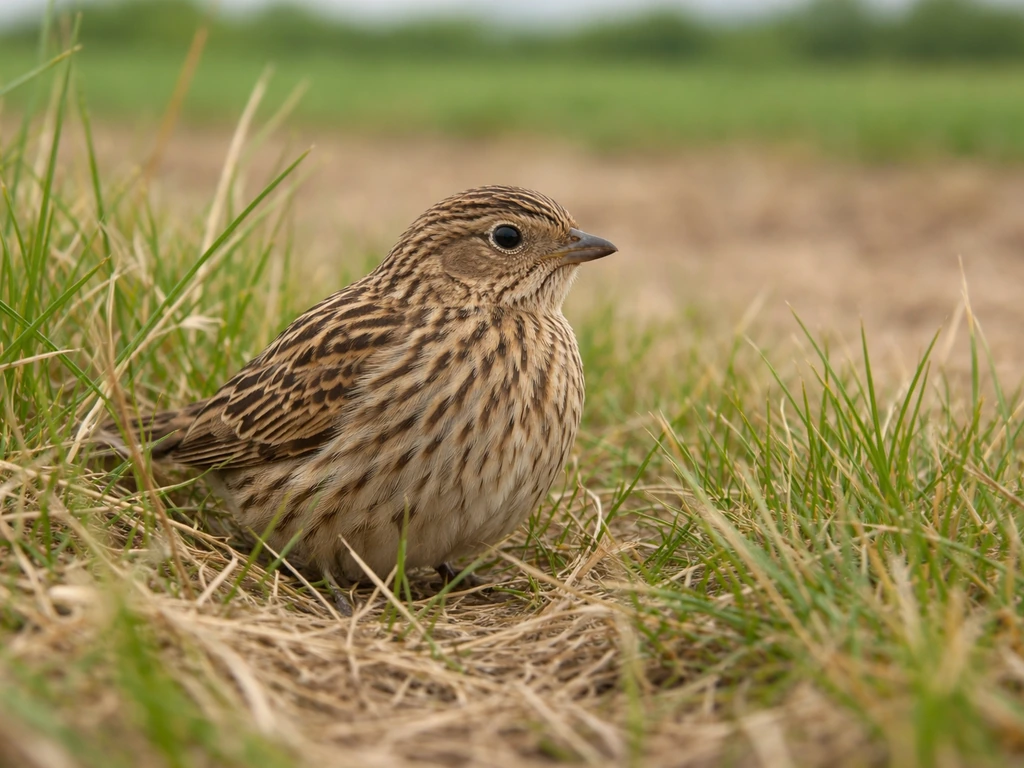
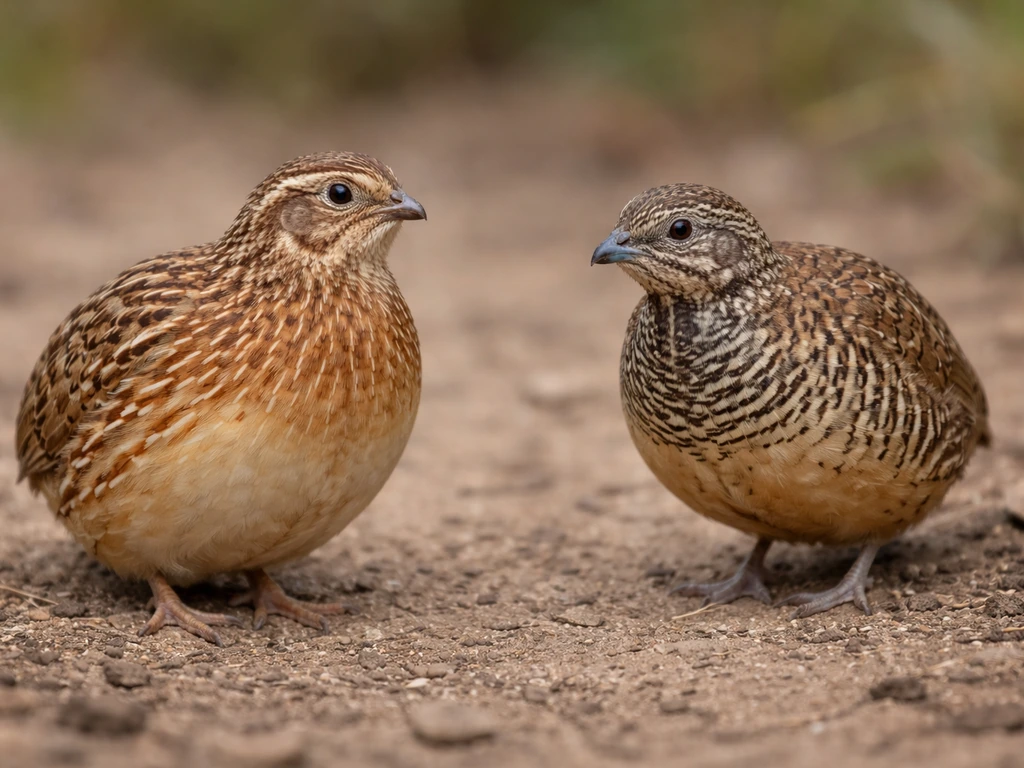
Common Quail is a small, streaky brown bird, roughly 16 to 18 cm long, with a pale supercilium and dark anchor-shaped markings on the breast in males. Bird feet are typically described as “feet” or “legs” in English bird guides, depending on the context. Barred Buttonquail is similarly small but notably has barred patterning on the breast and flanks, and the female (unusually for birds) is more brightly colored than the male. Grey Francolin is noticeably larger, around 28 to 32 cm, with heavily barred plumage and a distinctive rufous face. Size alone can often settle the question.
Birds people often mix up with bater
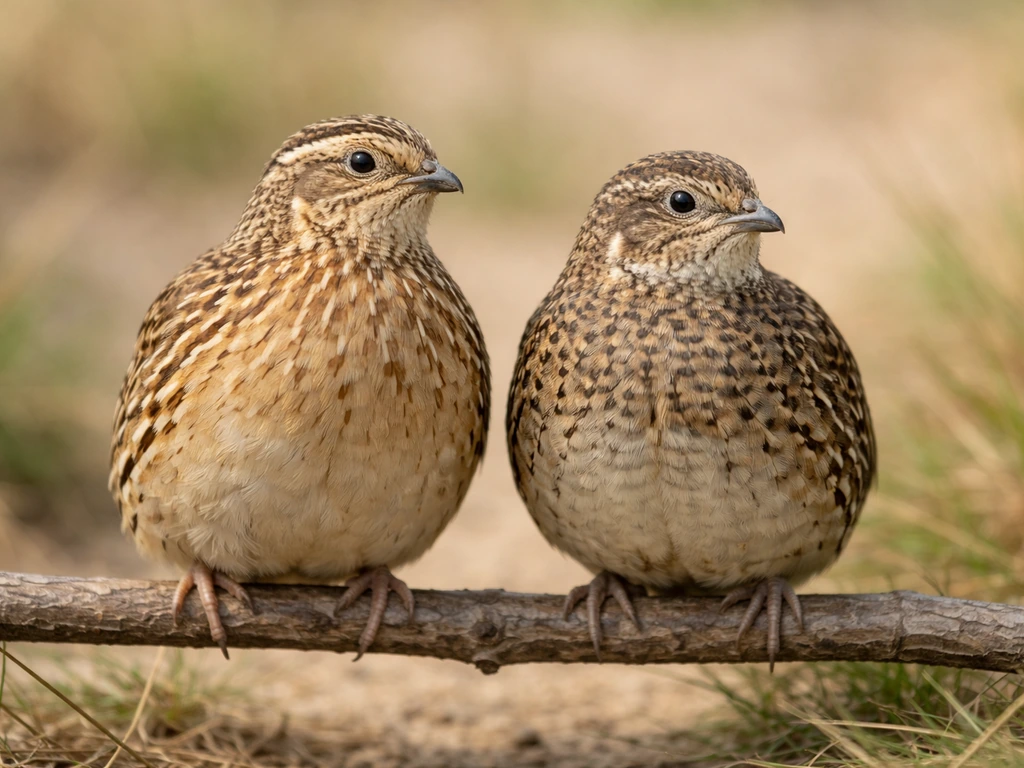
Because 'bater' is used so broadly, several species get tangled up with each other in online searches and casual conversation. Here are the most common confusions:
| Local Name Used | English Name | Scientific Name | Key Difference |
|---|---|---|---|
| Bater | Common Quail | Coturnix coturnix | True quail; migratory; found in open fields |
| Bater | Barred Buttonquail | Turnix suscitator | Not a true quail; resident; motorbike-like call |
| Bater / Jungle Bater | Jungle Bush Quail | Perdicula asiatica | Rocky hillside habitat; peninsular India |
| Bada Bater / Ghagus Bater | Grey Francolin | Francolinus pondicerianus | Larger bird; loud raucous call; common in gardens |
The Grey Francolin confusion is worth highlighting because it is so common in urban and peri-urban India. Many people who say 'bater' in a city garden or farmland context are actually pointing at a Grey Francolin, not a quail at all. The francolin is bigger, louder, and far more visible than true quails, which tend to hide in vegetation. If the bird you are thinking of was sitting in the open or calling from a fence post, francolin is a strong candidate.
Similar naming puzzles come up with other South Asian bird names that get searched in English, like 'vak bird,' 'bagla bird,' and 'cheel bird,' where a single local-language word maps onto one or more English species names depending on region and context. “Cheel bird” in English is usually a term for hawk-like raptors, commonly associated with the Brahminy Kite or similar kites depending on the region. The same naming puzzle can also apply to the bird people call a bagla bird in English searches. People often ask the same thing for other local terms, so you can use the English name mapping approach described here for what a vak bird is called in English. The bater situation is especially tangled because the word covers birds from three different families.
Why the local name and scientific name are so different
Local names like 'bater' develop organically within a language and culture. They often describe what the bird looks, sounds, or tastes like, or they come from the sounds the bird makes itself. 'Bater' in Hindi has been used for small ground-running birds for centuries, long before Western ornithology arrived with its Latin binomials and standardized English common names.
Scientific names like Coturnix coturnix or Turnix suscitator were assigned by European naturalists during the 18th and 19th centuries under a formal system called binomial nomenclature, introduced by Carl Linnaeus. Each species gets a two-part Latin name: genus first, then species. This name is globally unique and does not change based on geography or language, which is exactly why scientists use it. Coturnix coturnix means 'quail quail' in a sense, the genus name repeated as the species epithet, a pattern used when a species is considered the most typical member of its group.
English common names, meanwhile, sit somewhere between local vernacular names and scientific names. They are standardized to a degree (organizations like the International Ornithological Committee publish official English name lists), but they still vary between countries. 'Common Quail' in British English refers to Coturnix coturnix; in North America, 'quail' more often points to New World species like the Northern Bobwhite. This is why the scientific name is the only truly unambiguous way to specify a species.
Where to look this up and confirm the right name today
If you want to nail down the exact English name for your bater bird right now, here is a practical workflow that takes about five minutes: In Afrikaans, you will often see this bird referred to by common names related to the local term for quail or buttonquail bird in Afrikaans.
- Go to ebird.org and search for the region where the bird was seen. Browse the quail and buttonquail species listed for that area. Each species page shows the English name, photos, range maps, and call recordings so you can match all three at once.
- Check the International Ornithological Committee (IOC) World Bird List at worldbirdnames.org. Search 'quail' or 'buttonquail' and filter by the relevant region. This gives you the official English common name alongside the scientific name.
- If you have a photo, upload it to iNaturalist.org and let the AI suggest an identification. Users in India are very active on that platform and can confirm local species quickly.
- Cross-check the scientific name in Encyclopaedia Britannica or the IUCN Red List to read a full species description and confirm the match.
- For the Hindi-to-English direction specifically, Collins Hindi-English Dictionary and Rekhta Dictionary both list बटेर (bater) with English translations, confirming the quail connection.
Once you have the scientific name confirmed, you have the definitive answer. blank" rel="noopener noreferrer">Coturnix coturnix is Common Quail. Turnix suscitator is Barred Buttonquail. Perdicula asiatica is Jungle Bush Quail. A Government of Himachal Pradesh working-plan PDF lists “Jungle Bush Quil (bater)” under the scientific name Perdicula asiatica. Francolinus pondicerianus is Grey Francolin. Any of these could be the bird someone calls 'bater,' but with range, behavior, call, and a photograph, you can narrow it to exactly one species in a few minutes using the tools above.
FAQ
If I search “bater bird” online, how do I avoid getting the wrong species name in English?
Rely on the Hindi context and the bird’s location first, then match one observable detail, like call pattern or plumage bars. If you only use the English phrase “bater bird,” results can mix Common Quail, Barred Buttonquail, and sometimes Grey Francolin, because different regions reuse the same Hindi word.
What should I do if I only heard the bird but I did not see it clearly?
Use the call description as the primary clue. Barred Buttonquail is often reported as a low-pitched “motorbike rev” like call, while Common Quail is described as a repeated “wet-my-lips” or whistle. If the sound is loud and raucous, consider Grey Francolin even if the speaker said “bater.”
Does “bater” ever refer to more than one bird in the same area?
It can, especially in places where multiple ground birds coexist in scrub, farmland, and city edges. That is why the workflow in the article emphasizes cross-checking location, size, and behavior, not just the name. A photo or a clear call recording is the tiebreaker.
How can I confirm the English name if I only know the Roman spelling “baṭer” or “baTer”?
Treat roman spellings as the same Hindi word, but do not assume the English species from spelling alone. You still need the region and one trait (like barred breast, streaky brown body, or francolin size and visibility) to determine whether the correct English name is Common Quail, Barred Buttonquail, Jungle Bush Quail, or Grey Francolin.
Are Common Quail and buttonquail the same group of birds, or are they unrelated?
They are not the same group. Buttonquails belong to Turnicidae, while true quails are typically discussed under Phasianidae. This matters because “bater” can cover both, which can mislead English speakers who expect one “quail” type.
If the bird was seen in a forest or a wildlife report, is it always Common Quail?
Not always. Forest and wildlife documents often use “bater” for Common Quail, but the term can still be applied locally to other ground-running birds in similar habitats. If the report includes the bird’s size or call, use that to verify, because “forest” alone does not fully separate quail from buttonquail or francolin.
What is the quickest way to tell Quail versus Francolin when someone says “bater”?
Check size and visibility. Francolins tend to be larger, more noticeable, and call loudly from exposed perches, while quails and buttonquails are smaller and more ground-hiding. If you have only one clue, the call intensity and where it called from (open perch versus thick cover) usually settles it.
If my photo shows a small ground bird in grassland, which English name should I suspect first?
For northern scrub or grassland contexts, Barred Buttonquail is a strong starting candidate. For a wider agricultural-field and open-country pattern across the subcontinent, Common Quail is often the closest match. The final check should be breast patterning (barred versus streaky) and the call description if you have it.
Does British English or American English change the meaning of “Common Quail” and “quail”?
Yes, the word “quail” alone can shift meaning by region in English. “Common Quail” is generally used for Coturnix coturnix, but if someone only says “quail” in casual American conversation, it might not mean the same species. When possible, use the scientific name to remove ambiguity.
What if the person who said “bater” cannot remember where or when they saw the bird?
Without location, your best route is to request a photograph and a description of behavior. Ask specifically whether it ran along the ground or flushed and flew, and whether the call matched a whistle-like “wet-my-lips” pattern versus the motorbike-rev-like buttonquail call. If you cannot get that, treat the English name as uncertain until one diagnostic trait is confirmed.
Next Article
What Is a Bird in Afrikaans: Voël and Correct Usage
Learn voël for a bird in Afrikaans, correct articles, plural forms, pronunciation, spelling, and example sentences.