"Akala" is almost certainly a phonetic shortening of "akalat," the English name for a group of small African forest birds in the genus Sheppardia. The correct English spelling is akalat (pronounced uh-KAL-ut), and the group as a whole is known as blank" rel="noopener noreferrer">the akalats. If you've seen this name in a crossword clue, a field guide, or heard it in conversation, that's the bird: a medium-sized, insect-eating forest species from sub-Saharan Africa.
What Is Akala Bird in English? Name, Pronunciation

James Ridgley
6 Jun 2026
What "Akala" actually refers to
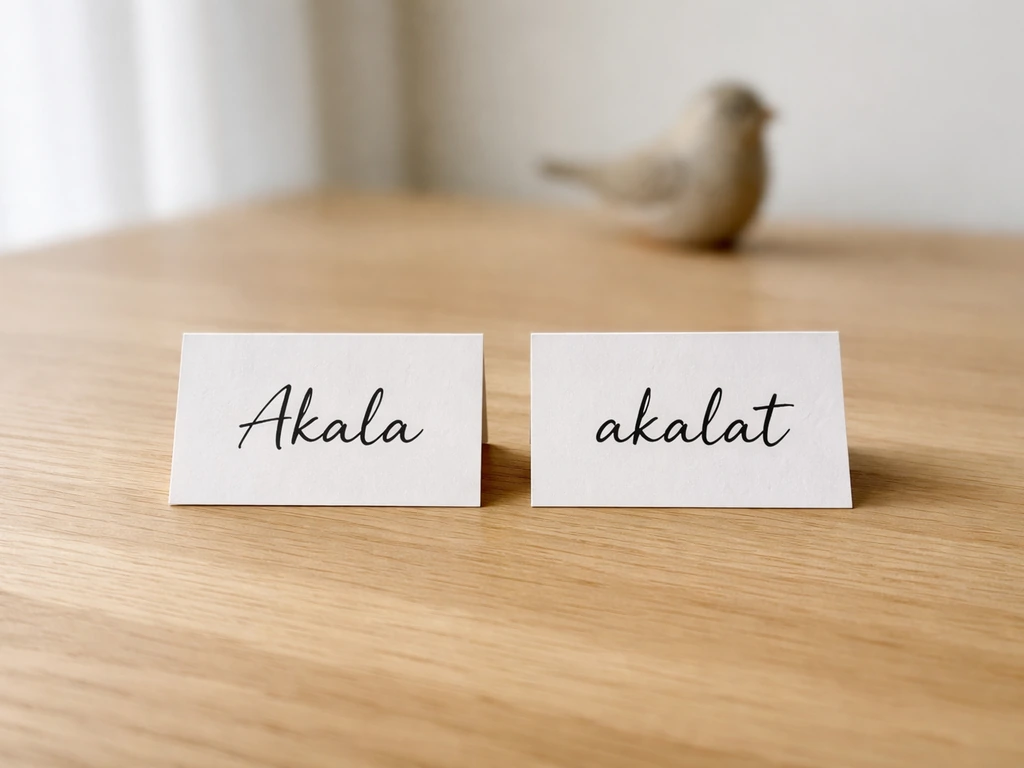
"Akala" isn't an officially recognized bird name on its own. If you actually meant the English common name for the samdi bird, the standardized bird name you want is akalat. It's a shortened or slightly altered form of "akalat," which is the accepted English common name for birds in the genus Sheppardia. This is a classic case of a local or informal rendering of a word that has a specific, standardized spelling in ornithology. For a quick answer to what you would call it in English, see what is akalat bird called in english and how the name is standardized in ornithology. It's worth noting that in Tagalog, "aklat" means "book" and has nothing to do with birds, so if you've seen "akala" floating around in a non-ornithology context, that may be the source of confusion. Stick to "akalat" when searching bird databases, field guides, or birdwatching apps.
Within the akalat group, the most commonly referenced species is Bocage's akalat (Sheppardia bocagei). There are roughly a dozen species in the genus, each with a regional English name following the same pattern: Usambara akalat, Equatorial akalat, East coast akalat, and so on. So when someone says "the akala bird," they're generally pointing to this genus rather than one specific species.
The correct English name and how to spell it
The English bird name is akalat, spelled A-K-A-L-A-T. When referring to the broader group, you'll see it pluralized as akalats. When referring to a specific species, the pattern is always [descriptor] + akalat, as in Bocage's akalat or Equatorial akalat. U.S. Fish & Wildlife Service records use this exact format, and the authoritative genus name is Sheppardia. If you're filling in a crossword or a bird-name puzzle, "akalat" is the answer you want, not "akala."
| English Name | Scientific Name | Region |
|---|---|---|
| Bocage's akalat | Sheppardia bocagei | Central/West Africa |
| Equatorial akalat | Sheppardia aequatorialis | East Africa |
| Usambara akalat | Sheppardia montana | Tanzania |
| East coast akalat | Sheppardia gunningi | East Africa |
| Short-tailed akalat | Sheppardia poensis | West Africa |
How to pronounce "akalat" in English
The word is stressed on the second syllable, so it sounds like uh-KAL-ut. In IPA notation, the two accepted pronunciations are /əˈkælət/ and /əˈkɑːlət/. The first version (uh-KAL-ut) is more common in American English; the second (uh-KAH-lut) leans British. Both are correct, and both are widely understood in birdwatching circles. The key thing to remember is that the stress does not fall on the first syllable. Saying AK-a-lat would sound off to most ornithologists.
- Phonetic (American): uh-KAL-ut
- Phonetic (British): uh-KAH-lut
- IPA: /əˈkælət/ or /əˈkɑːlət/
- Stress always falls on the second syllable
Where the name "akalat" comes from
The word "akalat" is borrowed directly into English from Bulu, a Bantu language spoken in Cameroon. The 19th-century ornithologist Richard Bowdler Sharpe encountered the name during early natural history work in the region and applied it to these forest birds in the scientific literature. The name stuck, and subsequent ornithologists retained "akalat" for the genus Sheppardia. It's a genuine linguistic borrowing, not a Latin or Greek construction, which makes it a bit unusual among bird names. The Bulu origin also explains why the word doesn't follow typical English pronunciation rules and why it gets mangled into "akala" by people who encounter it for the first time without a guide.
Other names for the same bird, across languages and regions
Different languages and birding communities use different names for Sheppardia species. For Bocage's akalat specifically, the French name follows the same borrowing pattern (akalat de Bocage), while other languages use entirely different root words. Regional English names sometimes overlap: the East coast akalat is also called Gunning's robin, and the Short-tailed akalat has appeared in older literature as Alexander's akalat. These alternate names come up in older field guides and museum records, so if you're cross-referencing historical sources, you may need to search under both names.
It's also worth knowing that early ornithological literature sometimes applied the "akalat" label incorrectly to birds in the genus Illadopsis (also called African thrush-babblers), before the taxonomy was fully sorted out. If you're reading older texts and see "akalat" applied to a very different-looking bird, that historical mislabeling is likely the reason. Modern references all tie "akalat" firmly to Sheppardia.
How to make sure you've found the right bird

If you're trying to confirm that the bird you've seen or read about is genuinely an akalat, here are the key identifiers to check. Bocage's akalat, the most frequently cited species, measures about 13 cm in length and weighs 16 to 21 grams, putting it firmly in the small-bird category. Akalats as a group are medium-sized by African forest bird standards, insectivorous, and found in forest understory habitats, particularly moist montane forest. They're not flashy birds, tending toward brown and rufous tones, which is typical of birds that forage in dim forest floors.
- Check the genus: the scientific name should include Sheppardia to confirm it's a true akalat.
- Check the size: akalats are small birds, around 13 cm, similar to a robin in build.
- Check the habitat: they live in sub-Saharan African forests, especially montane forest understory.
- Check the behavior: insectivorous, ground or low-level foragers, not open-country birds.
- Check regional tags: the species name should include a geographic or personal descriptor (Bocage's, Equatorial, Usambara, etc.) to pin down which akalat you're looking at.
- Cross-reference the spelling: if a source spells it "akala" without the final T, double-check against a recognized database like eBird, Wiktionary, or U.S. Fish & Wildlife records.
If you've come to this question from searching bird names in other languages, the same disambiguation approach applies to related queries: many local or regional bird names are phonetic adaptations of the English or scientific name, and confirming the genus is always the fastest way to be sure you've matched the right bird. If you are specifically asking what is bagla bird called in English, it will also help to confirm you mean the akalat genus rather than a lookalike or a different common name used locally. This is the same challenge that comes up with other locally named birds where the common name shifts slightly between languages and communities. In English, the bird feet on these forest birds are typically referred to as "feet" or "tarsi," depending on which part you mean.
FAQ
Is “akala” ever the correct English name for the bird?
In English, the standardized name you should use is “akalat” (plural, “akalats”). “Akala” is usually a phonetic misspelling or shortened form you may see in informal notes or crossword entries, so search for “akalat” first in bird apps and databases.
How can I confirm whether a source really means Sheppardia when it says “akal(a)”?
If you only remember the word “Akala,” the fastest verification step is to check whether the source is actually talking about Sheppardia. “Akalat” is tied to the Sheppardia genus, so if the text mentions Illadopsis or “African thrush-babblers,” it may be using the name historically or incorrectly.
If I see “East coast akalat” or “Usambara akalat,” does that mean a different bird or just a regional name?
When a bird listing says “East coast akalat” or “Usambara akalat,” it still refers to species within Sheppardia. These are common English regional descriptors, not separate genera, so in identification terms you should treat them as species-level names within the “akalat” group.
What’s the most common pronunciation mistake people make with “akalat”?
For pronunciation, the usual slip is stressing the first syllable. Aim for uh-KAL-ut (more common in American English) or uh-KAH-lut (often heard in British English). Either way, the second syllable is where the stress goes.
What should I do if an older book uses a different English name for an “akalat”?
Older field guides can list alternate common names, for example “Alexander’s akalat” or “Gunning’s robin” for some historical entries. If your source conflicts with modern databases, cross-check the species scientific name, since the English common name alone may have changed over time.
Could “akala” be something unrelated, like a translation or a different word?
If you are seeing “akala” in a non-bird context, it could be from Tagalog “aklat,” meaning “book,” or from general spelling variations. Ornithology sources that use “akalat” will usually contain locality and habitat clues that match small forest insect-eaters in sub-Saharan Africa.
What’s the correct singular and plural when referring to them in English?
Yes, but only as a group reference. “Akalat” is the singular English common name, “akalats” is plural for the genus group, and “[descriptor] + akalat” is the pattern for species like “Bocage’s akalat.” Writing “the akala bird” in English is informal, and the database-friendly form is “akalat.”
I tried searching “akala” in a birding app, and nothing came up. What should I search instead?
If you are searching a bird app or checklist and get zero results for “akala,” try these exact terms: “akalat,” “akalats,” and specific forms like “Bocage’s akalat” or “Sheppardia.” Many systems index by the standardized common name, not the phonetic shortening.
Next Article
What Is a Vak Bird Called in English? Find the Match
Learn the English name for a vak bird, plus how to confirm the exact species by traits, place, and call.