If you searched 'bird beaks Urban Dictionary,' you're probably doing one of two things: looking up what a bird's beak actually is (anatomy, shape, function), or hunting for a slang or meme definition that someone used the phrase for on Urban Dictionary. Both are legitimate searches, and this guide covers both. In real ornithology, a beak is the hard, jaw-based mouthpart a bird uses to eat, fight, preen, and court. On Urban Dictionary, 'bird beak' shows up with a handful of slang entries, including gesture-based, appearance-related, and explicit sexual meanings, none of which have anything to do with actual birds.
What Are Bird Beaks? Urban Dictionary Meaning vs Biology

James Ridgley
1 Jun 2026
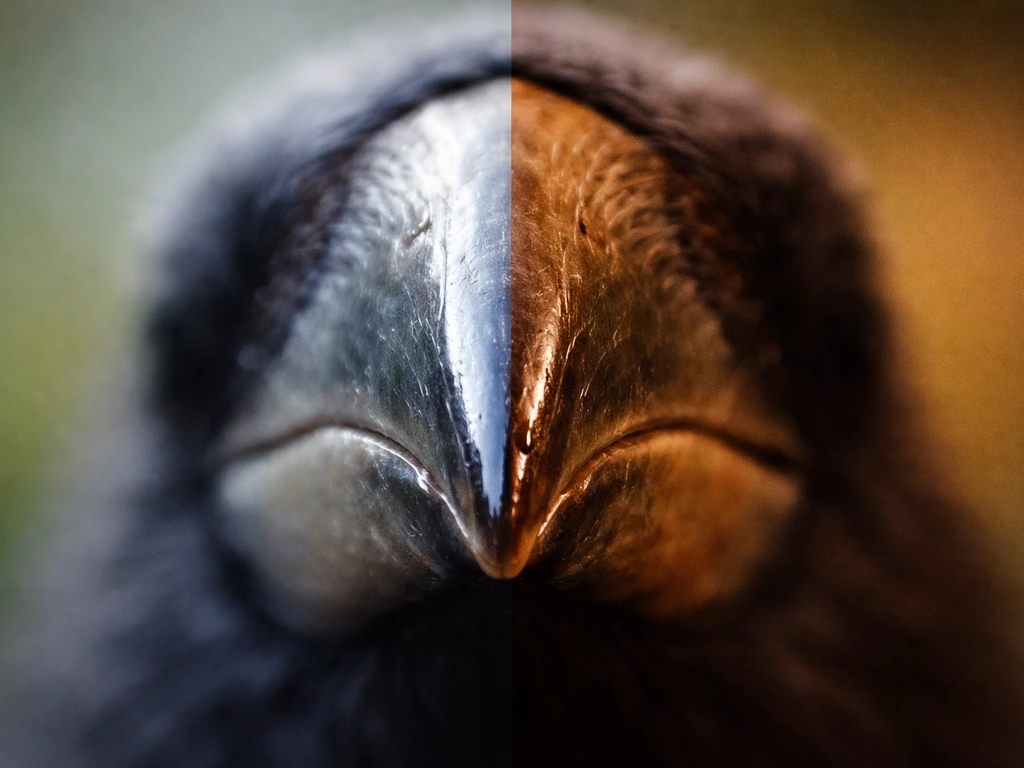
What 'bird beaks' means in birding terms
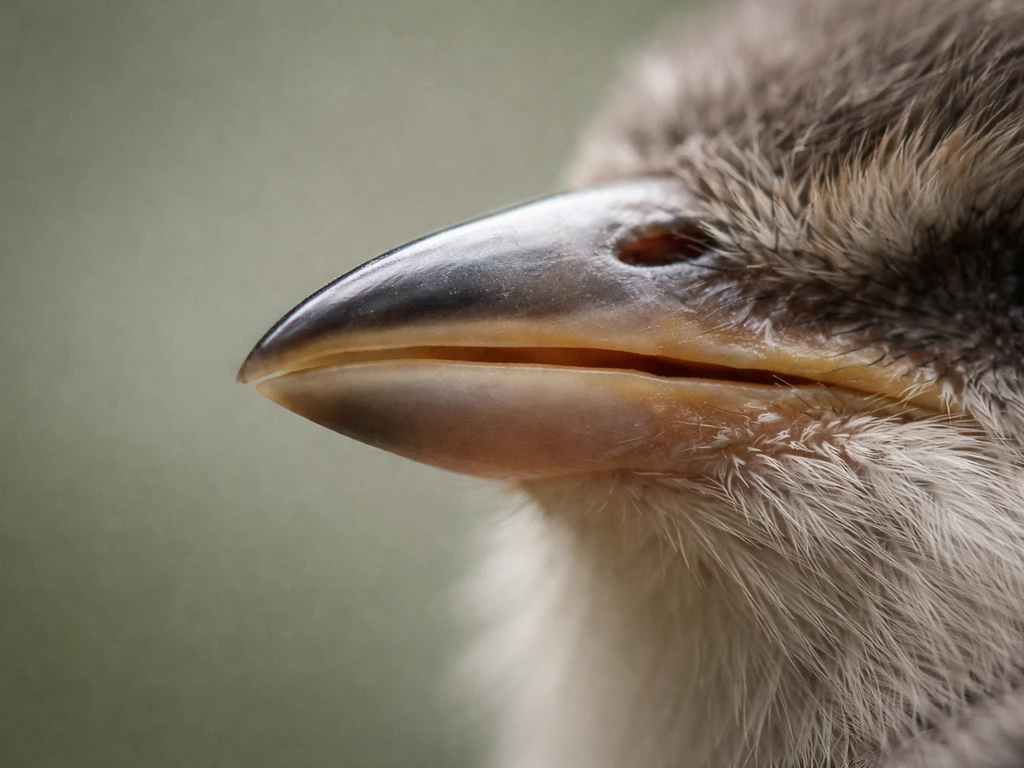
In birding and ornithology, a beak (also called a bill) is the external mouthpart of a bird, made up of two jaws: the maxilla on top and the mandible on the bottom. These aren't just passive mouth parts. Birds use their beaks for feeding, grasping, pecking at prey or wood, preening their feathers, fighting rivals, and even courtship displays. The interior of the open mouth is called the gape, and the spot where the two jaws meet at the base is called the gape flange, which is especially visible on nestlings.
The bones behind the beak include the premaxillary (forming the top of the beak) and the mandible bones. What makes bird beaks so scientifically interesting is that their shapes are textbook examples of ecological adaptation, but researchers have found that blank" rel="noopener noreferrer">beak shape is also strongly controlled by genetic and developmental factors that go beyond diet alone. That means a bird's beak tells you a lot about its lifestyle, but it's not a simple one-to-one relationship between shape and food.
If you're a birder trying to ID a species or understand why a bird is shaped the way it is, the beak is one of the most reliable field marks you can use. And the word 'beak' itself is fully interchangeable with 'bill' in everyday birding language, though 'bill' tends to appear more in scientific and formal contexts.
What Urban Dictionary is, and why 'bird beaks' shows up there
Urban Dictionary is a crowd-sourced slang reference where anyone can submit a definition for any word or phrase, with an example sentence showing how it's used in context. Definitions are voted up or down by the community, so the top-voted entry for any term is generally the most widely recognized meaning. The site was originally created to define internet slang and informal language that standard dictionaries skip, but over the years it has expanded to include memes, gestures, insults, explicit content, and pop culture coinages.
Urban Dictionary does have content guidelines. They reject definitions that attack specific people, definitions designed to harass rather than explain language, and certain categories of violent or non-English content. That said, explicit sexual definitions are common and are not automatically removed, which is why searching any common phrase there can turn up graphic results alongside innocent ones.
The reason 'bird beaks' appears on Urban Dictionary is simple: people submit entries for ordinary phrases and repurpose them as slang, gestures, or jokes. People also use the phrase in different slang ways, including the interpretation that shellac the bird is the most popular finger. If you're trying to track down what “bird beaks” means as slang, this guide on what are bird beaks slang can help you interpret the phrase and avoid irrelevant anatomy results.
'Bird beak' is a phrase that lends itself to visual and physical metaphors, so it attracted a few different slang definitions over time. If you landed on Urban Dictionary while searching for actual bird anatomy, you were probably sent there by a search engine that matched the phrase without understanding you wanted ornithology.
The actual Urban Dictionary entries for 'bird beak'
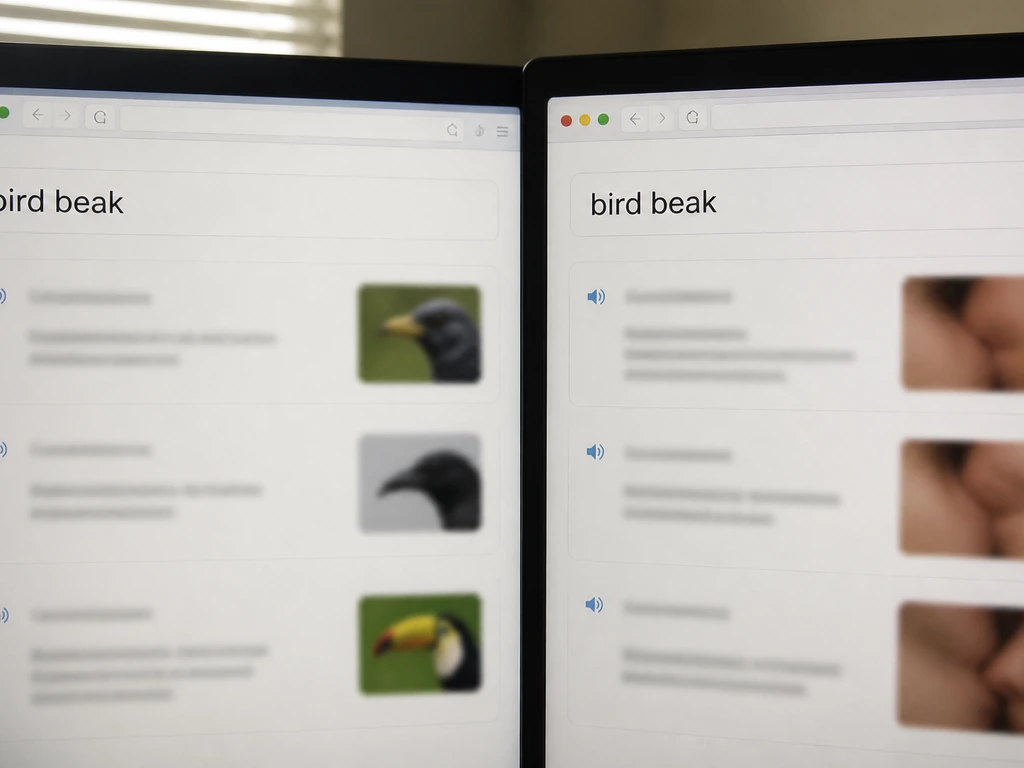
As of now, the Urban Dictionary page for 'bird beak' (reachable at the define.php?term=bird+beak URL) contains multiple definitions. Here is a straightforward summary of what's there, without reproducing graphic content verbatim:
- An explicit sexual act definition: fingers shaped like a bird's beak and inserted into someone's body. This is the kind of entry Urban Dictionary is most known (or notorious) for.
- An appearance-based insult: 'a case of lack of lips on a person's face,' meaning someone's mouth area looks beak-like. This is closer to how 'beak nose' is used, which has its own separate Urban Dictionary entry describing a hooked nose that looks like a bird's beak.
- The emoticon ': <>' has its own Urban Dictionary entry titled 'Bird Beak,' describing the symbol as an emoticon used in a chirping or mocking context.
- There is also a 'bird-beaked' entry (hyphenated) referencing a specific hand gesture or body position, which is a separate entry from 'bird beak.'
Beyond the main entry, close variants like 'Bird Beakin'' (with an apostrophe and suffix) have their own separate pages. This is worth knowing because if you search only the exact phrase 'bird beak,' you may miss related slang entries that use slightly different spelling or phrasing. The site also treats 'bird-beak' (hyphenated) as a potential separate slug, so the same meaning can appear under different URL variants.
It's also worth noting that 'bird beak' shows up metaphorically in other Urban Dictionary entries, not just its own page. Entries for unrelated slang terms sometimes use 'bird beak' as a physical descriptor in their example sentences, usually as an insult referencing someone's nose or mouth shape. This is a clear signal that the phrase has settled into informal English as a visual metaphor for a sharp or protruding facial feature.
How to tell which meaning you actually want
The fastest way to figure out whether you're looking for anatomy or slang is to check what context gave you the phrase in the first place. You can also look up which word can be placed before bottle, bell, and bird to find related uses and variations bird beak. Here's a quick guide:
| Your context | You probably want | Where to look |
|---|---|---|
| Watching birds, reading a field guide, or studying ornithology | Real anatomy: beak shape, function, and examples | This article, a field guide, or a science reference |
| Someone used the phrase in a conversation, text, or video and you didn't understand it | A slang or meme definition | Urban Dictionary: define.php?term=bird+beak |
| You saw ':<>' used as a symbol online | The emoticon definition | Urban Dictionary: define.php?term=:<> |
| Someone called another person a 'bird beak' or 'bird beaked' | An appearance-based insult | Urban Dictionary: define.php?term=bird-beaked |
| A crossword clue or word puzzle | Standard dictionary meaning: beak = bill = horny projecting mouth of a bird | Standard dictionary or ornithology reference |
If you opened Urban Dictionary and saw graphic content when you just wanted to know what a beak is, that's a mismatch between your intent and the site's content. Urban Dictionary is not a biology reference. It is a slang dictionary, and any entry there for a nature term is almost certainly a repurposed, often jokey or explicit, usage rather than a factual definition.
Bird beak basics: shape, function, and real examples
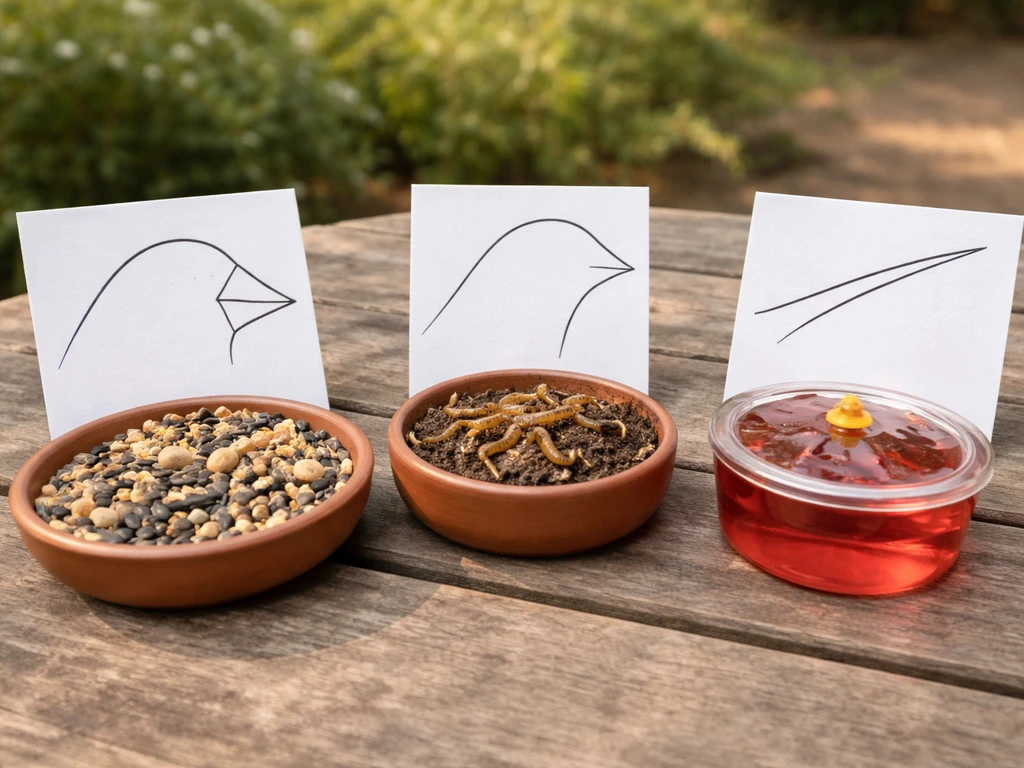
Since you may have landed here genuinely curious about bird beaks as anatomy, here is a practical overview of the main beak types and what they do. Beak shape evolved alongside diet and behavior, so you can often make a reasonable guess about what a bird eats just by looking at its bill. Britannica notes that bill construction types like probing bills tend to be relatively narrow and downcurved and are used for probing flowers, bark, and insects or nectar Beak shape evolved alongside diet and behavior.
| Beak type | Shape description | Function | Example birds |
|---|---|---|---|
| Conical | Short, thick, triangular | Cracking and husking seeds | Grosbeaks, sparrows, finches, cardinals |
| Probing (curved) | Narrow, often downcurved | Probing flowers, bark, or wood for insects and nectar | Hummingbirds, creepers, woodpeckers |
| Hooked (toothed) | Curved, sharp-edged upper mandible | Tearing prey (meat) | Hawks, falcons, eagles, owls |
| Flat/spoon-shaped | Broad, flattened | Filtering food from water | Ducks, spoonbills, flamingos |
| Long, straight, dagger-like | Pointed and elongated | Stabbing fish or catching quick prey | Herons, kingfishers, terns |
The key anatomy terms worth knowing: the upper jaw is the maxilla (also called the upper mandible in some references), and the lower jaw is the mandible. The gape is the opening of the mouth, and the gape flange, that fleshy rim at the corners of the mouth, is most visible in baby birds. The premaxillary bone forms the structural frame of the upper beak. None of these terms appear on Urban Dictionary with biology-based definitions, so if you see them in a sentence, you're firmly in the realm of ornithology.
Bird beak names, spelling, and pronunciation across languages
In English, 'beak' and 'bill' are the two main terms for the same structure. 'Beak' comes from Old French bec, and before that from Latin beccus, which itself was borrowed from Gaulish. The standard English pronunciation is /biːk/ (rhymes with 'seek'). 'Bill' as a synonym comes from Old English bile. In formal ornithology writing, 'bill' is slightly preferred, but both are completely accepted and interchangeable in practice.
Across other languages, the word for beak takes quite different forms. In Spanish, a bird's beak is pico (PEE-koh), and Cambridge Dictionary confirms 'beak' translates directly to pico in that context. In French, the word is bec (rhymes with 'beck'), which is also the word that English borrowed to make 'beak.' In German, it's Schnabel (SHNAH-bel). In Italian, becco (BEK-koh). In Portuguese, bico (BEE-koo). In Japanese, the word is くちばし (kuchiba-shi), which literally breaks down to 'mouth-edge.' These differences matter if you're doing multilingual research, reading bird guides in another language, or working on word puzzles that cross languages.
For beak type names specifically, terms like 'maxilla,' 'mandible,' and 'gape' are used in scientific writing across languages because they derive from Latin and Greek roots. You'll see these same words in Spanish, French, and German ornithology texts, sometimes with minor spelling adaptations. The word 'rostrum' is also used in scientific Latin to refer to a bird's beak or snout, and it shows up in species names and anatomical descriptions.
If you're exploring related terminology, it's worth knowing that the broader question of what the mouth of a bird is called, and what other names exist for a bird's beak, are topics with their own depth in English and other languages. The slang side of bird-related language, including how 'beak' and 'bill' show up in informal or figurative use in English, is a separate thread worth following if the language angle is what drew you here.
How to search Urban Dictionary for a specific 'bird beak' definition and verify it

If you are specifically looking for a slang definition and want to make sure you find the right one, here is exactly how to do it efficiently:
- Go directly to urbandictionary.com and use the search bar, or use the URL format: urbandictionary.com/define.php?term=bird+beak. That takes you straight to the entry page.
- Look at the vote counts on each definition. Urban Dictionary uses a thumbs-up/thumbs-down system, so the definition with the most upvotes is the community's most accepted meaning. If you see wildly different definitions, check which one has the highest vote count.
- Read the example sentence under each definition. Urban Dictionary requires submitters to provide an example of the phrase in use. The example usually tells you the context (sexual joke, insult, gesture, emoticon) faster than the definition itself does.
- Try close variants if the main page doesn't have what you need. Useful searches: 'bird-beak' (hyphenated), 'bird beaked,' 'bird-beaked,' 'Bird Beakin',' and ':<>' (the emoticon entry). Each can have its own separate page.
- To tell whether an entry is slang or an accidental biology definition: if the text mentions feeding, anatomy, evolution, or species, it was probably submitted as a joke reference to real biology. If the examples use the phrase in dialogue between people, reference a body part, or describe a gesture, it's genuine slang.
- If the content is graphic and you were not looking for that, close the tab and use a standard dictionary or field guide instead. Urban Dictionary is not moderated for explicit content in the way a general reference site would be.
One practical note: Urban Dictionary entries are user-submitted and not fact-checked, so a definition that sounds authoritative may have been written by a single person and voted up by a small community. If you're trying to understand whether a slang term is actually in widespread use or just an obscure in-joke, the vote count is your best signal. A definition with a few hundred upvotes is far more culturally established than one with a handful of votes regardless of how confidently it's written.
If your original search came from a conversation where someone used 'bird beak' in a way that still doesn't match any of the Urban Dictionary entries you find, it's possible the person was using it as a personal or regional invention, or as a reference to the appearance metaphor ('beak nose,' protruding facial features) that floats across multiple entries without having a single canonical definition. If you were actually looking for what bird watching slang means, make sure you use the birding context rather than Urban Dictionary results. In that case, asking the person directly is faster than any dictionary search.
FAQ
If I landed on Urban Dictionary from “bird beak” search, how can I tell in seconds whether it’s anatomy or slang?
Check whether the entry uses body-part anatomy words (like maxilla, mandible, gape) or whether it describes facial features in a judging or sexual context. Anatomy-related sentences usually reference birds and feeding behaviors, slang entries usually reference people, gestures, or appearance metaphors and won’t mention ecological function.
Why are there multiple Urban Dictionary pages for such a common term, like “Bird Beakin” or hyphenated versions?
Urban Dictionary treats slightly different spellings and punctuation as separate term slugs. So the same slang idea can appear split across “bird beak,” “bird-beak,” and variant forms with extra characters, which is why you may need to try multiple query formats.
What should I rely on if the Urban Dictionary “top-voted” meaning still doesn’t match what I heard in real life?
Use the upvote count as a rough popularity signal, then compare the example sentence to the situation you’re dealing with (joking, flirting, insult, gesture, or meme). If the meaning still doesn’t fit, it may be a personal invention, regional joke, or a different phrase entirely that your search engine collapsed into “bird beak.”
Can “bird beak” show up inside other unrelated Urban Dictionary entries even when I’m not on the right page?
Yes. Some entries use “bird beak” in example sentences as a descriptive insult (for example, referencing someone’s nose or mouth shape) even if the slang term being defined is different. In that case, you’ll need to read the specific example sentence, not just the entry title.
Is “beak” always the same as “bill,” and could that confusion affect how I interpret slang?
In birding and ornithology, “beak” and “bill” refer to the same mouthpart, but Urban Dictionary slang can treat either word as a separate search target. If your goal is slang, search both “bird beak” and “bird bill,” then compare which one has the matching metaphor to what you heard.
What if I’m trying to identify a species and I see a “beak” description on a non-bird site?
Be cautious: bird anatomy terms like maxilla, mandible, gape, and gape flange are strong indicators you’re reading a biology context. If those terms are missing and the writing talks only about people or explicit content, it’s almost certainly metaphor or slang, not field-guide information.
Are the scientific beak-type names on reliable bird resources, and what’s a quick field check I can do myself?
Use the overall bill shape and how it’s held during feeding. For example, probing bills, broad crushing bills, and hooked predatory bills usually map to different feeding strategies. You can narrow possibilities by combining bill shape with habitat and behavior, because diet alone is not a perfect one-to-one match.
Could “bird beak” have different meanings in different countries or online communities?
Yes. Slang on Urban Dictionary can reflect subcultures, older memes, or narrow joke circles, not global usage. If you’re hearing it from a specific group, ask someone from that context what they mean, then confirm by checking whether multiple unrelated entries use the phrase the same way.
When searching, what are smart alternate query formats to avoid missing the right definition?
Try several formats: “bird beak,” “bird-beak,” and close variants with punctuation or spacing changes. Also search with a likely surrounding word you remember (for example, if you heard it as “shellac the bird is …” type phrasing) because example sentences can reveal the exact slang construction.
Does Urban Dictionary content ever conflict with itself, and how should I handle that?
Treat definitions as user-submitted possibilities, not a single authority. If two entries contradict each other, use the example sentence and vote counts, then prefer the one whose context matches what you actually saw or heard.
Next Article
What Is Bird Watching Slang? Terms and Meanings Guide
Birding slang explained with a field-ready dictionary: lifer, tick, yard list, checklist, plus tools and regional meanin