Pronounce 'budgie' as BUD-jee, two syllables, with the stress firmly on the first one. The IPA is /ˈbʌdʒ. Oxford Learner’s Dictionaries gives “budgie” as /ˈbʌdʒi/ and shows it as two syllables, with the “-gie” portion corresponding to /dʒi/. i/: the 'bud' part rhymes with 'mud,' and the '-gie' ending sounds like the name 'Gee' or the letter G. That's it. There's no silent letter, no hard G, and no third syllable hiding anywhere.
How to Pronounce Budgie Bird: Simple Step-by-Step Guide

James Ridgley
30 May 2026
What 'budgie' means and which bird it refers to
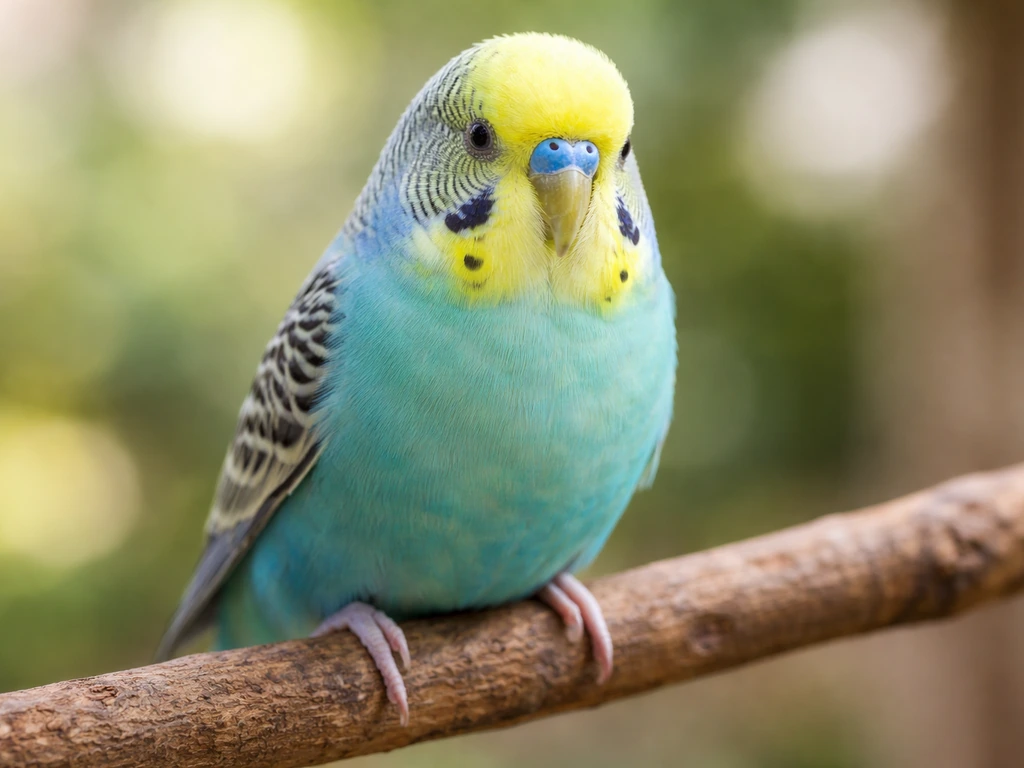
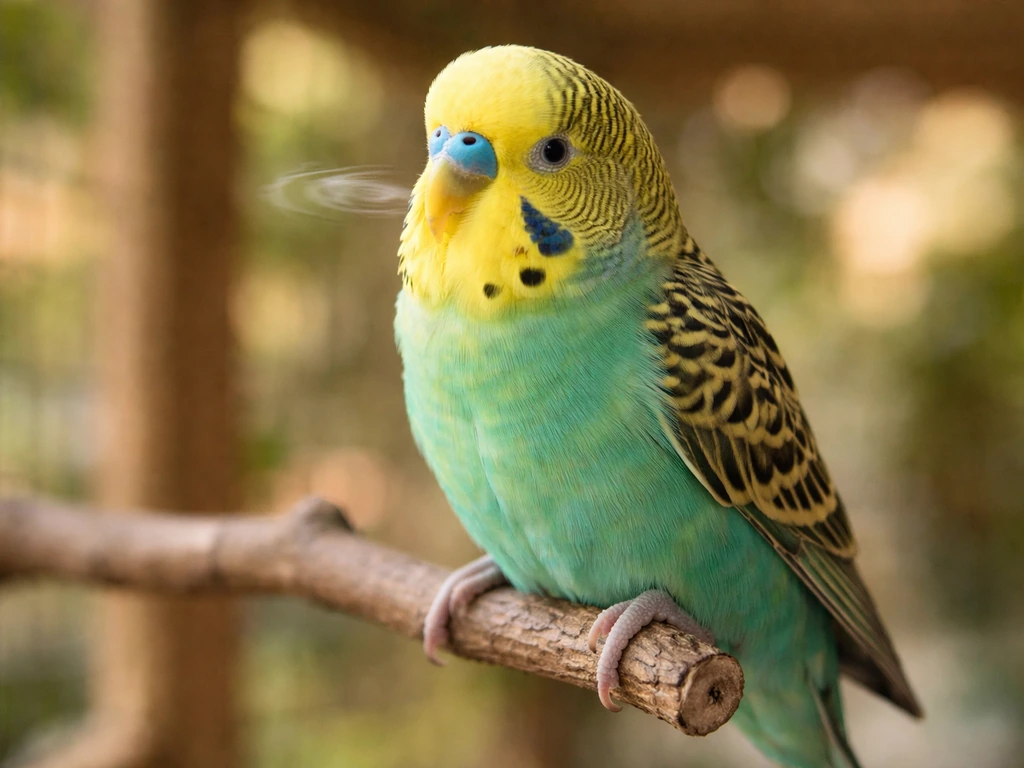
A budgie is a budgerigar, the small, brightly colored parakeet that's one of the most popular pet birds in the world. The full name 'budgerigar' traces back to an Australian Aboriginal word, though the exact origin is still debated among etymologists. What's not debated is that 'budgie' is the informal shortening that took over in everyday speech, especially in the UK and Australia. Merriam-Webster actually breaks the nickname down neatly: budg(erigar) + -ie, a common English pattern for turning a long word into a friendlier nickname. So when someone says 'my budgie,' they're referring to that same cheerful little green-and-yellow (or blue, or white) parakeet you'd find in a pet shop. The word appears across dictionaries including Cambridge, Oxford, Collins, and Britannica, all confirming it's the standard informal name for the species.
Breaking down the pronunciation syllable by syllable
Cambridge Dictionary gives the UK pronunciation as /ˈbʌdʒ.i/ and Oxford Learner's Dictionaries confirms /ˈbʌdʒi/. Both show the same two-part structure: a stressed first syllable and a light second syllable. Here's what's happening in each part:
- First syllable: 'budg' — pronounced like the word 'budge' as in 'it won't budge.' The vowel is the short 'uh' sound /ʌ/, as in 'mud' or 'fun.' The consonant cluster ends with the affricate sound /dʒ/, like the J in 'jump' or the G in 'gel.'
- Second syllable: '-ie' — a simple, unstressed 'ee' sound /i/, like the end of 'happy' or 'birdie.' Don't overthink it. It's just a quick, bright 'ee.'
- Stress: always on the first syllable. BUD-jee, not bud-JEE.
Wiktionary's IPA entry for budgie shows /ˈbʌd͡ʒi/, where the d͡ʒ symbol makes it explicit that you're dealing with a single affricate sound (like the 'dg' in 'fudge'), not two separate consonants. That's an important detail: don't try to pronounce the 'd' and 'g' separately.
The mispronunciations people actually make

A few common errors come up regularly, especially from people who haven't heard the word spoken aloud before and are working from the spelling alone.
| Wrong version | What it sounds like | The fix |
|---|---|---|
| BUDG-ee-eye or BUD-gee-ar | Adding a third syllable or blending it with 'budgerigar' | Stop at two syllables: BUD-jee. 'Budgie' is its own word now, not a pronunciation of the full name. |
| BUD-gee (hard G) | Like 'bug' + 'ee' with a hard G sound | The G here is soft. It merges with the D to make the /dʒ/ sound, like 'fudge.' Say 'fudge' then drop the final 'e' sound and add 'ee.' |
| bud-JEE (stress on second syllable) | Like you're saying a name: 'Bud GEE' | Move the stress to the first syllable: BUD-jee. English nicknames ending in '-ie' almost always stress the first syllable (think: birdie, doggie, budgie). |
| BYOO-jee or BOOD-jee | Changing the vowel sound | The vowel in 'bud' is a short 'uh' /ʌ/, not 'oo' or 'you.' Rhyme it with 'mud,' 'bud,' or 'thud.' |
How to pronounce the full name 'budgerigar'
Once you've got 'budgie' down, the full name 'budgerigar' is just an expanded version of the same starting point. Oxford Learner's Dictionaries gives it as /ˈbʌdʒəriɡɑː(r)/ and Wiktionary's Received Pronunciation form is /ˈbʌd͡ʒəɹiˌɡɑː/. In plain terms, it breaks into four syllables: BUD-juh-ree-gar.
- BUD — same stressed first syllable as in 'budgie,' short 'uh' vowel
- juh — a quick, unstressed syllable with the schwa /ə/ sound, like the 'a' in 'about'
- ree — a short, unstressed 'ree' sound
- gar — rhymes with 'bar' or 'car'; in British English the R is silent and the vowel is long: 'gah'
The relationship between the two words is immediately obvious once you say them side by side: 'budgie' is simply the first syllable of 'budgerigar' plus the affectionate '-ie' suffix. Collins confirms the full IPA for both forms, British and American, showing that the stress pattern at the start stays the same no matter which version you use.
UK vs US pronunciation: what actually changes

The differences between British and American English pronunciations of 'budgie' are subtle but real. Collins Dictionary is the most explicit source here, listing UK /ˈbʌdʒɪ/ and US /ˈbʌdʒi/. In practical terms, the main difference is in that final vowel:
- British English: the '-ie' ending can be a slightly more centralized, short /ɪ/ sound (the same vowel as in 'bit' or 'kit'), especially in careful or formal speech.
- American English: the '-ie' ending tends to be the clearer, longer /i/ sound (like the 'ee' in 'see'), which is also how most learners are taught.
- In everyday casual speech, most British speakers also use the /i/ version, so the distinction is minor and won't cause any confusion either way.
For 'budgerigar,' the bigger UK vs US difference is at the end of the word. In British English (Received Pronunciation), the final '-gar' is pronounced 'gah' /ɡɑː/ with no R sound. In American English, the R is pronounced: 'gar' /ɡɑr/. Collins lists British English /ˈbʌdʒərɪˌɡɑː/ and American English /ˈbʌdʒərigɑr/ to show exactly this split. The stressed first syllable, BUD-, stays the same in both accents.
If you're learning English or just want a single reliable target, aim for BUD-jee (with a clear 'ee' at the end). It will be understood everywhere. The same logic applies to other bird names that trip people up in similar ways, whether you're working out how to pronounce a grebe bird, a weaver bird, or the word 'plover,' where spelling and sound don't always match up neatly. If you're also wondering how to pronounce bird names you do not know yet, focus on syllables first, then match the stress to a reliable audio source how to pronounce a grebe bird.
Practice drills and self-check tips
The fastest way to lock in a new pronunciation is to practice it in short, repeated bursts connected to words you already know. Try this sequence:
- Say 'mud' out loud. Good. Now say 'bud.' Same vowel. Now say 'budge' (like 'it won't budge'). You've just nailed the first syllable.
- Say the name 'Lee' or the word 'free.' Now say just the 'ee' sound on its own. That's your second syllable.
- Put them together slowly: BUD... jee. Then speed up: BUD-jee. Repeat five times at a comfortable pace.
- Now try the full name: BUD... juh... ree... gar. Slow, then faster: BUD-juh-ree-gar. Repeat three times.
- Finally, say both in the same breath: 'My budgie is a budgerigar.' If it sounds natural, you're there.
Self-check checklist
- Is the stress on the first syllable? (BUD-jee, not bud-JEE)
- Does the 'bud' part rhyme with 'mud'? (Not 'bood' or 'byood')
- Is the G soft, blending with D into a single 'j' sound? (Like 'fudge,' not 'bug')
- Does the '-ie' end in a simple 'ee' sound? (Not an extra syllable)
- Is 'budgie' two syllables total? (Not three)
Example sentences to practice with
Running the word through real sentences helps it stick. These reflect the kinds of phrases you'd actually hear or say:
- "My budgie has been chirping all morning."
- "She bought a blue budgie from the pet shop."
- "How big is that budgie compared to a cockatiel?"
- "The budgerigar, or budgie, is native to Australia."
- "He taught his budgie to whistle three different tunes."
If you want to double-check your pronunciation against a native speaker model, Cambridge Dictionary and Oxford Learner's Dictionaries both have audio playback on their 'budgie' entries. Listen once, repeat out loud immediately, then listen again. Three rounds of that is usually enough to calibrate your ear. The same technique works well for any bird name where you're unsure about the sounds, whether it's a straightforward word like 'swallow' or a trickier one like 'frigate' in 'frigate bird. If you need practice beyond common bird names, you can also use the same method for how to say plover bird. If you’re also working on the sound of the wading bird name, you can use the same syllable-by-syllable approach to pronounce it confidently budgie. If you also want to pronounce turkey bird, start with the same approach and break it into syllables before you try saying it out loud pronounce the full name. You can use the same audio-and-repetition method for how to pronounce swallow bird. You can use the same approach for how to pronounce weaver bird, too, by listening, repeating, and checking the stress frigate bird. If you are also wondering how to pronounce Frigate bird, use the same approach: listen to a native recording first, then repeat the syllables out loud. '
FAQ
Is it pronounced “BUD-jee” or “bud-JEE” (where the stress goes)?
Say it with stress on the first syllable every time, BUD-jee. Even if you speak quickly in a sentence, keep the first syllable louder and slightly longer, then let the second syllable sound lighter (more like “jee,” not a full separate beat).
Do I pronounce the “dg” as two sounds (d + g) or as one affricate?
Treat the “dg” as one blended sound, like the single consonant cluster in “fudge.” Don’t add an extra “d” before the “g,” and don’t make the “g” too hard, you want the smooth combined sound rather than two hits.
What vowel sound should I use at the end, “-jee” or “-jay”?
Use the “ee” vowel for the ending, so it lands closer to “jee.” If you say “bud-jay,” it can drift toward a different vowel quality, and listeners may think you mean a different word or a different pronunciation variant.
Is there any silent letter or trailing consonant in “budgie”?
No silent letters, and you should not add an extra consonant at the end. It should end cleanly after the “ee” sound in casual speech, not with a clipped extra “g” or “y” sound.
How do you pronounce “budgie” in quick speech when it comes after “my” or “a”?
You’ll usually get “my budgie” as two beats: MY + BUD-jee, with “budgie” still keeping the stress on BUD. The second syllable may reduce slightly, but the overall rhythm should remain BUD-jee.
Are “budgie” and “budgerigar” always pronounced the same way at the start?
They share the same stressed start, BUD-, but “budgerigar” has more syllables after that. The common mistake is to make “budgerigar” start with a different vowel or to stress a later syllable, but the beginning stress stays consistent.
What’s the simplest way to choose a UK versus US pronunciation target?
If you want one that works everywhere, use BUD-jee (with the “ee” ending). If you are aiming specifically for UK or US, the difference shows up mainly at the end of the full word “budgerigar,” not in the stressed first syllable.
If I’m reading “budgie” but I don’t know any IPA, what’s the closest plain-English guide?
Say it like “bud” (rhymes with “mud”), then “gee” (the letter name “G” said like “jee”). The two-part pattern is BUD + GEE, and it stays two syllables.
How can I correct my pronunciation if I keep getting it wrong by ear?
Record yourself saying “budgie” three times in a row, then compare to an audio model by focusing only on two checkpoints: stress on the first syllable, and the ending vowel (aim for “ee”). If either checkpoint is off, fix that first before adjusting speed.
Do people ever pronounce it differently in different English varieties besides UK and US?
Variations usually stay within the same two-syllable structure with stress on the first syllable. The largest changes you’ll encounter are subtle vowel differences in the ending, but you generally won’t see a full change in syllable count or stress placement.
Next Article
How to Pronounce Weaver Bird Correctly (Step by Step)
Step by step guide to pronounce weaver bird, including weaver sound, IPA, common mistakes, and practice tips.