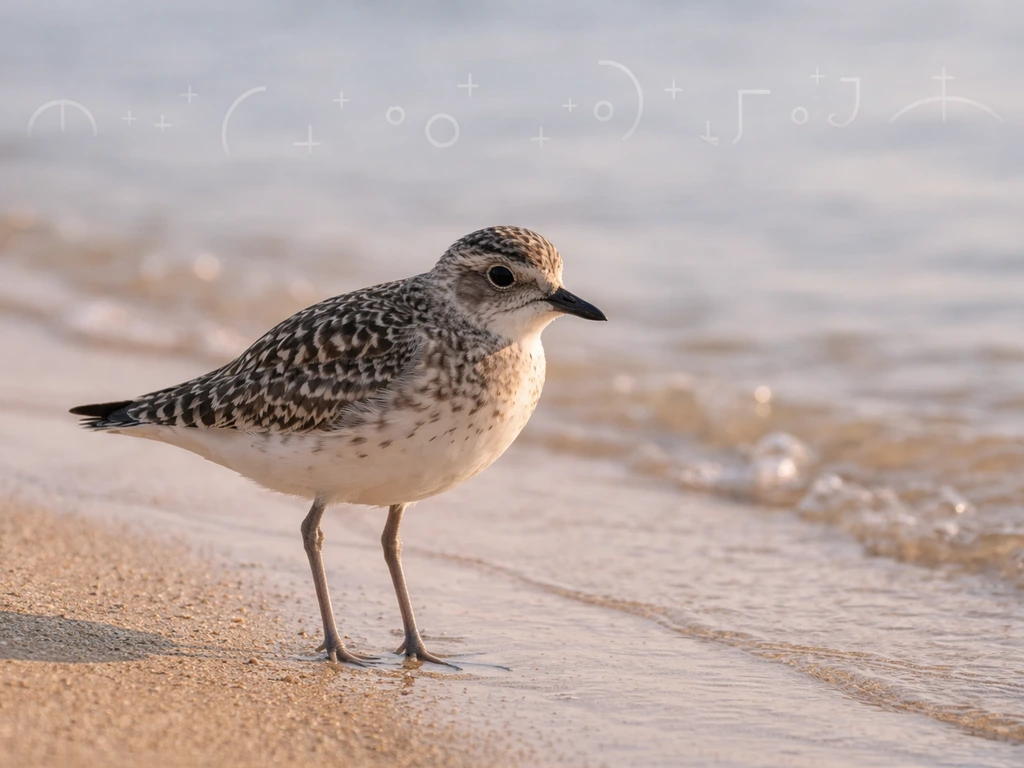
Weaver bird is pronounced WEE-vuh burd in British English and WEE-ver burd in American English. The IPA for the full phrase is /ˈwiːvə bɜːd/ (UK) or /ˈwiːvər bɜːrd/ (US). Stress lands firmly on the first syllable of weaver: WEE, not vuh. The second word, bird, is short and unstressed by comparison. That's everything you need to say it correctly in conversation. If you're wondering how to pronounce turkey bird, the key is to treat it as a separate phrase and follow the same careful syllable-and-stress approach.
How to Pronounce Weaver Bird Correctly (Step by Step)

James Ridgley
23 May 2026

What "weaver bird" actually refers to
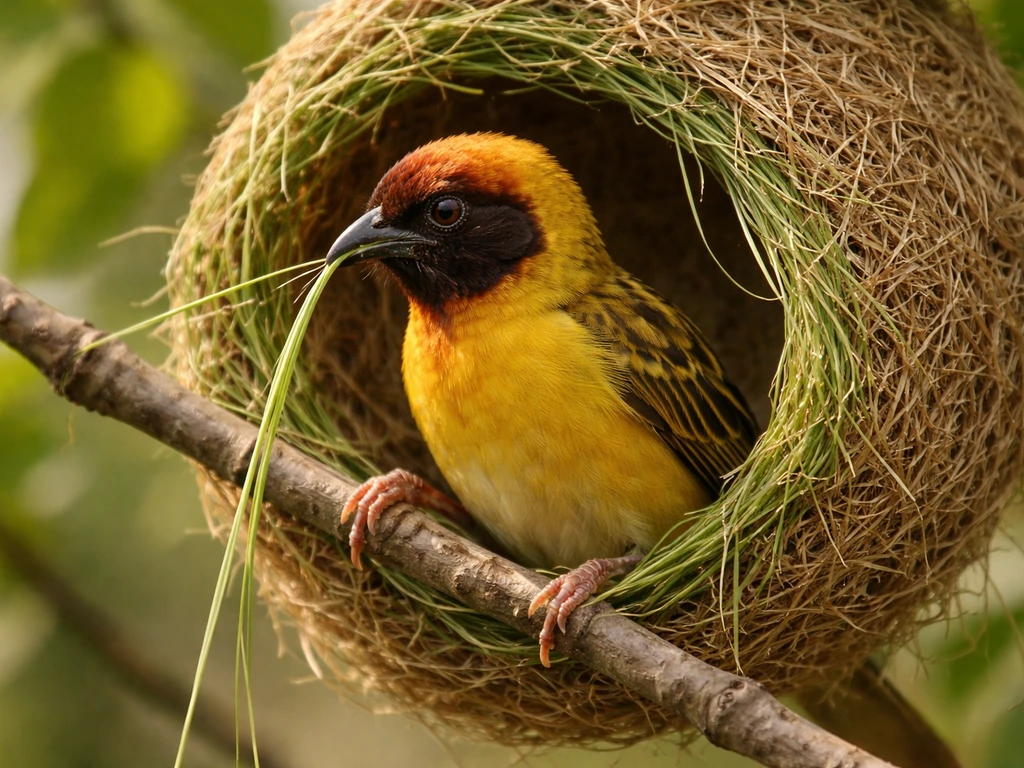
Before diving deeper into the pronunciation, it helps to know what you're saying. "Weaver bird" is a common name, not a strict taxonomic label. It describes a loose grouping of birds known for building elaborate, intricately woven nests from grass and sticks. Oxford's dictionary defines a weaver bird as a tropical bird that builds large nests by weaving sticks and pieces of grass together in a complicated way, which is exactly where the name comes from: these birds are, quite literally, weavers.
The birds most commonly grouped under this name belong to the family Ploceidae. Well-known examples include the baya weaver (Ploceus philippinus), found across the Indian subcontinent and into Southeast Asia, and blank" rel="noopener noreferrer">the streaked weaver (Ploceus manyar), which ranges from Bangladesh, India, Nepal, and Sri Lanka across to Thailand and Vietnam. So when someone says "weaver bird," they might mean any one of dozens of related species. The common name is a vernacular umbrella term, not a single-species designation.
Pronouncing "weaver": syllables and stress
"Weaver" has two syllables: WEE and vuh (or ver). The stress goes on the first syllable every time, without exception. In IPA it looks like /ˈwiːvə(r)/, where the /ˈ/ mark shows that WEE carries the primary stress and the /r/ in parentheses signals that it may or may not be pronounced depending on your accent.
The first syllable contains a long EE sound, exactly like the word "see" or "free." The second syllable is reduced: it's a soft, unstressed schwa (the "uh" sound) in British English, and in American English it becomes a rhotic schwa, sounding more like "ver" (as in "never"). Both Cambridge and Oxford dictionaries confirm this split: UK /ˈwiː.və r/ versus US /ˈwiː.vɚ/. Merriam-Webster echoes this with their respelling ˈwē-vər, reflecting the American rhotic version.
The full phrase: "weaver bird" in IPA and plain English

Put the two words together and here's what you get, laid out cleanly:
| Accent | Plain English spelling | IPA |
|---|---|---|
| British (non-rhotic) | WEE-vuh burd | /ˈwiːvə bɜːd/ |
| American (rhotic) | WEE-ver burd | /ˈwiːvər bɜːrd/ |
The natural rhythm is two beats: WEE-vuh BURD or WEE-ver BURD. In flowing speech, weaver carries a bit more weight than bird, so you land on WEE and then let the rest trail behind it. The word bird is short and clipped in both accents, roughly /bɜːd/ in British and /bɜːrd/ in American. WordReference's US respelling, "wē′vər bûrd′," captures this well: the primary stress is on the first syllable of weaver, and bird follows without any additional emphasis.
Common mispronunciations and how to fix them
There are a few predictable stumbling blocks with this phrase. Here's where people tend to go wrong and how to correct it:
- Stressing the wrong syllable: saying wee-VER instead of WEE-ver. The stress belongs on the first syllable, always. Think of it like "teacher" or "leader" — same pattern, stress up front.
- Using a short /ɪ/ instead of a long /iː/ in the first syllable: saying WIH-ver instead of WEE-ver. The vowel is long, like the word "week" or "deep." Hold it for a beat.
- Dropping the second syllable entirely and saying something like "WEEV-bird." This is a compression that happens in fast speech, but it blurs the two-word structure. Keep the schwa (or rhotic schwa) audible: WEE-vuh burd.
- Over-rhoting in British English: American speakers sometimes carry their heavy /r/ into a British context, which sounds slightly off. In non-rhotic British accents, the /r/ in weaver is not pronounced before a consonant like /b/, so the vowel in the second syllable stays as a plain schwa: WEE-vuh.
- Spelling-influenced mispronunciations: seeing "weaver" and guessing it rhymes with "cleaver" — which it actually does! If you can say "cleaver," you can say "weaver." Same vowel, same stress, same structure.
How it sounds in different accents
The biggest variable across English accents is rhoticity: whether speakers pronounce the /r/ in "weaver" or not. In standard British English (Received Pronunciation), the /r/ at the end of "weaver" is silent when the next sound is a consonant. Since "bird" starts with /b/, a non-rhotic British speaker says WEE-vuh burd, with no /r/ sound between the two words.
In American English, rhotic accents keep the /r/ colored throughout, giving you WEE-ver burd, where the second syllable of weaver sounds like "ver. " Australian and New Zealand English patterns are broadly non-rhotic like British English, so expect the WEE-vuh burd variant there too. Scottish and Irish accents vary but tend toward more rhoticity, so you may hear something closer to the American version in those regions.
No variant is wrong, they reflect real, recognized pronunciation patterns, both documented in Oxford's and Cambridge's entries.
Practice saying it: slow to conversational speed
The best way to lock in a new pronunciation is to move through it in stages rather than just repeating the whole phrase over and over at full speed. Here's a simple sequence that works:
- Say the first syllable alone: WEE. Hold the vowel a full half-second. Make sure it's a long EE sound, not a short ih.
- Add the second syllable slowly: WEE... vuh (or WEE... ver if you're using American English). Don't rush. The schwa is quiet and relaxed.
- Say the whole first word at slow speed: WEE-vuh. Then at normal speed: weaver. Do this five times.
- Now say "bird" alone: burd. Short and clear.
- Put the full phrase together at slow speed: WEE-vuh... burd. Pause between the words.
- Bring it up to conversation speed: weaver bird. Say it as one smooth phrase, no pause.
- Say it in a sentence out loud: "That's a weaver bird nest." Natural context cements the pronunciation faster than isolated drilling.
Listening is just as important as repeating. Pull up a nature documentary clip, a birding podcast, or even a dictionary audio player (Cambridge and Oxford both have audio buttons on their entries) and listen to the word several times before and after your practice. The British Council emphasizes that pronunciation practice is not just listen-and-repeat: pairing active listening with deliberate speaking practice is what makes it stick.
When you need the scientific name pronunciation instead
"Weaver bird" works perfectly in everyday conversation, field guides written for general audiences, and birding forums. If you want help with the basics, see a guide on how to pronounce budgie bird weaver bird. But if you're reading scientific literature, talking to an ornithologist, or trying to look up a specific species in a taxonomy database, you'll quickly run into the Latin binomial names, and those follow different pronunciation rules entirely.
The baya weaver, for example, is Ploceus philippinus. The streaked weaver is Ploceus manyar. These names are Latinized (or Latinized Greek) and pronounced using conventions from classical Latin or, in practice, a somewhat anglicized version of Latin that varies between countries and institutions. "Ploceus" alone requires knowing how to handle the pl- cluster and the -ceus ending, which is a different skill set from pronouncing the English common name.
As a rule of thumb: use "weaver bird" when talking generally, and look up the specific binomial pronunciation separately when you need precision for a particular species. Many birding apps and ornithological databases now include audio pronunciation for scientific names, which is worth using when the stakes are higher than casual conversation.
This distinction between common-name pronunciation and scientific-name pronunciation comes up across the whole world of bird naming. It's the same issue you encounter with birds like the plover, the grebe, or the frigate bird, where the everyday English name and the Latin binomial occupy completely separate pronunciation universes. If you meant a plover, note that “plover” has its own pronunciation that differs from “weaver bird” the plover.
The grebe bird name can be pronounced differently from “weaver bird,” so make sure you follow the correct phonetics for the specific bird you mean. If you mean the common name, check how to pronounce frigate bird as well, since it follows different everyday spelling and sound patterns than weaver bird. Getting comfortable with the common name first is always the right starting point.
If you're also wondering how to pronounce wading bird, the same word-stress approach can help you get the rhythm right.
FAQ
How do I pronounce “weaver bird” if I’m not sure which accent I should use?
Use the stress pattern first (WEE-). Then choose the r behavior: British-style versions drop the r between words (WEE-vuh burd), American-style versions keep it as part of weaver (WEE-ver burd). If you speak with mixed influence, aim for the American rhotic r in weaver for the safest cross-audience intelligibility.
Should “bird” be pronounced with a long sound like “bird” in “heard,” or is it clipped?
It should be short and unstressed compared with weaver. In most everyday speech, it sounds like a quick /bɜːd/ (UK) or /bɜːrd/ (US), without stretching vowels or adding extra emphasis to the word “bird”.
Is it okay to say “WEE-ver bird” even in British English?
Yes, as a recognizable accent variation. Native British speakers may say WEE-vuh burd in careful speech, but adding an r where a British speaker would not is usually understood as an accent feature rather than a mistake.
Do I pause between “weaver” and “bird” when speaking?
In normal conversation, don’t separate them with a long pause. Say it as one short two-part rhythm: WEE then bird, letting the second word trail quickly. A tiny break is fine for clarity, especially if you are introducing the phrase.
How do I pronounce it correctly if “weaver bird” appears in a longer sentence?
Sentence context can change what you hear around word boundaries. For instance, a British speaker may change whether the final /r/ in “weaver” is audible depending on the next word sound, but the main stress should stay on WEE and you should keep “bird” short.
What’s the most common pronunciation mistake learners make?
Putting the stress on the second word or overemphasizing the schwa in “weaver” (saying it like “WEE-ver” with extra weight, or stressing vuh/uh too strongly). The correction is to keep the primary beat on WEE and make the rest softer and shorter.
Are there different pronunciations for “weaver bird” depending on whether you mean the general group or a specific species?
The common-name pronunciation stays the same. The only time pronunciation rules change is when you switch to the scientific binomial, where the Latinized genus and species follow different conventions, so use audio for Latin names if you need precision.
How can I practice without sounding robotic?
Practice in chunks first (WEE-vuh, then burd). After that, practice at normal speaking speed while keeping the same stress, you should still hear WEE as the only strong beat, and “bird” should stay quick. Record yourself and check that “weaver” is not losing stress in connected speech.
Next Article
How to Say Plover Bird: Pronunciation Guide
Learn how to pronounce plover bird with phonetic spelling, stress tips, quick practice steps, and fixes for common mista