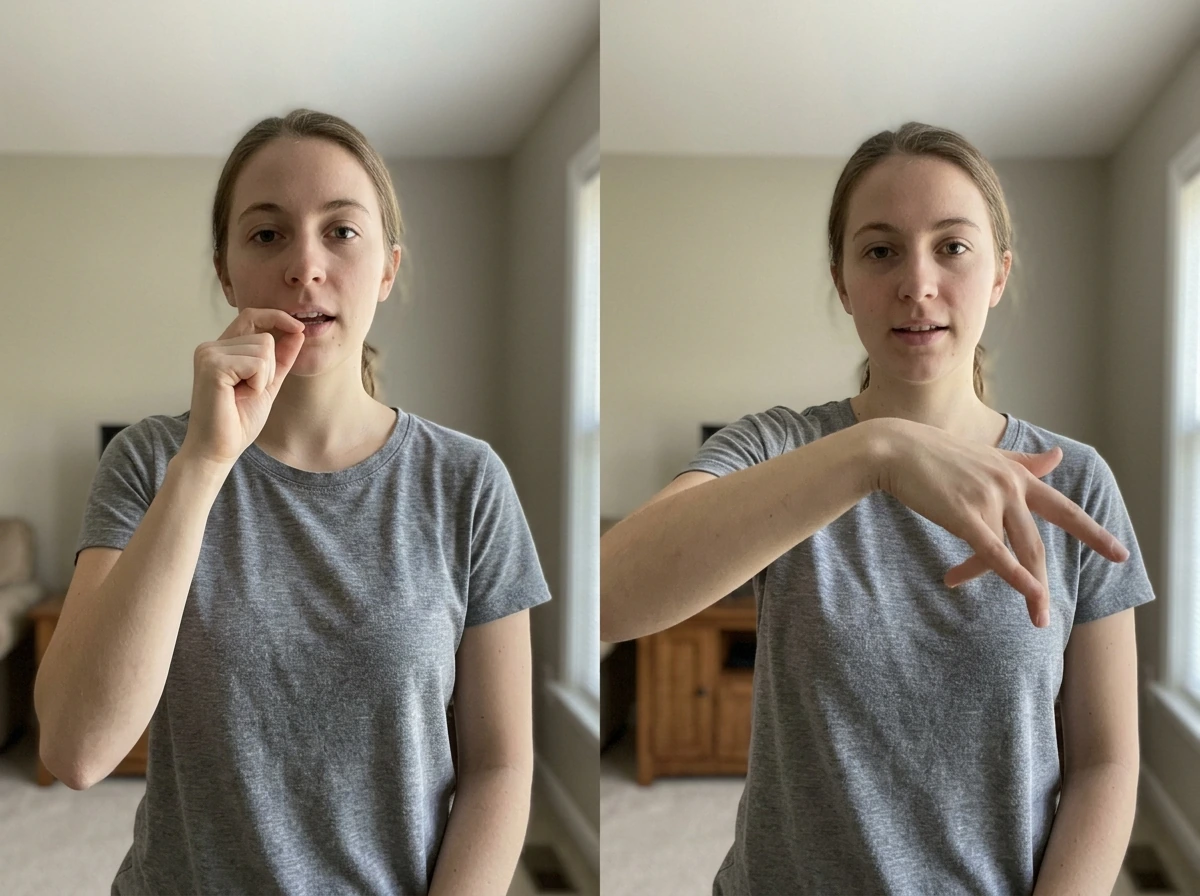
In American Sign Language (ASL), you sign "bird" by forming a "G" handshape (index finger and thumb extended, other fingers curled), placing your hand at the right corner of your mouth, and opening and closing your index finger and thumb together to mimic a beak. To say “bird” in Italian, you use the word “uccello. ” In American Sign Language (ASL).
How Do You Say Bird in Sign Language ASL and Tips

James Ridgley
23 Mar 2026
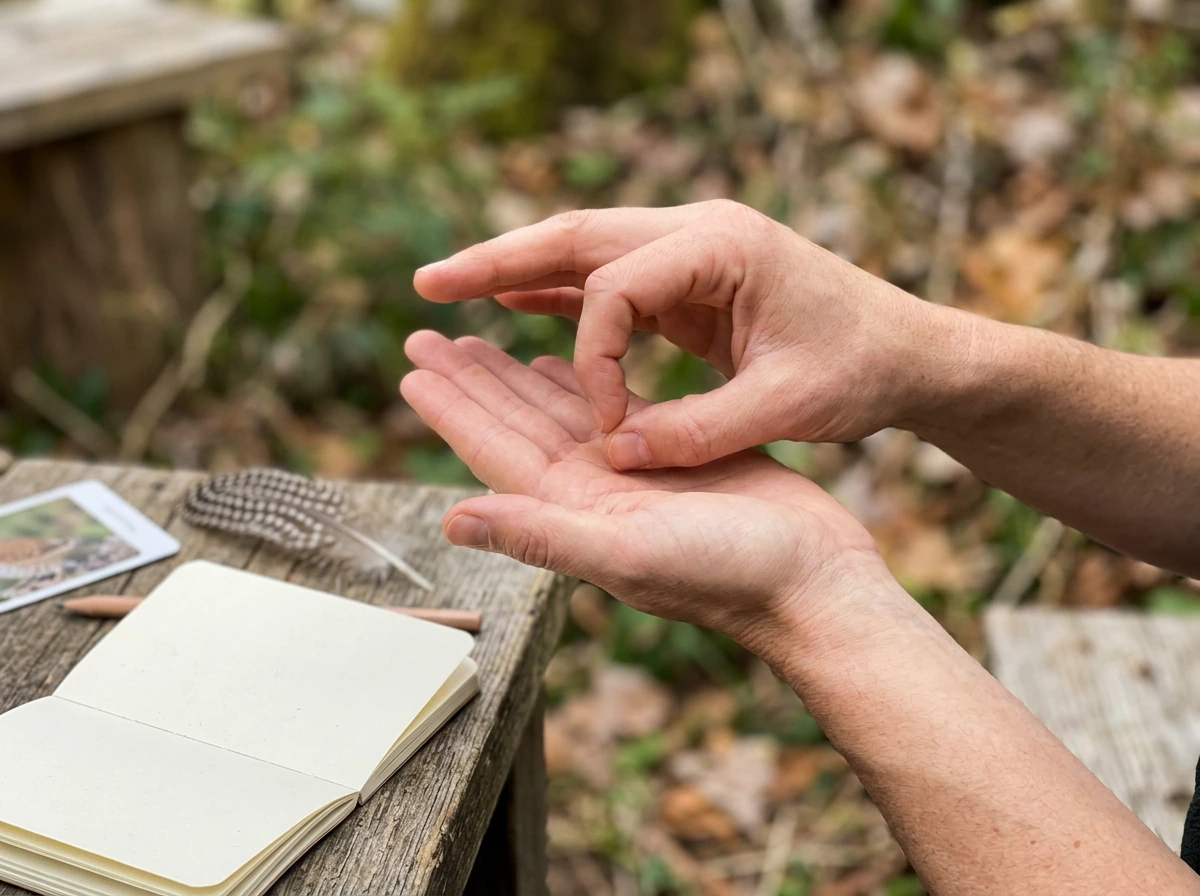
That is the standard, everyday sign for the general concept of "bird" in ASL, and it is what most people searching this question are looking for. If you use a different sign language, like British Sign Language (BSL) or Auslan, the sign will be different, because sign languages are not universal. This article walks you through the full technique, clears up the most common confusion points, and shows you how to use the sign naturally in real conversations.
"Bird" the concept vs. signing a specific species
Before you practice the sign, it helps to understand a key distinction that trips up a lot of beginners. In ASL there is one general sign for "bird" (the concept, the category), and then there are separate signs for specific species. Some species, like CHICKEN, share an almost identical sign with BIRD, and signers rely on context to tell them apart. Others, like FEATHER or FLY, are entirely different signs that beginners sometimes accidentally produce when they are reaching for BIRD.
The practical upshot: start by learning the general BIRD sign, which works in the vast majority of everyday situations. You say you saw a bird outside? If you are translating a phrase like “little bird” into French, you can look up the common word choice and usage how do you say little bird in french. Use the general sign. Talking about birds as a category? General sign. It is only when you need precision, like distinguishing a chicken from a robin during a specific conversation, that you need to layer in extra strategies. More on that below.
How to sign "bird" in ASL, step by step
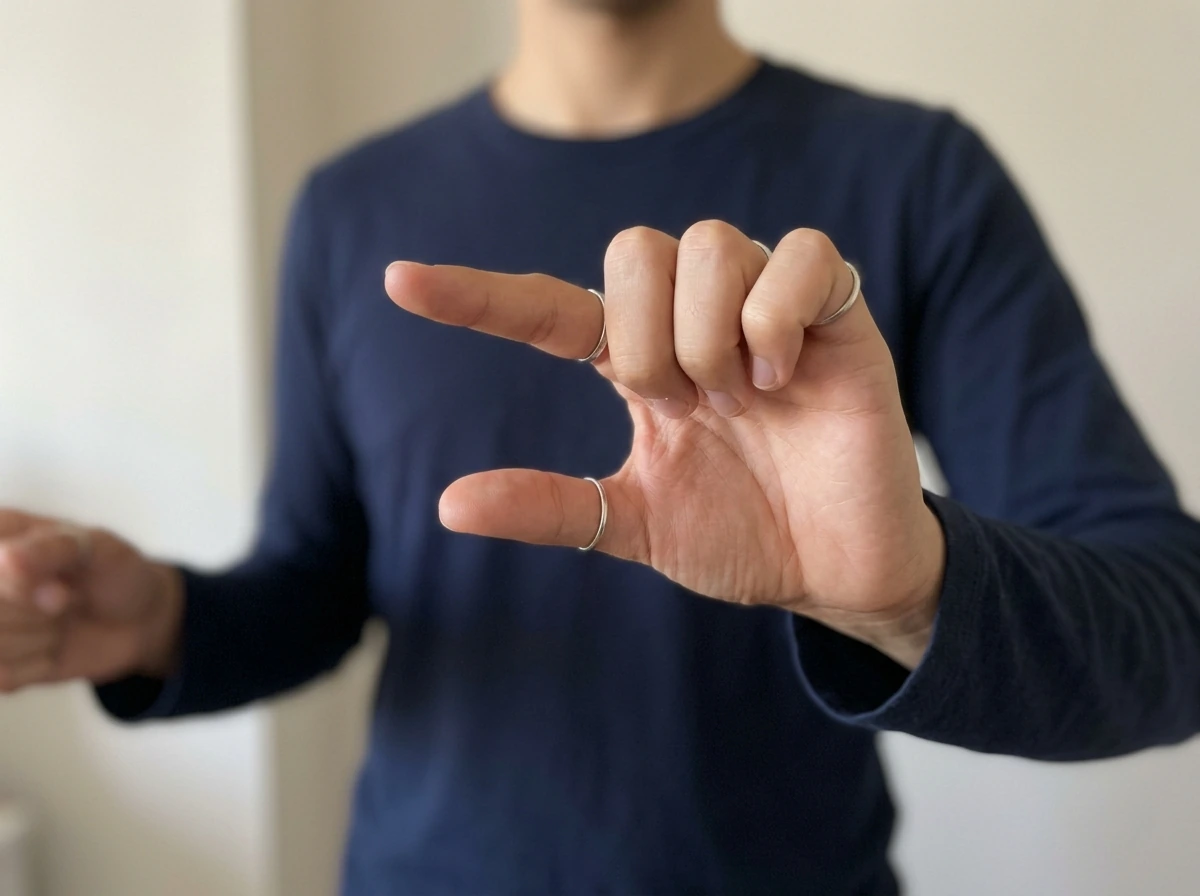
Every ASL sign is built from five core parameters: handshape, location, movement, palm orientation, and non-manual markers (facial expressions, mouthing, and similar signals). Here is how each one applies to BIRD.
- Handshape: Form a "G" handshape. Extend your index finger forward and your thumb downward (or toward each other), with your remaining three fingers curled into your palm. Think of it as making a beak shape with your dominant hand.
- Location: Bring your hand to the right corner of your mouth. Your index finger and thumb should be close to, but not touching, the corner of your lips.
- Movement: Open and close your index finger and thumb repeatedly, like a beak opening and closing. This is the core motion that communicates "bird." Two or more repetitions is the standard for the general sign.
- Palm orientation: Your palm faces left (toward your non-dominant side) throughout the movement. The beak motion is horizontal, not vertical.
- Non-manual markers: A neutral or slightly inquisitive facial expression works for declarative use. If you are asking "is that a bird?" raise your eyebrows to signal a yes/no question, as you would with any ASL question.
One important production note: if you produce only a single, quick open-close movement rather than the repeated beak motion, some signers and viewers will interpret it as "tweet" (as in the social media/Twitter sense). This is a well-documented context variant, not a mistake exactly, but it shows that production detail matters. When you mean "bird" the animal, use a clear repeated beak motion.
How "bird" looks across different sign languages
A common misconception is that sign language is universal. It is not. ASL, British Sign Language (BSL), and Australian Sign Language (Auslan) are three completely separate languages with their own vocabularies, grammars, and dictionary resources. SignBSL hosts a learner-oriented BSL dictionary entry for “bird” and includes sign video for instruction [SignBSL provides a learner-oriented BSL dictionary entry for “bird” and includes sign videos](https://www.
signbsl. com/sign/bird). The sign for "bird" in BSL is documented in the UCL BSL SignBank as a distinct lexical entry, not the ASL beak-at-the-mouth version. UCL explains that in 2014 DCAL launched [BSL SignBank](https://www.
ucl. ac. uk/pals/research/deafness-cognition-and-language-dcal/dcal-resources/dcal-sign-language-facts), an online dictionary that uses video clips to show what each BSL sign looks like, with over 2,500 signs based on the BSL Corpus. Auslan similarly has its own dedicated sign dictionary platform with its own bird sign.
If you are learning a sign language outside the United States, check the dictionary specific to that language rather than assuming ASL signs will transfer, similar to how to say bird in latin. how to say bird in chinese
| Sign Language | General Approach to "Bird" | Where to Look It Up |
|---|---|---|
| ASL (American) | G handshape at corner of mouth, repeated beak motion | Lifeprint.com, StrongASL.com |
| BSL (British) | Distinct lexical sign, different from ASL | UCL BSL SignBank |
| Auslan (Australian) | Own lexical form | Auslan Signbank (auslan.org.au) |
| Other sign languages | Each has its own sign | Check the national/regional sign dictionary |
The rest of this article focuses on ASL because that is what the large majority of English-speaking searchers are asking about. If you are learning another sign language, the step-by-step logic (learning the general sign, understanding context, fingerspelling as a fallback) still applies, just with that language's specific sign.
Practice tips: how to build the sign into memory without making common mistakes
Memorization shortcuts
The BIRD sign is genuinely iconic, meaning the handshape visually resembles what it represents (a beak). Lean into that. When you practice, say "beak" in your head rather than "bird." Your hand is mimicking a beak opening and closing at the side of your mouth. Once that image sticks, the sign becomes almost automatic.
Signs that beginners confuse with BIRD
- FLY: This is a completely separate ASL sign and does not resemble BIRD. Producing FLY when you mean BIRD is a meaningful error. Do not conflate the concept of a bird flying with the sign for bird itself.
- FEATHER: Also a distinct sign, described as using a falling-feather type of motion. If you are talking about bird anatomy, be aware these are separate vocabulary items.
- CHICKEN: This is the trickiest overlap. CHICKEN often uses the same or very similar sign as BIRD in ASL, and context usually resolves the difference. If you are in a setting where the distinction truly matters, use the disambiguation strategy described below.
- FOWL: Handspeak lists FOWL as its own lexical entry, distinct from BIRD. It tends to be used in poultry/agricultural contexts rather than everyday bird conversation.
Clarity tips for everyday use
- Repeat the beak motion clearly (two to three open-close cycles) to signal the general BIRD sign rather than the single-movement "tweet" variant.
- Keep your hand at the corner of your mouth, not in front of your chin or cheek. Location precision matters in ASL.
- Mouth the word "bird" simultaneously if you are in a mixed (hearing and Deaf) environment. This is common in contact signing situations and adds clarity.
- Watch native signers on video rather than relying only on still images. The movement parameter is hard to capture in a photograph.
Using the BIRD sign in real situations
Birdwatching and nature conversations
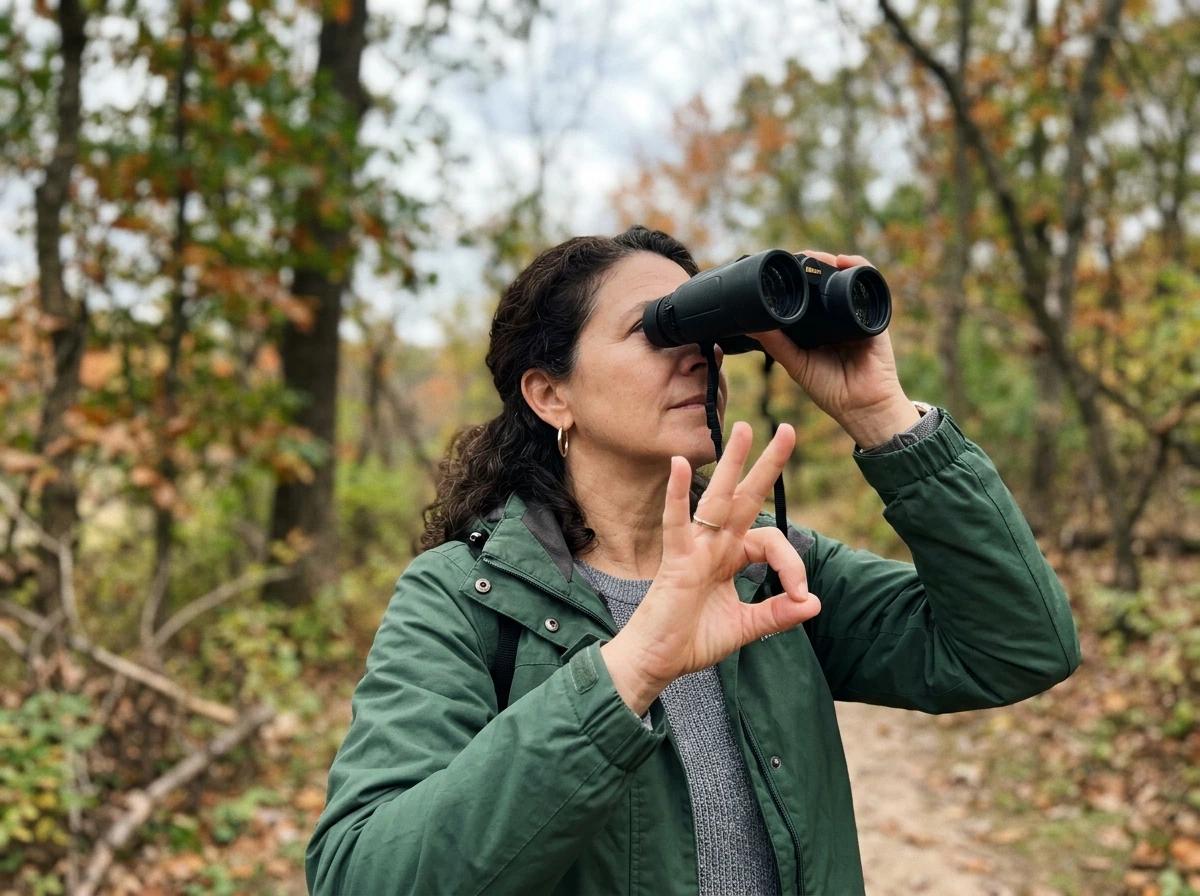
For general birdwatching talk, the BIRD sign carries most of what you need. "I saw a bird" or "there are birds in the tree" both use the standard sign without any modification. When you want to specify a species you do not have a dedicated sign for, the approach is to sign BIRD first to establish the category, then either produce a species-specific sign (if you know one) or fingerspell the species name. For example: BIRD, R-O-B-I-N would communicate "robin" clearly to a fluent signer.
Talking about pet birds
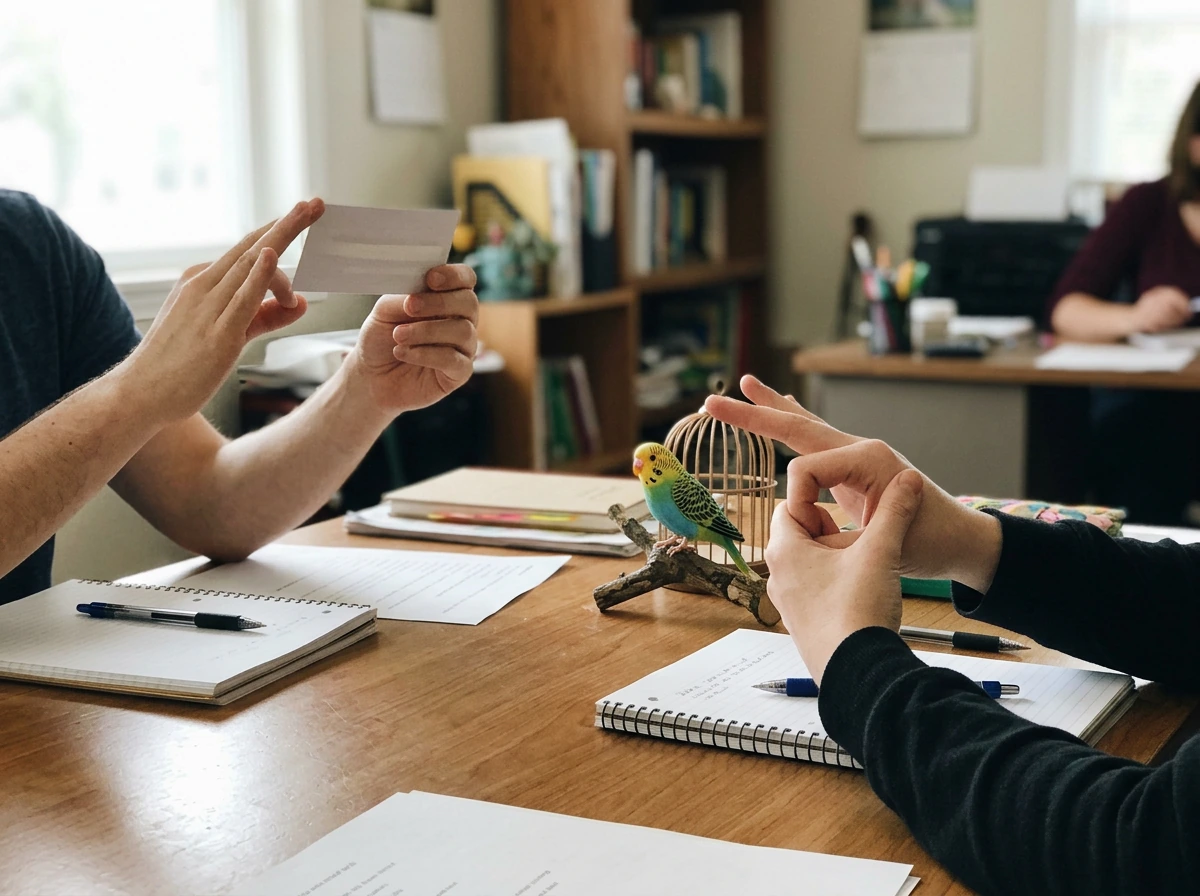
If you have a pet bird, like a parakeet or cockatiel, the same logic applies. Sign BIRD to establish what kind of pet you have, then fingerspell the species name or use a classifier to describe size or appearance. Signing MY BIRD SMALL GREEN gets the point across quickly in casual conversation. For parrots, some ASL users do have a sign, but if you are not sure your conversational partner knows it, BIRD plus a color or fingerspelled species name is always safe.
Discussing types of birds (including chickens)
When the context involves multiple bird types and you need to distinguish, say, a chicken from a generic bird, the documented ASL disambiguation strategy is to produce the beak motion with your right hand while holding your left hand flat, palm-up, as a reference surface. This combination signals CHICKEN specifically rather than BIRD in general. You would only need this level of precision in a structured context like a classroom discussion, a biology lecture, or an educational signing session. In casual conversation, context alone almost always resolves whether you mean a farm chicken or a wild bird.
When there is no dedicated sign: fingerspelling and species-specific options
ASL has dedicated signs for some bird species (CHICKEN being the most notable overlap, and a few others like DUCK or EAGLE appearing in many dictionaries), but it does not have a unique sign for every one of the roughly 10,000 bird species. When you need a species that does not have a standard sign, you have two solid options.
- Fingerspell the species name: Spell it out letter by letter after signing BIRD. This is the standard fallback in ASL for proper nouns and specialized vocabulary. It is slower but universally understood by fluent signers. For well-known species like cardinal (C-A-R-D-I-N-A-L) or sparrow (S-P-A-R-R-O-W), this works perfectly fine in context.
- Describe and classify: Use classifiers and descriptors to convey size, color, or behavior. BIRD SMALL RED SING gives a recognizable description of a cardinal without needing the exact species name. This is a natural, fluent-signer approach and works well in narrative or conversational contexts.
The broader point here is the same one that comes up when looking at how bird names translate across spoken languages, The broader point here is the same one that comes up when looking at how bird names translate across spoken languages, whether you are exploring how do you say little bird in spanish, <span>how to say bird in french</span>, or any other language. how do you say little bird in spanish There is rarely a perfect one-to-one correspondence for every species, and you often rely on context, description, or a borrowed/spelled term to fill the gaps. Sign languages work the same way. how to say bird in italian. how do you say little bird in french
Your next steps for actually learning this
Knowing the parameters of the sign is useful, but signing fluency comes from watching and doing. Start with Lifeprint. com (a free, comprehensive ASL dictionary with video examples) to see the BIRD sign in motion. StrongASL is another solid free resource.
Search for the gloss BIRD specifically, not just the English word, since glossing conventions can differ. Practice in front of a mirror so you can check your hand placement at the corner of your mouth. Then try using it in a simple sentence: point at a bird picture, sign BIRD, and add a color or size sign. If you want the spoken-language word, you can learn how to say bird in Spanish.
To hear the spoken-language word, you can also look up how to say bird in German. That three-part practice (see it, replicate it, use it in context) is the fastest path to actually retaining a new sign.
If you are learning ASL to communicate with a Deaf family member, coworker, or student, consider connecting with a local Deaf community event or finding a Deaf conversation partner. No dictionary resource, however detailed, replaces real feedback from a fluent signer on whether your production is clear.
FAQ
If I sign BIRD correctly but my facial expression looks different, will people understand me?
Facial expression and mouthing are part of ASL clarity. If your eyes and mouth look neutral, most people will still catch the meaning, but adding a natural, attentive expression (slight focus toward your hand) improves accuracy, especially in noisy or classroom settings.
How can I tell the difference between the BIRD sign and the one that looks like “tweet”?
Use the repeated beak-like open and close motion rather than a single brief pinch or open-close. Also keep the location at the corner of your mouth and repeat the motion two or more times for “bird (animal)” rather than a single snap for “tweet.”
What should I do if I do not know whether the sign language I am using is ASL or something else?
Treat “bird” signs as language-specific. If you are unsure, default to fingerspelling the word using the recipient’s preferred approach, or ask the person you are signing with what sign they use for bird, since ASL, BSL, and Auslan differ.
Do I need to fingerspell “bird” every time if I am a beginner?
No. Fingerspelling is a backup when you forget a sign or need precision. For everyday conversation, learn the standard BIRD sign first, then fingerspell only for special cases like uncommon species or when you are not confident your movement is clear.
When talking about a specific bird species, what is the best order to sign it in?
A reliable pattern is BIRD first to establish the category, then add either the species sign (if you know it) or fingerspell the species name. This prevents listeners from assuming you started with a different concept.
If I want to say “my bird,” do I add possessive signs or just say BIRD then point?
A common, clear approach is to sign BIRD and pair it with a possessive setup, like pointing to yourself for “my” or using the appropriate possessive pronoun structure your partner understands. If you are unsure of grammar, BIRD plus a clear point (to yourself and then to the bird you mean) is usually easier for listeners.
How do you sign “bird” when you mean the act of birds, like “birding” or “birdwatching”?
ASL often uses context plus a modified verb or event descriptor rather than changing the base “bird” sign. Start with BIRD, then add the relevant activity sign your partner would expect (for example, a watching or outdoors verb), so the sentence reads as an activity, not just an animal.
Is it acceptable to sign only the handshape at your mouth without the beak motion?
Not reliably. The beak-like open and close motion is what makes the sign recognizable. If you skip movement, viewers may interpret it as something else or miss the sign, so practice keeping the repeated motion consistent.
What if the listener asks “do you mean chicken?” when I sign BIRD?
Be ready to clarify using the documented disambiguation strategy: use the right-hand beak motion while your left hand stays flat, palm-up as a reference surface. If you do not want that level of precision, you can also add a quick descriptor like FARM or ROOST to steer the meaning.
How long should I practice the BIRD sign before using it in real conversations?
Practice until you can reproduce it in a mirror without checking placement every time, then try it in a low-risk setting (like signing BIRD plus a color/size to a picture). If someone consistently looks confused, slow down and exaggerate the repeated beak motion and location before you rely on it in live conversation.
Next Article
How to Say Bird in Italian: Pronunciation and Usage
Learn how to say bird in Italian, with pronunciation, plural forms, articles, and example sentences for everyday use.