The French word for 'bird' is oiseau. blank" rel="noopener noreferrer">Wiktionary lists oiseau as a masculine noun with plural oiseaux and gives the IPA pronunciation /wa.zo/. It's a masculine noun, it's pronounced roughly like 'wah-ZOH,' and it covers every situation where you'd say 'bird' in English in a general sense. That's the direct answer. Everything below unpacks the spelling, pronunciation, articles, and real sentences so you can actually use it. how do you say little bird in french
How to Say Bird in French: Spelling, Pronunciation, Examples

James Ridgley
23 Mar 2026
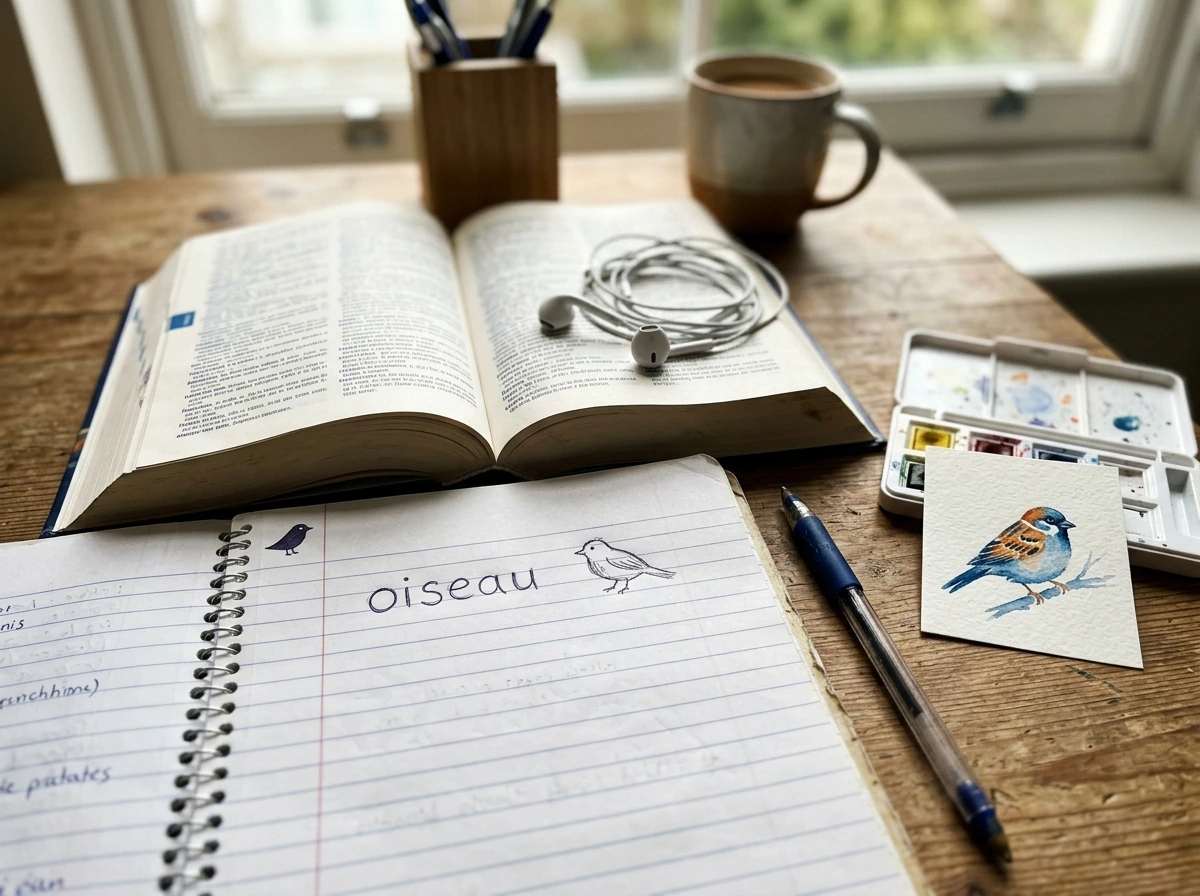
The French word for bird
Oiseau is the standard, everyday French word for bird, but if you’re wondering how do you say bird in latin, the term is different. You'll find it in every French dictionary from Larousse to Le Robert, and it's what a native French speaker would say in any normal context: spotting a bird in the garden, talking about a pet bird, or naming a species in a field guide. It's masculine, which matters for the articles and adjectives you attach to it (more on that in a moment).
You might occasionally come across oiselle, which is a feminine form used poetically or in older literary French to refer to a female bird. It's not common in everyday conversation, so unless you're reading 19th-century French poetry, oiseau is the word you need.
How to spell it correctly
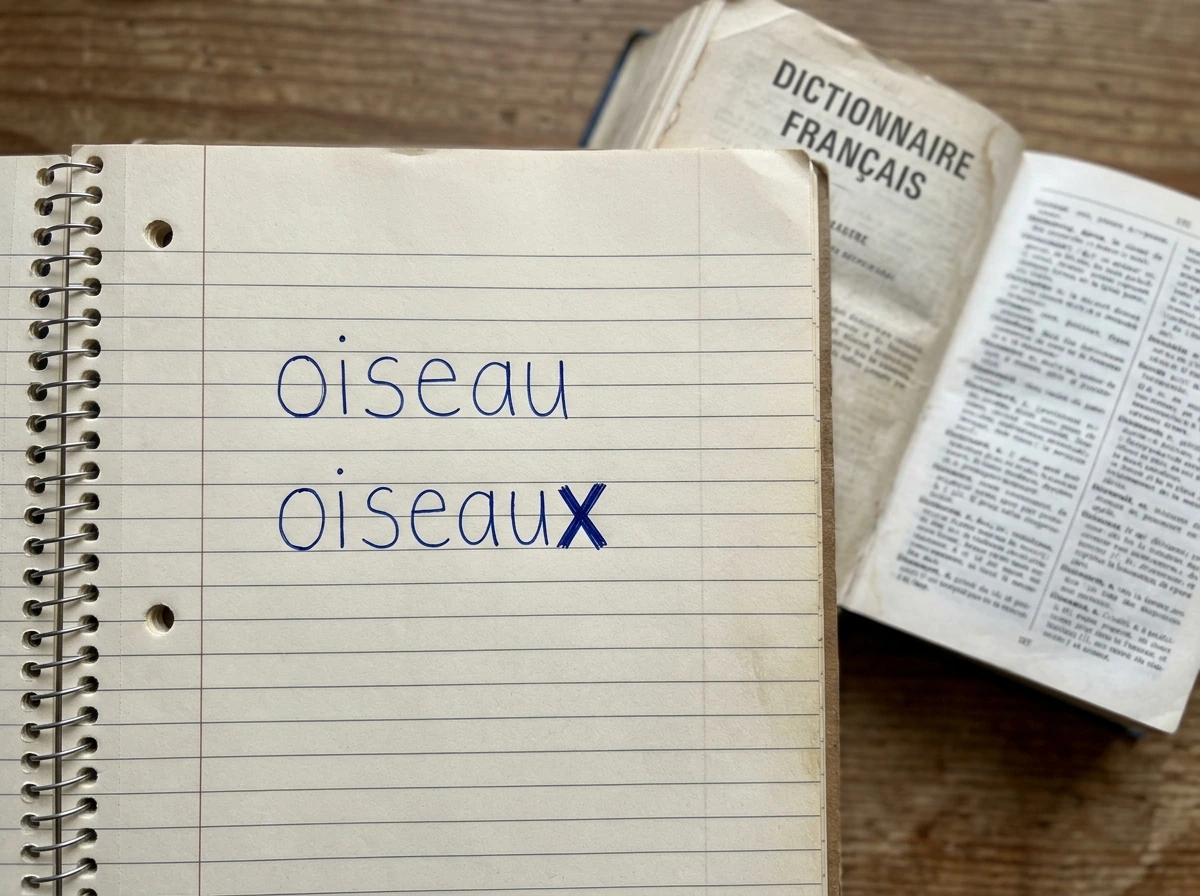
The spelling trips people up because French and English have very different rules about which letter combinations are even legal. Here's the word broken down:
- Singular: oiseau
- Plural: oiseaux (add an x, not an s)
- All lowercase unless it starts a sentence
- No accent marks anywhere in the word
The plural is worth memorizing on its own. French pluralizes many words ending in -eau by adding -x rather than -s, so birds becomes oiseaux. The pronunciation doesn't change between singular and plural, which is a small mercy.
How to pronounce oiseau
This is where most English speakers hesitate. The word looks intimidating on the page, but it's actually only two syllables and very smooth once you break it down.
- Phonetic (easy English guide): wah-ZOH
- IPA: /wazo/
- Stress: both syllables are fairly even, but the second (ZOH) carries a little more weight
- The 'oi' at the start sounds like the English word 'wa' (as in 'water' without the 'ter')
- The 'eau' at the end sounds like a long 'oh'
Put it together: wah-ZOH. Say it a couple of times quickly and it smooths out naturally. The plural oiseaux is pronounced identically: wah-ZOH. That silent x at the end is classic French.
Common ways to ask or phrase the question
If you're traveling, studying, or just curious, here are the natural French phrases that match the questions English speakers typically ask: how do you say bird in sign language
| English phrase | French equivalent |
|---|---|
| How do you say bird in French? | Comment dit-on 'bird' en français? |
| What is the French word for bird? | Quel est le mot français pour 'bird'? |
| What is French for bird? | Comment dit-on 'bird' en français? |
| What is a bird in French? | Qu'est-ce qu'un oiseau en français? |
| How do you say 'a bird' in French? | Comment dit-on 'un oiseau' en français? |
Using 'bird' in context: articles, singular, and plural
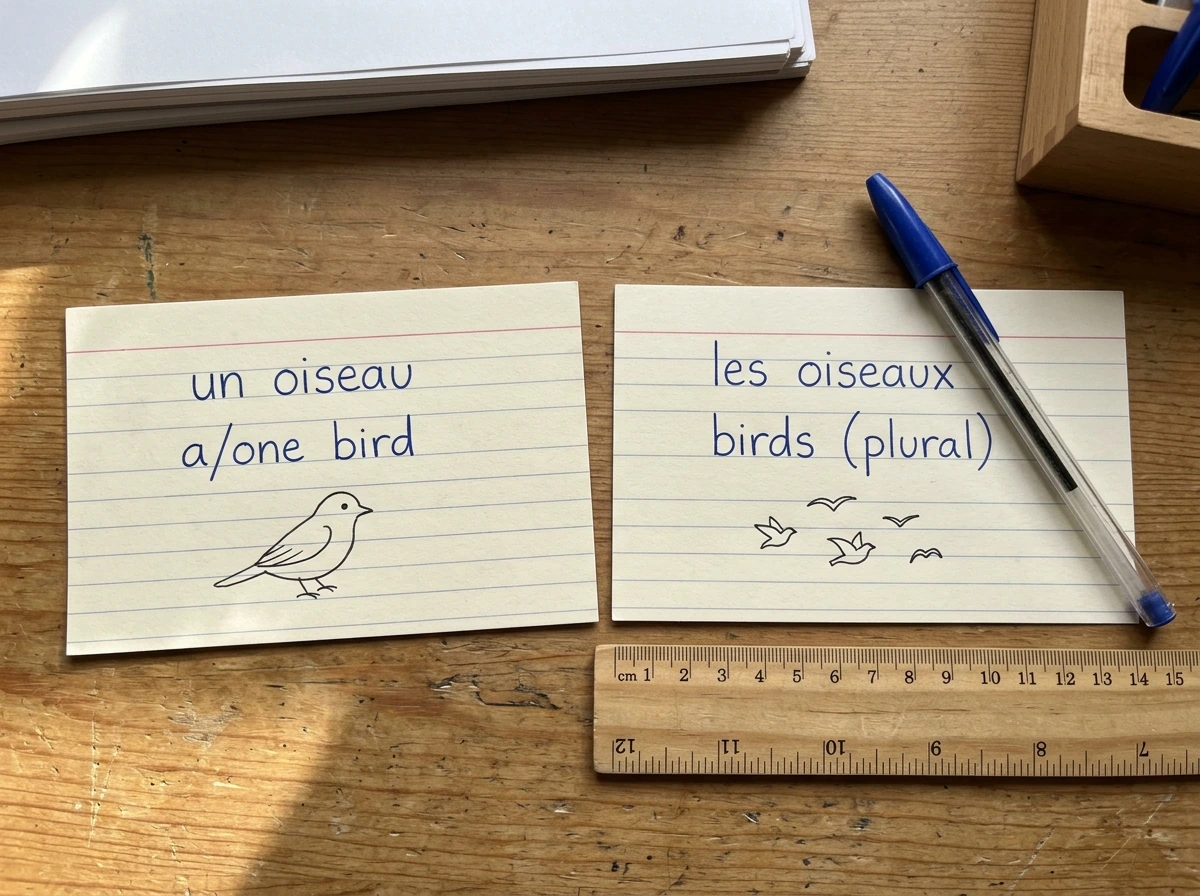
French nouns always need an article, and which one you use tells the listener whether you mean one specific bird, birds in general, or some birds. Because oiseau is masculine, the articles are un (a/one), le (the), and les (the, plural). Le Robert’s dictionary entry also labels oiseau as a masculine noun.
| What you mean | French | Pronunciation |
|---|---|---|
| A bird (one bird) | un oiseau | uhn wah-ZOH |
| The bird (specific) | le oiseau → l'oiseau | lwah-ZOH |
| Birds (general / plural) | les oiseaux | lay wah-ZOH |
| The birds (specific plural) | les oiseaux | lay wah-ZOH |
One thing to notice: 'le oiseau' contracts to 'l'oiseau' because oiseau starts with a vowel. French drops the -e from le (and la) before a vowel sound, so you'll always see and hear l'oiseau rather than le oiseau. That contraction also shows up in conversation naturally, so don't be surprised when you hear it spoken very quickly as a single flowing sound: lwah-ZOH.
When you want to talk about birds as a general concept, French uses les oiseaux rather than just oiseau on its own. So 'birds are beautiful' becomes 'Les oiseaux sont beaux,' not just 'Oiseaux sont beaux.' That definite article with the plural is an important difference from English.
Quick reference: spell it, say it, use it
At a glance
- Word: oiseau
- Gender: masculine
- Plural: oiseaux
- Pronunciation: wah-ZOH (IPA: /wazo/)
- Article (a/one): un oiseau
- Article (the): l'oiseau
- Article (the, plural): les oiseaux
Example sentences
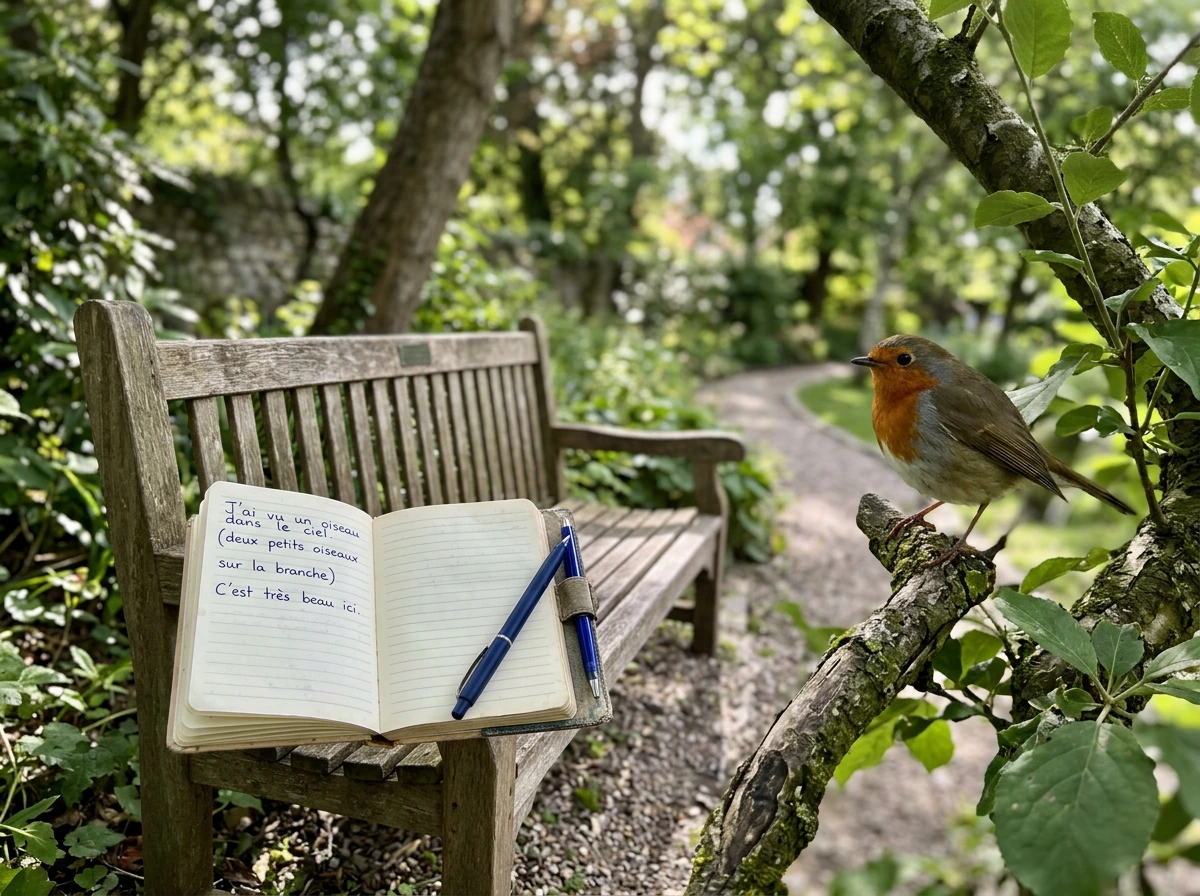
- J'ai vu un oiseau dans le jardin. (I saw a bird in the garden.)
- L'oiseau chante très bien. (The bird sings very well.)
- Les oiseaux migrent en automne. (Birds migrate in autumn.)
- Quel bel oiseau! (What a beautiful bird!)
- Mon oiseau de compagnie s'appelle Bleu. (My pet bird is called Bleu.)
These sentences cover the most common real-world scenarios: spotting a bird outdoors, describing a pet, talking about bird behavior. If you're a birder, a pet owner, or just working through a French crossword, these patterns will cover most of what you need.
And if you want to go deeper into related vocabulary, the same rules around articles and pronunciation apply when you look at how French handles species-specific bird names, These sentences cover the most common real-world scenarios: spotting a bird outdoors, describing a pet, talking about bird behavior. If you're a birder, a pet owner, or just working through a French crossword, these patterns will cover most of what you need.
And if you want to go deeper into related vocabulary, the same rules around articles and pronunciation apply when you look at how French handles species-specific bird names, or how other Romance languages like Spanish and Italian handle their equivalents If you are learning Spanish too, the same idea applies when you look up common animal words in Spanish, like bird.
One last thing worth knowing: oiseau is actually famous among French linguistics enthusiasts because it contains all five French vowels (a, e, i, o, u) in a single word. That's a genuine quirk of the language, and it makes oiseau a useful memory hook. If you can spell oiseau, you've practiced every vowel in French in one go. If you also want the German word, see our guide on how to say bird in German.
FAQ
When do I use un, le, l', or les with oiseau?
Use "un oiseau" for one bird (a/an bird), and "l'oiseau" when you mean a specific bird and the next word begins with a vowel sound. If you mean birds in general, use "les oiseaux" rather than leaving it bare.
Why do oiseaux sound the same as oiseau, even though the spelling changes?
In French, you don't add an s to make a noun plural the way you might in English. "Bird" becomes "oiseaux," and the pronunciation stays essentially the same for singular and plural.
Is it ever correct to write or say le oiseau instead of l'oiseau?
Oiseau starts with a vowel sound, so you must use the elision form "l'oiseau" (never "le oiseau"). The apostrophe is expected in writing and the two parts blend in speech.
Can I use oiselle in normal conversation?
"Oiselle" can appear in literature and older or poetic French, often referring to a female bird. In everyday conversation, it's safer to use "oiseau" unless you're sure you're in a literary context.
What’s the difference between les oiseaux and des oiseaux?
French has a clear difference between "oiseaux" as the general category and "des oiseaux" for some unspecified birds. Use "les oiseaux" for a general truth, and "des oiseaux" when you mean a few or some birds (for example, "J'ai vu des oiseaux dans le jardin").
How do I say bird-related actions in French, like birdwatching or feeding birds?
If you want to say "bird" as a verb idea like "to birdwatch" or "bird feeding," French typically uses different verb or noun phrases rather than reusing "oiseau" directly. For instance, you generally talk about "faire de l'observation des oiseaux" instead of trying to translate the English verb form word-for-word.
What are quick article-and-word-order patterns for common sentences with oiseau?
Your article choice depends on meaning, but word order also matters. For "The bird is singing," use "L'oiseau chante," for "A bird is singing," use "Un oiseau chante," and for "Birds sing" as a general statement, use "Les oiseaux chantent."
Next Article
How to Pronounce Mynah Bird (MY-nah vs my-NAY)
Learn how to pronounce mynah birds word mynah or myna, with syllables, stress, and quick self-check tips.