
The standard Mandarin Chinese word for 'bird' is 鸟 (simplified) or 鳥 (traditional), pronounced niǎo. Wiktionary lists 鳥 with the pinyin niǎo (niǎo3) and notes usage including the bird sense and relevant classifier information such as 隻/只 blank" rel="noopener noreferrer">pinyin niǎo (niǎo3) and classifier information (隻/只). That's the direct answer. If you just need to say it out loud or write it down, you've already got what you came for. But if you want to actually use the word correctly, pronounce it without embarrassing yourself, and understand when Chinese speakers use a different term instead, keep reading.
How to Say Bird in Chinese and Write 鸟 Correctly

James Ridgley
23 Mar 2026
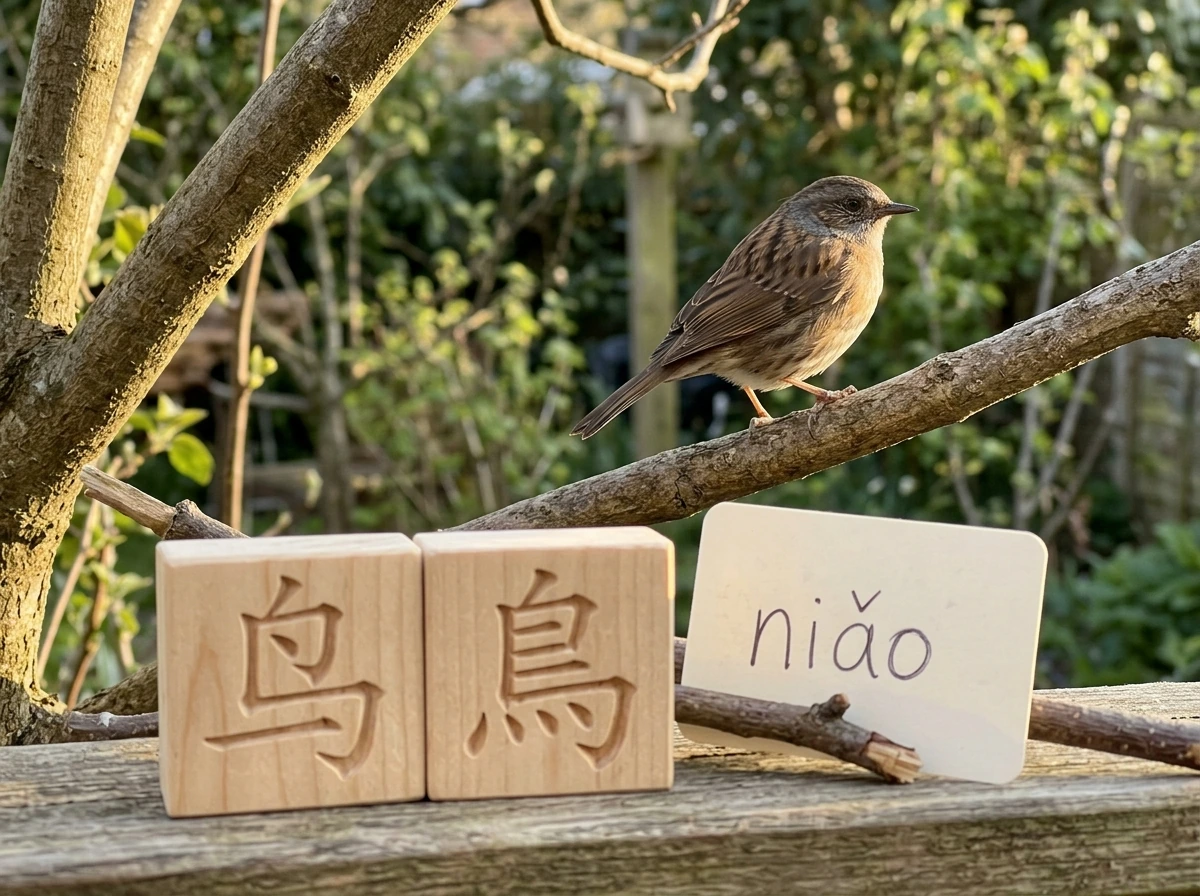
The standard Chinese word for 'bird'
In Mandarin Chinese, the word for bird is 鸟 (simplified) / 鳥 (traditional), romanized as niǎo. It's a standalone word and also the core building block for naming hundreds of specific bird species in Chinese. The character itself is one of the oldest in the language, a pictograph that originally depicted a bird in profile with a visible eye, beak, body, wings, and tail. Over time it was simplified into the form used in mainland China today (鸟), while Taiwan, Hong Kong, and overseas traditional-character communities still use the fuller form (鳥).
Both characters mean exactly the same thing and carry the same pronunciation. The only difference is which writing system you're working within. If you're studying Mandarin for mainland China, use 鸟. If you're working with traditional characters, use 鳥.
How to pronounce niǎo
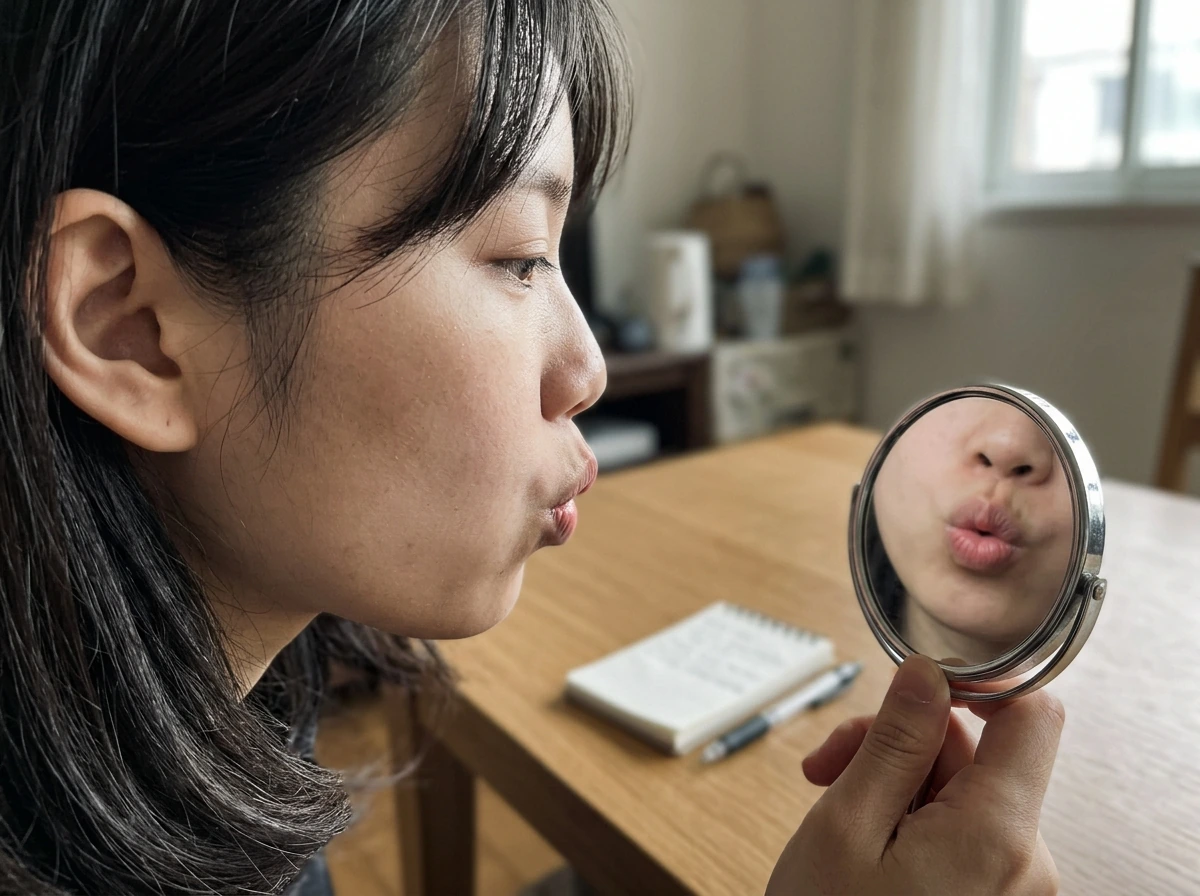
The pinyin for bird is niǎo, with the third tone (the tone mark that dips down and then rises, like a check mark in pitch). Breaking it down phonetically, 'ni' sounds like the English word 'knee,' and 'ǎo' sounds like the 'ow' in 'cow' but starts slightly further back in the mouth. Put them together and you get something close to 'nyow' said with a falling-then-rising pitch.
The third tone is the trickiest one for beginners because in casual, fast speech it often sounds like it just dips low rather than fully bouncing back up. Don't overthink it. Say 'nyow' and drop your voice pitch noticeably, and most Mandarin speakers will understand you perfectly. The tone matters in Mandarin, though: a different tone on this syllable can produce a completely different (and sometimes rude) word, so getting the third-tone dip right is genuinely worth practicing.
| Element | Detail |
|---|---|
| Pinyin | niǎo |
| Tone | Third tone (falling-rising) |
| Phonetic approximation | 'nyow' with a dipping pitch |
| Rhymes roughly with | 'meow' (minus the 'm') |
Writing the characters: simplified vs. traditional
Here's a side-by-side look at both forms of the character.
| Form | Character | Used in | Stroke count |
|---|---|---|---|
| Simplified | 鸟 | Mainland China, Singapore | 5 strokes |
| Traditional | 鳥 | Taiwan, Hong Kong, Macau, overseas communities | 11 strokes |
The simplified form 鸟 has just 5 strokes, which makes it fast to write by hand. The traditional form 鳥 has 11 strokes and preserves more of the original pictographic detail. If you want to learn the correct stroke order for either version (which matters if you're handwriting rather than typing), the MDBG Chinese Dictionary is a solid free resource: search for 鸟 or 鳥 and click the stroke-order icon next to the result to see an animated breakdown of each stroke.
Typing it on a phone or keyboard

If you just need to type the character rather than write it by hand, switch your keyboard to a Mandarin input method (such as Pinyin input on iOS, Android, or Windows) and type 'niao.' The character 鸟 should appear as one of the first suggestions. You can also copy the characters directly from this article.
Generic 'bird' vs. specific bird terms
Niǎo (鸟/鳥) is the general, catch-all word for bird, the equivalent of the English word 'bird' used on its own. It covers everything from sparrows to eagles. But in practice, Mandarin speakers often use it as a suffix attached to a modifier when naming a specific species, the same way English sticks 'bird' after a descriptor (think 'songbird' or 'waterbird'). In Chinese, the species name typically comes first: for example, 麻雀 (máquè) for sparrow, 老鹰 (lǎoyīng) for eagle, or 鹦鹉 (yīngwǔ) for parrot. These are standalone words that don't use 鸟 directly.
There's also a related and very common word worth knowing: 小鸟 (xiǎo niǎo), which literally means 'small bird' and is used affectionately, often for songbirds or pet birds. If you're looking for “little bird” (like in Spanish), this is a great term to know. In Spanish, the phrase “little bird” is “pajarito”. You'll hear it in everyday speech and in children's books far more often than the bare word 鸟 on its own.
Another term that comes up in scientific and ornithological contexts is 禽 (qín), which refers more broadly to fowl or poultry-type birds and appears in compound words like 家禽 (jiāqín, meaning domestic fowl or poultry). If you're reading a Chinese field guide or scientific paper about birds, you may also encounter 鸟类 (niǎolèi), where 类 (lèi) means 'kind' or 'category,' making 鸟类 the equivalent of 'avian species' or 'birds as a class.'
| Chinese term | Pinyin | Meaning / use case |
|---|---|---|
| 鸟 / 鳥 | niǎo | Bird (generic, everyday) |
| 小鸟 | xiǎo niǎo | Little bird (affectionate or informal) |
| 鸟类 | niǎolèi | Birds as a category (scientific/ornithological) |
| 禽 | qín | Fowl, poultry (broader/more formal) |
| 麻雀 | máquè | Sparrow (example of a species-specific term) |
| 鹦鹉 | yīngwǔ | Parrot (example of a species-specific term) |
Using 鸟 in everyday sentences
Seeing the word in context is one of the fastest ways to make it stick. Here are a few simple, realistic examples.
- 那是一只鸟。(Nà shì yī zhī niǎo.) — That is a bird. Note that 只 (zhī) is the standard measure word (classifier) used when counting birds, equivalent to saying 'one bird' rather than just 'bird.'
- 我喜欢看鸟。(Wǒ xǐhuān kàn niǎo.) — I like watching birds. (Birdwatching as a hobby.)
- 这只小鸟受伤了。(Zhè zhī xiǎo niǎo shòushāng le.) — This little bird is injured.
- 中国有很多种鸟类。(Zhōngguó yǒu hěn duō zhǒng niǎolèi.) — China has many species of birds.
- 那只鸟在唱歌。(Nà zhī niǎo zài chànggē.) — That bird is singing.
One grammar note worth flagging: in Mandarin you almost always need a measure word (量词, liàngcí) between a number or demonstrative and a noun. For birds, that measure word is 只 (zhī). So 'a bird' becomes 一只鸟 (yī zhī niǎo) rather than just 一鸟. Getting this right makes your Mandarin sound much more natural.
Looking up the Chinese name for a specific bird species
If you searched 'how to say bird in Chinese' because you actually want to know the Mandarin name for a particular species, like a robin, a crane, or a bird you spotted on a trip, the generic word niǎo is just your starting point. For specific species names, you'll want a dedicated lookup tool, especially if you're wondering how do you say bird in latin.
The most reliable free option is the MDBG Chinese Dictionary (mdbg.net). Type the English species name and it will return the Chinese characters, pinyin, and tones. Wiktionary is also useful for common birds and gives you additional context like etymology. For scientific ornithology, a Chinese field guide or a birding database that cross-references English and Chinese names will give you the most accurate species-level terminology, including the 鸟 (or other character) that forms part of many species names in Chinese.
If you're exploring how other languages handle the word 'bird,' this site also covers how to say bird in spanish (link) and French The way different languages construct bird names, whether they use a single root word the way Mandarin uses niǎo or build compound terms from Latin roots the way scientific names do, is a genuinely fascinating thread to pull on once you have the basics down. If you want the French equivalent, look for how to say “bird” in French and its common variations bird in French. If you're learning Spanish too, it helps to compare how each language forms “bird” from its own roots bird in spanish.
FAQ
How do you say “bird” in Chinese if you mean a bird as a living animal, not the general word?
Use 鸟 (niǎo) by default, then add context with classifier and specificity. For example, “a bird” is 一只鸟 (yī zhī niǎo), and “birds (in general)” can be 鸟类 (niǎolèi). If you are talking about domesticated fowl, consider 禽 (qín) or compounds like 家禽 (jiāqín).
What measure word should I use with 鸟 when I say a number?
In everyday Mandarin, 只 (zhī) is the standard classifier for birds: 一只鸟, 两只鸟, 三只鸟. Avoid using 个 (ge) for a living animal noun, it sounds unnatural unless you are speaking very loosely in casual contexts.
Is it okay to pronounce it like “niao” without the third tone?
You can be understood sometimes, but it can also cause confusion with other words that share similar consonants and vowels. Mandarin relies on tone for meaning, so practicing the third tone dipping then rising pattern for niǎo is the safest bet, especially in sentences.
Do tones change when 鸟 is said after another third-tone syllable?
Yes. In sequences where two third tones meet, the first one often becomes a second tone (the classic tone sandhi rule). So in phrases, 鸟 may sound slightly different than when you practice it alone.
How do you say “many birds” or “birds are…” in a sentence?
A natural pattern is “birds + 是/有 + description,” for example 鸟很多 (niǎo hěn duō, “there are many birds”) or 鸟在树上 (niǎo zài shù shàng, “the birds are on the tree”). If you count, keep the classifier: 两只鸟 在… (liǎng zhī niǎo zài…).
When should I use 鸟 vs the species form (like 麻雀) instead of saying “bird”?
If you are identifying a specific species, use the species word, like 麻雀 (máquè) for sparrows or 鹦鹉 (yīngwǔ) for parrots. Using only 鸟 is fine when you do not know or do not need the exact type, but it sounds vague for identification.
What’s the difference between 鸟 and 鳥 beyond simplified vs traditional characters?
They mean the same thing and share the same pronunciation, niǎo. The practical difference is only the writing system you choose. If you are writing to mainland China audiences, use 鸟, and if you are using traditional-character communities, use 鳥.
How do I type 鸟 or 鳥 if I do not know pinyin perfectly?
Most Chinese input methods also support handwriting or character lookup. If you use pinyin input, typing niao usually produces 鸟 quickly. For 鳳-like traditional characters, ensure your input method is set to traditional support, otherwise you may only see simplified candidates.
I keep seeing 禽 in “field guides.” Does it mean the same as bird?
Not exactly. 禽 (qín) is more like “fowl” or “poultry-type birds,” so it appears in terms about birds as a category of animals used in science or agriculture, such as 家禽 (domestic poultry). For general everyday “birds,” 鸟 is the default.
Next Article
How to Say Bird in French: Spelling, Pronunciation, Examples
Learn how to say bird in French: spelling, pronunciation, and examples for a bird and birds.